Gilang Muhammad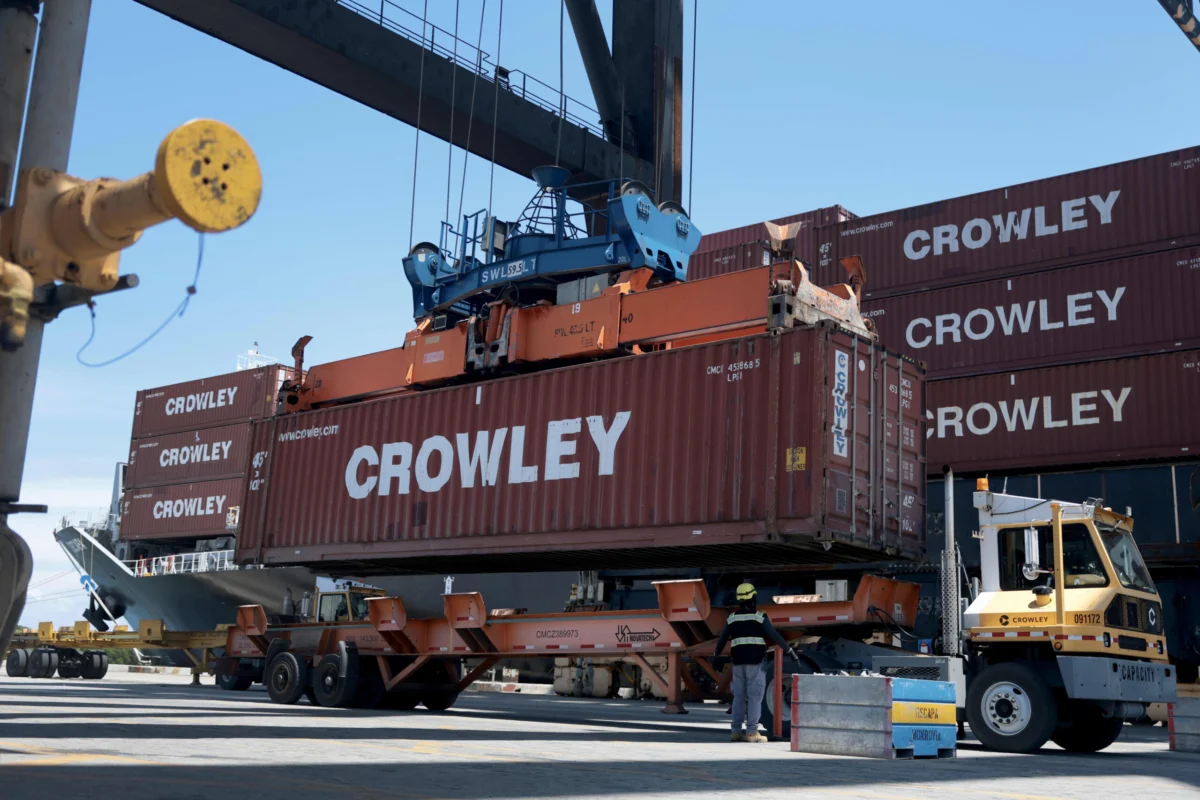
The cost of goods brought into the United States posted an unexpected increase in June, driven significantly by a sharp rise in prices for Chinese imports, marking their largest monthly surge in over 18 years, the Bureau of Labor Statistics (BLS) reported on Friday. This upward movement in import costs, despite a concurrent drop in energy prices, signals a potential broadening of inflationary pressures across the American economy, posing fresh challenges for policymakers at the Federal Reserve.
Overall import prices rose by 0.3% for the month of June, a figure that sharply defied economists’ expectations for an 0.8% decline, as surveyed by Dow Jones. On an annual basis, the increase was even more pronounced, with prices jumping 7.1% year-over-year, marking the steepest rise since August 2022. This unexpected acceleration in import costs comes as a critical indicator, suggesting that underlying inflationary forces may be more persistent and widespread than recent softening in consumer and wholesale price indices had suggested.
Unpacking the Drivers: China, AI, and Industrial Machinery
A primary catalyst for June’s import price surge was a substantial 0.9% increase in the cost of goods imported from China. This represents the most significant monthly jump since January 2008, a period marked by global commodity price spikes preceding the Great Financial Crisis. Analysts suggest this sharp rise could be a reflection of ongoing tariff impacts, supply chain adjustments, or shifts in production costs within China itself. On a 12-month basis, import prices from China climbed 1.3%, the largest yearly gain observed since the November 2021 to November 2022 period, underscoring a sustained upward trend. Interestingly, export prices to China saw a slight decline of 0.2% in June, though they remained up 7.4% annually, their largest monthly increase dating back to August 2022, indicating a complex and asymmetric trade dynamic.
Beyond traditional trade dynamics, the BLS report also highlighted the burgeoning artificial intelligence (AI) build-out as a significant contributor to rising import costs. Prices for critical components such as computers, peripherals, and semiconductors experienced notable increases. The global demand for advanced AI processors, specialized memory, and high-performance computing infrastructure has intensified, placing upward pressure on the supply chain for these sophisticated technologies. As companies worldwide invest heavily in AI capabilities, the cost of acquiring these essential imported goods is directly translating into higher input costs for U.S. businesses. This trend is further compounded by the concentrated nature of semiconductor manufacturing and the significant capital expenditure required to expand production, keeping supply tight relative to surging demand.
Furthermore, industrial and service machinery played a substantial role in driving costs higher, offsetting a 0.4% decrease in fuels and lubricants. This category had already posted a robust 12.6% jump in May, indicating a sustained period of increased pricing. The rising costs in machinery sectors can be attributed to several factors, including elevated raw material prices, labor shortages in manufacturing, and increased demand for capital goods as businesses seek to upgrade or expand operations. The decline in fuels and lubricants, while a welcome respite for some sectors, was clearly insufficient to counteract the broad-based increases observed elsewhere.
The Broader Inflationary Landscape and Geopolitical Context
The June import price data serves as a stark reminder that while a decline in oil costs provided some relief, inflation is increasingly showing signs of broadening beyond the energy sector. This implies that the cost pressures are not solely driven by volatile commodity markets but are becoming embedded in a wider array of goods and services, making the Federal Reserve’s task of achieving price stability more intricate.
Earlier this week, the BLS had reported that both consumer and wholesale prices saw monthly declines in June, largely on the back of sliding energy costs. This temporary softening was partly attributed to a brief easing of tensions between the U.S. and Iran, which had previously spiked following U.S. and Israeli attacks on Iran that commenced in late February. These geopolitical events had significantly roiled global oil markets, pushing energy prices higher and contributing to inflationary pressures across the economy. However, the import price data now indicates that the relief from falling energy costs is being countered by rising prices in other critical sectors, suggesting that the underlying inflation problem remains pervasive.
The U.S.-Iran conflict, initiated in late February 2026, had immediately injected volatility into the global energy complex. As a major oil-producing region, any instability in the Middle East has immediate repercussions on crude oil benchmarks like Brent and WTI. The attacks and subsequent heightened tensions led to concerns about supply disruptions, driving up prices at the pump for consumers and increasing operational costs for businesses reliant on fuel. While a temporary de-escalation in June provided some downward pressure on energy prices, the geopolitical risk premium remains a significant factor in global commodity markets, underscoring the fragility of this particular inflationary relief.
The Federal Reserve’s Persistent Battle Against Inflation
The Federal Reserve has been grappling with the inflation question since prices spiked in the wake of the aforementioned geopolitical events and continued supply chain disruptions. The central bank operates under a dual mandate from Congress: to achieve maximum employment and maintain price stability. Its long-term target for inflation is 2%, a level deemed conducive to sustainable economic growth. To combat the inflationary surge experienced over the past few years, the Fed has aggressively raised benchmark interest rates, aiming to cool demand and bring prices back to target.
Despite the recent monthly declines in consumer and wholesale prices, Federal Reserve officials remain cautious and steadfast in their commitment to curbing inflation. In congressional hearings earlier this week, Fed Chairman Kevin Warsh emphasized that he did not view the softer June inflation reports as an indication that the central bank’s work was finished in returning inflation back to its 2% goal. Warsh highlighted that while monthly figures showed a decrease, the annual rates for consumer prices remained elevated at 3.5%, and wholesale costs at 5.5%. These figures, well above the Fed’s target, reinforce the need for continued vigilance.
Echoing Warsh’s sentiment, regional Fed presidents have also signaled a hawkish stance. On Thursday, Dallas Fed President Lorie Logan publicly stated her belief that benchmark interest rates "should be modestly higher" to effectively address the persistent inflation problem. Logan’s remarks underscored the Fed’s readiness to take further action if inflationary pressures do not subside in a sustained manner. Similarly, Cleveland Fed President Beth Hammack on Friday reinforced this view, suggesting that monetary policy needs to be tighter. In a candid LinkedIn post, Hammack shared insights from her direct engagements with the economy: "For the first time in my tenure, I’m hearing from businesses who say they think we need to take action to curb inflation, and from consumers who can’t make ends meet about a growing sense of despair." This statement from a key policymaker paints a vivid picture of the real-world impact of sustained inflation on both businesses struggling with rising input costs and households facing an eroding purchasing power.
These statements from top Fed officials indicate that the central bank is likely to maintain a restrictive monetary policy stance, and potentially consider further interest rate hikes in upcoming meetings, if economic data continues to point towards persistent inflationary pressures, especially from non-energy sectors. The import price report for June adds another layer of complexity to their deliberations, suggesting that the battle against inflation is far from over and may require more aggressive measures.
Implications for Businesses, Consumers, and Trade Policy
The rising import prices carry significant implications across the U.S. economy. For businesses, higher import costs translate directly into increased input expenses. Manufacturers relying on imported components for their production, retailers stocking foreign goods, and technology firms sourcing specialized hardware will all face upward pressure on their cost structures. This could lead to a compression of profit margins if businesses are unable to pass these increased costs onto consumers. Alternatively, a widespread pass-through of these costs would further fuel domestic inflation, creating a challenging environment for businesses to manage both their supply chains and pricing strategies. Small and medium-sized enterprises (SMEs) might be particularly vulnerable, lacking the scale to absorb significant price increases or negotiate more favorable terms with suppliers.
Consumers, in turn, are likely to feel the pinch through higher retail prices for a broad array of goods. From electronics powered by imported semiconductors to clothing and household items manufactured abroad, the increased cost of bringing these products into the U.S. will eventually trickle down. This erosion of purchasing power, especially for essential goods, exacerbates the cost-of-living crisis highlighted by Cleveland Fed President Hammack. Households already grappling with elevated prices for food, housing, and services will find their budgets further strained, potentially leading to reduced discretionary spending and a slowdown in overall economic activity.
From a trade policy perspective, the significant rise in import prices from China, explicitly linked to "possible reflection of tariff impacts," reignites discussions around the effectiveness and economic consequences of current trade measures. Tariffs are designed to make imported goods more expensive, ostensibly to protect domestic industries or address unfair trade practices. However, when these tariffs lead to broad-based increases in import prices, they can act as a tax on domestic consumers and businesses, contributing to inflation rather than alleviating it. The asymmetry observed, with U.S. export prices to China also rising annually, suggests a complex interplay of global supply and demand dynamics, currency fluctuations, and geopolitical tensions influencing bilateral trade flows. Policymakers may need to re-evaluate the strategic and economic impact of existing trade policies in light of these inflationary pressures.
Looking ahead, several factors will influence the trajectory of import prices. Geopolitical stability, particularly in energy-rich regions, will continue to play a crucial role in commodity price volatility. Global demand for cutting-edge technologies like AI components will likely remain high, keeping pressure on semiconductor and electronics prices. Furthermore, the strength of the U.S. dollar, global shipping costs, and the ongoing evolution of international trade relationships will all contribute to the overall cost of goods brought into the United States. The June import price report underscores a complex and challenging economic environment, where the fight against inflation is far from over, requiring vigilance and potentially further action from central banks and governments alike.