Gilang Muhammad
Miami, Florida – U.S. consumers are navigating one of the most protracted periods of elevated inflation in nearly a century, a phenomenon that is increasingly shaping economic behavior and raising significant alarm bells within the Federal Reserve. As a persistent rise in prices begins to feel like a "new normal" for many households, central bankers are grappling with the potential for deeply entrenched inflationary expectations that could prove challenging to rein in.
The latest economic data underscores the severity of the situation. The Consumer Price Index (CPI) report released on Wednesday, October 14, 2026, revealed a 3.7% increase year-over-year for September. This marks an astonishing 65 consecutive months – more than five years – of annual CPI readings exceeding the Federal Reserve’s widely accepted 2% inflation target. This unbroken streak represents the longest of the 21st century, surpassed only twice since the late 1940s, according to a CNBC analysis of Bureau of Labor Statistics data. During this prolonged period, which began in early 2021, the average CPI reading has hovered around 4.5%, a mean rate last observed during a similarly challenging inflationary spell that concluded in the 1980s.
The Genesis of Persistent Price Pressures
The current inflationary cycle, often traced back to early 2021, emerged from a complex interplay of factors following the unprecedented global economic disruptions of the COVID-19 pandemic. Initial drivers included massive fiscal stimulus packages designed to support households and businesses, coupled with exceptionally accommodative monetary policy from the Federal Reserve. Simultaneously, global supply chains, already strained, faced bottlenecks and disruptions, leading to shortages and increased costs for raw materials and finished goods. Pent-up consumer demand, unleashed as economies reopened, further exacerbated price pressures, particularly in sectors like durable goods and travel.
Initially, many economists, including those at the Federal Reserve, characterized the inflation as "transitory," expecting it to subside as supply chains healed and demand normalized. However, geopolitical events, such as the conflict in Ukraine, further complicated the picture by driving up energy and food prices globally. The sheer scale and duration of these combined forces proved more persistent than anticipated, leading to the sustained price increases now observed across the economy.
Federal Reserve’s Mounting Concerns Over Expectations
The Federal Reserve’s primary concern extends beyond current price levels to the psychological impact on consumers and businesses. When individuals and firms begin to expect higher prices as a permanent feature of the economic landscape, these expectations can become self-fulfilling, making the central bank’s job significantly harder.
Cleveland Fed President Beth Hammack articulated this apprehension in a social media post last week, stating, "They’re starting to accept high inflation as just a fact of life. That’s concerning." This sentiment is echoed across the Fed, where leaders are actively questioning whether consumers’ inflationary expectations are becoming too deeply ingrained to manage effectively.
The New York Fed’s Survey of Consumer Expectations, released last week, provided further evidence of this shift. The one-year inflation outlook for September rose three-tenths of a percentage point to 3.9%, marking its highest reading in over three years. Such an upward revision in short-term expectations suggests a growing belief among the public that price increases will continue, rather than abate.
The Mechanics of Entrenched Inflation
Economists and central bankers widely understand that anchoring inflation expectations is paramount for effective monetary policy. As Gary Richardson, an economist and former historian at the Fed, emphasized, "Inflation expectations have to be anchored for monetary policy to affect the economy in an effective and predictable manner. That’s got to be number-one goal of any central bank."
The mechanism is straightforward: if businesses anticipate higher costs for materials and labor, they preemptively raise prices for their goods and services. Similarly, if workers expect their purchasing power to erode due to persistent inflation, they will demand higher wage increases to maintain their real incomes. This creates a wage-price spiral, where rising wages lead to higher production costs, which in turn lead to higher prices, prompting further wage demands. This cyclical feedback loop renders the Fed’s traditional tools, primarily interest rate adjustments, less potent in controlling price growth.
Minneapolis Fed President Neel Kashkari highlighted the real-world impact of this phenomenon during an event last month, recounting a conversation with a labor union leader who claimed inflation was "worse" than a recession for their members. Kashkari noted that this perspective influenced his view on the trade-off within the Fed’s dual mandate of price stability and maximum employment, suggesting that unbridled inflation can be more destructive to household welfare than even a temporary economic downturn.

Monetary Policy Responses and Their Impact
In response to this persistent inflation, the Federal Reserve has embarked on an aggressive campaign of interest rate hikes. After raising rates again in September 2026, Fed funds futures traders anticipate further increases in December and into 2027. These rate hikes are designed to cool aggregate demand by making borrowing more expensive for consumers and businesses, thereby slowing economic activity and, in theory, putting downward pressure on prices.
However, the path to disinflation is often fraught with challenges. Diane Swonk, chief economist at KPMG, likened inflation to "a cancer," asserting that "if you let it metastasize and go further, it’s even worse. Even when the cure hurts, it’s better than letting it metastasize." While rate hikes are ultimately intended to benefit consumers by restoring price stability, they can create immediate pressures through higher borrowing costs for mortgages, auto loans, and credit card debt. This delicate balance of addressing inflation without triggering a severe recession is the central bank’s ongoing tightrope walk.
Consumer Strain and Shifting Lifestyles
The cumulative effect of years of high inflation has significantly eroded the purchasing power of average Americans, casting a "dark cloud" over their view of the economy. The University of Michigan’s closely followed consumer sentiment survey earlier this year plunged to its lowest levels ever recorded. For the first time on record in 2026, over 50% of respondents cited high prices as the primary reason for their worsening personal finances. Joanne Hsu, the director of Michigan’s survey, encapsulated the mood by stating that high prices are "dominating consumer thinking," and are still considered "an unacceptable fact of life."
In recent months, year-over-year inflation has once again outpaced wage growth, meaning that despite nominal pay increases, many consumers are effectively losing ground in real terms. This squeeze forces difficult choices upon households. Cleveland Fed President Hammack observed within her district that residents are "choosing" rather than merely "trading down," implying they are making stark decisions between essential expenditures like groceries and other crucial bills.
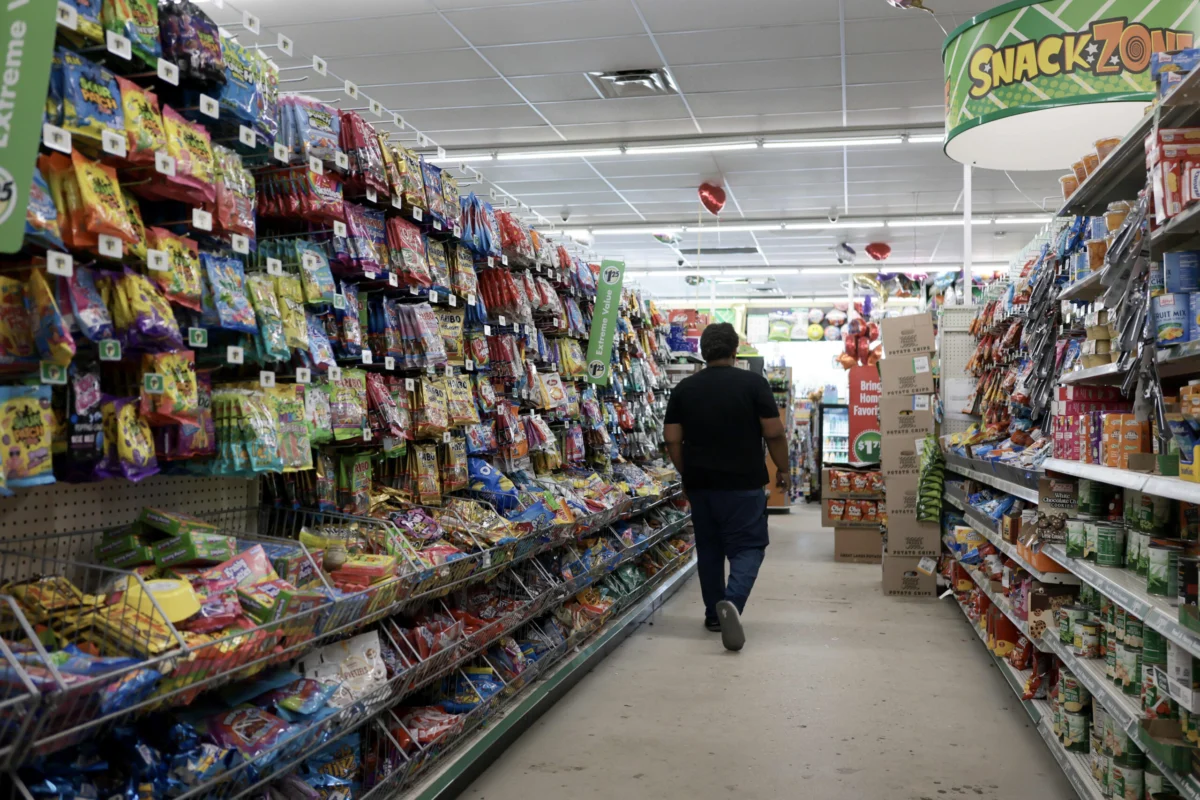
Anecdotal evidence from across the country supports this narrative of financial strain and behavioral adjustment. Olena Nicks, a 34-year-old analyst and local lawmaker in Long Island, New York, exemplifies this trend. Nicks has noted steep price increases in everyday items, particularly in the grocery store produce aisle and for airline flights for vacations. In response, she has tightened her purse strings, cutting back on restaurant meals and fast-food purchases. Her friend group has opted for less costly leisure activities, foregoing outings like bowling in favor of nights spent at home. "Frustrated is an understatement," Nicks said, expressing a common sentiment: "It feels like you’re stuck."
Broader Economic and Political Implications
The persistent inflationary environment carries significant implications beyond individual household budgets. For businesses, the unpredictability of costs and consumer demand makes long-term planning challenging. Investment decisions may be deferred, and supply chain strategies reassessed to build greater resilience against price shocks. Labor markets are also impacted, with unions pushing for stronger wage protections and businesses struggling to balance rising labor costs with competitive pricing.
Politically, inflation has emerged as a dominant issue. Consumer sentiment has notably diverged along partisan lines, with Republicans and independents showing a sharper decline compared to Democrats this year. The crucial question ahead of next month’s midterm elections is whether voter anger over the rising cost of living will translate into a shift in political control in Washington, potentially away from Republicans and President Donald Trump. Historically, economic discontent has been a powerful motivator for electoral change, and the current inflationary climate sets the stage for a highly charged political contest.
A Look Ahead: The Path to Price Stability
Despite the current glum outlook, economists caution against expecting outright deflation, where annual prices fall below 0%. Deflation, while seemingly beneficial, can usher in a dangerous downward spiral for the national economy, discouraging spending and investment, and potentially leading to widespread job losses.
Instead, the hope is for a sustained period where inflation’s 12-month growth rate consistently cools to levels below the pace of wage increases. If this scenario materializes over a sufficiently long period, higher real wages and increased purchasing power would gradually enable shoppers to better absorb today’s elevated prices. This would alleviate the current squeeze on household budgets without plunging the economy into a deflationary trap.
Achieving this delicate rebalancing act requires a combination of prudent monetary policy, continued healing of global supply chains, and potentially a recalibration of fiscal policy. The Federal Reserve’s commitment to its 2% target remains unwavering, but the journey to get there is proving to be one of the most complex economic challenges of the modern era, demanding patience and resilience from policymakers and the public alike. The coming months will be critical in determining whether the current "inflationary mindset" can be successfully diffused, or if it indeed becomes an entrenched feature of the American economic landscape.