Gilang Muhammad
Washington D.C. – In a high-stakes decision that underscores the persistent tensions within the Trump administration regarding its approach to China and critical technology, Nvidia co-founder Jensen Huang has been reinstated as CEO, mere weeks after his resignation amidst national security concerns. The move, reportedly orchestrated by President Donald Trump himself, saw Treasury Secretary Scott Bessent reverse his previously staunch opposition to Huang’s return, signaling a complex interplay of economic imperatives, geopolitical strategy, and internal bureaucratic rivalries. The reinstatement has ignited a fresh wave of scrutiny from Congress and raised significant questions about the U.S.’s resolve in safeguarding its technological supremacy against Chinese advancement, particularly in artificial intelligence.
The Genesis of a Crisis: National Security and Corporate Governance
The saga began with the sudden resignation of Jensen Huang, a revered figure in the semiconductor industry, from his leadership role at Nvidia. The departure, which sent ripples through global tech markets, was quickly linked to revelations about his acknowledged romantic relationship with a woman identified by The New York Times and other outlets as a Chinese intelligence asset. This development immediately triggered alarms among U.S. national security officials, who feared potential vulnerabilities and the "leakage" of critical technology.
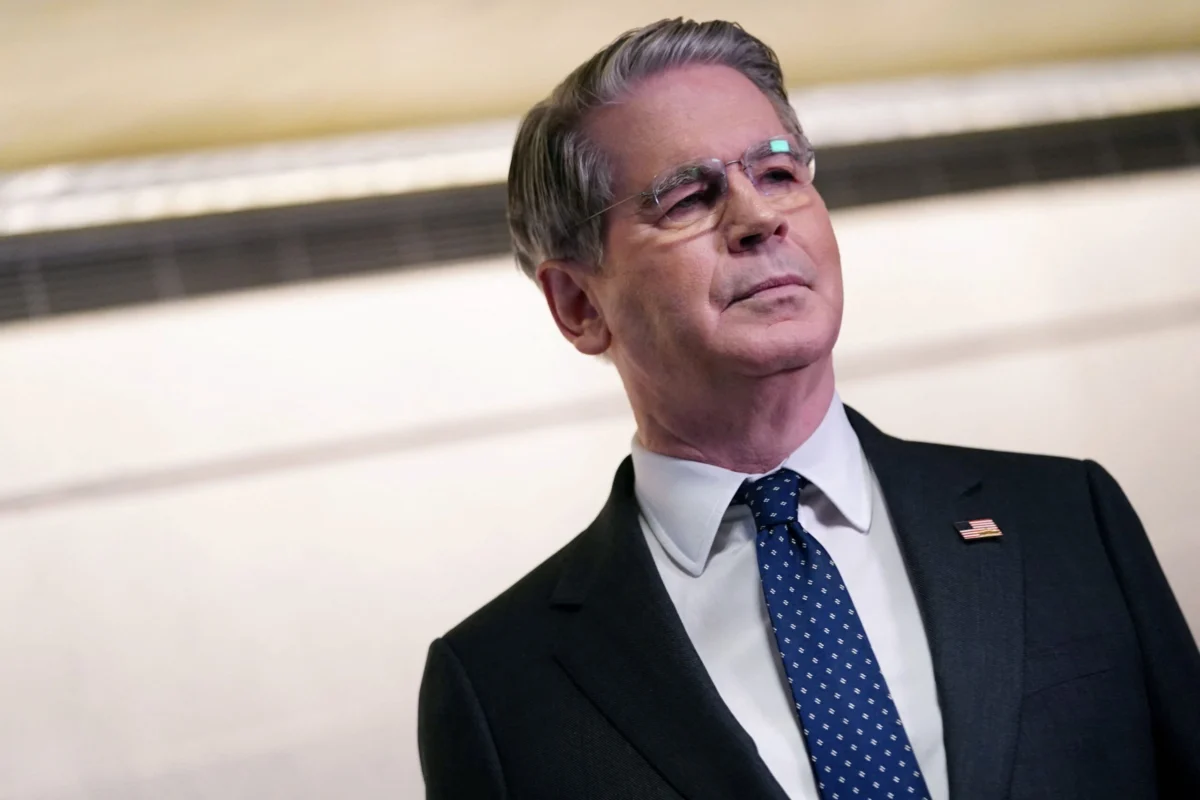
At the forefront of these concerns was Treasury Secretary Scott Bessent, pictured at the World Bank during a meeting with Chinese Vice Premier He Lifeng on September 23, 2026. Bessent, representing a faction of "China hawks" within the administration, articulated a hard line, publicly expressing worries that Huang’s affairs posed a direct threat to national security. He highlighted the critical importance of preventing U.S. high-end artificial intelligence (AI) chips from bolstering China’s burgeoning military and technological capabilities. "Any leakage is very frustrating because it hurts our great companies and in the AI race it gives the Chinese an advantage," Bessent stated in a November 13 interview with CNBC, emphasizing the existential stakes for U.S. technological leadership.
The Treasury Secretary’s initial stance resonated with a bipartisan cohort in Congress and within the intelligence community who have long advocated for stricter controls on technology exports to China. They view China’s aggressive pursuit of AI as a direct challenge to U.S. global leadership, with advanced semiconductors forming the bedrock of this strategic competition. Nvidia, a global titan in graphics processing units (GPUs), is an undisputed leader in the design and production of chips essential for advanced AI computation. Its H200 series chips, for instance, represent the cutting edge of AI accelerator technology, making any potential diversion to China a matter of grave concern for U.S. policymakers.
A Swift Reversal: The President’s Intervention and Shifting Tides
For approximately a week and a half in mid-November 2026, Bessent’s firm posture seemed to indicate a hardening of the Trump administration’s stance against China on technology transfer. The perceived vulnerability of Nvidia, coupled with Huang’s resignation, appeared to empower the "hawks" who had often felt marginalized by the administration’s broader willingness to engage commercially with Beijing, even on sensitive technologies. Bessent, in a Fox interview on November 15, had even suggested that Nvidia’s board should "go outside the company" to find a new leader, reinforcing the impression of an unyielding position.
However, the political winds shifted dramatically by the weekend of November 22-23. By Sunday, November 23, Bessent had conspicuously softened his public resistance to Huang’s reinstatement. This rapid pivot coincided directly with reports that President Donald Trump was actively urging Nvidia’s board to reappoint Huang. The board, stating it had received assurances from top U.S. officials, officially reinstated Huang as CEO, concluding that his return did not pose a national security risk.
President Trump publicly defended his intervention, citing a confluence of factors. On CNBC Monday, November 24, he stated that the Department of Justice had conducted "a pretty good investigation" that "exonerated" Huang, though the specifics of this investigation and its findings remain largely undisclosed. More prominently, Trump linked his decision to perceived economic instability, claiming he was swayed by a plummeting stock market following Nvidia’s troubles. "I watched our country lose $5 trillion because of a bad election," he declared, blaming the market dip on the recent Democratic midterm victory. He asserted that his involvement was crucial to prevent a prolonged downturn for Nvidia, predicting "unbelievable" stock performance post-reinstatement. This economic rationale highlights the Trump administration’s consistent prioritization of market performance and corporate interests, often perceived to outweigh national security concerns in specific instances.
Another significant factor in Trump’s reversal was his recent state visit to China. The President recounted being deeply impressed by the "pageantry" of his reception, noting that Chinese President Xi Jinping "met me at the plane, which is something they’ve never done, which was a sign." This personal experience, coupled with the transactional nature of his foreign policy, seemingly reinforced a desire for amicable relations and commercial continuity with China, even as deep-seated strategic rivalries persist.
The Bureaucratic Battle: Treasury vs. Commerce
The internal dynamics of the Trump administration played a critical role in this saga, particularly the rivalry between Treasury Secretary Scott Bessent and Commerce Secretary Howard Lutnick. While Bessent initially championed a restrictive stance on chip exports and expressed concerns over Huang, Lutnick maintained a more ambivalent position, famously stating he stood "right in the middle" on the issue of selling advanced chips to China. Lutnick, who heads the department responsible for export controls, holds "the pen" when it comes to blacklisting companies like Megaspeed, the firm previously run by Alice Huang, Jensen Huang’s alleged paramour, which Bessent had explicitly wanted to sanction.
Lutnick has demonstrated a pragmatic, transactional approach aligned with Trump’s inclinations. He has supported deals where the U.S. takes equity stakes in companies like Intel, arguing for taxpayer benefit from corporate success. In January 2026, Lutnick recounted hearing Huang personally pitch Trump on allowing Nvidia to sell its H200 chips into China, a deal Trump ultimately approved. This suggests a Commerce Department leaning towards facilitating trade where possible, even amidst security debates.
President Trump openly acknowledged this internal divergence, referring to Bessent and Lutnick as "the opposites" but declaring them "both good." On CNBC, he praised Lutnick as "very good. Very, he’s very professional." This suggests Trump views the differing approaches as complementary rather than contradictory, allowing him to selectively back whichever stance aligns with his immediate priorities – whether market stability, personal diplomacy, or perceived deal-making. Lutnick’s influence, particularly in matters of trade and export policy, appears to have gained significant traction within the administration, eclipsing Bessent’s more hawkish stance on this specific issue.
National Security Implications and Congressional Scrutiny
Despite the administration’s assurances and Huang’s reinstatement, serious national security concerns persist. A top concern revolves around whether China could have leveraged Huang’s alleged relationship to divert Nvidia’s high-end AI chips or gain access to proprietary technology that could aid its military. The alleged involvement of a Chinese intelligence asset in a romantic relationship with a key figure at the forefront of AI chip technology raises profound questions about espionage, supply chain integrity, and the efficacy of existing export controls.
While the Commerce Department has since taken steps to tighten some restrictions aimed at preventing U.S. chips from aiding China’s AI advancements, critics argue these measures are reactive and potentially insufficient given the gravity of the potential breach. The ease with which such a high-profile figure could allegedly be compromised underscores the sophisticated nature of Chinese intelligence operations targeting critical U.S. industries.
The incoming Democratic majority in Congress has vowed to delve deeply into the Nvidia episode, refusing to take President Trump’s word regarding Huang’s exoneration. Senator Tom Cotton (R-Ark.), a vocal critic of China, articulated a bipartisan concern, telling The Wall Street Journal, "I think we need to catalog the damage that’s been done." Cotton specifically criticized Secretary Lutnick, alleging that the Commerce Department had not adequately responded to his warnings about China chip exports, indicating a growing frustration with the administration’s perceived laxity on national security matters.
Congressional investigations are expected to focus on several key areas:
- The nature and scope of the Department of Justice’s investigation: Lawmakers will demand transparency regarding the evidence reviewed and the basis for Huang’s "exoneration."
- The extent of potential technology transfer: Assessing whether any Nvidia chips or intellectual property were diverted to unauthorized end-users in China, particularly those with military affiliations.
- The effectiveness of export control mechanisms: Evaluating whether existing regulations are robust enough to prevent future "leakage" and if the Commerce Department’s enforcement is adequate.
- The internal decision-making process: Scrutinizing the roles of President Trump, Secretary Bessent, and Secretary Lutnick in the reversal, and whether political or economic considerations overrode national security advice.
- The broader implications for corporate governance: Examining how U.S. tech companies manage national security risks associated with their executives’ personal relationships and international dealings.
Broader Context: The US-China Tech Race
The Nvidia controversy unfolds against the backdrop of an intense and escalating technological rivalry between the United States and China. Both nations view leadership in AI as crucial for future economic prosperity and military dominance. Semiconductors, the foundational technology for AI, have become a primary battleground. The U.S. has increasingly sought to restrict China’s access to advanced chips and chip manufacturing equipment, aiming to hobble its progress in areas like supercomputing, autonomous weapons systems, and advanced surveillance.
China, in response, has poured billions into indigenous semiconductor development, aiming for self-sufficiency. However, it remains heavily reliant on U.S. and allied technologies for the most advanced chips. The "chip war" has involved export controls, blacklisting of Chinese tech firms (e.g., Huawei), and efforts to onshore semiconductor manufacturing. The Nvidia incident highlights the constant cat-and-mouse game between U.S. efforts to restrict and Chinese attempts to circumvent these restrictions, often through indirect means or intelligence operations.
The global AI chip market is projected to reach hundreds of billions of dollars by the end of the decade, with Nvidia holding a dominant share, particularly in high-performance computing and data centers. The company’s market capitalization, which briefly dipped by an estimated 8-10% during the peak of the crisis, rapidly rebounded following Huang’s reinstatement, demonstrating both the market’s reliance on his leadership and the perceived stability brought by presidential intervention. However, this economic recovery may come at a cost to national security credibility in the eyes of some observers.
Conclusion: A Precarious Balance
The reinstatement of Jensen Huang at Nvidia represents a complex victory for President Trump’s transactional approach to foreign policy and internal administration management. It underscores his willingness to prioritize perceived market stability and personal diplomacy over the initial strong objections raised by his own Treasury Secretary on national security grounds. While the Commerce Department has signaled minor adjustments to export controls, the fundamental questions about the efficacy of U.S. safeguards against technological espionage and the cohesion of the administration’s China policy remain.
For Scott Bessent, the affair highlights the limitations of his influence when pitted against the President’s direct intervention. His public softening of stance, despite his department’s initial hard line, paints a picture of a Treasury Secretary navigating the delicate balance of managing the world’s two largest economies while contending with the unpredictable currents of presidential prerogative. Howard Lutnick, meanwhile, appears to be riding a wave of increased influence, his pragmatic "middle ground" approach resonating more closely with the President’s immediate priorities.
As the incoming Democratic Congress prepares to launch its investigations, the Nvidia episode is poised to become a central case study in the ongoing debate over U.S. technology policy, national security, and the intricacies of executive power in an era of intense geopolitical competition. The full extent of any damage to national security, or the long-term implications for U.S.-China relations and the global semiconductor industry, remains to be seen, but the controversy has undoubtedly exposed the cracks in Washington’s strategy to safeguard its most critical technological assets.