Ena Muazin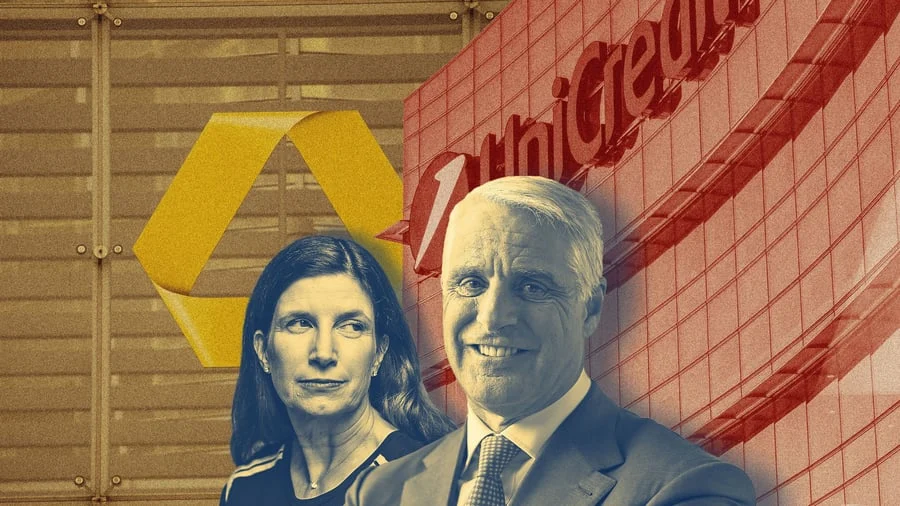
The protracted takeover battle for Commerzbank, spanning nearly two years, has cast a long shadow over the venerable German financial institution. While internal communications, such as messages posted on the bank’s intranet, attempt to project an image of resilience and commend the efforts of its workforce, the underlying sentiment among many employees reveals a deep-seated uncertainty about the future. This internal discourse, coupled with external pressures and the decisive move by Italian banking giant UniCredit to secure a controlling stake, paints a complex picture of a bank grappling with a potential seismic shift in its identity and strategic direction.
The initial public statements from Commerzbank’s leadership, including Deputy CEO Michael Kotzbauer and board member Thomas Schaufler, have been geared towards bolstering morale. They have highlighted the strengths of the bank’s business model and lauded the dedication of its employees. This messaging, however, appears to be falling on deaf ears for a significant portion of the workforce. As one anonymous employee expressed in the intranet, "I no longer need pats on the back or platitudes of perseverance. It’s time to face the truth, however bitter it may be." This sentiment underscores a palpable desire for clarity regarding the bank’s future prospects, particularly in the wake of UniCredit’s increasingly dominant position as its principal shareholder.
Handelsblatt, a prominent German business newspaper, has obtained access to these internal communications and has also engaged in extensive discussions with numerous Commerzbank employees directly involved in the ongoing negotiations and strategic considerations surrounding UniCredit’s involvement. These conversations reveal a widespread acknowledgment that the fight for Commerzbank’s independence, a battle waged for the preservation of a 156-year-old institution, is likely lost. The prevailing focus has now shifted to maximizing benefits for employees, customers, and shareholders during the forthcoming negotiations with UniCredit.

A Two-Year Struggle for Independence
The intricate dance between Commerzbank and UniCredit began to intensify in early 2023. UniCredit, under the ambitious leadership of CEO Andrea Orcel, signaled its strategic interest in expanding its footprint within the German market, a move that naturally brought Commerzbank, Germany’s second-largest private bank, into its crosshairs. Initially, Commerzbank’s management, supported by the German government, which held a significant stake, publicly resisted any form of hostile takeover. The narrative was one of safeguarding national financial interests and preserving the unique identity of a bank deeply interwoven with the German Mittelstand.
However, UniCredit’s approach was persistent and strategic. Through a series of market acquisitions and strategic stake-building, the Italian bank steadily increased its influence. By early 2024, UniCredit had successfully acquired nearly 50 percent of Commerzbank’s shares through a takeover bid, effectively solidifying its position as the majority shareholder. This development marked a critical turning point, transforming the defensive posture of Commerzbank into a strategic imperative to negotiate the terms of integration rather than outright rejection.
Shifting Tides: From Resistance to Negotiation

The internal communications paint a clear picture of this evolving strategy. While initial messages focused on resilience, the tone began to shift as UniCredit’s stake grew. Commerzbank CEO Bettina Orlopp, despite the challenging circumstances, has strived to maintain an optimistic outlook, expressing her belief that a constructive dialogue with UniCredit CEO Andrea Orcel could transform the initial hostile takeover attempt into a more amicable agreement. This diplomatic approach, however, faces significant hurdles, given Orcel’s reputation for aggressive deal-making and his stated intentions for restructuring.
The German government, a key stakeholder with approximately 13 percent of Commerzbank’s shares, had initially championed the bank’s independence. However, as UniCredit’s control became undeniable, the government’s stance also evolved, prioritizing stability and minimizing disruption. Their continued involvement in negotiations underscores the strategic importance of Commerzbank to the German financial landscape.
Employee Concerns and the Threat of Job Losses
A primary concern for Commerzbank employees revolves around job security. UniCredit CEO Andrea Orcel has been candid about his plans for significant cost-cutting measures, including the potential elimination of approximately 7,000 full-time positions in Germany alone. Furthermore, Orcel has indicated a desire to streamline Commerzbank’s international network. This prospect has generated considerable anxiety among the workforce, who are now looking to their representatives for protection.
In response to these mounting concerns, the Commerzbank’s General Works Council (Gesamtbetriebsrat) has adopted a more pragmatic tone. Gone are the calls for preserving Commerzbank’s independence. Instead, their recent circulars emphasize the urgent need to protect employees in the event of a takeover by UniCredit. This strategic shift reflects a realistic assessment of the situation, prioritizing the welfare of the workforce over the distant possibility of retaining the bank’s autonomy.
Crucially, the Works Council has secured a "transformation agreement" that provides employees with a degree of protection until the end of 2030. This agreement effectively rules out compulsory redundancies, offering a safety net for the workforce. Any personnel changes would be strictly governed by existing agreements, including social plan provisions and protective clauses negotiated with the Works Council. This proactive measure aims to mitigate the immediate impact of potential restructuring and job cuts.
UniCredit’s Vision: Restructuring and Integration
Andrea Orcel’s vision for Commerzbank involves a multi-stage integration process. He anticipates obtaining all necessary regulatory approvals by the end of the current year to formalize UniCredit’s control. Following this, a significant restructuring phase is expected to commence. Orcel has stated his intention to implement his plans starting January 1, 2027.

A key aspect of Orcel’s strategy involves the potential merger of Commerzbank with UniCredit’s German subsidiary, HypoVereinsbank (HVB). However, Orcel has emphasized that such a merger would not occur for at least two to three years, allowing ample time for the business models, corporate cultures, and technological infrastructures of both institutions to be harmonized. This phased approach suggests a deliberate strategy to avoid a hasty and potentially disruptive consolidation.
Disagreements Over Core Assets and Strategy
Despite repeated attempts at dialogue, significant divergences remain between Commerzbank CEO Bettina Orlopp and UniCredit CEO Andrea Orcel. Two in-person meetings and a phone call have failed to bridge the gap on several critical issues. Orlopp has advocated for a substantial takeover premium on Commerzbank’s share price and, crucially, for the preservation of the bank’s existing business model and its international network.
The international network, which extends to 40 countries, is considered vital by many Commerzbank employees. It enables the bank to support small and medium-sized enterprises (SMEs) in their international business dealings, a core strength that aligns with Commerzbank’s historical focus on the German Mittelstand. The German government also supports the preservation of this network, recognizing its economic significance.

UniCredit, however, operates with a different model. Outside of its core European markets, the Italian bank relies heavily on correspondent banking relationships rather than maintaining a significant physical presence. This fundamental difference in approach to international operations represents a major point of contention. Orcel’s inclination to view Commerzbank as a "HVB clone" suggests a potential strategy of absorbing Commerzbank’s German operations into the existing HVB structure, potentially leading to the dissolution of its distinct international presence.
The Shadow of HVB’s Past
The history of UniCredit’s acquisition of HypoVereinsbank (HVB) in 2005 serves as a potent case study, casting a long shadow over the current negotiations. The HVB acquisition was marked by substantial job cuts and a significant increase in profits for UniCredit, but also by considerable internal turmoil and strategic adjustments. Former managers and industry insiders point to this event as both a success in terms of financial gains for UniCredit and a cautionary tale regarding the human cost and operational challenges of such large-scale integrations.
The lessons learned from the HVB takeover are being closely examined by Commerzbank stakeholders. The potential for a similar outcome, involving significant job losses and a restructuring that prioritizes UniCredit’s strategic objectives over Commerzbank’s established strengths, is a recurring theme in internal discussions.

Regulatory Oversight and the Call for Constructive Dialogue
The escalating tensions and the potential for destabilization have not gone unnoticed by regulatory bodies. Financial circles suggest that some European banking supervisors have quietly urged both Commerzbank and UniCredit to engage in constructive dialogue. The paramount concern is to prevent further instability within Commerzbank, which could have negative repercussions for both institutions and the broader European financial system.
Analysts also echo these concerns, highlighting the significant implementation risks associated with a hostile takeover. Deutsche Bank analysts, in a recent study, noted that "amicable deals tend to create more value for shareholders, as synergies are likely to be realized more quickly and to a greater extent." This perspective underscores the financial benefits of a negotiated agreement over a prolonged and contentious acquisition process.
Orlopp’s Stance: A Matter of Duty and Resilience

Despite the immense pressure, Commerzbank CEO Bettina Orlopp has consistently rejected any suggestions of stepping down. She views her role as a duty and an imperative to navigate the complex situation with diligence and determination. In an interview with the "Frankfurter Allgemeine Zeitung," she stated, "I have a commitment and a mandate. I don’t think one can simply walk away just because it’s a bit strenuous." Her public stance reflects a commitment to her responsibilities and a refusal to succumb to the challenges.
Orlopp’s internal appeal to employees emphasizes the enduring importance of performance and unity. She asserts that these factors will be crucial for the bank’s future, not only at the negotiating table but also in its day-to-day operations. This message aims to foster a sense of collective responsibility and resilience within the organization.
UniCredit’s Assertiveness and the German Response
UniCredit CEO Andrea Orcel’s recent statements have further underscored his assertive approach. He declared his intention to engage in a "constructive dialogue with the German government, employee representatives, and other stakeholders." Notably, he omitted any mention of Commerzbank’s board, a deliberate snub that has not gone unnoticed.

This perceived slight has prompted a swift response. Both the Works Council and the German government have made it clear that Orcel must first engage in discussions with Bettina Orlopp. Supervisory Board Chairman Jens Weidmann has also emphasized the need for all parties to act maturely, stating, "These discussions are also in UniCredit’s interest, and there will be no shortcut through Berlin." This firm stance highlights the German authorities’ determination to ensure that negotiations proceed through established channels and involve all relevant stakeholders.
The Unfolding Scenario: A Future Uncertain
The Commerzbank saga is far from over. The coming weeks and months will be crucial as negotiations intensify. The core of the conflict lies in UniCredit’s vision of transforming Commerzbank into a "HVB clone" versus Commerzbank’s desire to preserve its distinct identity, particularly its international network and its commitment to supporting German SMEs.
The outcome will likely depend on the ability of Bettina Orlopp to negotiate favorable terms that protect the interests of employees, customers, and shareholders, while also acknowledging the strategic objectives of its new majority shareholder. The German government’s continued involvement will be pivotal in ensuring a stable transition, and the resilience of the Commerzbank workforce will be tested as they navigate this period of profound uncertainty. The banking world will be watching closely to see how this intricate financial drama unfolds and what the future holds for one of Germany’s most significant financial institutions.