Ena Muazin
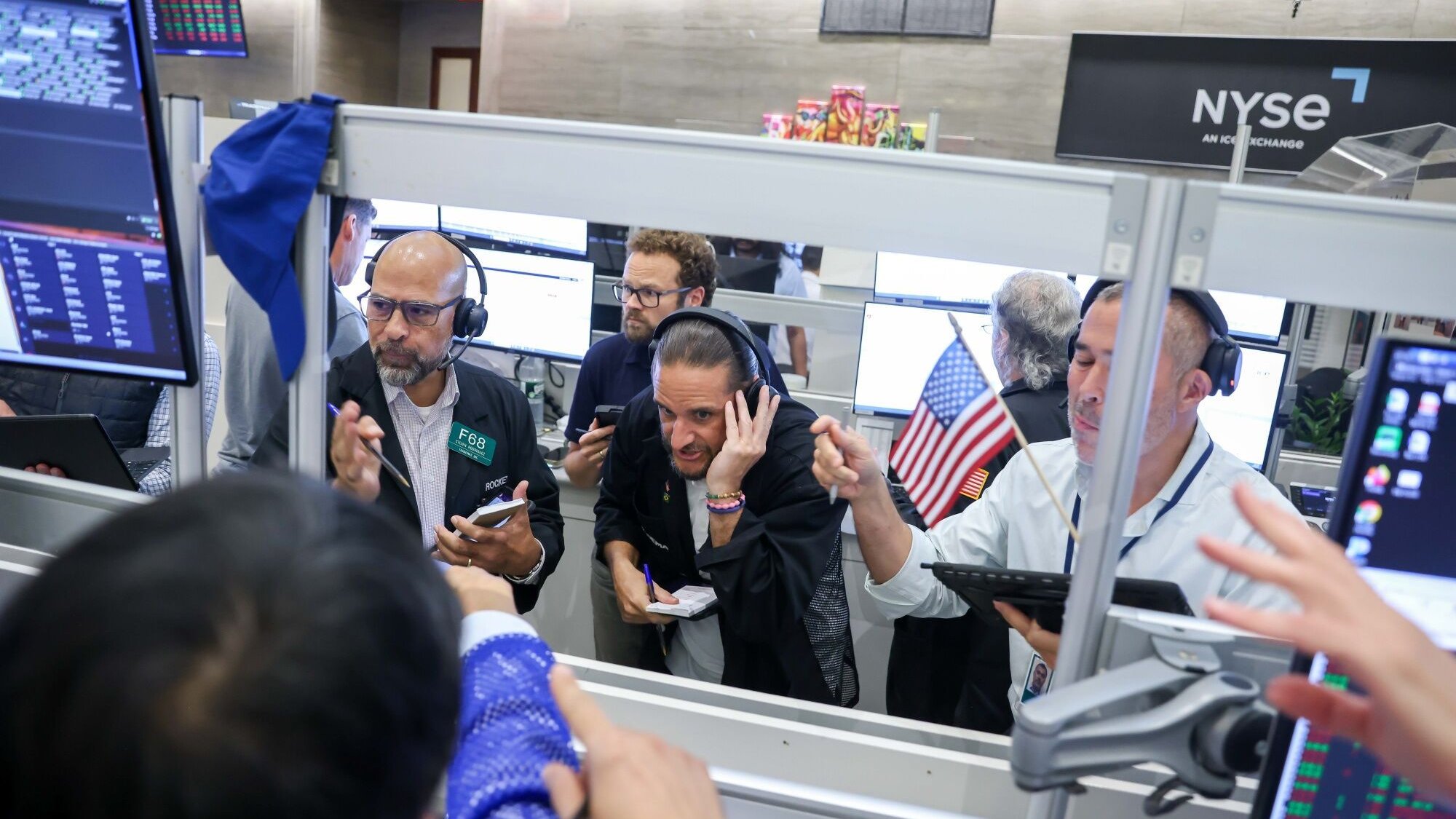
The stock market, particularly the technology sector, is currently experiencing a pronounced swing between investor anxiety and unbridled euphoria, primarily driven by the volatile trajectory of artificial intelligence (AI) stocks. This extreme market sentiment is proving challenging even for seasoned professionals to interpret, leaving investors grappling with uncertainty about the true market direction. Jochen Stanzl, an analyst at Consorsbank, articulated this sentiment, noting, "A crash in chip stocks in Asia is followed by such an extreme rally that it’s difficult for investors to grasp whether this is the beginning of a new recovery or merely a flash in the pan."
The root cause of this market turbulence is the pervasive uncertainty surrounding the artificial intelligence boom. For years, AI has been a powerful engine propelling the growth of technology stocks. The widespread adoption of AI applications by consumers and businesses, coupled with rapid advancements in tools like ChatGPT and Claude AI, ignited optimistic projections of boundless growth potential. This optimism directly translated into soaring stock prices for companies at the forefront of AI development and deployment.
The AI Ecosystem and its Market Impact
The primary beneficiaries of this AI-driven growth have been hyperscale cloud providers, the infrastructure backbone for AI applications, and semiconductor manufacturers, who supply the essential chips powering these data centers. Companies like Amazon and Microsoft, through their cloud divisions, and chip giants such as Nvidia, SK Hynix, and Samsung, have seen their valuations skyrocket on the back of this trend. The narrative was clear: more AI meant more data processing, which in turn necessitated more cloud capacity and more advanced chips.
However, recent market movements suggest a growing apprehension that stock valuations may have outpaced fundamental economic realities. This concern materialized acutely when the Nasdaq 100, a technology-heavy index heavily influenced by Nvidia, Alphabet, Amazon, and Microsoft, entered a correction, trading ten percent below its record high. Similarly, the Kospi index, largely driven by SK Hynix and Samsung, experienced a significant downturn, falling 36 percent from its peak after a period of rapid ascent.
The Critical Question: End-User Adoption
The sustainability of the AI boom hinges on a fundamental question, according to Ulrich Stephan, an investment strategist at Deutsche Bank: "Will there ultimately be enough end consumers?" This question underscores the dependency of the AI narrative on tangible adoption and value creation. While technological advancements are impressive, their true market impact is determined by their ability to solve real-world problems and generate demonstrable economic benefits for businesses and individuals.

The recent earnings reports from cloud giants offered a much-needed reprieve, injecting a dose of optimism back into the market. Microsoft reported a robust 43 percent increase in its cloud segment revenue for the second quarter, while Amazon announced a 37 percent surge in its cloud offerings. "The cloud growth rates are extremely strong. This is a sign that investments are beginning to pay off," commented Stephan Kemper, Chief Investment Strategist at asset manager BNP Paribas. This positive news immediately resonated with the market, with Microsoft’s stock price surging over 15 percent on a single Thursday, adding approximately $450 billion to its market capitalization—an unprecedented single-day gain for any company.
Hyperscalers’ Investment Prowess and Profitability
The impressive performance of Microsoft and Amazon underscores their ability to not only invest heavily in AI infrastructure but also maintain high levels of profitability. Serge Nussbaumer, a capital markets expert at financial services firm Maverix Securities, highlighted this achievement: "Microsoft continues to invest tens of billions in data centers and AI infrastructure, while simultaneously managing to maintain margins, cash flows, and returns on capital at an exceptionally high level." This dual success in aggressive expansion and sustained profitability has reassured investors about the underlying business models of these tech giants.
A Massive Investment Undertaking: Alphabet, Amazon, and Microsoft Lead the Charge
The scale of investment in AI infrastructure is staggering. Collectively, Alphabet, Amazon, and Microsoft are projected to spend over $500 billion this year. This colossal expenditure is primarily directed towards building data centers, acquiring advanced semiconductors, bolstering power supply and network infrastructure, and developing sophisticated AI platforms. This massive capital deployment has created a ripple effect throughout the economy, generating record profits for chip manufacturers and benefiting energy companies and data center equipment suppliers. As BNP Paribas’s Kemper aptly put it, "One man’s capex is another man’s revenue." This interdependence means that a slowdown in investment by these hyperscalers would inevitably impact a broad spectrum of related industries.

The Interconnected Ecosystem Under Pressure
The recent market jitters stemmed from investor doubts about the return on these massive investments. If fewer data centers are built, the demand for chips will consequently decrease, impacting the entire AI ecosystem. This interconnectedness means that any hesitation in the construction of data centers directly translates to reduced chip demand.
Chip Stock Valuations Plummet Amidst Uncertainty
The wave of doubt led to a significant decline in the valuations of chip stocks. Investors became hesitant to participate even when highly profitable chip companies were trading at multiples of less than five times their net earnings—a valuation more attractive than that of German automotive giants like BMW and Mercedes-Benz. Ulrich Stephan of Deutsche Bank noted, "The earnings would have to collapse quite considerably for the price-to-earnings ratios to return to the level of the S&P 500. This shows that a lot of caution has already been priced into the market." For context, the broader S&P 500 index is currently valued at more than 20 times the net earnings of its constituent companies.
The Key to Future Growth: Corporate AI Adoption
The future trajectory of the AI rally, according to Stephan, hinges on the adoption of AI by businesses. Companies must demonstrate tangible productivity gains that outweigh the costs associated with AI integration. "If this is not the case, they will not book computing capacity," he explained. A failure to achieve this balance could lead to declining revenues for hyperscalers, while the depreciation costs of their investments already weigh on operating results. This, in turn, would negatively impact chip companies due to diminished demand for AI infrastructure.

Serge Nussbaumer of Maverix Securities emphasized this critical shift in investor expectations: "It is no longer enough to merely announce high investment programs." He elaborated, "AI will undoubtedly remain the most important structural growth driver of the coming years. At the same time, it is no longer sufficient to merely announce high investment programs. Scalability, operational excellence, increasing free cash flows, and disciplined capital allocation are crucial."
Financial Market Reactions to AI Investment Uncertainty
The increasing reliance of hyperscalers on debt financing for their investments, rather than relying solely on operational cash flows, has also introduced uncertainty into the bond market. This has led to an increase in the cost of credit default swaps (CDS) for hyperscaler bonds, indicating a perceived rise in the risk of default. CDS spreads, which represent the annual premiums paid to insure against a default, have shown a notable increase, even if they remain at historically low levels. This uptick is interpreted by market strategists, such as Kemper, as a sign of underlying investor nervousness.
Market Volatility Amplified by Leveraged Bets
The extreme swings in AI stock prices are also attributed to the increased use of leveraged exchange-traded funds (ETFs), which amplify the price movements of underlying assets. Enguerrand Artaz, a strategist at asset manager LFDE, pointed to the significant trading volume of leveraged ETFs tracking the performance of companies like Samsung and SK Hynix. These ETFs, which saw their holdings swell by 2.7 times between late May and mid-July, accounted for nearly 40 percent of the trading volume of all Korean ETFs during that period. This concentration of leveraged positions can exacerbate market volatility during periods of price fluctuations.

Record Levels of Margin Debt Fuel Market Swings
Adding another layer to market volatility is the surge in margin debt in the United States. According to data from the U.S. regulator Finra, the amount of securities credit extended to investors (margin debt) surpassed $1.5 trillion in June, a record high and a nearly 50 percent increase year-over-year. This trend of credit-fueled stock purchases can amplify price swings. When stock prices fall instead of rise, the collateral backing these loans diminishes. Brokers then issue margin calls, demanding that investors deposit additional funds. Failure to meet these calls can trigger forced selling by brokers to limit losses, thereby accelerating downward market pressure.
Navigating the Path Forward: Awaitingsigns of Sustained Growth
The recent strong performance of Microsoft and Alphabet’s cloud divisions has provided a temporary stabilization to the market. However, according to analyst Violeta Todorova of online broker Leverage Shares, the market remains vulnerable as long as sentiment oscillates between extremes. "When valuations price in near-perfect execution, even minor shifts in sentiment can trigger disproportionately sharp corrections," she warned.
Analyst Stanzl suggests that the recent market corrections may have priced in sufficient risk for AI stocks, potentially paving the way for a new market floor. The upcoming earnings report from Elon Musk’s SpaceX, scheduled for Tuesday, could serve as a crucial test. The company’s valuation, initially pegged at trillions based on the prospect of building data centers in space, has seen its stock price more than halve from its late June peak. The market will be closely watching to see if SpaceX can demonstrate the operational excellence and scalable revenue streams that investors are increasingly demanding.

The current market environment for AI stocks is characterized by a delicate balance between immense potential and significant risks. Investor sentiment remains a key driver, and any indication of weakening end-user adoption or a failure of companies to translate massive investments into tangible economic returns could trigger further volatility. The coming weeks and months will be critical in determining whether the AI boom can sustain its momentum or if the current euphoria will give way to a more prolonged period of recalibration.