Farhan Pambudi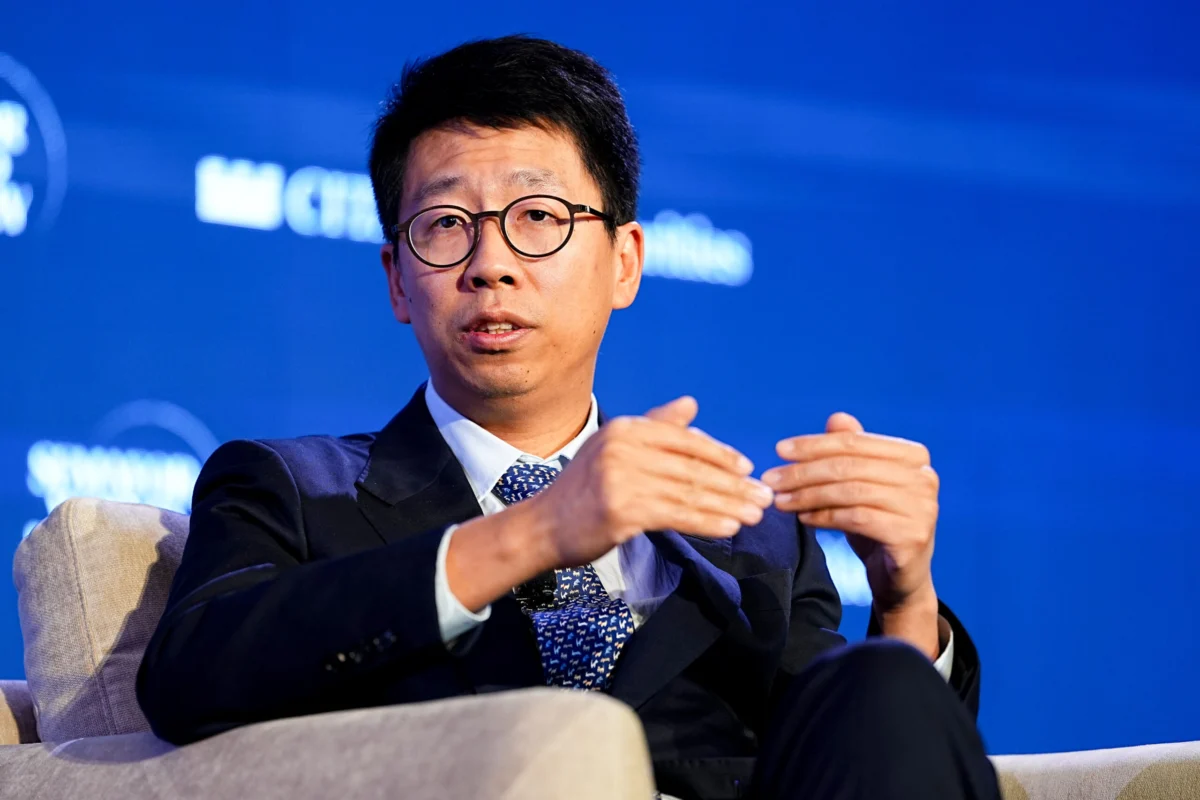
The year was 2018, and Jack Zhang, the 34-year-old CEO of the Melbourne-born startup Airwallex, found himself at a crossroads that would define the trajectory of the global fintech industry. Seated in the San Francisco residence of Michael Moritz—the legendary Sequoia Capital partner who helped steer Google and PayPal to dominance—Zhang was presented with an offer that most founders would consider the ultimate validation. Stripe, the Silicon Valley titan led by Patrick Collison, wanted to acquire Airwallex for $1.2 billion. At the time, Airwallex was generating just $2 million in annualized revenue. The offer represented a staggering 600-times revenue multiple, a figure nearly unheard of even during the peak of venture capital exuberance.
For two weeks, Zhang walked the streets of San Francisco in a state of restless contemplation. The proposal was mathematically irresistible and strategically sound; Moritz argued that joining forces with a "generational founder" like Collison would allow the combined entity to compound into an unprecedented financial force. Zhang initially agreed to the deal. However, the 8,000-mile flight back to Melbourne provided the distance necessary for a profound shift in perspective. Upon returning to his office and looking at a whiteboard detailing the unfinished vision of a global financial infrastructure, Zhang realized his journey as an entrepreneur had only just begun. Backed by two of his three co-founders who voted against the sale, Zhang walked away from the billion-dollar exit, choosing instead the "path of maximum resistance."
The Genesis of a Global Visionary
To understand Zhang’s decision to reject a guaranteed fortune, one must look at the formative experiences that shaped his approach to business and risk. Growing up in Qingdao, a major port city in northeastern China, Zhang moved to Melbourne at age 15. He arrived with limited English and lived with a host family, but his life took a sharp turn when his family’s finances collapsed. To fund his computer science degree at the University of Melbourne, Zhang balanced four jobs simultaneously: bartending, washing dishes, working graveyard shifts at a petrol station, and picking lemons during school holidays—a job he frequently cites as the most physically grueling labor he ever performed.
This period of intense struggle instilled a resilience that would later define his corporate strategy. Following graduation, Zhang spent years writing high-frequency trading code for an Australian investment bank. While the role was lucrative, it lacked the "deep fulfillment" he craved. Before finding success with Airwallex, Zhang experimented with roughly ten different business ventures, ranging from a magazine at age 14 to real estate development, a burger chain, and import-export operations involving wine, olive oil, and textiles.
The specific spark for Airwallex occurred while Zhang was running a Melbourne coffee shop. His co-founder, Max Li, struggled with the inefficiencies of the traditional banking system while trying to pay suppliers in Brazil, Indonesia, and Guatemala. Payments frequently vanished into the "black box" of correspondent banking, often frozen for weeks by American intermediary banks enforcing Office of Foreign Assets Control (OFAC) sanctions or bouncing back due to opaque processing errors. This friction led Zhang to dissect the mechanics of the SWIFT network and the correspondent banking system, concluding that the world needed a proprietary, global money movement network built for the digital age.
A Timeline of Strategic Milestones
The growth of Airwallex from a Melbourne startup to a global powerhouse has been characterized by a methodical, long-term approach to infrastructure.
- 2015: Airwallex is founded in Melbourne by Jack Zhang, Max Li, Lucy Liu, and Xijing Dai.
- 2017: The company secures a $13 million Series A led by Tencent, Sequoia China, and MasterCard.
- 2018: The $1.2 billion acquisition offer from Stripe is rejected. Airwallex chooses to focus on building independent infrastructure.
- 2019: Airwallex achieves "Unicorn" status after a $100 million Series C round, valuing the company at over $1 billion.
- 2021-2022: The company aggressively expands its licensing footprint, securing approvals in key markets including Singapore, Malaysia, and the United Kingdom.
- 2023: Airwallex announces it has reached $100 million in Annual Recurring Revenue (ARR).
- 2024: The company reports over $1.3 billion in annualized revenue, processing nearly $300 billion in transaction volume.
The Path of Maximum Resistance: Infrastructure vs. Integration
The core differentiator between Airwallex and many of its competitors lies in Zhang’s "path of maximum resistance" philosophy. While many fintech companies choose to "white-label" or build on top of existing banking rails to achieve speed-to-market, Airwallex spent years securing its own financial licenses and building direct integrations with central banks.
Today, Airwallex holds nearly 90 financial licenses across 50 global markets. This regulatory moat was not built overnight. In Japan, the licensing process took seven years. In other emerging markets, the company resorted to acquiring shell companies with existing licenses—some of which were no longer being issued—and then completely rebuilding the underlying technology stack to meet modern standards.
Zhang’s insistence on owning the infrastructure is not merely a matter of pride; it is a fundamental business advantage. For example, in Mexico, Airwallex maintains a direct integration with the central bank. Accessing this system requires a high level of physical and digital security, including biometric scans to enter the server rooms. This level of control allows Airwallex to offer features that competitors cannot.
In Japan, while processors like Stripe or Square can facilitate payments, they are often required by regulation to immediately transfer funds out to a merchant’s external bank account. Because Airwallex holds a specific "fund transfer operator" license, it can retain those funds within its own ecosystem. This enables customers to issue cards, manage local bank accounts, and pay vendors without the money ever leaving the Airwallex platform, thereby avoiding the 2% to 3% currency conversion fees typically charged by traditional processors.
Financial Performance and Market Valuation Analysis
The decision to remain independent has proven to be a masterstroke of financial timing. Airwallex currently reports an 85% year-over-year growth rate. While Stripe remains the dominant player in the space—valued at approximately $159 billion following a February 2024 tender offer—Airwallex is narrowing the gap in terms of efficiency and revenue-to-volume ratios.
| Metric | Airwallex (Current) | Stripe (2025 Projected/Reported) |
|---|---|---|
| Annualized Revenue | $1.3 Billion+ | ~$10 Billion+ (Estimated) |
| Annual Transaction Volume | ~$300 Billion | $1.9 Trillion |
| Recent Valuation | $8 Billion (Series G) | $159 Billion |
| Revenue Growth Rate | 85% | ~25-35% (Estimated) |
While Stripe’s valuation is approximately 20 times that of Airwallex, its total payment volume is only about six to seven times larger. This suggests that Airwallex is generating higher revenue per dollar of transaction volume, likely due to its focus on high-margin cross-border transactions and its integrated treasury management suite. Zhang projects that Airwallex will reach $2 billion in revenue within the next year, further closing the distance between the two rivals.
The Looming Clash: CFOs vs. Developers
For much of the past decade, Airwallex and Stripe operated in parallel universes. Stripe’s growth was driven by the "developer-first" movement in the United States, where engineers chose Stripe as the default payment gateway for new internet businesses. In contrast, Airwallex found its footing in Australia and Southeast Asia, targeting the CFO’s office and treasury departments.
The Airwallex sales motion typically begins with a business account product. Once a company utilizes Airwallex for its international banking and currency exchange needs, it naturally migrates toward the company’s payment processing and spend management tools. Currently, over 50% of Airwallex customers use multiple products within the ecosystem.
However, the geographical and functional barriers between the two companies are dissolving. Stripe is pushing deeper into international markets and corporate treasury products, while Airwallex has established a dual headquarters in San Francisco to aggressively pursue the U.S. market. Zhang acknowledges that Stripe holds a significant brand advantage, particularly among the Silicon Valley elite. "Our brand is just not there yet," Zhang admitted, noting that winning over developers who instinctively reach for Stripe is a different kind of challenge than winning over a finance director focused on FX margins.
The Future of Autonomous Finance
Looking toward the next decade, Zhang has set ambitious targets: reaching one million customers by 2030 and generating $20 billion in annual revenue. The key to this growth, he believes, lies in the intersection of financial infrastructure and artificial intelligence.
Airwallex is currently rolling out a suite of AI-powered "autonomous finance" products. Unlike traditional financial software that merely surfaces data for human review, these AI agents are designed to execute transactions—such as optimizing treasury flows or flagging fraudulent vendor payments—without manual intervention. Zhang argues that Airwallex’s decade of proprietary data across the entire financial stack (from revenue collection to payroll) provides a unique training set for these models that competitors who rely on third-party rails cannot easily replicate.
An Initial Public Offering (IPO) is on the horizon, though Zhang suggests it is at least three to five years away. The delay is intentional, allowing the company to further scale its revenue and solidify its infrastructure before facing the scrutiny of public markets.
Industry Implications and Conclusion
The story of Airwallex serves as a powerful counter-narrative to the "exit-at-all-costs" mentality that often pervades the startup ecosystem. By rejecting a $1.2 billion offer when his company was in its infancy, Jack Zhang bet on the long-term value of owning the "pipes" of global commerce.
The implications for the broader fintech sector are clear: as the "easy money" era of venture capital fades, the companies that control their own infrastructure and regulatory destiny are the ones positioned for sustainable growth. While Stripe remains the "golden child" of Silicon Valley, Airwallex has emerged as a formidable challenger, built on a foundation of "maximum resistance" and a global vision that extends far beyond the Golden Gate Bridge. The two companies, once potential partners, are now locked in a high-stakes competition to define how money moves in a borderless digital economy. Whether Zhang can achieve his $20 billion revenue goal remains to be seen, but his journey from a lemon farm in Victoria to the helm of a billion-dollar fintech powerhouse has already rewritten the playbook for international entrepreneurship.