
 Ena Muazin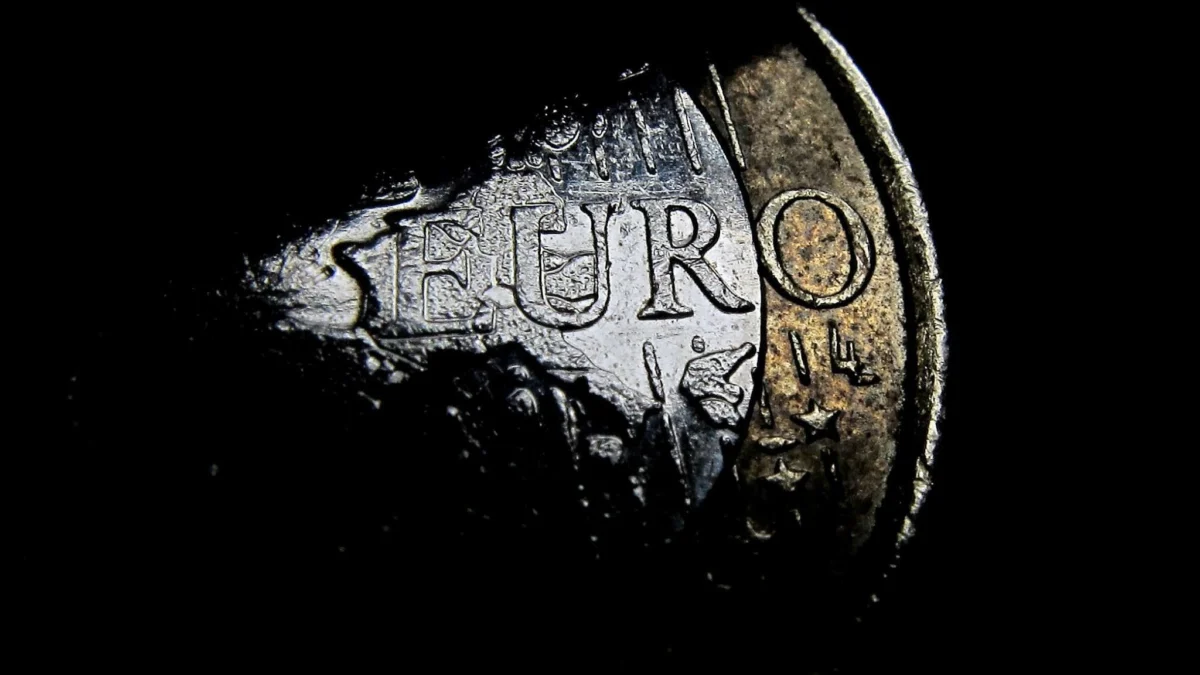
The flight reflex is taking hold. The foreign exchange market clearly shows how much the sudden increase in yields has unsettled investors. Under the impression of the "France shock" on the bond markets, the euro briefly dropped to its lowest level in 17 months against the dollar. Even days later, the common currency is struggling to recover, as investors are avoiding the euro.

Market Turmoil and Echoes of the Past
Frankfurt – The tremors from the political and economic uncertainties in France are sending ripples through global financial markets, with the Euro currency bearing the brunt of investor apprehension. The immediate aftermath of the surprise announcement of snap parliamentary elections in France has triggered a significant sell-off in French government bonds, pushing yields higher and casting a shadow over the entire Eurozone. This turmoil has led to a notable decline in the euro’s value against major currencies, including the US dollar, reaching a 17-month low. Analysts are drawing parallels to the sovereign debt crisis of 2011-2012, a period that threatened the very existence of the single currency and led to years of economic austerity and restructuring across several member states.
The current situation, while not identical, carries unsettling echoes of that tumultuous era. The rapid increase in borrowing costs for France, a cornerstone of the Eurozone economy, has ignited fears of contagion. Investors, wary of potential political instability and its economic ramifications, are seeking safer havens for their capital, leading to capital flight from Euro-denominated assets. This sentiment is further amplified by the perceived lack of a clear, reassuring figurehead like former European Central Bank (ECB) President Mario Draghi, whose decisive "whatever it takes" stance in 2012 is credited with calming the markets and preventing a collapse.

The "France Shock": A Deep Dive into Market Reactions
The catalyst for this market upheaval was the unexpected call for early legislative elections by French President Emmanuel Macron following a significant defeat for his centrist coalition in the European Parliament elections. This move has introduced a substantial degree of political uncertainty into the heart of the Eurozone’s second-largest economy. The prospect of a far-right or far-left majority in the National Assembly, potentially leading to policy gridlock or a significant shift in economic direction, has spooked investors.
The most immediate and visible impact has been on the French bond market. The yield on 10-year French government bonds, a benchmark for borrowing costs, has surged. This rise in yields reflects increased investor demand for higher compensation to hold French debt, signifying a heightened risk perception. Data from financial information providers shows a significant widening of the spread between French and German 10-year bond yields – the "spread" – indicating that investors now demand a considerably higher premium to lend to France compared to its AAA-rated neighbor. This widening spread is a clear signal of market stress and a potential precursor to broader instability within the Eurozone.
The impact on the euro has been equally pronounced. As investors de-risk, they tend to convert their euro holdings into currencies perceived as more stable, such as the US dollar or Swiss franc. This increased selling pressure on the euro has driven its value down against these currencies. For instance, the euro’s exchange rate against the US dollar has fallen below key technical levels, a move that currency strategists view with concern. A weaker euro not only makes imports more expensive for Eurozone countries, potentially fueling inflation, but also diminishes the purchasing power of European consumers and businesses in international trade.
Historical Parallels: The Eurozone Debt Crisis of 2011-2012
To understand the current anxieties, it’s crucial to recall the Eurozone debt crisis. Beginning in late 2009 with Greece’s budget deficit revelations, the crisis quickly spread to other peripheral Eurozone countries like Ireland, Portugal, Spain, and Cyprus. Concerns about sovereign solvency led to soaring bond yields for these nations, making it prohibitively expensive for them to borrow and potentially triggering defaults. This situation raised fundamental questions about the sustainability of the euro itself, as a monetary union without a full fiscal union proved vulnerable to asymmetric shocks.

During that crisis, the European Central Bank, under the leadership of Mario Draghi, played a pivotal role in stabilizing the situation. In July 2012, Draghi famously declared that the ECB was ready to do "whatever it takes" to preserve the euro. This commitment, coupled with the subsequent launch of the Outright Monetary Transactions (OMT) program, a pledge to buy sovereign bonds of distressed countries under strict conditionality, helped to quell market panic and restore confidence. The crisis also spurred significant reforms within the Eurozone, including the establishment of the European Stability Mechanism (ESM) and enhanced fiscal surveillance frameworks.
Contrasting Scenarios: Lessons Learned and New Challenges
While the current situation shares the underlying concern of sovereign debt risk and its potential to destabilize the euro, there are significant differences. The Eurozone’s institutional framework is arguably stronger now than it was in 2011-2012. The ECB has a broader toolkit and a more established role in crisis management. Furthermore, the economic fundamentals of many member states have improved, and the degree of fiscal integration, while still incomplete, has advanced.

However, the nature of the current challenge is also distinct. The "France shock" stems from political uncertainty within a core Eurozone economy, rather than a peripheral debt crisis driven purely by fiscal imbalances. This political dimension introduces a layer of unpredictability that is harder for central banks to directly address. The rise of populist and Eurosceptic parties across Europe, as evidenced in recent European Parliament elections, suggests a broader trend of political fragmentation that could pose ongoing challenges to economic stability and European integration.
Mark Dowding, Chief Investment Strategist at RBC Bluebay, articulated this concern, stating, "Back then, the collapse of the single currency seemed possible, and today, a sense of crisis is building again in the bond market." He highlights that the current environment lacks a clear "Mario Draghi" figure capable of single-handedly calming the markets with a decisive statement. This absence of a universally trusted crisis manager adds to investor nervousness.

Eckhard Schulte of Mainsky Asset Management also pointed out a crucial difference: "Today, there is no Mario Draghi." This sentiment underscores the reliance on the ECB to step in and stabilize the situation. However, the ECB’s room for maneuver might be constrained by inflation concerns and the political sensitivities surrounding direct intervention in sovereign debt markets, especially if such intervention could be perceived as circumventing national fiscal responsibility.
The ECB’s Dilemma and Potential Responses
The European Central Bank is undoubtedly monitoring the situation closely. While the immediate focus is on the bond market and the euro’s exchange rate, the ECB’s mandate is primarily price stability. A weaker euro could exacerbate inflation, complicating the ECB’s efforts to bring inflation back to its 2% target.

Potential responses from the ECB could include:
- Verbal Intervention: The ECB could issue statements emphasizing its commitment to financial stability and the integrity of the euro, aiming to reassure markets through communication.
- Liquidity Operations: In case of severe market dysfunction, the ECB could deploy targeted liquidity operations to ensure smooth functioning of financial markets.
- Asset Purchase Programs (APP) or Pandemic Emergency Purchase Programme (PEPP) flexibility: While the ECB has ended net asset purchases under its APP, it retains flexibility within its existing programs, including PEPP, to address risks to monetary policy transmission. This could involve targeted purchases of French government bonds if the situation deteriorates significantly and poses a threat to financial stability.
- Targeted Longer-Term Refinancing Operations (TLTROs): The ECB could offer favorable lending conditions to banks to ensure credit continues to flow to the real economy, even amidst market turmoil.
However, any direct intervention in sovereign debt markets would be politically sensitive and could face scrutiny from fiscally conservative member states. The ECB will likely aim to use its tools judiciously, balancing the need to maintain financial stability with its primary mandate of price stability and respecting the boundaries of national fiscal policy.

Broader Implications for the Eurozone and Beyond
The fallout from the "France shock" extends beyond financial markets. A prolonged period of political and economic uncertainty in France could:
- Slow Economic Growth: Reduced investor confidence and higher borrowing costs can deter investment and consumption, leading to a slowdown in French economic growth, which in turn impacts the broader Eurozone.
- Impact European Integration: The rise of Eurosceptic forces in France and other European countries poses a challenge to the future direction of European integration. If political instability in major member states becomes a recurring theme, it could undermine the cohesion and effectiveness of the EU.
- Affect Global Markets: As the Eurozone is a major global economic bloc, significant turmoil within it can have spillover effects on other economies, impacting global trade, investment flows, and currency markets.
The current situation is a stark reminder of the interconnectedness of political stability and economic prosperity. The coming weeks will be critical in determining whether the "France shock" remains a contained episode of market volatility or evolves into a more systemic threat to the Eurozone’s economic stability. Investors, policymakers, and citizens alike will be watching closely to see how France navigates its political landscape and how European institutions respond to the renewed challenges facing the single currency. The lessons from the past are clear, but the path forward requires careful management and a strong commitment to stability from all stakeholders.








