Farhan Pambudi
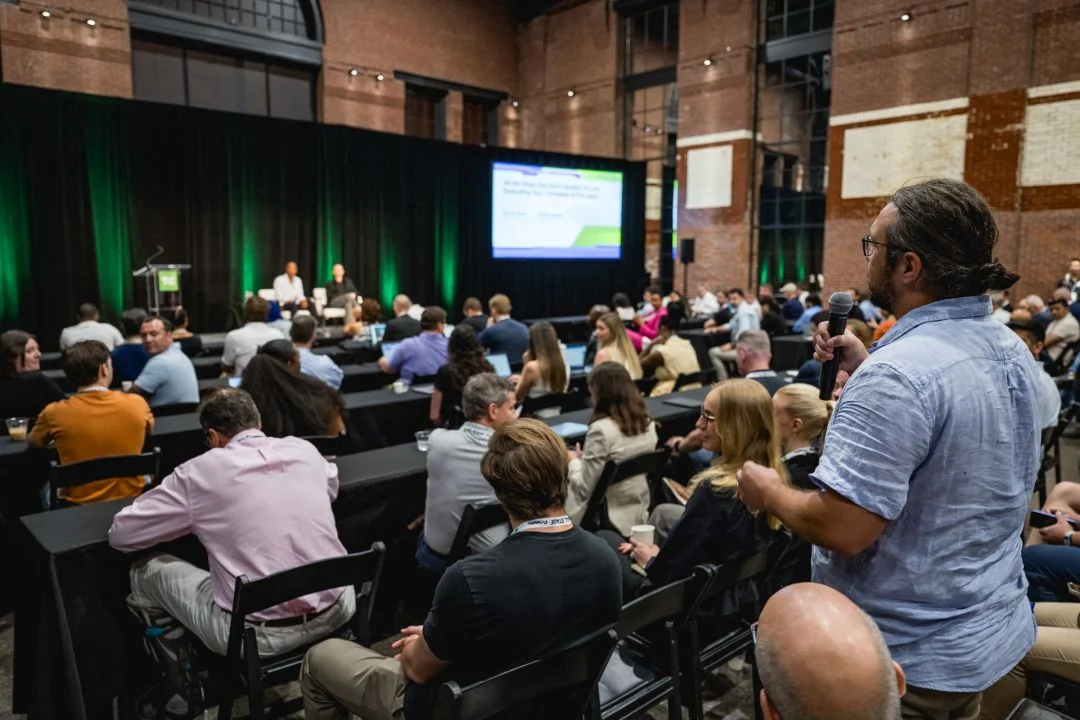
The historic SoWa Power Station in Boston, Massachusetts, has transformed into a high-stakes hub for the global venture community as the TechCrunch Founder Summit 2026 officially commences today, November 4, 2026. Beginning at 9:00 a.m. ET, the event brings together an elite cohort of founders, institutional investors, and startup operators for a comprehensive exploration of the strategies required to navigate the increasingly complex path from early-stage development to enterprise-level scaling. The summit serves as a critical junction for the New England tech corridor, occurring at a time when the venture capital landscape is recalibrating toward sustainable growth and technological pragmatism.
The opening of the summit also marks a final transition in the event’s operational logistics, as registration prices are set to shift to full on-site rates. Organizers noted that the early-morning deadline of 9:00 a.m. ET represented the final opportunity for attendees to secure discounted passes, including a high-value "buy one, get one free" incentive aimed at encouraging collaborative attendance between co-founders. As the doors opened, the venue reached capacity, signaling a robust appetite for face-to-face strategic discourse in a post-digital-saturation era.
The Strategic Importance of the Boston Venue
Choosing Boston as the site for the 2026 Founder Summit is a calculated move by TechCrunch, reflecting the city’s enduring status as a primary engine of deep tech, life sciences, and enterprise software. According to recent industry reports, the Boston-Cambridge ecosystem remains the third-largest venture hub in the United States, trailing only Silicon Valley and New York City. In 2025, Boston-based startups successfully raised an estimated $18.4 billion in venture funding, with a significant concentration in artificial intelligence and robotics.
The SoWa Power Station, a late 19th-century industrial marvel, provides a symbolic backdrop for the event. Once the largest power plant of its kind, it now fuels intellectual capital rather than electricity. This transition from heavy industry to the knowledge economy mirrors the broader economic shifts discussed at the summit. For the founders in attendance, the location offers proximity to the academic rigor of MIT and Harvard, as well as the commercial prowess of established tech giants that have set up significant operations in the Seaport District and Kendall Square.

A Chronological Overview of the Day’s Agenda
The summit is structured to maximize high-density learning and peer-to-peer networking, moving from broad industry insights to granular, interactive problem-solving sessions.
9:00 a.m. – 4:30 p.m. ET: Registration, Expo, and Discovery
The day began with the opening of the Expo Hall, a curated space featuring exhibiting startups that have reached the growth stage. Unlike traditional trade shows, the Expo Hall at the Founder Summit focuses on solutions designed specifically for scaling—ranging from automated compliance tools for international expansion to AI-driven talent acquisition platforms.
9:30 a.m. – 4:30 p.m. ET: The Braindate Networking Lounge
A central pillar of the event is the Networking Lounge powered by Braindate. This platform allows participants to bypass the awkwardness of traditional networking by scheduling one-on-one or small-group meetings based on specific topics of expertise or challenges. Data from previous TechCrunch events indicates that nearly 40% of follow-up investment meetings originate in these structured networking environments.
10:00 a.m. – 4:30 p.m. ET: Breakout and Roundtable Sessions
The core intellectual property of the summit is delivered through two simultaneous tracks: the Build Stage and the Impact Stage. These sessions are complemented by closed-door roundtables where participants can engage in "off-the-record" discussions with industry veterans.
4:30 p.m. – 6:30 p.m. ET: Closing Reception
The summit will conclude with a reception designed to solidify the day’s connections. In the high-pressure world of startup development, these informal settings often serve as the birthplace of future partnerships and acquisition talks.

Key Themes: Distribution, AI, and the Scaling Imperative
The 2026 agenda reflects a shift in the startup zeitgeist. While previous years focused heavily on the mechanics of building technology, this year’s summit emphasizes the mastery of distribution and the maturation of artificial intelligence.
One of the most anticipated sessions on the Build Stage, led by Hunter Worland of NEA, is titled "The Next Startup Advantage: Distribution Beats Technology." This thesis suggests that in an era where AI has significantly lowered the barrier to software development, the true competitive moat is no longer the code itself, but the ability to reach and retain customers. Worland’s analysis points to a market where "commoditized innovation" requires founders to be as proficient in go-to-market (GTM) strategies as they are in engineering.
On the Impact Stage, the focus turns toward the "Boston Founder Playbook," a session led by Chase Garbarino, founder of HqO. This discussion highlights the unique characteristics of the Boston ecosystem—often characterized by capital efficiency and a focus on solving "hard" problems in B2B sectors. Additionally, the presence of Steve Fredette, co-founder of Toast, provides a rare look at the trajectory of a local startup that scaled to a multi-billion-dollar public entity. Fredette’s interactive AMA (Ask Me Anything) session is expected to address the psychological and operational hurdles of maintaining company culture during rapid headcount expansion.
Supporting Data: The 2026 Venture Landscape
The summit takes place against a backdrop of a stabilizing yet disciplined venture market. Data analyzed leading up to the event suggests that while "mega-rounds" have become less frequent compared to the 2021 peak, Series A and Series B activity has seen a 12% year-over-year increase in 2026. Investors are increasingly looking for "King of the Hill" companies—those that demonstrate clear category leadership and a path to profitability within 18 months of funding.
Tina Tosukhowong of TDK Ventures is scheduled to lead a session on identifying these "Hidden Signals" that define category winners. According to TDK’s internal research, the most successful startups in the current cycle are those that integrate AI not as a peripheral feature, but as a core operational efficiency that reduces the cost of goods sold (COGS).

AI Innovation: Beyond the Generative Hype
Artificial Intelligence remains the dominant technological theme of the summit, but the conversation has evolved. Amulya Vishwanath of Techable Ventures is set to lead a session titled "The Next AI Opportunity: What Hasn’t Been Built Yet?" This discussion moves away from large language models (LLMs) toward vertical AI and the integration of AI into physical systems—a sector where Boston’s robotics heritage provides a distinct advantage.
Supporting this technological focus is a panel on "Fundraising Trends" featuring Kristen Craft (Fidelity Private Shares), Jennifer Neundorfer (January Ventures), and Darren Ross (The.Team). The consensus among these experts is that while AI is a prerequisite for many investors, the "AI premium" is now reserved for companies that can demonstrate proprietary data moats and high switching costs for enterprise clients.
Interactive Roundtables and the "Pitch" Dynamics
A unique feature of the Founder Summit is the "So You Think You Can Pitch?" session. Led by Dave Balter of True Ventures and a panel of seasoned VCs including Jonny Boyarsky (FirstGlance) and Simran Suri (Maveron), this session provides real-time feedback to founders. In 2026, the criteria for a successful pitch have shifted; investors are less interested in "total addressable market" (TAM) projections and more focused on "unit economics" and "customer acquisition cost" (CAC) sustainability.
The roundtable sessions, which require pre-registration due to limited space, allow for deep dives into sensitive topics. These include "Navigating Down Rounds," "Enterprise Sales Cycles in a Recessionary Environment," and "The Ethics of AI Deployment." These sessions are often cited by attendees as the most valuable component of the summit, providing a level of candor not found on the main stages.
Broader Impact and Industry Implications
The TechCrunch Founder Summit 2026 is more than a regional gathering; it is a barometer for the health of the global startup ecosystem. The insights generated here are expected to influence venture strategy through the end of the decade. By focusing on the intersection of "Build" and "Impact," the summit addresses the dual necessity of technological excellence and societal contribution.

Industry analysts suggest that the takeaways from today’s sessions will likely emphasize a return to "Foundational Scaling." This involves building robust internal systems before pursuing aggressive market expansion—a lesson learned from the high-profile startup failures of the mid-2020s. As founders leave the SoWa Power Station this evening, they will carry with them not just a stack of business cards, but a refined roadmap for navigating the "Second Wave" of the AI revolution and the complexities of modern enterprise growth.
The summit also reinforces Boston’s role as a stabilizing force in the tech world. While other hubs may be prone to speculative bubbles, the Boston contingent’s emphasis on "Product-Market Fit Before You Scale"—a session led by Kent Bennett of Bessemer Venture Partners—highlights a commitment to building companies with lasting intrinsic value.
As the 9:00 a.m. deadline passes and the sessions begin, the atmosphere inside the SoWa Power Station is one of focused intensity. For the hundreds of founders in attendance, the day represents an opportunity to transition from the isolation of the building phase to the collaborative environment of the scaling phase, backed by the collective wisdom of the industry’s most successful figures.