Farhan Pambudi
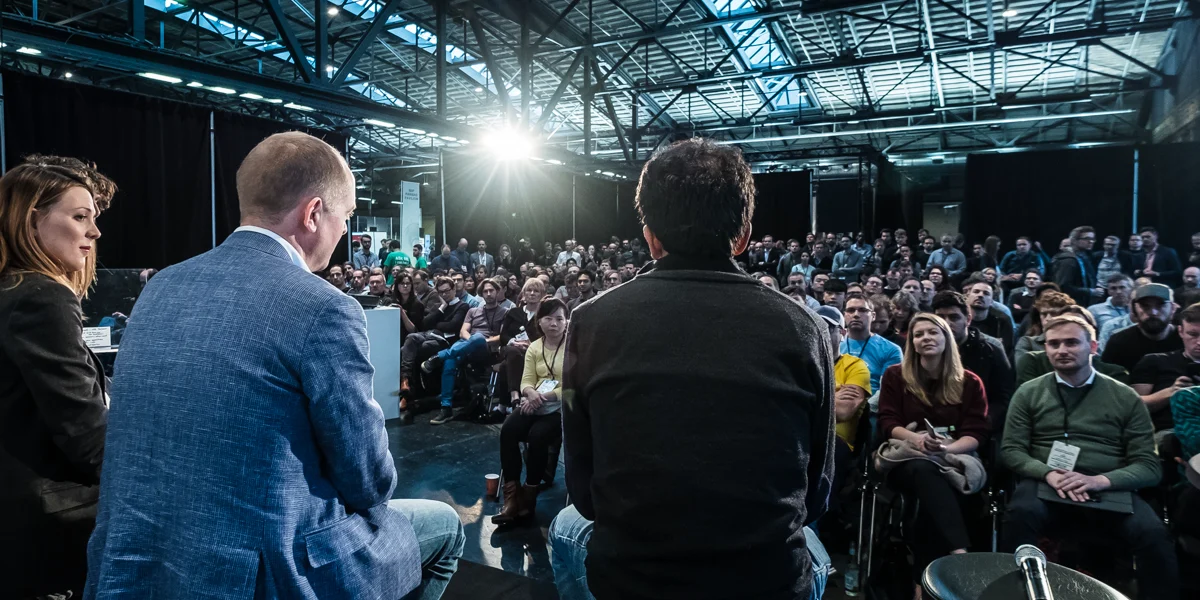
The Builders Stage will return to TechCrunch Disrupt 2026, serving as a central hub for founders, startup operators, and venture capitalists to engage in high-level tactical discussions regarding the complexities of building and scaling technology companies. Scheduled for October 13-15 at the Moscone Center in San Francisco, the event is expected to draw more than 10,000 participants, ranging from early-stage entrepreneurs to seasoned institutional investors. This year’s programming specifically addresses the shifting paradigms of the tech ecosystem, where rapid advancements in artificial intelligence and a tightening venture capital market have redefined the traditional benchmarks for success.
As the tech industry navigates a period of significant structural change, the Builders Stage aims to move beyond theoretical discussions to provide actionable, real-world case studies. The lineup features a diverse array of industry leaders, including Grant Lee, CEO and co-founder of Gamma; Leah Solivan, founder and general partner at Precedent.vc; and Robby Stein, Vice President of Product at Google. These experts, alongside representatives from Blackstone, Index Ventures, and General Catalyst, will dissect the operational decisions that fuel growth in an increasingly competitive global market.
The Strategic Significance of the Builders Stage in 2026
Historically, TechCrunch Disrupt has served as the premiere launchpad for startups, famously hosting the early debuts of companies like Dropbox, Fitbit, and Cloudflare. However, as the "growth at all costs" era of the 2010s has been replaced by a focus on sustainable unit economics and efficient scaling, the Builders Stage has evolved into one of the most critical components of the conference. It is one of six industry-focused stages designed to provide deep-dive insights into the mechanics of business development.
The 2026 agenda reflects a broader industry trend: the transition from "seed to scale." For many founders, the challenge is no longer just securing initial funding, but navigating the "Series A chasm" and building a go-to-market engine that can survive market volatility. The sessions curated for this year are specifically designed to address these hurdles through the lens of fundraising, hiring, and product-led growth.
Navigating the AI-First Ecosystem
A significant portion of the Builders Stage programming is dedicated to the impact of generative AI on startup defensibility. In a market where foundational models from OpenAI, Anthropic, and Google are evolving at a breakneck pace, many founders find their roadmaps at risk of being subsumed by platform updates.
In the session "What Happens When OpenAI Ships Your Roadmap," industry veterans like Michel Tricot (Airbyte) and Linda Tong (Webflow) will discuss strategies for maintaining a competitive edge. The conversation is expected to center on the concept of "the moat," exploring whether defensibility lies in proprietary data, workflow integration, or vertical-specific expertise.

Furthermore, the session "How to Win When You’re Not Building AI" addresses the significant portion of the market that remains focused on SaaS, fintech, and hardware. Panelists Shan Shan of Baillie Gifford and Yuri Sagalov of General Catalyst will argue that while AI dominates the news cycle, durable companies are still being built on the fundamentals of retention, revenue quality, and disciplined execution. This provides a necessary counter-narrative to the current hype cycle, emphasizing that not every breakout business needs to be an AI-first company to achieve a massive exit.
The Evolution of Venture Capital and Fundraising Metrics
The fundraising landscape has undergone a rigorous correction since the highs of 2021. For founders looking toward 2027, the criteria for "fundability" have shifted. The Builders Stage will host a session titled "The Series A in 2027," featuring Jahanvi Sardana (Index Ventures), Shailendra Singh (Peak XV), and Janelle Teng Wade (Bessemer Venture Partners). These investors will provide a roadmap for what traction looks like in a post-zero-interest-rate environment.
Supporting data suggests that the "Series A crunch" is real; according to recent venture reports, the bar for Annual Recurring Revenue (ARR) and capital efficiency has risen by nearly 40% over the last two years. The session "The 90-Day GTM: Why $0–$10M ARR Is the New Baseline" explores how AI-enabled tools have compressed the time it takes to reach significant revenue milestones. Founders are now expected to achieve in months what previously took years, and this session will break down the tactical levers required to meet these aggressive new expectations.
Human Capital and the Hybrid Workforce
The Builders Stage also tackles the "human" side of technology. As AI agents begin to take over traditional roles in engineering, customer support, and operations, the very definition of a startup team is being rewritten. Josh Reeves, CEO of Gusto, will lead a discussion on "Hiring When AI Is a Co-Founder," exploring how high-growth companies are building hybrid teams of humans and autonomous agents.
The competition for top-tier talent remains fierce, particularly in the AI sector. A dedicated session on hiring and compensation will feature Matt Birnbaum (Wylder.co) and Atli Thorkelsson (Redpoint Ventures), focusing on how startups can attract talent without the massive balance sheets of Big Tech. This includes the use of secondary sales, equity structures, and culture as a retention tool in a market where employee expectations are rapidly evolving.
M&A as a Primary Exit Strategy
With the IPO window remaining selective, Mergers and Acquisitions (M&A) have moved from a "plan B" to a primary strategic goal for many early-stage companies. Karl Alomar of M13 and Lindsey Mignano of Mignano Law Group will discuss how founders can build with acquisition in mind from day one. This involves not just product alignment, but the legal and operational hygiene required to pass rigorous due diligence from corporate development teams at major tech conglomerates.
This shift in strategy is a response to the current exit environment, where "acqui-hires" and strategic IP acquisitions have become more common than traditional public debuts for mid-market startups. By understanding the M&A landscape early, founders can maximize their chances of a liquidity event even in a challenging market.

Chronology and Event Logistics
TechCrunch Disrupt 2026 is structured to maximize networking and educational opportunities over a three-day period:
- October 13: Opening keynotes and the commencement of the Startup Battlefield 200, where the world’s most promising early-stage startups compete for a $100,000 equity-free prize.
- October 14: Full-day programming on the Builders Stage, focusing on GTM strategies, AI integration, and product scaling.
- October 15: The Startup Battlefield Finals, followed by the "Ask the Investors" Q&A and the reveal of the "AI Disruptors 60" list by Greenfield Partners.
The Moscone Center, located in the heart of San Francisco’s SoMa district, remains the symbolic center of the tech world. Despite the rise of remote work, the concentration of venture capital and technical talent in the Bay Area continues to make Disrupt a "must-attend" event for the global startup community.
Broader Impact and Industry Analysis
The return of the Builders Stage at TechCrunch Disrupt 2026 signifies a maturation of the startup ecosystem. The focus has moved from the "spectacle" of the pitch to the "grind" of the build. This reflects a broader economic reality: in 2026, capital is no longer a commodity, and growth is no longer guaranteed by a clever pitch deck alone.
The inclusion of mental health and founder resilience in the session "Yes, It’s Hard to Be a Founder" highlights a growing awareness of the psychological toll of high-growth entrepreneurship. By bringing mental performance experts and Harvard Medical School faculty onto the stage, TechCrunch is acknowledging that the "human infrastructure" is just as important as the code.
For the 10,000+ attendees expected in San Francisco, the Builders Stage offers more than just information; it offers a community of peers facing similar challenges. Whether it is navigating the "tokenmaxxing" world of multi-model AI or finding the first 1,000 customers without a marketing budget, the insights shared here will likely influence the next wave of category-defining companies.
As registration continues, TechCrunch has incentivized early participation with ticket price discounts of up to $330 for those who secure their passes before the next scheduled increase. In an era defined by rapid technological disruption, the Builders Stage stands as a testament to the enduring power of practical knowledge and disciplined company building.