Farhan Pambudi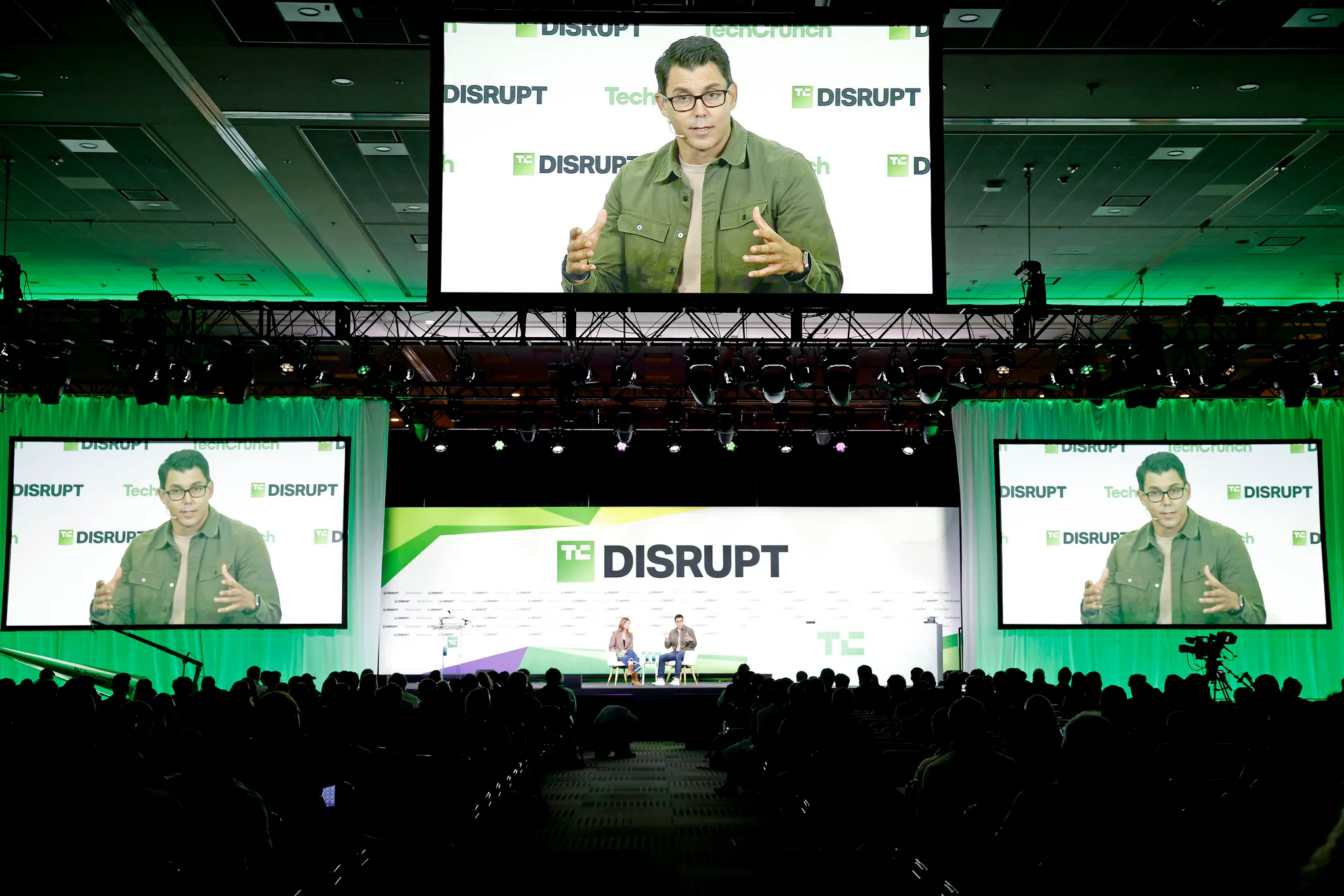
The second day of TechCrunch Disrupt 2026 convened at San Francisco’s Moscone West, marking a pivotal moment in the annual technology calendar as more than 10,000 founders, investors, and industry leaders gathered to chart the next phase of the global digital economy. Following an opening day characterized by high-level policy discussions and macro-economic forecasting, the second day shifted focus toward the practical application of emerging technologies, specifically within the realms of artificial intelligence (AI) hardware, robotics, and the evolving landscape of venture capital. As the centerpiece of the Silicon Valley ecosystem, Disrupt continues to serve as a high-stakes arena where early-stage startups compete for visibility and capital while established giants showcase the infrastructure that will power the next decade of innovation.
The State of the Tech Ecosystem at Moscone West
The atmosphere at Moscone West reflected a tech industry that has moved past the speculative fervor of previous years and into a period of disciplined, high-velocity execution. Registration opened at 8:00 a.m. PT, with a massive influx of participants utilizing the event’s proprietary AI-powered matchmaking tools to facilitate high-value connections. The Expo Hall, situated on Level 2, transformed into a dense marketplace of ideas, featuring over 300 startups across various sectors including fintech, sustainability, and enterprise software.

Industry analysts noting the shift in this year’s attendance observe that while software remains a dominant force, there is a tangible increase in the presence of "hard tech" and "deep tech" firms. This trend is underscored by the heavy representation of robotics and AI hardware providers in the Expo Hall, indicating a maturation of the market where AI is no longer confined to the cloud but is increasingly integrated into physical environments.
Chronology of Day 2 Sessions and Keynote Address
The programming for Day 2 was meticulously structured across six specialized stages, each designed to address a specific facet of the startup lifecycle.
Morning Sessions: Public Safety and Venture Conviction
The Disrupt Stage opened with a critical examination of the intersection between surveillance and ethics. Garrett Langley, CEO of Flock Safety, delivered a keynote on "AI, Surveillance, and the Future of Public Safety," addressing the complexities of using machine learning for community security while maintaining civil liberties. This was followed by a highly anticipated session featuring the full partnership of Benchmark. Partners Jack Altman, Peter Fenton, Chetan Puttagunta, Everett Randle, and Eric Vishria shared their current investment theses in a talk titled "What We Believe Now." The consensus among the partners suggested a shift toward "conviction-based" investing, focusing on founders who demonstrate an ability to navigate the increasingly complex regulatory and competitive landscape of the late 2020s.

Midday: The Convergence of Hardware and Intelligence
Simultaneously, the Real World AI Stage hosted a series of demonstrations that pushed the boundaries of traditional automation. A standout moment occurred during the "Humanoid Robots Have Arrived" session, where Jonathan Hurst of Agility Robotics introduced "Digit," a humanoid robot designed for logistics and industrial applications. Unlike previous years’ demonstrations, which often focused on controlled environments, this session highlighted Digit’s ability to operate in dynamic, human-centric spaces.
Furthering the hardware discussion, Anna Goldie and Azalia Mirhoseini of Ricursive Intelligence discussed the recursive nature of modern engineering in their session, "When AI Starts Designing Its Own Hardware." Their research into using AI to optimize chip architecture and circuit design represents a fundamental shift in the semiconductor industry, potentially shortening hardware development cycles from years to months.
Afternoon: Scaling and the Series A Landscape
The Builders Stage provided a pragmatic counterpoint to the high-level technology showcases. A panel consisting of Jahanvi Sardana (Index Ventures), Shailendra Singh (Peak XV), and Janelle Teng Wade (Bessemer Venture Partners) dissected the requirements for a successful Series A round in 2027. The discussion highlighted a "flight to quality," where revenue durability and unit economics have replaced user growth as the primary metrics for institutional backing.

For founders operating outside the immediate AI hype cycle, Mark Crane of General Catalyst and Shan Shan of Baillie Gifford led a session titled "How to Win When You’re Not Building AI." This discussion offered a strategic roadmap for sectors like climate tech and healthcare, emphasizing that foundational business principles remain the most effective hedge against market volatility.
Startup Battlefield 200: A Crucible for Innovation
A core component of the Disrupt experience remains the Startup Battlefield 200, a curated competition that has historically launched companies like Dropbox, Mint, and Fitbit. On Day 2, the competition focused on two high-growth sectors: Health Tech/Life Sciences and Enterprise/Security.
Contenders faced rigorous questioning from a panel of expert judges, including top-tier VCs and veteran engineers. The stakes are notably high, with a $100,000 equity-free grand prize and the "Disrupt Cup" awaiting the winner. More importantly, however, is the exposure to the thousands of investors in attendance. Historical data from TechCrunch indicates that Battlefield alumni have collectively raised over $9 billion in funding and seen more than 100 exits. The 2026 cohort appears particularly focused on solving "unsexy" problems, such as supply chain transparency and backend security for autonomous systems, reflecting a broader industry trend toward operational efficiency.

Supporting Data: Venture Trends and AI Market Projections
The discussions at Disrupt 2026 are happening against a backdrop of significant shifts in the venture capital market. According to recent industry reports, while overall deal volume has stabilized after the fluctuations of 2023-2025, the average deal size for AI-integrated startups has increased by 22% year-over-year.
Furthermore, the "Real World AI" sector—encompassing robotics, autonomous vehicles, and edge computing—is projected to reach a market valuation of $1.2 trillion by 2030. The sessions on the Real World AI Stage, such as Nvidia’s Les Karpas explaining the "ChatGPT moment" for robotics, align with these projections. Nvidia’s presence at the event serves as a reminder of the critical role that compute power plays in the current era; without the underlying GPU infrastructure, the agentic AI and humanoid robots showcased at Moscone West would remain theoretical.
StrictlyVC: The Investor’s Perspective
While the main stages catered to a broad audience, the StrictlyVC track provided a restricted environment for Investor Pass holders to discuss the mechanics of the capital markets. These sessions addressed the "New Rules of Going Public," with Ryan Flanagan of ICR providing a post-mortem on the IPO class of 2025.

A significant portion of the afternoon was dedicated to the changing demographics of the LP (Limited Partner) world. Amit Bhatti of Truebridge Capital and Beezer Clarkson of LGT Capital Partners noted that family offices are increasingly bypassing traditional VC funds to make direct investments in late-stage startups. This "disintermediation" of venture capital is forcing traditional firms to provide more value-add services to their portfolio companies to remain competitive.
Broader Impact and Industry Implications
The themes emerging from Day 2 of TechCrunch Disrupt 2026 suggest a technology sector that is rapidly maturing. Several key implications for the broader industry can be inferred from the day’s proceedings:
- The End of the "Chatbot" Era: As Alexander Embiricos of OpenAI suggested in his session, the industry is moving beyond simple conversational interfaces toward "Agentic AI"—systems capable of making autonomous decisions and executing complex workflows without human intervention.
- Sovereign AI as a Geopolitical Asset: The session featuring representatives from Turkey and Hewlett Packard Enterprise highlighted a growing trend of nations seeking to build their own independent AI infrastructure. This movement toward "Sovereign AI" suggests that data and compute are now viewed as essential national resources, similar to energy or water.
- Hardware as the New Software: With sessions dedicated to "Storagemaxxing" and AI-designed chips, it is clear that the bottleneck for innovation has shifted from code to physical constraints like power consumption and thermal management.
- The Professionalization of the Founder Class: The "Zero-to-1K Playbook" and sessions on "Thinking like a CFO" indicate that the "move fast and break things" era has been replaced by an era of "sustainable growth and operational excellence."
Conclusion and Looking Ahead to Day 3
As the formal sessions at Moscone West concluded, the dialogue shifted to various "Side Events" across San Francisco, including the Ecosystem Mixer hosted by Peak XV and the "Afterburn" event by Backblaze. These informal gatherings are often where the most significant deals of the week are finalized, away from the glare of the stage lights.

Day 2 of TechCrunch Disrupt 2026 successfully bridged the gap between visionary technology and the harsh realities of the marketplace. By providing a platform for both the creators of humanoid robots and the investors who fund them, the event reinforced San Francisco’s position as the epicenter of the AI revolution. With Day 3 set to feature the final rounds of the Startup Battlefield and closing keynotes on the ethics of artificial general intelligence (AGI), the momentum generated at Moscone West shows no signs of slowing. For the 10,000 attendees, the message is clear: the future is no longer a distant prospect—it is being built, programmed, and funded in real-time.