Gilang Muhammad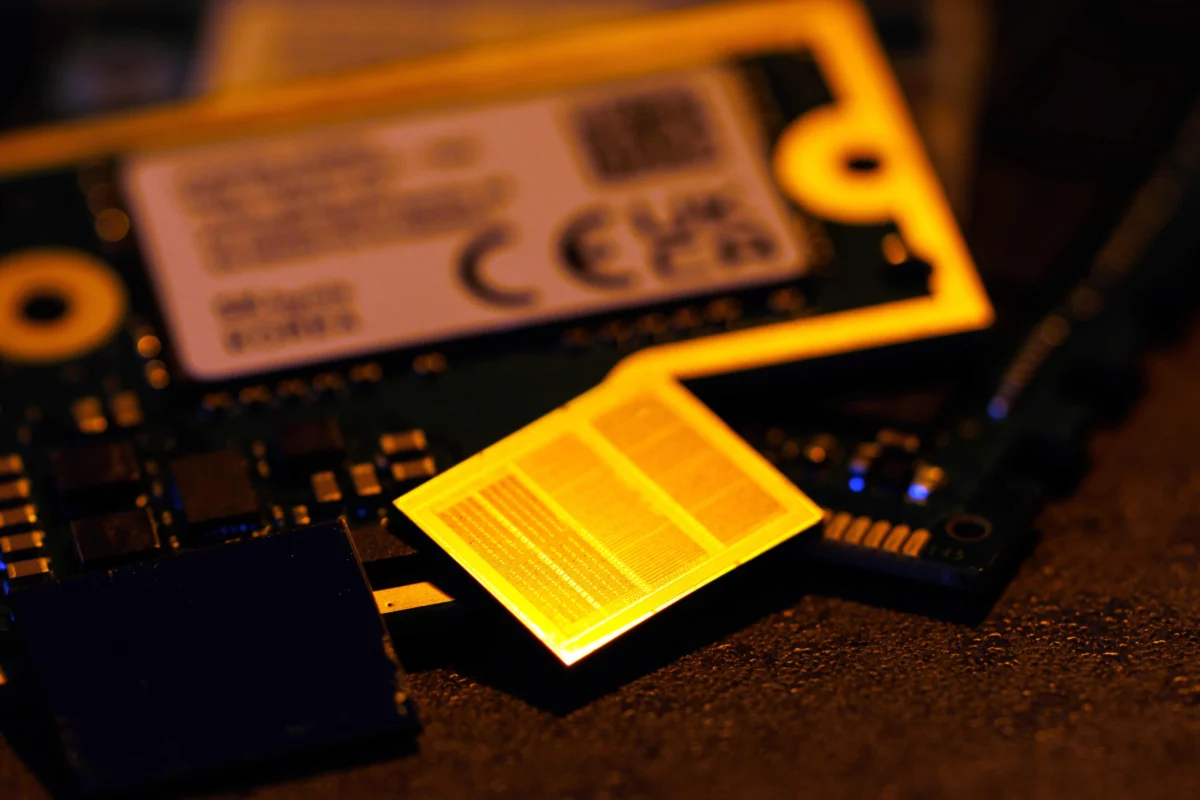
South Korea, a global powerhouse in advanced manufacturing and technology, is currently experiencing an unparalleled surge in its semiconductor exports, providing an immense boost to Asia’s fourth-largest economy and propelling overall export figures to record highs. This frenetic pace, however, while celebratory on the surface, has ignited a nuanced debate among economists and policymakers regarding the sustainability of such concentrated growth and the potential vulnerabilities it introduces to the broader economic landscape. The nation’s stock market, increasingly viewed as a bellwether for global AI sentiment, is grappling with significant volatility, fueled in part by speculative investments in the chip sector, as major players like SK Hynix Inc. and Samsung Electronics Co. continue to push the boundaries of memory technology, exemplified by cutting-edge innovations such as the 12-layer HBM4E memory chips on LPDDR5X CAMM2 modules, which were showcased by SK Hynix in Seongnam, South Korea, with an eye towards future production and deployment by July 2026.
The Unprecedented Surge in Semiconductor Exports
The latest data from the Ministry of Trade, Industry and Resources (MOTIR) paints a striking picture of this semiconductor-driven boom. In August, South Korea’s semiconductor exports skyrocketed by an astonishing 209% from a year earlier, reaching an all-time high of $46.65 billion. This colossal figure alone accounted for a dominant 47.5% of the country’s total goods exports, which stood at $98.25 billion for the month. This level of concentration underscores the pivotal role that the semiconductor industry now plays in South Korea’s export-oriented economy, a trend that has accelerated rapidly over the past year. Jeff Ng, head of Asia macro strategy at Sumitomo Mitsui Banking Corporation, highlighted the sheer magnitude of this impact, estimating that semiconductor exports alone contributed nearly 80% of the overall export growth observed in August. He further noted that the broader export expansion was primarily driven by chips, computers, and a global uptick in petroleum product prices, reflecting both high-tech demand and commodity market shifts.
This recent performance follows a period of significant volatility in the global chip market. After a protracted downturn in 2022 and early 2023, characterized by oversupply and weakening demand for conventional memory chips, the industry has staged a dramatic recovery. The resurgence began to gain momentum in late 2023 and accelerated sharply into 2024, largely on the back of the burgeoning artificial intelligence (AI) revolution. South Korea, home to two of the world’s largest memory chip manufacturers, SK Hynix and Samsung Electronics, has been exceptionally positioned to capitalize on this renewed demand, particularly for high-bandwidth memory (HBM) and advanced DDR5 modules crucial for AI accelerators.
Driving Forces: The Global AI Revolution
The primary catalyst behind this unprecedented demand is the global proliferation of artificial intelligence, particularly generative AI and large language models (LLMs). Companies like Google and Amazon, alongside other major cloud service providers and tech giants, are engaged in a massive expansion of their AI infrastructure. This requires enormous capital expenditure on specialized hardware, including powerful Graphics Processing Units (GPUs) and, critically, high-performance memory chips that can process vast datasets at incredible speeds. High-Bandwidth Memory (HBM) chips, stacked vertically to achieve greater data transfer rates and lower power consumption, have become indispensable components in AI servers and accelerators. SK Hynix and Samsung Electronics are at the forefront of HBM development and production, holding dominant market shares. The image caption referencing 12-layer HBM4E memory chips for 2026 highlights the continuous innovation and the long-term investment cycles inherent in this high-stakes industry, projecting sustained demand for ever more sophisticated memory solutions. The global AI market is projected to grow from hundreds of billions of dollars to trillions within the next decade, ensuring that the demand for the foundational hardware will remain robust for the foreseeable future.
Key Players and Strategic Investments
SK Hynix and Samsung Electronics are not merely beneficiaries of this trend; they are active architects of the future of AI memory. Both companies have poured billions into research and development, as well as capital expenditure to expand production capacities for advanced memory solutions. SK Hynix, in particular, has positioned itself as a leader in HBM technology, securing significant supply contracts with major AI chip developers. Samsung, with its diversified semiconductor portfolio encompassing logic, foundry, and memory, is also aggressively scaling up its HBM production and developing next-generation technologies.
The HBM4E mentioned in the introductory caption represents the evolution beyond current HBM3 and HBM3E standards, promising even greater bandwidth and capacity. The transition to advanced packaging technologies, such as those used for LPDDR5X CAMM2 modules (Compression Attached Memory Module 2), indicates a move towards more compact, high-performance memory solutions for various computing platforms, including AI-powered laptops and specialized edge devices. These strategic investments and technological advancements are critical for South Korea to maintain its competitive edge in a global semiconductor market that is becoming increasingly complex and geopolitically sensitive.
A Two-Speed Economy: Beneath the Surface
While the semiconductor sector basks in unprecedented prosperity, a closer examination reveals a more complex and potentially concerning economic reality for South Korea: a widening disparity between its booming tech sector and other, more traditional industries. Dave Chia, an economist at Moody’s Analytics, articulated this concern, stating that "a gradual slowdown would be manageable. An abrupt stall is a different matter, because the economy already runs at two speeds, and the sectors that would need to take up the slack are the ones under pressure today." This "two-speed economy" refers to the stark contrast between the hyper-growth of semiconductors and the struggles faced by other historically significant export pillars.
The automotive industry, a cornerstone of South Korean manufacturing and exports, provides a salient example of these challenges. Automobile exports experienced a significant decline of 29.8% from a year earlier in August. While the Ministry of Trade, Industry and Resources attributed a substantial portion of this decline to seasonal factors like summer holiday timing and partial labor strikes, analysts like Chia point to more persistent structural headwinds. These include escalating U.S. tariffs on imported vehicles and a growing trend among South Korean automakers to shift production towards plants located in North America, driven by factors such as geopolitical considerations, trade agreements, and incentives from foreign governments. Beyond automobiles, other traditional sectors like petrochemicals and shipbuilding have also faced varying degrees of pressure from global competition, shifting supply chains, and evolving environmental regulations.
This sectoral imbalance raises questions about the resilience of the South Korean economy in the event of a future slowdown in the semiconductor market. A downturn in the chip cycle, historically prone to significant fluctuations, could have disproportionate effects if other industries are not robust enough to compensate for the slack.
Monetary Policy and Inflationary Pressures
Adding another layer of complexity to South Korea’s economic management is the current monetary policy stance of the Bank of Korea (BOK). In August, the BOK raised its base rate to 3%, marking its second consecutive hike. This decision was primarily driven by concerns over elevated core inflation, which has remained stubbornly high despite efforts to temper price pressures. The central bank’s mandate is to ensure price stability, and as such, it has been compelled to tighten monetary conditions.
However, this policy creates a delicate balancing act. As Chia warned, if chip demand cools while monetary policy is still tightening, "the windfall fades when domestic demand isn’t strong enough to take over." In such a scenario, the economy could find itself caught between a shrinking external demand from semiconductors and a constrained domestic demand due to higher borrowing costs and reduced consumer spending power. This highlights a significant policy dilemma: how to manage inflation without inadvertently stifling growth in non-chip sectors that are already struggling to gain traction. The BOK’s August monetary policy decision did acknowledge a "gradually accelerating" recovery in consumption, suggesting some underlying strength in domestic demand, but the extent to which this can offset a potential chip downturn remains a critical question.
Expert Perspectives on Sustainability and Risk
The ongoing debate among economists largely revolves around whether South Korea’s heavy reliance on semiconductors constitutes an "over-reliance" or a strategic specialization. While Jeff Ng from Sumitomo Mitsui Banking Corporation highlights the unprecedented concentration of growth in chips, other experts offer a more nuanced view. Homin Lee, a senior macro strategist at Swiss private bank Lombard Odier, argues against characterizing it as "over-reliance." He contends that South Korea possesses other cyclical sectors that tend to perform well when the broader global economy is robust. These sectors, including petrochemicals, general machinery, displays, and certain segments of electronics (beyond core semiconductors), could potentially provide a cushion if the semiconductor momentum were to fade. Lee suggests that if these other sectors perform adequately, South Korea could still sustain annual real growth of around 2% to 3%.
Despite the long-term structural concerns, the near-term base cases for analysts generally remain positive. SMBC’s Ng anticipates that overall export growth will stay positive over the next 12 months, although he expects some moderation due to base effects from previous strong performance and a stabilization in prices. This outlook suggests that the immediate boom is likely to continue, albeit potentially at a less frenetic pace. However, the core challenge for policymakers will be to leverage the current semiconductor prosperity to foster greater diversification and strengthen the foundational resilience of the entire economy.
Government Strategy and Future Outlook
The South Korean government has consistently emphasized the importance of its semiconductor industry as a strategic national asset. Initiatives include significant tax incentives for chipmakers, substantial investments in research and development, and programs aimed at cultivating a highly skilled workforce to support the advanced manufacturing sector. However, alongside this support for the leading industry, there is also a recognized need to nurture other growth engines and address the vulnerabilities of the "two-speed economy." Efforts towards innovation in biotechnology, renewable energy, and other high-tech areas are underway, though these sectors are yet to achieve the scale and global dominance of semiconductors.
The future trajectory of South Korea’s economy will largely depend on its ability to navigate the inherent volatility of the global semiconductor market while simultaneously fostering a more balanced and diversified economic structure. Geopolitical factors, including ongoing trade tensions and the global race for technological supremacy, will also play a crucial role in shaping the operating environment for its key industries. The remarkable success of its chip industry offers a powerful springboard, but the challenge lies in ensuring that this prosperity translates into broad-based, sustainable growth for all sectors of the economy, rather than creating a singular point of dependency.
The current semiconductor boom represents a golden opportunity for South Korea to solidify its position as a global technology leader and generate substantial wealth. However, it also serves as a stark reminder of the complexities of managing an export-driven economy in an increasingly interconnected and volatile world. The cautious optimism expressed by economists, coupled with the BOK’s vigilant stance on inflation, underscores the delicate balance required to capitalize on the present windfall while prudently preparing for future economic cycles and structural shifts.