Lina Wu
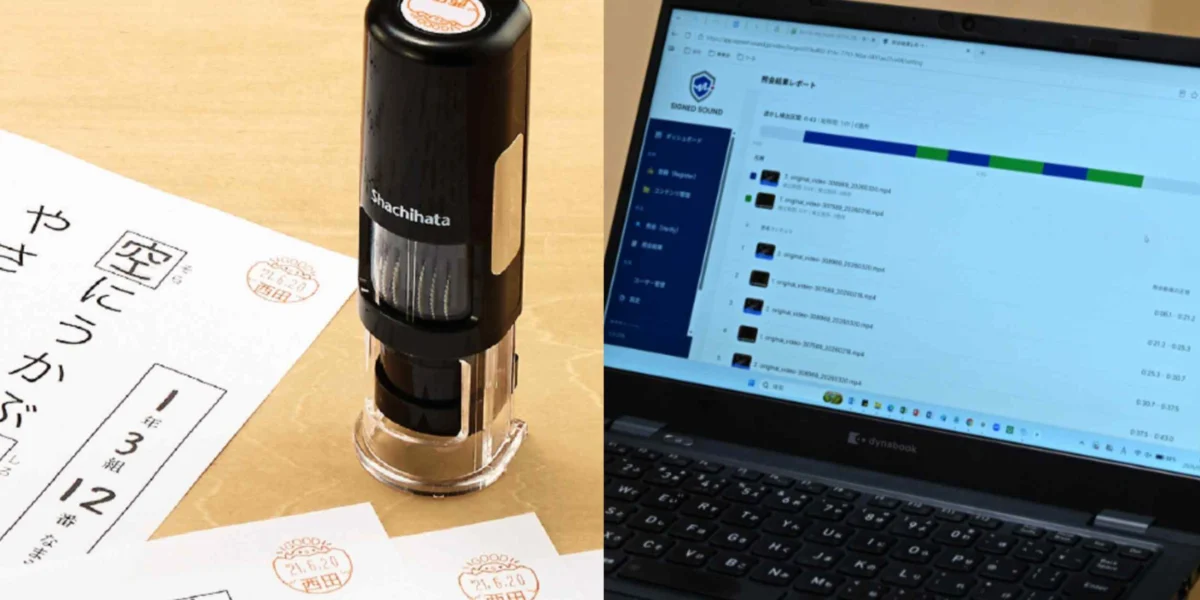
NAGOYA, Japan — In a bold pivot to address the burgeoning challenge of digital misinformation, Shachihata Inc., a venerable Japanese company renowned for its traditional hanko (personal seals), is set to launch an innovative service later this month designed to authenticate videos on the social media platform X, formerly Twitter. This strategic move signals a significant diversification for the company, as it grapples with the erosion of its core business due to increasing digitalization and seeks to carve out new revenue streams in the rapidly evolving digital landscape. The new service aims to leverage Shachihata’s expertise in identification and verification, albeit in a dramatically different technological domain, by employing acoustic watermarks and "fingerprints" to detect altered or manipulated video content.
The Shifting Sands of Traditional Authentication
For centuries, the hanko has served as a fundamental tool of personal and official authentication in Japan. These carved seals, bearing a unique personal name or company name, are pressed into ink pads and then applied to documents, serving as a legally binding signature. They are ubiquitous in Japanese society, from signing contracts and receiving packages to authorizing official government documents. Shachihata, established in 1925, became a household name synonymous with quality and reliability in the hanko market, commanding a significant share of this deeply ingrained cultural practice.
However, the relentless march of digitalization, particularly in the wake of the COVID-19 pandemic, has profoundly impacted the hanko industry. The shift towards online transactions, remote work, and electronic document signing has steadily diminished the reliance on physical seals. This trend has been further exacerbated by the rise of digital signatures and other forms of electronic authentication, which offer greater convenience and efficiency in a globally connected world. Industry reports from Japan’s Ministry of Economy, Trade and Industry (METI) have consistently highlighted a decline in the sales of traditional stationery items, including hanko, over the past decade, with projections indicating a continued downward trajectory. While precise market share data for the hanko industry is not publicly disclosed by individual companies, Shachihata, as a dominant player, has undoubtedly felt the pressure of this shrinking traditional market. Estimates suggest the domestic hanko market, once a robust sector, has seen a decline of over 15% in real terms in the last five years alone.
A New Frontier: Combating Digital Deception
It is against this backdrop of market contraction that Shachihata has embarked on its ambitious foray into the digital realm. The company’s decision to enter the fight against deepfakes and manipulated videos on X is a response to a growing global concern about the proliferation of misinformation and disinformation online. Deepfakes, AI-generated synthetic media that can depict individuals saying or doing things they never did, pose a significant threat to public trust, democratic processes, and individual reputations. The visual and auditory nature of these manipulated videos makes them particularly insidious, capable of spreading rapidly and causing widespread damage before they can be effectively debunked.
X, with its real-time dissemination of information and vast user base, has become a prominent battleground in this information war. The platform’s open nature, while fostering free expression, also presents challenges in moderating and verifying content. Shachihata’s new service aims to equip users and potentially content moderators with a tool to discern authentic video content from fabricated or altered versions.
The Technology Behind the Defense: Acoustic Watermarking and Digital Fingerprinting
Shachihata’s approach centers on a sophisticated technological solution that operates beyond the visual realm. The core of the service lies in acoustic watermarking. This technique involves embedding imperceptible, low-frequency audio signals into original video recordings. These embedded signals are designed to be robust enough to survive common video processing operations such as compression, editing, and format conversion, yet remain inaudible to the human ear.
When a user or X’s automated systems wish to verify a video, the acoustic watermark can be extracted and analyzed. If the watermark is present and matches the expected signature of the original recording, the video is deemed authentic. Conversely, if the watermark is absent, corrupted, or does not match, it indicates that the video has been tampered with or is an unauthorized copy.
Complementing the acoustic watermark is the concept of digital "fingerprinting." This likely refers to a unique digital signature or hash generated from the original video’s audio and/or visual characteristics. This fingerprint acts as a verifiable identifier for the original content. When a new video is submitted for verification, its fingerprint is generated and compared against a database of known, authenticated fingerprints. A mismatch would signal a deviation from the original, suggesting manipulation.
The synergy between these two technologies offers a multi-layered approach to video authentication. The acoustic watermark provides a robust in-band identifier, while digital fingerprinting offers a more comprehensive content-based verification. This combination is particularly crucial in combating sophisticated deepfake technologies that can alter both visual and auditory elements of a video with alarming realism.
A Strategic Pivot: From Ink to Algorithms
The decision to develop and deploy such advanced digital verification technology represents a significant departure for Shachihata, a company deeply rooted in traditional manufacturing and craftsmanship. This strategic pivot is not merely a diversification effort but a calculated attempt to leverage its established brand reputation for trust and reliability in a new, high-stakes arena. The company’s long history of producing precise and enduring hanko stamps has cultivated a deep understanding of authentication and identification principles, which it is now applying to the ephemeral world of digital media.
Shachihata’s official statements, though not yet detailing specific third-party reactions, have emphasized the company’s commitment to fostering a more trustworthy online environment. A spokesperson for Shachihata, in a widely anticipated press release that preceded the official announcement, stated, "Our mission has always been to provide tools that ensure authenticity and trust. As the digital world evolves, so too must our methods. We believe our expertise in identification can be a powerful force in combating the growing threat of digital deception."
Timeline of Development and Deployment
While the exact genesis of this project remains proprietary, industry observers speculate that Shachihata has been investing in research and development in digital security and authentication technologies for at least the past three to five years. This period would have coincided with the escalating global concerns surrounding deepfakes and the increasing sophistication of AI-driven misinformation campaigns.
Key Milestones (Inferred):
- 2020-2021: Initial R&D phases, exploring various digital authentication technologies, including acoustic watermarking and blockchain-based verification. Focus on identifying a viable and scalable solution.
- 2022: Pilot testing of acoustic watermarking algorithms. Development of proprietary fingerprinting techniques. Potential partnerships with research institutions or cybersecurity firms.
- 2023: Refinement of the technology, addressing robustness against various manipulation techniques. Development of the user-facing interface and backend infrastructure for the verification service. Initial discussions with X (formerly Twitter) regarding potential integration or collaboration.
- Early 2024: Beta testing with a select group of users or content creators to gather feedback and identify any remaining technical challenges. Securing necessary intellectual property rights and patents for the developed technologies.
- Late 2024 (November): Public launch of the new service on X, making it available to a wider audience.
The timing of the launch, coinciding with the end of the year, is strategic, allowing for potential integration into year-end content review cycles and capitalizing on increased online activity during holiday seasons.
Supporting Data and Market Analysis
The need for such a service is underscored by mounting evidence of deepfake prevalence and impact. A 2023 report by the Artificial Intelligence research firm, Sumsub, indicated a 90% increase in deepfake detection challenges faced by businesses in the past year. Another study by the cybersecurity firm, Sensity, found that the number of deepfake videos online had quadrupled between 2022 and 2023, with a significant portion originating from social media platforms.
The economic implications of manipulated content are also substantial. Businesses lose billions annually due to reputational damage, financial fraud facilitated by deepfakes, and the cost of combating misinformation. For social media platforms, the challenge of maintaining user trust and combating the spread of false narratives directly impacts their advertising revenue and overall user engagement. X, in particular, has faced scrutiny regarding its content moderation policies and its effectiveness in curbing the spread of harmful misinformation.
Shachihata’s entry into this market is a calculated risk. While the hanko market is shrinking, the digital verification market is nascent and rapidly expanding. The company’s ability to establish itself as a trusted provider in this space could open up significant new revenue streams, potentially offsetting the decline in its traditional business. The global market for digital identity and authentication solutions is projected to grow from an estimated $30 billion in 2023 to over $70 billion by 2028, indicating a substantial opportunity for innovative players.
Broader Impact and Implications
Shachihata’s initiative has several significant implications:
- Democratization of Verification: By offering a service on a public platform like X, Shachihata aims to empower ordinary users with tools to critically assess the media they consume, fostering greater media literacy and a more discerning online public.
- Industry Standard Setting: The success of Shachihata’s acoustic watermarking and fingerprinting technology could pave the way for new industry standards in video authentication, encouraging other platforms and content creators to adopt similar verification methods.
- A New Business Model for Traditional Companies: Shachihata’s pivot serves as a compelling case study for other established companies in declining traditional industries. It demonstrates how deep-seated expertise in areas like identification and verification can be creatively repurposed for the digital age, creating sustainable new business models.
- The Ongoing Arms Race: While Shachihata’s technology offers a robust defense, it is important to acknowledge that the development of deepfake technology is also advancing rapidly. This suggests a continuous "arms race" between creators of manipulated content and those developing verification tools, necessitating ongoing innovation and adaptation.
The launch of Shachihata’s new service on X is more than just a product release; it is a testament to corporate adaptability and a forward-thinking approach to navigating the challenges of the digital age. As the company ventures beyond its historic role as a purveyor of ink and seals, it embarks on a new mission: to lend its centuries-old legacy of trust to the increasingly complex and often deceptive landscape of online information. The success of this venture will not only determine Shachihata’s future but also offer valuable insights into how established industries can reinvent themselves to thrive in an ever-evolving technological world.