Tari Putri Malika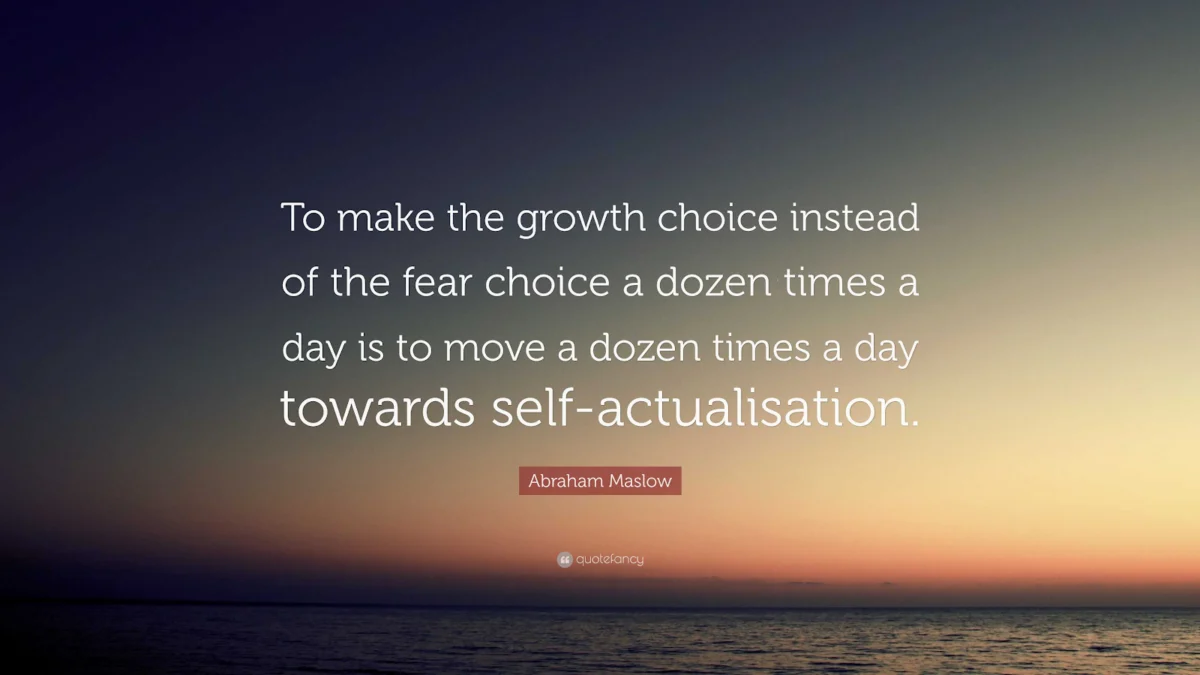
The landscape of financial markets in late 2026 has undergone a fundamental transformation, driven not only by the rapid integration of advanced artificial intelligence but also by a deepening understanding of the psychological frameworks that dictate trader success and failure. As market participants navigate a year characterized by extreme volatility and shifting regimes—moving from the AI-led momentum of the first half of the year to a more fragmented, cyclical environment in the fourth quarter—professional psychologists and performance coaches are identifying a critical divergence between traders motivated by personal growth and those driven by "deficit" needs. This distinction, rooted in the humanistic psychology of Abraham Maslow, is now being cited as the primary determinant of longevity in a sector where traditional roles are being displaced by automation and machine learning.
The Psychological Core: Growth vs. Deficit Motivation
Central to the current discourse on market performance is the application of Maslow’s theory of motivation to the high-stakes environment of electronic trading. In 2026, the industry has observed that technical proficiency is frequently secondary to the underlying psychological "why" of the participant. Traders operating under "growth motivation" view the market as a laboratory for mastery, where new challenges and even financial setbacks serve as catalysts for skill acquisition. For these individuals, Profit and Loss (P/L) statements are viewed as lagging indicators of competency rather than reflections of personal worth.
Conversely, a significant segment of the retail and institutional population remains trapped in "deficit motivation." These participants often approach the markets to compensate for perceived personal shortcomings or lack of success in other life domains. For this demographic, market losses are not merely financial events; they are perceived as existential threats and validations of inadequacy. Industry data suggests that traders operating from a deficit perspective are 60% more likely to engage in revenge trading or emotional reactivity following a drawdown. Experts argue that until a trader addresses these internal deficits, tactical interventions like "trading discipline" act as temporary solutions to systemic psychological issues.
Chronology of Market Adaptation in 2026
The year 2026 has served as a masterclass in market regime shifts, forcing a rapid evolution in how traders perceive and interact with price action. The following timeline outlines the pivotal shifts that have defined the current trading environment:
- January – June 2026: A period of sustained momentum dominated by artificial intelligence and semiconductor equities. Trend-following strategies yielded record returns as "headline risk" remained low and institutional inflows into AI-integrated firms were consistent.
- July – August 2026: A significant market pullback triggered by rising interest rate regimes and a cooling of the initial AI euphoria. The transition from "stable" to "volatile" rates caught many relative-value traders off guard, leading to widespread "blowouts" in fixed-income and equity portfolios.
- September 2026: The emergence of a "cycling" market. The smooth trends of the first half were replaced by choppy, mean-reverting action. Many traders failed to adapt, continuing to apply breakout strategies to a market that was effectively trading in short-term ranges.
- October 2026: A renewed focus on "Solution-Focused Trading." Performance coaches began emphasizing the identification of the "Trade of the Day" to help participants recognize when market regimes have changed. By studying the best-performing moves regardless of participation, traders began to recalibrate their systems to the new, more tactical reality.
The Impact of Artificial Intelligence on Professional Roles
The integration of AI has moved beyond mere data scraping into the realm of autonomous decision-making. In the final quarter of 2026, major trading firms have reported a notable "shrinking" of team sizes. Roles traditionally held by junior analysts and trading assistants—such as news synthesis, basic backtesting, and strategy optimization—are now being performed by AI engines with higher precision and lower latency.
However, this technological leap has introduced a new psychological paradox. As AI engines take over the discretionary role of the trader, the "reward" of trading is changing. When a machine generates the insights and executes the trades, the human participant often experiences a diminishment in the sense of personal mastery that previously fueled their motivation. This "discretionary erosion" is becoming a leading cause of burnout among veteran traders who find the lack of creative input psychologically unfulfilling. Furthermore, the scope of the individual trader is expanding; an equity trader in 2026 is now often a "portfolio manager" by default, using AI to scan multiple asset classes including currencies, commodities, and interest rates simultaneously to maintain an edge.
Strategic Constraints and the Overtrading Epidemic
One of the most persistent challenges identified in 2026 is overtrading, a phenomenon now being linked to a lack of creative constraints. Drawing on the philosophies of Orson Welles—who famously stated that "the absence of limitations is the enemy of art"—market theorists are advocating for strict trade limits to force higher-quality decision-making.
In a market where commission-free trading and high-speed execution are the norms, the "fear of missing out" (FOMO) often leads to a series of low-conviction trades. Industry analysts compare this to "one-night stands" in social dynamics: plenty of activity, but no cumulative growth. By limiting an active trader to just two or three trades per day, the trader is forced to "drill down" and identify the highest-probability opportunities. This forced scarcity encourages innovation and discipline, turning the act of trading back into a craft rather than a compulsive reaction to price movement.

Scaling Operations: Breadth over Magnitude
As traders find success in the volatile 2026 environment, the challenge of "scaling up" has come to the forefront. Historical data from this year shows that simply increasing position size often leads to a reversion to "rookie mistakes" as the emotional weight of the trade increases.
The emerging consensus among top-tier performers is that "breadth" should precede "size." Rather than doubling the risk on a single momentum strategy, successful traders are diversifying into uncorrelated patterns—such as mean reversion or relative value—across different sectors or market caps. This approach builds a "consistency cushion." Once a trader achieves a high Sharpe ratio through breadth, gradual increases in sizing can be implemented across the entire portfolio. This ensures that no single trade "feels" different, preserving the psychological equilibrium necessary for long-term survival.
The Physicality of Performance: Self-Care as a Metric
A significant but often overlooked trend in 2026 is the emphasis on physical self-care as a prerequisite for cognitive performance. The sedentary nature of modern trading—characterized by hours at high-resolution monitors and ergonomic strain—has been linked to a "stagnation of energy" that clouds judgment.
Market psychology sessions in October 2026 have highlighted that "the absence of negatives (fear/greed) is not enough; the presence of positives (energy/inspiration) is required for peak performance." There is a growing movement toward treating the trader’s body with the same rigor as a professional athlete’s. Proper sleep hygiene, nutritional optimization, and physical therapies like massage are no longer viewed as luxuries but as essential components of a trading business. Data suggests that traders who prioritize physical well-being report higher levels of resilience during drawdowns and a greater ability to remain "grounded" during periods of extreme market stress.
Technical Adaptation: Moving from Strategic to Tactical
In the current market regime, the "strategic" trend-following that defined the early 2020s has become less effective. The focus has shifted to "tactical" execution using advanced volume-based analytics. Many professionals are now utilizing volume-denominated bars—where a new candle is formed based on a specific number of contracts traded (e.g., 50,000 contracts) rather than a set time interval.
This method "normalizes" market activity, revealing cycles that are often invisible on traditional time-based charts. By observing how shorter-term cycles (lower volume bars) interact with longer-term cycles (higher volume bars), traders are finding entry and exit points that allow them to navigate the "choppy" markets of late 2026. The shift from seeking "smooth trends" to "trading the cycle" represents a fundamental maturation of the retail trading community.
Broader Impact and Future Implications
The developments of late 2026 suggest that the "trader of the future" will be less of a chart-reader and more of a psychological and technological orchestrator. The barriers to entry in terms of capital and technology have lowered, but the barrier to entry in terms of psychological maturity has never been higher.
As AI continues to commoditize alpha, the only remaining edge lies in the human ability to adapt to changing regimes, maintain physical and mental health, and operate from a position of growth rather than deficit. The industry is moving toward a model where "doing less is doing better," and where the most successful participants are those who view their trading struggles not as obstacles, but as the very path to their professional evolution. The "solution-focus" remains the primary tool for survival: by identifying what works in the present moment and discarding what worked in the past, traders can remain relevant in an era where the only constant is the accelerating pace of change.