Gilang Muhammad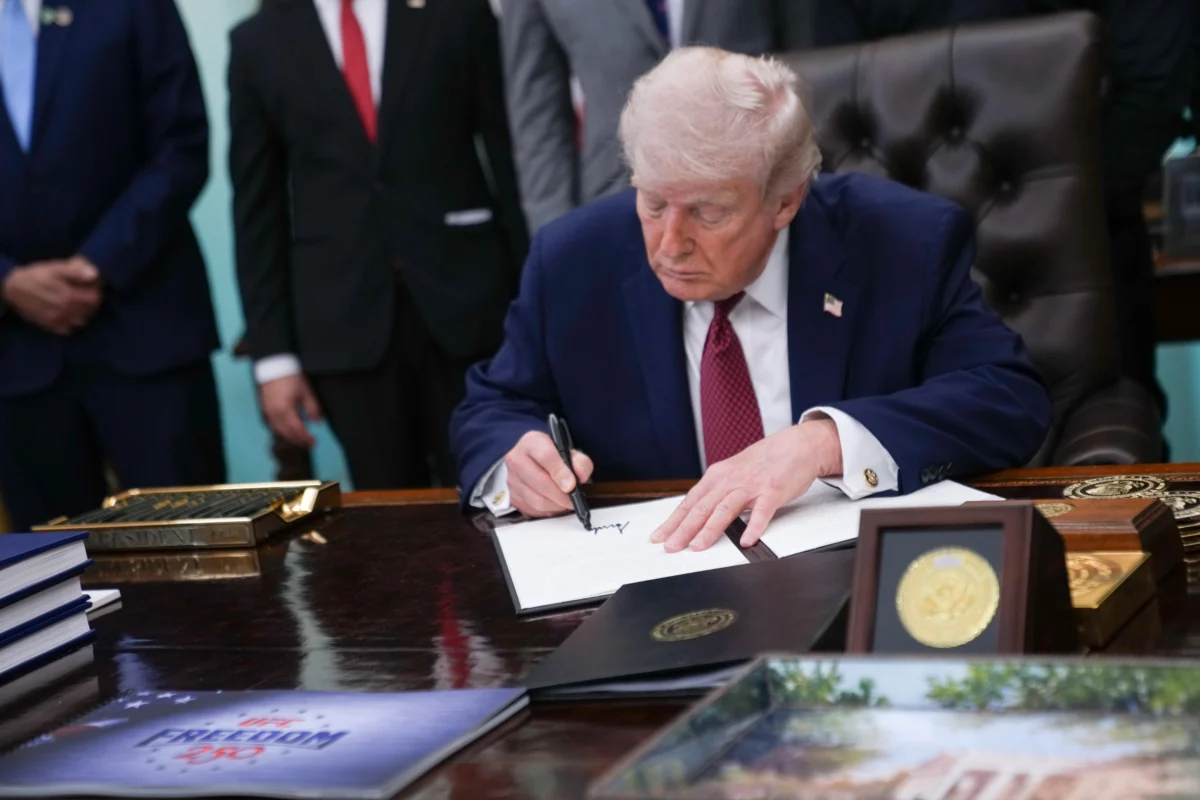
President Donald Trump announced a new, phased tariff schedule targeting imported generic drugs, commencing with a two-year period of zero tariffs before escalating significantly to compel pharmaceutical manufacturers to relocate production to the United States. This move, communicated via a social media post on Tuesday, August 5, 2026, marks a critical expansion of the administration’s "America First" agenda into the crucial healthcare sector, aiming to bolster domestic supply chains and reduce reliance on foreign manufacturing for essential medicines. The announcement follows a separate, albeit related, action taken by the President on Saturday, April 18, 2026, when he signed an executive order in the Oval Office at the White House in Washington, D.C., mandating research into the effects of psychedelic drugs in medical treatment for veterans, indicating a multi-faceted approach to healthcare policy innovation and reform.
A New Tariff Framework for Generic Pharmaceuticals
Under the newly announced policy, generic drugs imported into the U.S. will initially face zero tariffs for two years, starting on August 1, 2026. This grace period is designed to provide generic drugmakers with a window to assess and initiate plans for establishing manufacturing facilities within the United States. However, the policy outlines a dramatic escalation: a 100% levy will take effect in August 2028, further rising to 200% a year later in August 2029. President Trump explicitly described this escalating tariff structure as "a penalty" for companies that fail to build plants and facilities in the U.S. within the stipulated grace period, underscoring the administration’s firm stance on reshoring pharmaceutical production.
Crucially, the President clarified that tariffs on patented and branded drugs will remain unchanged. This distinction is vital, as the administration had previously imposed a 100% levy on patented pharmaceutical products and ingredients under Section 232 of the Trade Expansion Act of 1962, effective April 2, 2026. This earlier action, justified on national security grounds due to vulnerabilities in the pharmaceutical supply chain, initially exempted generic drugs, biosimilars, and related ingredients. Larger drugmakers were granted 120 days before the 100% tariff rate on patented products went into effect, while smaller drugmakers, often reliant on contract manufacturers, were given 180 days. The new policy specifically targets generics, closing what some might perceive as a loophole in the broader strategy to secure domestic drug supply.
Background: Trump’s Broader Pharmaceutical Policy Offensive
The latest tariff announcement is not an isolated measure but rather a continuation and intensification of President Trump’s comprehensive strategy to reform the pharmaceutical industry and reduce drug prices in the United States. His administration has consistently advocated for policies aimed at lowering healthcare costs, promoting domestic manufacturing, and challenging the global pharmaceutical pricing structure.
One of the cornerstone policies preceding this generic drug tariff was the "most favored nation" policy, unveiled on May 12, 2025. This initiative sought to tie U.S. drug prices to the lower prices observed in other high-income countries, effectively compelling pharmaceutical companies to charge Americans no more than patients in other nations. As part of this policy, several major drugmakers, including industry giants like Eli Lilly, Pfizer, and Novo Nordisk, struck deals with the Trump administration by December 19, 2025. These agreements involved commitments from the companies to lower the prices of both new and existing medicines in exchange for a three-year exemption from tariffs. This approach demonstrated the administration’s willingness to use both the carrot (tariff exemptions for compliance) and the stick (tariff threats for non-compliance) to achieve its policy objectives.
The initial imposition of 100% tariffs on patented pharmaceutical products and ingredients under Section 232 on April 2, 2026, marked a significant escalation. Section 232 allows the President to impose tariffs on imports if the Commerce Department finds that those imports threaten national security. The administration’s rationale for applying this to pharmaceuticals stemmed from concerns about the nation’s over-reliance on foreign suppliers for critical medicines and active pharmaceutical ingredients (APIs), particularly those from geopolitical rivals. The COVID-19 pandemic had starkly exposed these vulnerabilities, revealing how disruptions in international supply chains could jeopardize access to essential drugs, diagnostics, and medical supplies. This experience likely reinforced the administration’s resolve to push for greater pharmaceutical independence.
The Global Generic Drug Landscape and Stakeholder Implications
The new generic drug tariffs carry profound implications, particularly for countries that serve as major global hubs for generic pharmaceutical production. India, often dubbed the "pharmacy of the world," stands to be significantly affected. Indian pharmaceutical companies supply nearly 50% of all generic medicines consumed in America, making the U.S. market a critical destination for their exports. Annually, the U.S. accounts for approximately a third of India’s total pharmaceutical exports, predominantly comprising cheaper, off-patent versions of popular drugs. The prospect of escalating tariffs poses an existential threat to this established trade relationship and could force Indian drugmakers to make difficult strategic decisions regarding their U.S. market presence.
Similarly, Chinese firms dominate the upstream supply of active pharmaceutical ingredients (APIs), which are the biologically active components of a drug. Products like amoxicillin (a common antibiotic) and heparin (an anticoagulant) are heavily reliant on Chinese API manufacturing. While the new tariffs directly target finished generic drugs, a broader push for domestic manufacturing will inevitably impact the entire supply chain, including API production. If generic drugmakers are forced to reshore, they would ideally need a domestically secure API supply as well, further challenging the current global manufacturing paradigm.
Inferred Reactions and Analysis of Implications
The announcement is expected to elicit a range of reactions from various stakeholders:
U.S. Administration and Proponents: The Trump administration will likely frame this policy as a decisive step towards achieving pharmaceutical independence, enhancing national security, and creating high-paying manufacturing jobs within the U.S. They will emphasize the long-term benefits of a resilient supply chain, capable of withstanding future pandemics or geopolitical crises. Supporters will argue that the two-year grace period offers ample time for companies to adapt, and that the "penalty" tariffs are necessary to ensure compliance with the reshoring objective.
Generic Pharmaceutical Industry (Domestic and International):
- Concerns: Generic drugmakers, particularly those heavily invested in overseas production, will likely express significant concerns. Relocating complex manufacturing facilities to the U.S. involves enormous capital investment, navigating stringent U.S. regulatory processes (FDA approvals for new facilities), and facing higher labor and operational costs. The timeline of two years for establishing new plants and gaining regulatory clearance is exceptionally aggressive for an industry with long lead times for facility construction and validation.
- Potential for Price Increases: A primary concern is that the increased cost of domestic production, coupled with the tariffs, could lead to higher generic drug prices for American consumers. Generic drugs are vital for affordability and access, accounting for roughly 90% of prescriptions filled in the U.S., while representing only about 20% of total drug spending due to their significantly lower cost compared to branded counterparts. Any policy that threatens this affordability could face strong opposition from patient advocacy groups and healthcare providers.
- Market Consolidation: Smaller generic drug manufacturers might struggle to absorb the costs of reshoring or tariffs, potentially leading to market consolidation as larger players acquire or outcompete them.
- Supply Chain Disruption: In the short to medium term, the transition could lead to temporary supply chain disruptions as companies reconfigure their operations, potentially impacting the availability of certain critical generic medicines.
International Governments (India, China, etc.):
- India: The Indian government is expected to react strongly, likely expressing diplomatic protests and seeking exemptions or alternative solutions. India’s pharmaceutical industry is a significant contributor to its economy and a key foreign exchange earner. The tariffs could severely impact Indian pharma companies, potentially leading to job losses and reduced export revenues. India might explore diversifying its export markets or engaging in bilateral negotiations to mitigate the impact.
- China: While the immediate target is generic drugs, China’s dominant role in API production means it will also closely monitor the situation. A push for U.S. domestic generic production would eventually necessitate a domestic API supply, potentially reducing reliance on China. This could intensify trade tensions and prompt China to further invest in its own domestic finished drug production capabilities or seek to strengthen its position in other global markets.
Consumer Advocacy and Healthcare Groups: These groups are likely to voice strong concerns about the potential for higher out-of-pocket costs for patients and reduced access to essential generic medicines. They will emphasize the importance of affordability in healthcare and may advocate for measures to offset potential price increases, such as subsidies or stricter price controls on domestically produced generics. Healthcare providers, including hospitals and pharmacies, will also be concerned about stable supplies and the financial burden on patients.
Broader Economic and Geopolitical Impact
The new generic drug tariffs represent a significant shift in U.S. trade and industrial policy within the pharmaceutical sector.
- Economic Reshaping: If successful, the policy could lead to a substantial reshaping of the global pharmaceutical manufacturing landscape, bringing jobs and investment back to the U.S. However, it also risks increasing the cost base for generic drugs, potentially impacting overall healthcare expenditures.
- Supply Chain Resilience: The long-term goal of enhanced supply chain resilience is a compelling national security argument, especially in an era of increasing geopolitical instability and health crises. A domestic supply of essential medicines would reduce vulnerability to external shocks.
- Geopolitical Ramifications: The policy could strain trade relations with key partners and suppliers like India and potentially escalate broader economic tensions with China. It underscores a global trend towards economic nationalism and protectionism, particularly in strategic sectors.
- Innovation vs. Access: There’s a delicate balance between fostering pharmaceutical innovation (often associated with branded drugs) and ensuring widespread access to affordable medicines (the role of generics). This policy primarily addresses the latter, but its indirect effects on the overall ecosystem will be closely watched.
The executive order signed by President Trump on April 18, 2026, to research the effects of psychedelic drugs in medical treatment for veterans, while distinct from the tariff policy, highlights the administration’s broader engagement with healthcare issues. This initiative signals an openness to exploring innovative and unconventional therapeutic approaches, particularly for pressing public health challenges such as veteran mental health. It suggests a multi-pronged approach that combines economic leverage (tariffs) with scientific exploration to improve healthcare outcomes, albeit in very different domains.
As the August 1, 2026, deadline approaches for the commencement of the zero-tariff grace period, pharmaceutical companies, international governments, and healthcare stakeholders will be closely monitoring developments, strategizing their responses, and bracing for a potentially transformative period in the global generic drug market. The success of this ambitious policy will hinge on the industry’s ability and willingness to adapt, the actual costs of reshoring, and the administration’s resolve to enforce the escalating tariff schedule.