Gilang Muhammad
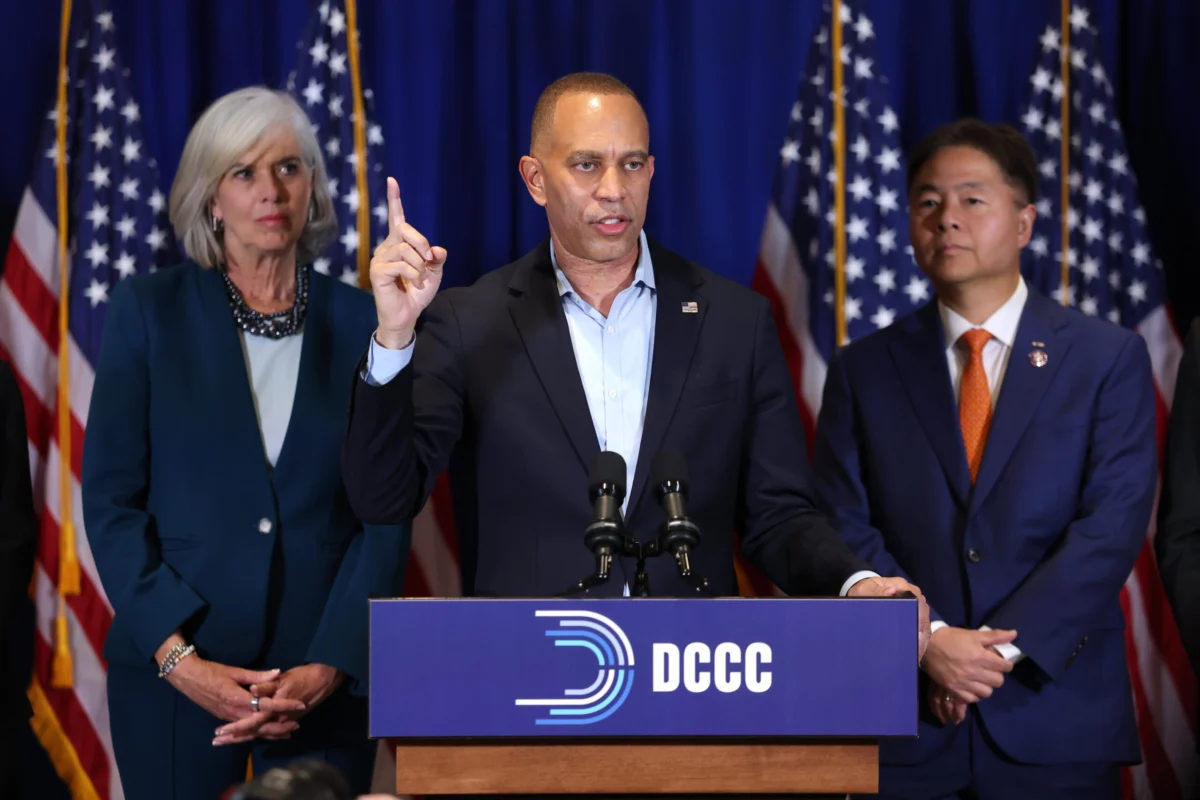
The resounding Democratic sweep in the late 2026 midterm elections, capturing majorities in both the House and Senate, alongside significant gains in gubernatorial and state-level races, has sent ripples through the political landscape. While typically signaling a mandate for policy shifts, the immediate economic implications are proving to be more nuanced and constrained than the scale of the victory might suggest. Economists and policy analysts largely concur that the biggest forces shaping the nation’s economy are unlikely to fundamentally alter simply because the party in congressional power has changed. Instead, deeply entrenched affordability pressures, escalating government spending, and an economic growth model heavily reliant on the burgeoning artificial intelligence sector are poised to persist, each carrying substantial risks.
Mark Zandi, chief economist at Moody’s Analytics, articulated a prevailing sentiment of caution, noting, "It’s in a very kind of fragile place, and I don’t know that it would take a lot to push the economy off the rails, and recession becomes a much greater risk. That isn’t the case at the moment, but I don’t think that’s gone away." Zandi’s pre-election concerns about inflation, a sputtering labor market, and escalating geopolitical dangers, particularly the ongoing conflict in Iran, remain undiminished. This assessment underscores a critical dichotomy: while the political power balance in Congress has shifted dramatically, the executive branch, led by President Donald Trump, retains significant control over key economic and foreign policy levers through executive orders, limiting the immediate legislative impact of the Democratic victories.
The Political Reconfiguration and Executive Dominance
The Democratic midterm success was unexpected in its breadth, defying historical trends and pre-election polling in many districts. This "blue wave" was fueled by voter frustration over the cost of living, healthcare access, and the perceived instability of foreign policy under the Trump administration. Victories included flipping several historically Republican House seats, securing a slim but decisive majority in the Senate, and winning key governorships in battleground states. For instance, the Democrats gained 27 seats in the House, achieving a 230-205 majority, and secured 51 seats in the Senate, including unexpected wins in Ohio and Florida. State legislative chambers also saw a significant shift, providing Democrats with increased influence over redistricting and local policy.
However, the euphoria of these legislative gains is tempered by the reality of presidential authority. President Trump, despite acknowledging the Democratic victories and expressing a willingness to "work with them," has historically demonstrated a preference for executive action over legislative compromise. As Zandi pointed out, "I don’t expect any change in economic policy. The Iran war, the tariffs and trade policy, the heavy-handed immigration policy, all are done under executive order. They’re not legislatively driven." This means that core tenets of the administration’s economic strategy – policies that Zandi believes "restrain growth and add to inflationary pressures and interest rates" – are unlikely to be reversed by congressional fiat alone.
The president’s resolve, stemming from his belief in the efficacy of these policies prior to the election, is seen as unwavering. This sets the stage for a period of potential legislative-executive gridlock, where Democratic efforts to enact their agenda on issues like social spending, environmental regulations, or healthcare expansion could be met with presidential vetoes, while the administration’s executive orders continue to shape the nation’s economic trajectory.
Persistent Economic Headwinds and Underlying Fragilities
Even amidst a period of robust top-line economic indicators, several deep-seated issues continue to pose risks, largely impervious to the recent electoral shift.
The Affordability Crisis
Foremost among these is the escalating affordability crisis. While the unemployment rate sits at a healthy 4.2% and layoffs are at their lowest levels since 1969, the purchasing power of the average American household has been significantly eroded. The Consumer Price Index (CPI) in September 2026 registered 3.7% year-over-year, a marked increase from 2.3% in April 2025 when President Trump initiated a new round of reciprocal tariffs. Crucially, this inflationary trend was exacerbated by the late February 2026 commencement of the Iran war, which saw the CPI jump from 2.4% just prior to the conflict. The war’s disruption of global oil supplies and shipping routes has caused gas prices to soar, with a gallon of regular unleaded reaching an average of $4.85 nationwide in October 2026, up from $3.20 a year prior.
This surge in energy costs, combined with inflationary pressures in food, housing, and other essential goods, has outpaced wage growth. According to the Bureau of Labor Statistics, real wage growth, adjusted for inflation, declined by 0.7% from a year ago in September 2026. This means that despite working, many Americans feel financially worse off, struggling to maintain their standard of living, a sentiment that played a significant role in the midterm election outcomes. For instance, a CNBC poll conducted in October 2026 found that 72% of respondents cited "cost of living" as their top concern, far outranking other issues like immigration or foreign policy.

Soaring Government Spending and Debt
Another critical, and seemingly intractable, challenge is the nation’s burgeoning government debt and persistent budget deficits. The national debt now stands at an unprecedented $40.5 trillion, representing an increase of over $4 trillion since President Trump began his second term in January 2025. This massive debt pile has significant implications, particularly in an environment of rising interest rates. Net interest payments on the debt totaled an astonishing $1.05 trillion in fiscal year 2026, surpassing all other federal spending categories except for Social Security and Medicare. This allocation of taxpayer money to service debt rather than invest in infrastructure, education, or research represents a substantial opportunity cost.
The U.S. ended fiscal year 2026 with a budget deficit just shy of $2 trillion, equating to approximately 6.1% of Gross Domestic Product (GDP). While some Democratic officials have signaled a renewed focus on fiscal discipline, analysts like Morgan Stanley predict that this elevated level of deficit spending is likely to persist. The structural drivers of this deficit, including an aging population, rising healthcare costs, and ongoing defense expenditures (especially with the Iran conflict), are deeply embedded and difficult to address without bipartisan consensus on significant policy changes. This fiscal trajectory raises concerns among international creditors and could, over time, impact the nation’s credit rating and the dollar’s global standing.
The AI Paradox: Growth Engine and Fragile Dependence
The artificial intelligence revolution has undeniably served as a powerful tailwind for economic growth, driving unprecedented investment and innovation. The "AI hyperscaler buildout," characterized by massive investments in data centers, advanced semiconductor manufacturing, and AI software development, has created new jobs and fueled corporate profits. Major tech companies reported record revenues and capital expenditures in 2026, with the AI sector alone contributing an estimated 0.5 percentage points to annual GDP growth. Texas, for example, has seen a surge in data center construction, attracting billions in private investment and thousands of high-tech jobs, a trend lauded by Governor Greg Abbott as essential for the state’s economic future.
However, Mark Zandi highlighted the inherent fragility within this AI-driven growth model. "The risks are decidedly to the downside because the growth is so dependent on AI, and the AI growth effects are so dependent on the equity market, and the equity market is so dependent on the valuations," he warned. This interconnected reliance creates a precarious situation where a significant correction in the highly valued tech sector, driven by investor concerns over future profitability, regulatory risks, or a general economic downturn, could have a cascading effect on the broader economy. The "labor market is not well functioning" in a way that fully captures this transformation, with significant skills gaps emerging between the demands of the AI economy and the available workforce.
Adding another layer of complexity, local opposition to the proliferation of data centers emerged as a notable, albeit secondary, issue in the midterm elections. CNBC polling indicated that while ranking below cost of living and corruption, concerns over the environmental impact (massive energy and water consumption) and aesthetic implications of these facilities spurred community activism and ballot measures in several states. For instance, referendums in Virginia and Arizona sought to impose stricter zoning laws or moratoriums on data center construction, reflecting a growing tension between economic development and local quality of life concerns. Should this opposition coalesce into broader regulatory hurdles, it could present an additional headwind to the crucial AI buildout.
The Tale of Two Economies: Macro Strength vs. Main Street Strain
The economic narrative of late 2026 is best described as a tale of two economies. On one hand, the aggregate data paints a picture of robust expansion. The U.S. economy accelerated at an impressive 3.4% annualized pace in the third quarter of 2026, propelled by strong consumer spending, which grew at 3.8%. The unemployment rate of 4.2% and near-record low layoffs (the lowest since 1969) suggest a vibrant labor market with ample job opportunities for those seeking employment. Corporate profits remained solid, with the S&P 500 reporting average earnings growth of 8% year-over-year in Q3 2026, signaling healthy business activity.
Yet, this macroeconomic strength stands in stark contrast to the lived experience of many Americans. The aforementioned 3.7% CPI inflation rate has overshadowed the positive top-line figures, creating a pervasive sense of financial unease. The Iran war, which commenced with U.S. and Israeli attacks in late February 2026, significantly exacerbated these conditions, pushing gas prices to historic highs and adding pressure to global supply chains already strained by post-pandemic recovery and geopolitical tensions. This directly contributed to the erosion of real wages, leaving households struggling to keep pace with the rising cost of everyday necessities. For the average family, a strong GDP growth number offers little comfort when their weekly grocery bill continues to climb and their paychecks buy less.
Policy Battlegrounds and Glimmers of Bipartisan Compromise
Despite the prevailing political polarization, a few areas might present opportunities for legislative-executive dialogue, even if limited.
Tariffs: A Potential Ground for Redefinition
One such area is trade policy and tariffs. President Trump’s aggressive "reciprocal tariffs," first announced in April 2025, have been a hallmark of his economic strategy, targeting a wide range of goods from U.S. trading partners. While these policies have drawn criticism for their sweeping nature and potential to disrupt global trade, there has been a noticeable shift in congressional Democratic sentiment towards more targeted tariff applications. Many Democrats are not "reflexively opposed" to tariffs aimed at leveling the playing field against countries like China, particularly when framed as protecting U.S. industries and jobs.

Gary Cohn, who served as director of the National Economic Council during Trump’s first term, noted this evolving consensus. During a CNBC interview, Cohn observed, "There’s become a much more universal view on tariffs and what they’re good for. Protecting U.S. workers and protecting manufacturing, protecting jobs in the United States, specifically from China, more than anything, is good and has been good policy." He contrasted this with the less successful "shutting down the borders between Canada and Mexico and the United States," suggesting a more nuanced approach is possible. Cohn proposed a "compromise that could be reached where we actually have tariffs put through the legislative system and they become law. They wouldn’t become executive orders that can be rescinded the minute the next president walks off the podium." Such a legislative framework could provide greater predictability and stability for businesses, moving away from the often-unpredictable nature of executive trade actions.
Addressing Affordability and Social Safety Nets
Democrats, now with congressional control, are poised to prioritize measures aimed at alleviating affordability pressures and strengthening social safety nets. A primary objective is likely to be the rollback of spending cuts to SNAP (food stamp benefits) and Medicaid, which were approved by the Republican-controlled Congress under the "One Big Beautiful Bill Act." This legislation, passed in early 2026, had introduced stricter eligibility requirements and reduced benefit levels for millions of low-income Americans, leading to increased food insecurity and reduced access to healthcare. Morgan Stanley analysts, in a client note, highlighted this as a key Democratic target, anticipating efforts to reverse these cuts to provide immediate relief to vulnerable populations.
However, as Morgan Stanley also noted, many other policies opposed by Democrats, particularly those enacted via executive order, would be harder to reverse. "Policies on tariffs, geopolitics, trade… deregulation, and export controls are all likely to persist, meaning we should expect a certain level of policy uncertainty to continue." This underscores the ongoing challenge for Democrats to translate their electoral success into substantive policy changes without presidential cooperation.
The Looming Debt Ceiling Standoff
The change in congressional power inevitably raises the specter of a contentious debt ceiling standoff. The U.S. government is projected to hit its statutory borrowing limit again in late 2027 or early 2028. Historically, such impasses have been used as leverage by the opposition party to extract policy concessions. Jan Hatzius, chief economist at Goldman Sachs, predicted that "Democrats are likely to leverage [an impasse] to win policy concessions." He suggested that limiting the war with Iran, rolling back some tariffs, reversing spending cuts, and expanding health benefits would be high on the list of Democratic priorities during any debt ceiling negotiations.
A protracted debt ceiling battle carries significant risks, potentially triggering financial market volatility and even a default on U.S. obligations, which could have catastrophic global economic consequences. The ability of both parties to find common ground and avoid such a scenario will be a critical test of political leadership in the coming months.
The Path Forward: Enduring Growth Amidst Persistent Uncertainty
Despite the various economic headwinds and the heightened political uncertainty stemming from a divided government, most of Wall Street anticipates that the U.S. economic expansion will continue, albeit not without its share of hiccups and lingering issues over the cost of living. Joseph Brusuelas, chief economist at RSM, expressed a cautiously optimistic outlook: "My sense is that the economic expansion will continue to roll on, featuring above trend growth near 2½ percent." He maintained a low 15% probability of a recession over the next 12 months, asserting that "the outcome of the election was immaterial to that estimate," suggesting the economy’s underlying momentum is robust enough to weather political shifts.
Brusuelas also sees an opportunity for a "reset" of the trade agreement between the U.S., Mexico, and Canada (USMCA) following a year and a half of tension fueled by the Trump tariffs and retaliatory measures. A more stable and predictable trade environment with key North American partners could provide a boost to regional supply chains and economic activity.
In conclusion, the late 2026 midterm elections represent a significant political realignment, yet their immediate impact on the nation’s core economic challenges appears limited by the enduring power of the executive branch. The U.S. economy faces a complex balancing act: navigating robust top-line growth alongside pervasive affordability pressures, unsustainable government debt, and the volatile dependence on AI. While potential areas for bipartisan compromise on tariffs and social spending exist, the prospect of legislative-executive gridlock and a looming debt ceiling showdown suggest that policy uncertainty will remain a defining feature of the economic landscape. Policymakers in Washington must now contend with a divided government in a highly interconnected and volatile global environment, where the stakes for sustained prosperity and stability are exceptionally high.