Gilang Muhammad
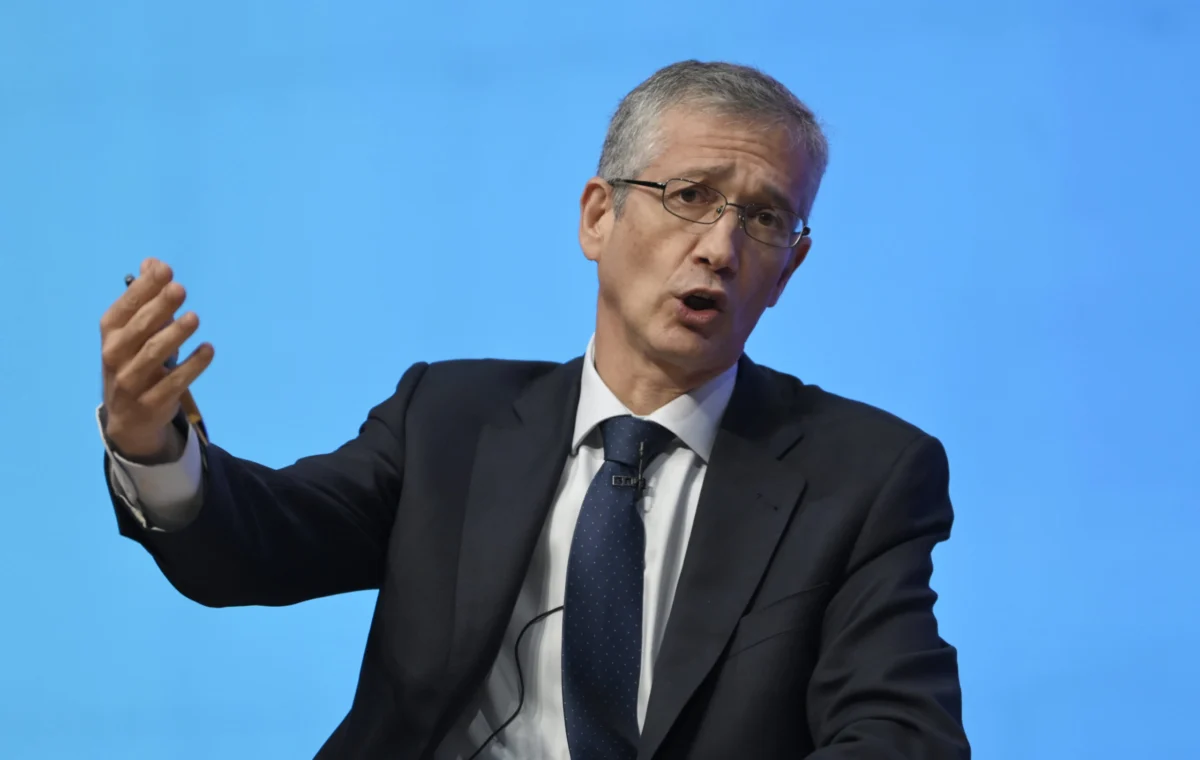
Pablo Hernández de Cos is set to assume the presidency of the European Central Bank (ECB) next year, succeeding Christine Lagarde at a pivotal moment for the eurozone. His nomination, confirmed by euro area leaders at a recent European Council Summit, marks the culmination of intense political negotiations to secure consensus for the crucial eight-year term. While formal appointment awaits consultation with the European Parliament and the ECB’s Governing Council, neither body holds veto power, making the Council’s decision a near certainty. This move signals a preference for a seasoned technocrat to steer the central bank through an increasingly complex economic landscape characterized by resurgent inflation, geopolitical fragmentation, and persistent political uncertainty across the bloc.
The path to de Cos’s presumed appointment was paved by intricate diplomatic maneuvering. Reuters, citing European diplomatic sources, reported that the nomination became clear after the Netherlands agreed to back Klaas Knot, the only other prominent candidate, for a different influential role. This consensus-building was essential given the high stakes and the desire among member states to balance representation on the ECB’s powerful six-member Executive Board. Lagarde’s announcement on February 7, 2027, that she would step down, more than seven years after becoming the first woman to helm the ECB, triggered the succession race. Despite a final push by the Netherlands for Knot at the European Council meeting, de Cos ultimately garnered sufficient political backing in the closed-door discussions.
A Career Central Banker for a Challenging Era
Pablo Hernández de Cos, a 55-year-old economist, embodies the profile of a career central banker. His trajectory within the financial world is marked by a deep understanding of monetary policy and financial stability, attributes deemed critical by leaders given the current economic climate. De Cos began his career as a researcher at the Bank of Spain in the 1990s, steadily rising through various departments before being appointed Governor in 2018, a position he held until June 2024. During his tenure at the Bank of Spain, he gained a reputation for combining academic rigor with practical policy application.
His international experience further solidifies his credentials. From 2019 to 2024, de Cos chaired the Basel Committee on Banking Supervision, a global standard-setter for banking regulation. In July 2025, he took on the role of General Manager of the Basel-based Bank for International Settlements (BIS), often referred to as the "central bank of central banks." These roles provided him with invaluable insights into global financial markets, regulatory frameworks, and the interconnectedness of economies. His extensive background stands in contrast to early criticisms leveled against Christine Lagarde during the initial phase of her ECB presidency, which some observers felt lacked sufficient direct central banking experience despite her distinguished career in international finance. Both de Cos and Klaas Knot were seen as candidates possessing the deep technical expertise necessary to navigate the intricate challenges facing the eurozone.

The "Owl" of Monetary Policy: Pragmatism Over Dogma
De Cos’s monetary policy philosophy is often described not as purely hawkish (favoring higher interest rates to combat inflation) or dovish (favoring lower rates to stimulate growth), but rather as that of an "owl." This moniker, which he himself quipped in 2024, emphasizes his data-driven and pragmatic approach, adapting policy decisions to the specific economic situation at hand. His track record supports this characterization.
During the period when inflation consistently ran below target, he was a staunch backer of the ECB’s uber-dovish monetary policy, including the massive stimulus package and negative interest rates launched by then-ECB President Mario Draghi in 2019 to reboot the eurozone economy. However, his pragmatism was equally evident during the energy price shock that followed Russia’s full-scale invasion of Ukraine in February 2022, when he supported strong interest rate hikes to combat surging inflationary pressures. This adaptability is crucial for a central bank whose primary mandate is price stability – maintaining inflation at a target of 2% over the medium term.
Christian Kopf, head of fixed income and foreign exchange at Union Investment, commented on de Cos’s approach, noting that while he supported dovish policies in a low-inflation environment, "his monetary policy views may well be regime-dependent." Kopf added, "We are now clearly in a higher-inflation regime, with core inflation in the euro area expected to remain above the ECB’s target through 2029." Kopf lauded de Cos as the candidate with the "strongest technical understanding of monetary policy and central banking," an attribute he believes is vital at a time when central bank independence is under assault globally. "By appointing a career technocrat such as Hernández de Cos as ECB President, the European Council would send a strong signal that Europe will not waver in its commitment to price stability and that the euro will remain a hard currency," Kopf asserted. This commitment is particularly salient as central banks worldwide face increasing political pressure and scrutiny.
The Geopolitical Chessboard: Balancing Europe’s Interests
The selection of de Cos is part of a broader "carefully crafted package deal" designed to balance the representation of northern and southern European countries on the ECB’s Executive Board. This delicate balance is crucial given the historical "north-south divide" in economic philosophies, with northern nations traditionally leaning more hawkish and southern nations often perceived as more dovish, especially in the context of sovereign debt and growth. The package reportedly includes Germany’s Markus Brunnermeier for the influential chief economist role and France’s Laurence Boone as head of the Markets Portfolio, both of whom are expected to take up their positions in 2027.

This arrangement reflects the ongoing horse-trading among the eurozone’s biggest economies – Germany, France, Italy, Spain, and the Netherlands – to secure influence within the central bank. John Orchard, chairman of the Digital Monetary Institute at think tank OMFIF, highlighted de Cos’s ability to transcend these traditional divisions, noting that as a "central banker’s central banker," he had "managed to earn respect from typically hawkish northern observers."
A contributing factor to de Cos’s strong candidacy has been the robust economic performance of many southern European economies in recent years. Once labeled the "sick men" of the eurozone during the 2010s sovereign debt crisis, countries like Portugal, Italy, Spain, and Greece have emerged as some of the bloc’s strongest growth drivers. Factors such as booming tourism sectors, relative political stability, increased foreign investment, and strengthening public finances have propelled these economies forward. Simultaneously, the eurozone’s traditional powerhouse, Germany, has experienced economic stuttering amid soaring industrial costs and a struggling automotive market. While Christine Lagarde’s presidency was credited by some with fostering an "esprit de corps" at the ECB, aiming for policymakers to focus on the collective European interest, the persistent theme of national representation in the recent debate, and the perception of Knot as a hawkish choice, underscore the enduring importance of this geographical balance.
Navigating Economic Headwinds: Key Challenges Ahead
De Cos will inherit a challenging economic environment, marked by a resurgence of price pressures and significant fiscal fragilities. Euro area inflation surged to 4% in October 2026, its highest level in over three years. This renewed inflationary pressure is largely attributed to escalating energy costs, driven by the Iran war which has pushed up oil and gas prices and tightened the supply of refined fuels. The ECB will face the difficult task of balancing the need to prevent these higher energy costs from spreading into wages and broader prices, potentially triggering a wage-price spiral, while avoiding unnecessary damage to economic growth that could result from overly aggressive monetary tightening.
Adding to the complexity is the precarious fiscal situation of France, the bloc’s second-largest economy, which is reportedly teetering on the edge of its own potential debt crisis. Despite political efforts to pass a budget aimed at reducing its budget deficit to around 5% of GDP, investors have been driving up French borrowing costs. Concerns are mounting over France’s increasing public debt-to-GDP ratio, persistent high budget deficit, and a contracting economy, as reported in October 2026. This situation is further compounded by political uncertainty ahead of France’s presidential election in April 2027, with far-right and far-left candidates gaining traction, stymying business activity, and raising broader questions about EU unity.
The rising French bond yields and the widening spread between French and German borrowing costs (OAT-Bund spread) have led to speculation about whether the ECB might need to deploy extraordinary tools, such as liquidity injections or its never-used Transmission Protection Instrument (TPI), to prevent market disorder and protect other countries from contagion. Such intervention would be politically controversial unless France agreed to stringent fiscal discipline measures, akin to those accepted by southern nations during the 2010s Sovereign Debt Crisis. This scenario becomes even more complicated if a figure like far-right presidential frontrunner Marine Le Pen, known for her combative stance towards EU institutions, were to win the election.

Ken Egan, head of European sovereigns at ratings agency KBRA, acknowledged fragmentation as a perennial challenge for the ECB, which aims to avoid divergent financing conditions and high sovereign spreads across the bloc. However, regarding France, Egan believed the situation was "some way from having a serious conversation about ECB intervention." He noted that "sovereign spreads have pulled back a bit and tightened, and some measures of market liquidity have also improved in recent weeks." While underlying risks persist, Egan emphasized the distinction between periods of market volatility and a fundamental breakdown in monetary policy transmission.
Broader Mandate and Future Horizons
Beyond the immediate challenges of inflation and fiscal stability, de Cos will inherit several major supranational projects. Plans for a digital euro are progressing, requiring careful consideration of its design, implications for financial stability, and public acceptance. Europe’s long-delayed capital markets integration also remains a critical task. Outgoing President Lagarde, in a speech at the European Banking Congress in Frankfurt, warned that each year without capital markets integration means "more of our savings are invested abroad and more of our growing firms look elsewhere for funding," underscoring the urgency of this initiative to boost European competitiveness and investment.
The politically uncertain climate extends beyond France, with pivotal elections expected in Finland, Greece, Italy, Estonia, Slovakia, and Slovenia in the coming year. These national polls could introduce further volatility and complicate consensus-building within the eurozone. Moreover, the struggle to find fiscal headroom and manage higher government borrowing costs and public debt is not unique to France; it is a growing problem among many developed countries globally.
The ECB’s Financial Stability Review in November 2026 further highlighted mounting risks, including European investors’ growing exposure to the U.S. economy and the vulnerability of equity and credit markets to artificial intelligence. Lagarde herself, in one of her final public addresses, identified cyber threats, particularly "AI applied together with cyber threat," as her biggest concern, an area she felt policymakers had not adequately addressed.
As Pablo Hernández de Cos prepares to take the helm of the European Central Bank, he steps into a role of immense responsibility. His deep technical expertise, pragmatic monetary philosophy, and international experience are seen as crucial assets in navigating a eurozone fraught with economic disparities, inflationary pressures, and geopolitical uncertainties. His presidency will be defined by his ability to maintain price stability, safeguard financial integrity, and foster unity amidst the diverse economic and political interests of the European Union, all while steering the institution through its ongoing evolution in a rapidly changing global financial landscape.