Clara Shinta
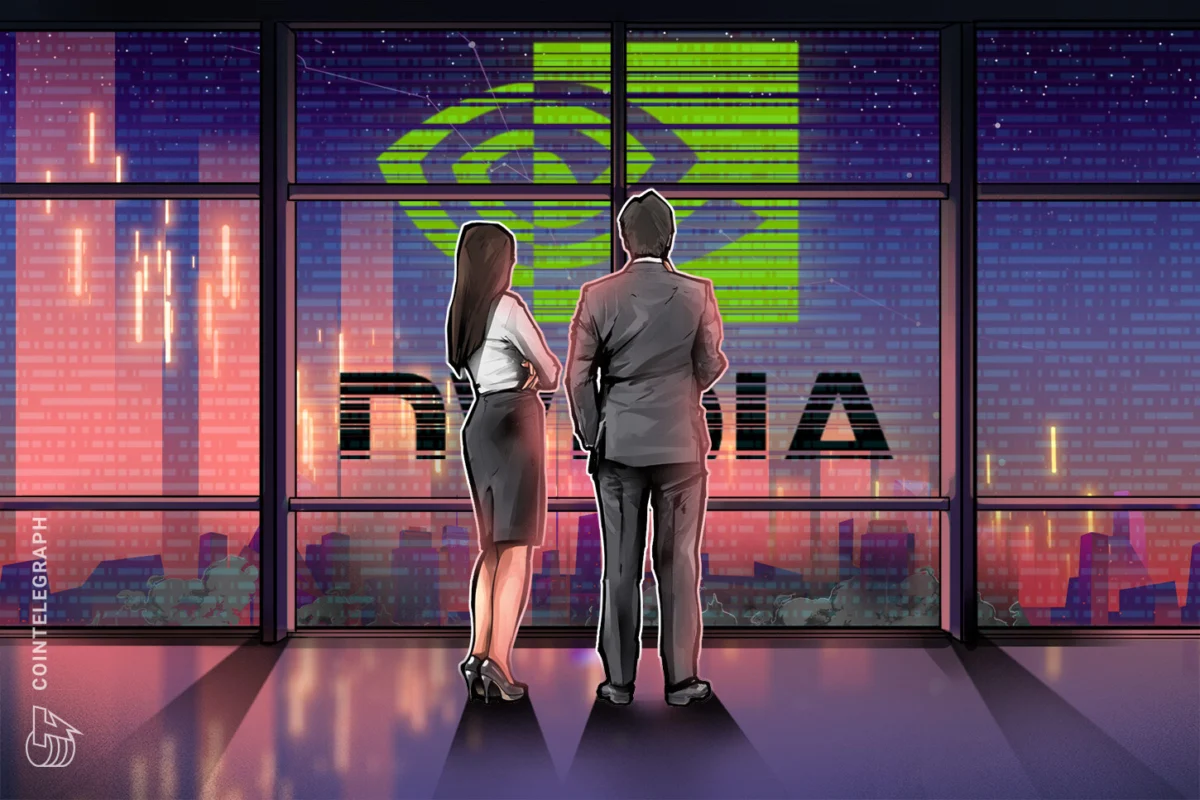
Washington D.C. – In the aftermath of a pivotal election that has reshaped the political landscape, Nvidia CEO Jensen Huang’s previously cultivated relationship with President Donald Trump appears increasingly insufficient to insulate the semiconductor giant from a burgeoning wave of bipartisan scrutiny in Washington. As victorious Democrats prepare to assert their influence over key regulatory committees and Republicans push for more stringent export controls, Nvidia finds itself navigating a complex and potentially hostile federal environment, according to recent analyses by Semafor. The converging pressures from both sides of the aisle signal a challenging era for the company, particularly concerning its strategic operations and sales practices in China, a critical market for advanced semiconductors.
The concerns emanating from Capitol Hill are multifaceted, reflecting a broader anxiety within Washington regarding technological supremacy, national security, and economic competitiveness in an increasingly volatile global arena. Nvidia, a linchpin in the artificial intelligence and high-performance computing sectors, sits at the nexus of these critical debates. Its advanced graphics processing units (GPUs) are not only integral to cutting-edge AI development but also have dual-use applications that raise alarms among policymakers wary of China’s technological ambitions.
A Shifting Political Tides and Bipartisan Pressure
The recent electoral outcomes have emboldened Democrats, who are now poised to take the helm of influential regulatory bodies. This shift is anticipated to bring a renewed focus on corporate accountability, market concentration, and the ethical implications of advanced technologies. Among the most vocal proponents of increased oversight is Democratic Senator Elizabeth Warren, who has reportedly expressed a desire for Huang to testify before Congress. Her potential line of questioning is expected to delve into Nvidia’s extensive chip sales to entities in China, seeking clarity on the types of chips sold, their potential end-uses, and the broader implications for U.S. national security and technological leadership. Senator Warren’s long-standing advocacy for robust corporate regulation and her skepticism regarding unchecked corporate power suggest that her inquiry would be thorough and probing, aiming to understand the extent to which American technological prowess is being leveraged by geopolitical rivals.
Simultaneously, the Republican caucus, despite electoral setbacks in some areas, remains steadfast in its commitment to bolstering national security and confronting what it perceives as the economic and strategic threats posed by the People’s Republic of China. A key tenet of their agenda is the implementation of tougher export controls on advanced semiconductors, a policy stance that has gained significant bipartisan traction in recent years. This focus is not merely theoretical; it has manifested in direct congressional action. On November 4, 2026, three prominent Republican House members dispatched a letter to CEO Jensen Huang, requesting his appearance for a briefing. The subject of this urgent request was deeply concerning: whether Huang or Nvidia had been targeted or compromised by a Chinese intelligence agent. This specific inquiry underscores the heightened paranoia and deep-seated fears within Washington regarding industrial espionage and the illicit acquisition of sensitive U.S. technology by foreign adversaries. The request for a briefing implies a serious level of concern, potentially signaling investigations into specific incidents or broader patterns of intelligence activity.
The Huang-Trump Connection: A Legacy of Engagement
Jensen Huang’s interactions with the previous administration, particularly his engagement with then-President Donald Trump, had been perceived by some as a strategic move to secure a favorable position for Nvidia amidst escalating U.S.-China trade and technology tensions. In March of this year, Cointelegraph reported that President Trump had appointed several leaders from the crypto, blockchain, AI, and technology industries, including Nvidia’s CEO Huang, to his Council of Advisors on Science and Technology (PCAST). This appointment was widely interpreted as a direct channel for industry insights to reach the highest levels of government, potentially allowing Nvidia to articulate its perspectives on critical policy decisions.
Furthermore, Huang had reportedly met with President Trump on previous occasions specifically to discuss the intricacies and implications of export controls on Nvidia’s cutting-edge chips. These discussions would have been crucial for Nvidia, given that its highly advanced GPUs, essential for AI training and data centers, have frequently been targeted by U.S. restrictions aimed at curbing China’s access to strategic technologies. The company has often found itself in the challenging position of balancing its commercial interests in a vast market like China with compliance with evolving U.S. national security directives. While these past engagements might have provided Huang with valuable insights into the Trump administration’s thinking, and perhaps even some level of informal influence, the current political climate suggests that such personal relationships may offer diminishing returns in the face of a unified, albeit ideologically diverse, Washington consensus on China.
Nvidia’s Strategic Tightrope Walk
Nvidia’s position is inherently delicate. The company is a global leader, holding an estimated 80% or more of the market for AI chips used in data centers, a dominance that makes it an indispensable partner for technological advancement worldwide. However, this very prominence also makes it a focal point for geopolitical tensions. China represents a significant revenue stream for Nvidia, and any substantial curtailment of its sales there would have considerable financial implications. The company has previously navigated export restrictions by designing modified, less powerful chips for the Chinese market, a strategy that aimed to comply with U.S. regulations while retaining market access. However, the increasing hawkishness in Washington suggests that such nuanced solutions might face growing skepticism.
The demand for Huang to testify or brief Congress places him and Nvidia in a difficult public spotlight. Testifying before Congress can be a grueling process, requiring executives to disclose sensitive company information and publicly defend their business practices under intense scrutiny. The allegations of potential targeting by a Chinese intelligence agent, if substantiated, could trigger more profound investigations and potentially lead to severe penalties or even criminal charges, significantly impacting Nvidia’s reputation and operational freedom. Even without direct evidence, the mere suggestion of such a threat highlights the pervasive distrust that now characterizes the U.S.-China tech relationship.
The Broader Geopolitical Context: A Tech Cold War
The scrutiny facing Nvidia is not an isolated incident but rather a symptom of a much larger and intensifying "tech cold war" between the United States and China. Both nations view technological leadership, particularly in critical areas like semiconductors, artificial intelligence, and quantum computing, as paramount for future economic prosperity and national security. The U.S. has increasingly employed a range of tools, including export controls, investment restrictions, and supply chain reshoring initiatives (such as the CHIPS and Science Act), to slow China’s technological advancement and protect its own innovation ecosystem.
For instance, the CHIPS Act, enacted in 2022, allocated billions of dollars to boost domestic semiconductor manufacturing and research, explicitly aiming to reduce reliance on foreign supply chains, particularly those linked to potential adversaries. This legislative push underscores a long-term strategy to decouple critical technology sectors from China. Furthermore, previous administrations have already implemented stringent export controls on advanced semiconductors and related manufacturing equipment, explicitly naming certain Chinese entities to prevent them from acquiring the capabilities necessary for advanced military applications or widespread surveillance. These policies have created a complex regulatory labyrinth for companies like Nvidia, forcing them to meticulously vet their customers and adapt their product lines to comply with ever-evolving restrictions.
The concerns extend beyond commercial competition. U.S. intelligence agencies have repeatedly warned about China’s sophisticated state-sponsored cyber espionage and intellectual property theft efforts, targeting American companies and research institutions to accelerate its own technological development. The request for a briefing on a potential Chinese intelligence agent targeting Huang is a direct manifestation of these broader intelligence community warnings, indicating a specific concern about the vulnerability of critical technology leaders.
Implications for the Semiconductor Industry and Beyond
The unfolding situation for Nvidia carries significant implications for the entire semiconductor industry. Companies operating in this sector, many of whom have extensive global supply chains and customer bases, will likely face similar pressures. The demand for greater transparency, stricter compliance with export controls, and heightened vigilance against foreign espionage will become the new normal. This could lead to increased operational costs, necessitate significant investments in compliance infrastructure, and potentially fragment global technology markets further.
For companies deeply embedded in both U.S. and Chinese ecosystems, the balancing act will become increasingly precarious. They will be forced to make difficult strategic choices, potentially sacrificing market share in one region to maintain favor in another. This environment fosters uncertainty, which can dampen innovation and investment, particularly in areas requiring long-term, cross-border collaboration.
Moreover, the focus on figures like Jensen Huang highlights the increasing politicization of corporate leadership in critical industries. CEOs are no longer merely business strategists but are now expected to be adept at navigating complex geopolitical currents, often finding themselves caught between the conflicting demands of national security, shareholder value, and global market access. Their personal relationships with political figures, once a potential asset, are now subject to intense public and congressional scrutiny, often viewed through the lens of potential undue influence or perceived conflicts of interest.
Outlook: A Path of Continued Scrutiny
Looking ahead, it is clear that the adversarial stance from Washington towards major tech companies, particularly those with significant ties to China, is unlikely to abate. The bipartisan nature of the concerns – Democrats focusing on regulatory oversight and the ethical implications of technology sales, and Republicans emphasizing national security and export controls – ensures a sustained and comprehensive approach to scrutiny. Nvidia, as a pioneer in AI and a critical component of global technological infrastructure, will remain a bellwether for how these tensions play out.
The company will likely need to redouble its efforts in government relations, not just with the executive branch but critically with congressional committees and regulatory agencies. Transparency, robust compliance mechanisms, and a clear articulation of its contributions to U.S. innovation and security will be paramount. The era where personal relationships might smooth over geopolitical frictions appears to be drawing to a close, replaced by a more formal, rigorous, and often confrontational engagement between Washington and Silicon Valley. The future for Nvidia, despite its technological prowess, will be defined as much by its ability to navigate these political currents as by its continued innovation in chip design.