Farhan Pambudi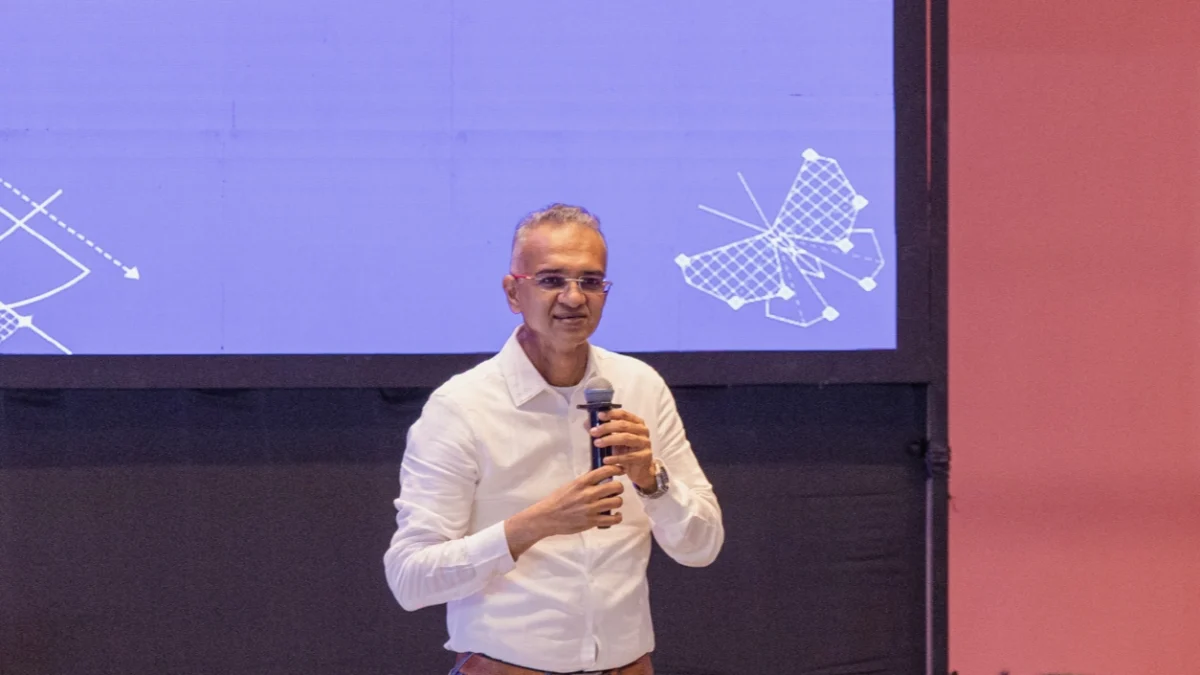
India’s digital payments landscape is entering a transformative era as the National Payments Corporation of India (NPCI) prepares to integrate advanced artificial intelligence (AI) to scale the Unified Payments Interface (UPI) beyond its current record-breaking milestones. Speaking at the Mumbai Tech Week (MTW) 2026, Dilip Asbe, Managing Director and CEO of NPCI, detailed a strategic vision where AI serves as the primary catalyst for reaching over one billion daily transactions. This next phase of growth focuses on three critical pillars: expanding the user base by another 500 million people, fortifying fraud prevention mechanisms, and democratizing credit distribution through digital footprints.
The Unified Payments Interface has already redefined the global benchmark for real-time retail payment systems. As of early 2026, the platform facilitates over 750 million transactions daily, a staggering figure that underscores India’s rapid transition toward a cashless economy. However, to bridge the gap between the current user base and the remaining unbanked or digitally hesitant population, Asbe emphasized that traditional onboarding methods must evolve. The collaboration between NPCI, the Reserve Bank of India (RBI), and the central government is increasingly leaning on AI-driven solutions to simplify the user journey, particularly for those in rural and semi-urban areas.
The Strategic Integration of AI in Financial Inclusion
A central theme of Asbe’s address was the deployment of AI to lower the barriers to entry for new users. While smartphone penetration in India is high, a significant portion of the population remains intimidated by complex digital interfaces or faces language barriers. Asbe noted that AI-powered voice and multilingual solutions are essential to making onboarding "simpler and more intuitive." By utilizing natural language processing (NLP), NPCI aims to allow users to interact with payment systems in their native dialects, moving away from text-heavy applications to voice-activated commands.
This shift toward voice-based interaction is not entirely new but is reaching a point of technological maturity. In 2023, NPCI launched "Hello UPI," a voice assistant-based interactive system designed to facilitate seamless transactions. While Asbe acknowledged that adoption has been gradual due to the early-stage accuracy of voice models, he remains optimistic. The goal is to refine these models to be "sharp, specific, and deterministic," ensuring that a voice command in a regional language like Marathi or Tamil is executed with the same precision as a manual input in English.
Beyond accessibility, AI is being positioned as the primary shield against the rising tide of sophisticated financial crimes. As the volume of transactions grows, so does the complexity of fraudulent activities, including the use of "mule accounts"—accounts used by criminals to launder money or hide the origins of illicit funds. NPCI is leveraging AI to monitor transaction patterns in real-time, identifying anomalies that human oversight or traditional rule-based systems might miss. This proactive stance on fraud detection is vital for maintaining public trust in the digital ecosystem.
Credit Distribution and the Power of Digital Footprints
One of the most significant shifts in the UPI roadmap is the transition from a pure payment tool to a comprehensive financial services platform. Asbe highlighted the role of AI in analyzing the "digital footprints" of users and merchants to facilitate credit distribution. Historically, millions of small-scale vendors and low-income individuals have been excluded from formal credit markets due to a lack of traditional collateral or credit history.
By applying AI algorithms to the vast datasets generated by daily UPI transactions, financial institutions can now assess creditworthiness based on cash flow and payment behavior. This "flow-based lending" model allows banks and fintech companies to offer micro-loans and working capital to those who were previously "invisible" to the banking system. Asbe suggested that the richness of the Indian dataset provides a unique opportunity for domestic companies to build "Small Language Models" (SLMs). Unlike Large Language Models (LLMs) like GPT-4, which require massive computational power and general data, SLMs can be trained on specific financial datasets to provide highly accurate, specialized services tailored to the Indian market.
NPCI has already seen success with this focused approach. Last year, the organization launched "FIMI," an AI language model specifically tailored for the payments sector. FIMI is currently being used to resolve user disputes, cancel mandates, and address transaction failures. According to Asbe, the model is already serving over a million users and is scaling rapidly, demonstrating the practical utility of specialized AI in financial operations.
Navigating Market Concentration and Regulatory Challenges
Despite the technological advancements, the UPI ecosystem faces a significant challenge in the form of market concentration. Currently, two major players—Walmart-owned PhonePe and Google Pay—control over 80% of the market share. This duopoly has long been a point of concern for regulators who fear "concentration risk," where a technical failure or policy shift in one or two companies could destabilize the entire national payment infrastructure.
To address this, NPCI has proposed a 30% market share cap for third-party app providers. Originally scheduled for earlier implementation, the deadline has been moved to December 31, 2026. Asbe noted that the lack of a "viable commercial model" for smaller players is a primary reason for the current concentration. Since UPI transactions are largely free for consumers and merchants (Zero Merchant Discount Rate), apps must find alternative ways to monetize, such as selling insurance or credit products.
"The moment we see the commercial model being available to the ecosystem, I believe newer players will start investing very heavily," Asbe remarked. To lead by example, NPCI spun off its BHIM (Bharat Interface for Money) app into a wholly-owned subsidiary in 2024. While BHIM’s current market share remains around 1%, the move is intended to make the app more competitive and serve as a "sovereign and secure alternative" to private-sector players. The objective for BHIM is not necessarily to dominate the market but to ensure that a public-sector option remains robust and available to all citizens.
Comparative Global Context and Agentic Commerce
The evolution of UPI mirrors global trends in AI-powered finance, though with distinct regional characteristics. In the United States, companies like Coinbase and Robinhood are exploring "agentic" finance, where AI agents can execute trades or manage portfolios on behalf of users. Similarly, OpenAI has enabled users to integrate personal financial data into ChatGPT for customized advice.
India is following a similar trajectory but with a focus on commerce and retail payments. Last year, NPCI demonstrated "agentic commerce" pilots with Razorpay, showcasing how AI bots could handle end-to-end shopping and payment experiences within a chat interface. However, Asbe cautioned that a wider rollout requires a robust regulatory framework. He emphasized that the system must ensure user protection and risk mitigation, particularly regarding "consent." If an AI agent executes a transaction, there must be a clear, auditable trail of the user’s instructions to prevent unauthorized activity.
Chronology of UPI’s Evolution and Future Milestones
The journey of UPI serves as a backdrop to these new AI initiatives:
- 2016: UPI is launched by NPCI with 21 member banks.
- 2020: UPI overtakes debit cards in transaction volume.
- 2023: Launch of "Hello UPI" and "UPI-Lite" for small-value offline payments.
- 2024: BHIM is spun off as a separate entity; "FIMI" AI model is introduced for dispute resolution.
- 2025: Agentic commerce pilots begin; transaction volumes hit 15 billion per month.
- December 2026: Deadline for the 30% market share cap implementation.
- The Vision: Reaching 1 billion daily transactions and 1 billion unique users through AI-enhanced accessibility.
Conclusion: The Road Ahead for India’s Digital Economy
The integration of AI into UPI represents more than just a technological upgrade; it is a strategic move to ensure the longevity and inclusivity of India’s digital public infrastructure. By focusing on Small Language Models and voice-based interfaces, NPCI is tailoring global innovation to fit the specific linguistic and economic diversity of the Indian subcontinent.
As the December 2026 deadline for market share caps approaches, the industry expects a surge in innovation from newer fintech players and traditional banks. The success of this transition will depend on whether the ecosystem can develop sustainable revenue models while maintaining the low-cost, high-efficiency nature of UPI. For global investors and technology watchers, India’s "AI-first" approach to payments serves as a blueprint for how emerging economies can leverage cutting-edge tech to achieve mass-scale financial empowerment.
With the backing of the RBI and the government, NPCI’s roadmap suggests that the next half-billion users will not just be "using" an app—they will be interacting with an intelligent, voice-responsive financial ecosystem that understands their language, protects their assets, and provides the credit they need to thrive in a digital-first world.