Gilang Muhammad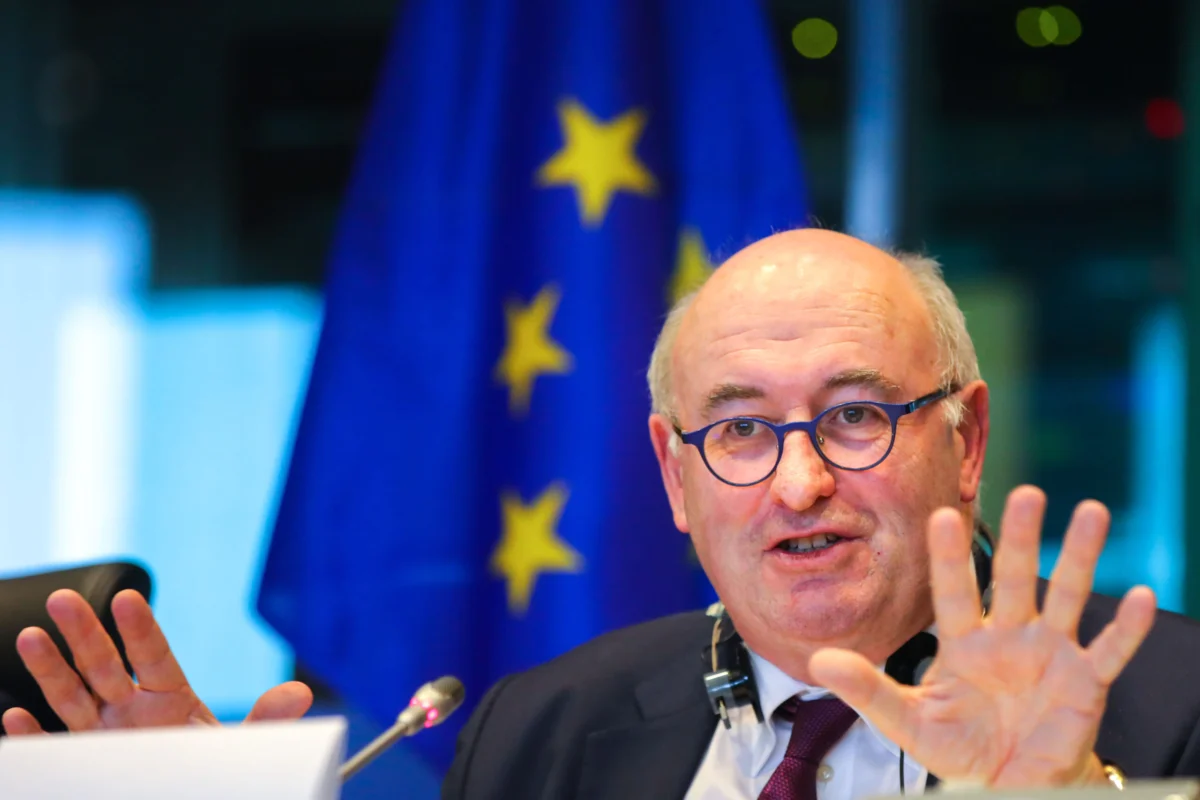
Singapore – Phil Hogan, the former European Union trade commissioner and a leading candidate to head the United Nations Food and Agriculture Organization (FAO), has issued a stark warning regarding the financial stability of the critical agency. Speaking in an exclusive interview in Singapore, Hogan emphasized that other nations must step up to fill a significant funding void created by the United States’ scaling back of its contributions to international humanitarian programs. This financial strain comes at a time when global food security faces unprecedented threats from geopolitical conflicts, climate change, and economic volatility.
"It is important to continue to support [the agency] financially," Hogan stated emphatically to CNBC, acknowledging the implications of Washington’s shift. "As the United States pulls back from some of these programs, other member countries of the FAO will have to step in to ensure all the animal disease issues and food safety issues remain in place." His comments underscore a growing concern within the international community about the sustainability of crucial global initiatives, particularly those focused on preventing hunger and maintaining food safety standards worldwide.
The Funding Imperative: A Global Call to Action
The United Nations Food and Agriculture Organization, headquartered in Rome, serves as the primary global body tasked with achieving food security for all and ensuring that people have regular access to enough high-quality food to lead active, healthy lives. Its mandate encompasses a vast array of activities, from developing sustainable agricultural practices and fisheries management to providing early warning systems for food crises and coordinating responses to animal disease outbreaks. The effective execution of these functions relies heavily on consistent and robust financial support from its member states.
Historically, the United States has been the largest donor to many UN agencies and international humanitarian organizations. However, under the Trump administration, there was a pronounced shift towards an "America First" foreign policy, which often translated into significant reductions in foreign aid and a re-evaluation of commitments to multilateral institutions. This policy saw the dismantling and reduction of the U.S. Agency for International Development (USAID), once the world’s preeminent humanitarian donor, leading to substantial funding shortfalls across the global aid landscape. While the subsequent administration has shown some signs of re-engagement, the precedent set has left many international bodies, including the FAO, in a precarious financial position.
The financial retrenchment from a major donor like the U.S. has ripple effects far beyond immediate budget cuts. It signals a potential weakening of the multilateral system and places increased pressure on other affluent nations to augment their contributions. For the FAO, this means a potential reduction in its capacity to conduct essential monitoring and surveillance for early warnings of looming problems, limiting the world’s ability to cushion the blows to vulnerable families facing sudden spikes in food prices. As agricultural and development economist Chris Barrett of Cornell University warned, "The funding shortfalls mean less monitoring and surveillance for early warning of looming problems, and limit the world’s ability to cushion the blows to poor families suddenly facing higher food prices." This ultimately contributes to more severe hunger problems and heightened sociopolitical unrest in regions where governments struggle to safeguard their citizens’ food security.
The FAO’s Critical Mandate and Leadership Race
Phil Hogan, Ireland’s former EU agriculture and trade commissioner, brings a wealth of experience in global trade and agricultural policy to his bid for the FAO’s top job. He is currently considered a frontrunner in the race to become director-general, a position that oversees global rules for food security and plays a crucial role in sounding alarms over impending famines. The election is slated for next summer, when the term of the current chief, Qu Dongyu, expires in July. Hogan’s campaign has seen him embark on a weeks-long tour across Asia, engaging with regional leaders to garner support ahead of the critical vote.
The role of the FAO Director-General is pivotal. It requires not only diplomatic acumen to navigate complex international relations but also a deep understanding of agricultural economics, food systems, and humanitarian aid. The Director-General sets the strategic direction for the organization, mobilizes resources, and represents the FAO on the global stage. Hogan’s campaign emphasizes the need for a more agile, efficient, and impactful FAO, particularly in an era defined by overlapping crises.
The FAO’s mandate, as articulated by the Sustainable Development Goals (SDGs), includes eradicating hunger, achieving food security, improving nutrition, and promoting sustainable agriculture. This overarching mission requires a multifaceted approach, involving policy advice to governments, technical assistance in agricultural development, data collection and analysis, and emergency response coordination. Without adequate funding, the organization’s ability to fulfill these vital functions is severely compromised, putting millions of people at risk.
Escalating Global Food Insecurity: A Dire Picture
The backdrop to Hogan’s campaign and his calls for increased funding is a global food security landscape that has deteriorated significantly in recent years. Data from leading international bodies paint a grim picture. More than a quarter of the world’s population faced moderate or severe food insecurity in 2025, a figure that continues to be alarmingly high. Moreover, the World Health Organization and the UN World Food Programme report that over 266 million people are grappling with acute hunger this year, indicating an immediate and life-threatening lack of food. These statistics represent not just abstract numbers but millions of individual stories of hardship, malnutrition, and despair.
The drivers of this escalating crisis are complex and interconnected. Climate change continues to disrupt agricultural cycles, leading to more frequent and intense droughts, floods, and extreme weather events that devastate harvests. Geopolitical conflicts displace populations, destroy infrastructure, and disrupt supply chains, turning once-productive regions into humanitarian disaster zones. Economic shocks, including high inflation and surging interest rates, erode purchasing power, making staple foods unaffordable for the poorest households. These factors converge to create a perfect storm, pushing vulnerable populations further into hunger.
Geopolitical Flashpoints and Climate Threats: A Confluence of Crises
Hogan explicitly highlighted the potent combination of geopolitical instability and climate phenomena as catalysts for potential food "disasters" in the near future. Specifically, he pointed to the conflict around the Strait of Hormuz and the ongoing war in Ukraine as major contributors to global food insecurity, with the anticipated El Niño weather event set to compound these risks.

The conflict in the Middle East, particularly around the strategically vital Strait of Hormuz, has generated profound fears of a global agrifood catastrophe. This narrow waterway, crucial for global energy and fertilizer exports, has seen disruptions that could effectively bring the flow of these essential commodities to a halt. The FAO has previously sounded the alarm, noting that poor countries are most exposed to such disruptions. Delayed commodity supplies could lead to lower agricultural output globally, higher inflation, and weaker economic growth, exacerbating food insecurity in nations already struggling. Fertilizers, derived largely from natural gas, are indispensable for modern agriculture, and their restricted availability or increased cost can severely impact crop yields worldwide.
Concurrently, the protracted war in Ukraine continues to exert immense pressure on global food markets. Ukraine, often referred to as the "breadbasket of Europe," is a major exporter of wheat, corn, and sunflower oil. The conflict has severely snarled global wheat trade through the Black Sea, a critical artery for these exports. Russia’s attacks since 2022 have largely halted vessel traffic through Ukraine’s Black Sea ports, which were previously responsible for around 90% of the country’s agricultural exports. The disruption of these vital supply routes has compounded economic effects globally and profoundly undermined food security in numerous vulnerable countries that depend on Ukrainian grains.
Adding to these man-made crises is the specter of a powerful El Niño weather event. El Niño, a naturally occurring climate pattern, is characterized by warmer-than-average sea surface temperatures in the central and eastern tropical Pacific Ocean. Its effects are far-reaching, typically bringing altered rainfall patterns and temperatures to various parts of the world. For many agricultural regions, this can mean severe droughts, while others experience excessive rainfall and flooding. Both extremes are detrimental to crop production and livestock, threatening global food security by reducing yields and increasing volatility in food prices. The forecast of an exceptionally strong El Niño event amplifies concerns, as it could lead to simultaneous harvest failures in multiple key agricultural zones, pushing millions more into hunger.
Hogan’s Vision for a Leaner, More Responsive FAO
Acknowledging the tightened fiscal environment, Hogan underscored that any reform plan for the FAO must operate within the reality of "less money." His proposed strategy for his initial 100 days as Director-General would focus on a significant reallocation of resources and personnel. He plans to move staff out of the FAO’s headquarters in Rome and into offices located in so-called "hunger hotspots" – regions characterized by severe food shortages and acute vulnerability. This decentralization aims to bring the organization closer to the ground, enabling more direct and effective interventions and a better understanding of local needs and challenges.
Beyond geographical realignment, Hogan stressed the importance of cost efficiency and enhanced collaborations with other UN agencies. He argued that by streamlining operations and fostering greater synergy with partners, the FAO could more effectively implement its mandate of providing regular access to enough high-quality food and ending hunger and malnutrition. This collaborative approach seeks to maximize the impact of limited resources and avoid duplication of efforts within the broader UN system.
A significant critique from Hogan concerned the FAO’s perceived passivity during the Black Sea Grain Initiative. This now-suspended agreement, brokered by Russia, Ukraine, Turkey, and the UN, was crucial for getting food and fertilizer exports from Ukraine flowing again after the initial disruptions of the war. While the UN played a key role in facilitating the agreement, Hogan expressed disappointment that the FAO was "not at the table." He contended, "Perhaps the FAO was a bit behind the curve in not elevating this issue and becoming more centrally involved in solutions around food security within the United Nations family." This statement reflects Hogan’s belief that the FAO needs to be more assertive and proactive in addressing major global food crises, leveraging its expertise and mandate to play a more central role in diplomatic and logistical solutions.
Expert Perspectives: Alarms and Reassurances
The confluence of climate shocks, geopolitical conflict, a global fuel crisis, surging interest rates, and donor cuts has left the world in a precarious position to respond effectively, according to Chris Newton, a food security analyst at the International Crisis Group. Newton painted a dire picture, stating, "We’re going into this on our way to being blind and with one hand tied behind our back, in terms of global capacity to foresee and respond to major food crises." This reflects the concern that reduced funding and diminished international cooperation are eroding the very mechanisms designed to prevent and mitigate large-scale humanitarian disasters. The ability to monitor, analyze, and predict food shortages, coupled with the capacity to mobilize rapid humanitarian responses, is fundamental to global food security governance. Any weakening of these capabilities poses an existential threat to millions.
However, not all experts share the same level of alarm. Ian Mitchell, a senior policy fellow at the Center for Global Development, offered a more tempered assessment. Even with an "exceptionally strong" El Niño, Mitchell argued, "we are currently well short of the conditions for a global food crisis." His optimism stems from several factors, including healthy global grain stockpiles, which, by historical standards, remain robust. Furthermore, Mitchell noted that futures markets, often sensitive indicators of impending supply crunches, are not currently signaling widespread shortages or dramatic price surges. This perspective suggests that while regional vulnerabilities exist and specific populations face acute hunger, the overall global food system might possess more resilience than some current narratives imply, at least in terms of aggregate supply.
The Path Forward: Challenges and Opportunities for Global Food Governance
The narrative emerging from Hogan’s candidacy and the broader discourse on global food security is one of critical challenges intertwined with urgent calls for reform and renewed commitment. The FAO stands at a crossroads, needing to demonstrate its relevance and effectiveness in an increasingly complex and resource-constrained world. Its next Director-General will inherit a mandate of immense importance and an organization facing significant operational and financial pressures.
The implications of continued funding shortfalls are profound. A less effective FAO means reduced capacity to develop climate-resilient agriculture, diminished ability to monitor and control transboundary animal diseases that threaten food supplies, and weakened early warning systems that could prevent famines. It also means a reduced voice for sustainable food systems in global policy debates, potentially undermining efforts to achieve the Sustainable Development Goals by 2030.
The call for other nations to step in and fill the funding gap is not merely an appeal for financial aid; it is a plea for renewed multilateralism and shared responsibility. In an interconnected world, food insecurity in one region can have cascading effects globally, impacting migration patterns, political stability, and economic markets. Investing in the FAO and other international food security initiatives is an investment in global stability and prosperity.
As the election for the next FAO Director-General approaches, the debate over the agency’s future, its funding, and its strategic direction will intensify. Phil Hogan’s vision of a leaner, more responsive, and proactive FAO, coupled with his critique of past shortcomings, offers a clear direction for reform. However, the success of any such reforms will ultimately hinge on the collective will of member states to provide the necessary political and financial backing, ensuring that the world’s most vulnerable populations are not left to face hunger alone amidst a confluence of unprecedented crises.