Gilang Muhammad
The escalating conflict in the Middle East has sent shockwaves through global financial markets, presenting a formidable challenge to central banks worldwide. Fears of a severe oil shock and renewed inflationary pressures are now significantly complicating policymakers’ calculus for sustaining economic growth and price stability. The recent surge in crude prices, triggered by direct military engagements between the United States, Israel, and Iran, followed by Tehran’s retaliatory strikes, has brought the precarious balance of global energy security to the forefront, impacting everything from shipping lanes to consumer prices.
The Catalyst: Escalation in the Middle East
The current crisis reached a critical juncture over the weekend following a series of dramatic military actions. On Saturday, March 1, 2026, reports confirmed that U.S. and Israeli forces launched coordinated strikes on targets within Iran. These strikes, reportedly in response to a string of regional aggressions attributed to Iranian-backed proxies, culminated in the death of Iranian Supreme Leader Ali Hosseini Khamenei. The operation marked a profound escalation, crossing a threshold in the long-simmering tensions in the region.
Tehran’s response was swift and forceful. Within hours of the initial strikes, Iran launched a barrage of missile attacks targeting multiple Gulf countries, including Saudi Arabia and the United Arab Emirates, where significant U.S. military assets are stationed. These retaliatory actions underscored Iran’s capability and willingness to project power across the region, further destabilizing an already volatile geopolitical landscape. The immediate aftermath saw international condemnations, urgent calls for de-escalation from the United Nations Security Council, and a significant spike in alert levels across military commands globally.
Strait of Hormuz: A Critical Chokepoint Under Threat
Central to the economic ramifications of this conflict is the Strait of Hormuz, the narrow waterway connecting the Persian Gulf to the open ocean. This strategic chokepoint is arguably the most critical artery for global oil shipments, through which an estimated 20% of the world’s total petroleum liquids and about one-third of all seaborne-traded oil pass daily. The threat of attacks from Iran, coupled with heightened military activity and the inherent risks of navigating a conflict zone, has effectively brought tanker traffic through the Strait to a standstill. Major shipping companies and insurers have either rerouted vessels, if alternative (and often longer, more expensive) routes exist, or entirely halted passage, leading to an immediate bottleneck in global energy supply chains.
The U.S. Energy Information Administration (EIA) has long highlighted the Strait’s importance, noting that any significant disruption could trigger a global energy crisis. The current cessation of traffic is precisely the "worst-case scenario" that analysts have warned about for years. The ripple effects are profound, impacting not only the availability of crude oil but also the transportation costs for other goods, as global shipping lines grapple with increased insurance premiums, diverted routes, and potential delays.
Global Oil Markets React to Unprecedented Volatility
The direct impact on global energy markets was immediate and severe. Crude prices, already trending upwards due to geopolitical uncertainties, soared on Monday following the weekend’s events. Brent crude, the international benchmark, extended four days of gains, rising 1.6% to $82.76 a barrel on Wednesday, nearing its highest level since January 2025. Similarly, U.S. West Texas Intermediate (WTI) crude prices surged for a third consecutive day, reaching $75.48 a barrel. This sharp ascent represents a significant shift, with Brent crude having risen by a substantial 36% so far this year, according to LSEG data, and WTI futures up by 32% as of Wednesday.
The Bank of America has warned that a prolonged disruption in the Strait of Hormuz could push Brent oil prices above $100 per barrel, with European natural gas prices potentially breaking 60 euros ($70.17) per megawatt hour. This dire forecast underscores the fragility of global energy supply and the immediate inflationary pressures this conflict generates. Higher energy prices will inevitably filter through to consumer and producer prices across the board, affecting everything from manufacturing costs to transportation and ultimately, the prices consumers pay for goods and services.

Central Banks Face a Dual Challenge: Inflation vs. Growth
The widening Middle East conflict poses a fresh and acute test for global central banks. Policymakers are now juggling the delicate task of balancing persistent inflationary risks against slowing economic growth. The immediate concern is that an oil shock will exacerbate already sticky inflation, forcing central banks to reassess their carefully calibrated interest rate trajectories.
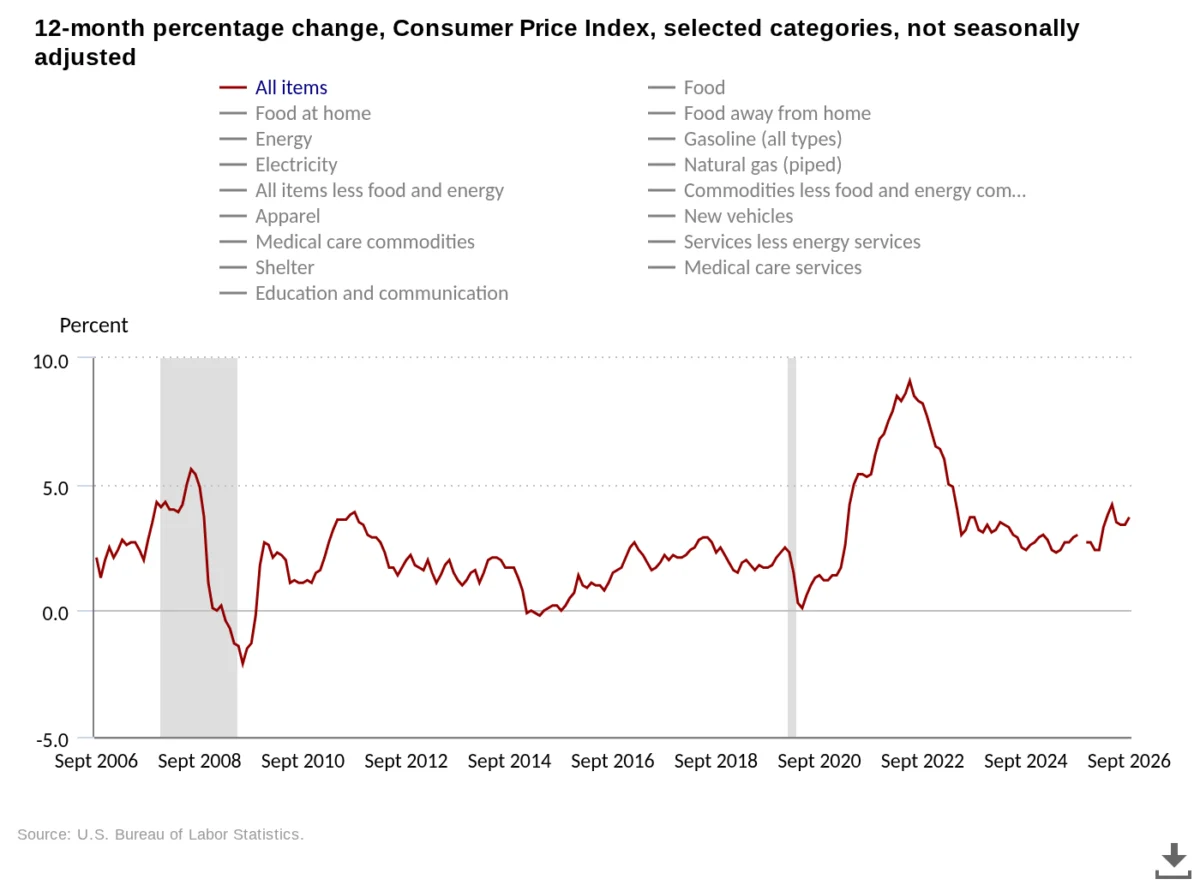
The Federal Reserve, for instance, was already grappling with U.S. inflation standing at 2.4% in January 2026, above its 2% target. Former Treasury Secretary Janet Yellen articulated the immediate dilemma, stating on Monday that "the recent Iran situation puts the Fed even more on hold, more reluctant to cut rates than they were before this happened." Yellen also reiterated her earlier warnings that President Donald Trump’s proposed tariffs could push annual inflation to at least 3%, compounding the challenge presented by energy price spikes. The Fed’s path to interest rate cuts, previously anticipated later in the year, now appears increasingly uncertain, with a higher likelihood of rates remaining elevated for longer.
Across the Atlantic, the European Central Bank (ECB) finds itself in what ING economists describe as a "genuine dilemma." Europe, heavily reliant on Middle East oil imports and a significant share of liquefied natural gas, faces the acute risk of a dual energy and trade shock. An oil price surge could push already elevated eurozone inflation even higher, while the region’s growth outlook simultaneously weakens under the strain of increased energy costs and potentially higher U.S. tariffs. ECB council member Pierre Wunsch, governor of the National Bank of Belgium, stated this week that officials would avoid reacting hastily to immediate movements in energy prices. However, he acknowledged the gravity of a sustained increase: "If it lasts longer, if the increase in energy prices is higher, then we will have to run our models and see what happens." This indicates a wait-and-see approach, but with a clear recognition of the potential need for policy adjustments should the situation deteriorate further.
Nomura economists, in a note on Sunday, concluded that "the ongoing Iran conflict solidifies the case for many central banks to hold rates steady for now," signaling a pause in any anticipated easing cycles. This sentiment is echoed across various financial institutions, all closely monitoring the evolving situation.
The Looming Specter of Inflation and Broader Economic Implications
Beyond the immediate price of crude, the inflationary impact of the Middle East conflict extends to a wider array of goods and services. Higher energy costs translate directly into increased expenses for transportation, manufacturing, and agriculture. This "second-round effect" risks embedding inflation more deeply into core consumer price indices, making it harder for central banks to manage. For economies heavily reliant on Middle East oil imports, this is a significant blow to purchasing power and corporate profitability.
The conflict also casts a long shadow over global supply chains, which are still recovering from pandemic-era disruptions. The effective closure of the Strait of Hormuz creates logistical nightmares, leading to longer transit times, increased freight costs, and potential shortages of goods. This could further dampen global trade and investment, exacerbating the economic slowdown in many regions. Investor sentiment has also been hit, with global equity markets experiencing heightened volatility and a flight to safe-haven assets.
Furthermore, the latest flare-up comes against a backdrop of other recent geopolitical maneuvers, including President Trump’s seizure of oil-rich Venezuela earlier this year and his threat to take control of Greenland, another strategically significant energy reserve. These actions, while distinct from the current Middle East crisis, underscore a broader trend of geopolitical instability directly impacting global energy resources and markets, adding layers of complexity to the global economic outlook.
Asia’s Vulnerability: A Regional Deep Dive
Asian economies, particularly those in East and Southeast Asia, are poised to bear a disproportionate brunt of the crisis. The U.S. Energy Information Administration highlights that most crude shipped through the Strait of Hormuz flows to major Asian importers such as China, India, Japan, and South Korea. This heavy reliance makes the region acutely vulnerable to supply disruptions and price spikes.

Goldman Sachs estimates that a six-week closure of the Strait of Hormuz, coupled with an oil price jump from $70 to $85 a barrel, could trigger a regional inflation increase of approximately 0.7 percentage points in Asia. The Philippines and Thailand are identified as the most vulnerable, owing to their high energy import dependency and energy weightage in inflation calculations, while China could experience a "more modest increase" due to its diversified energy sources and strategic reserves.
Michael Wan, senior currency analyst at MUFG Bank, suggests that sustained oil price hikes could force Asian central banks like those in the Philippines and Indonesia to pause on anticipated rate cuts. Policymakers in India and South Korea, he notes, will likely hold rates steady for longer, prioritizing inflation control over growth stimulus.
BMI, a unit of Fitch Solutions, projects that the conflict will add between seven and 27 basis points to headline consumer inflation across Asia. Thailand, South Korea, and Singapore are expected to face the sharpest impact due to the higher energy weighting in their inflation calculations. While a modest 10% oil shock might be "looked through" by most central banks, BMI warns that "the calculus changes materially at $20–30/per barrel increases, where headline CPI impacts double or triple and second-round effects become harder to ignore."
However, not all Asian economies are equally exposed. Nomura identifies Malaysia as a "relative beneficiary" due to its status as a net energy exporter, potentially leading to a tightening of interest rates there. Conversely, Nomura has lowered its expectations for a rate hike by the Philippine central bank, now anticipating it to remain on hold, a shift from a prior baseline of a 25-basis-point cut. Singapore is projected to experience a modest 0.01-percentage-point impact on its GDP growth from higher oil prices, suggesting a degree of resilience, though its Monetary Authority is closely assessing the conflict’s impact. Indonesia and Singapore both issued statements on Monday, affirming their commitment to monitoring financial markets and intervening as necessary to maintain stability.
Policy Responses and Fiscal Buffers
In response to the mounting economic pressures, Asian governments and central banks are exploring various policy levers. Nomura economists anticipate that Asia will primarily deploy fiscal policy as the "first line of defense" to shield consumers from soaring energy costs. Possible measures include price controls, increased subsidies for fuel, cuts in fuel excise taxes, and lower import tariffs on crude oil and refined products.
However, these fiscal interventions come with their own set of challenges. Rob Subbaraman, head of global macro research at Nomura, highlighted this dilemma on CNBC’s "Squawk Box Asia." Subbaraman noted that while subsidies can cushion inflationary impacts, they inevitably add fresh strain to governments’ already-tight fiscal budget deficits. "So which ‘negative’ do you want to have: higher inflation or worse fiscal? These are policy choices the governments have to make," he remarked, underscoring the difficult trade-offs facing policymakers.
The availability of fiscal buffers, alongside relatively benign price pressures heading into 2026, might provide some economies with a comfortable starting point. However, prolonged conflict and sustained high oil prices could quickly erode these buffers, forcing tougher decisions on either enduring higher inflation or accumulating greater public debt.
The Path Forward: Uncertainty Prevails
The Middle East conflict has fundamentally altered the global economic outlook, introducing a significant layer of uncertainty that will dominate central bank discussions and government strategies in the coming months. The immediate focus remains on de-escalation of military tensions and the reopening of the Strait of Hormuz, but even if these are achieved, the scars on energy markets and global supply chains will likely persist.
Central banks globally are now tasked with navigating an increasingly complex environment where geopolitical events hold immense sway over economic fundamentals. Their ability to manage inflationary pressures while supporting fragile growth will be severely tested, and the outcome will profoundly shape the trajectory of the global economy through 2026 and beyond. The international community watches anxiously, hoping for a swift resolution to a conflict that threatens to derail global recovery and stability.