Clara Shinta
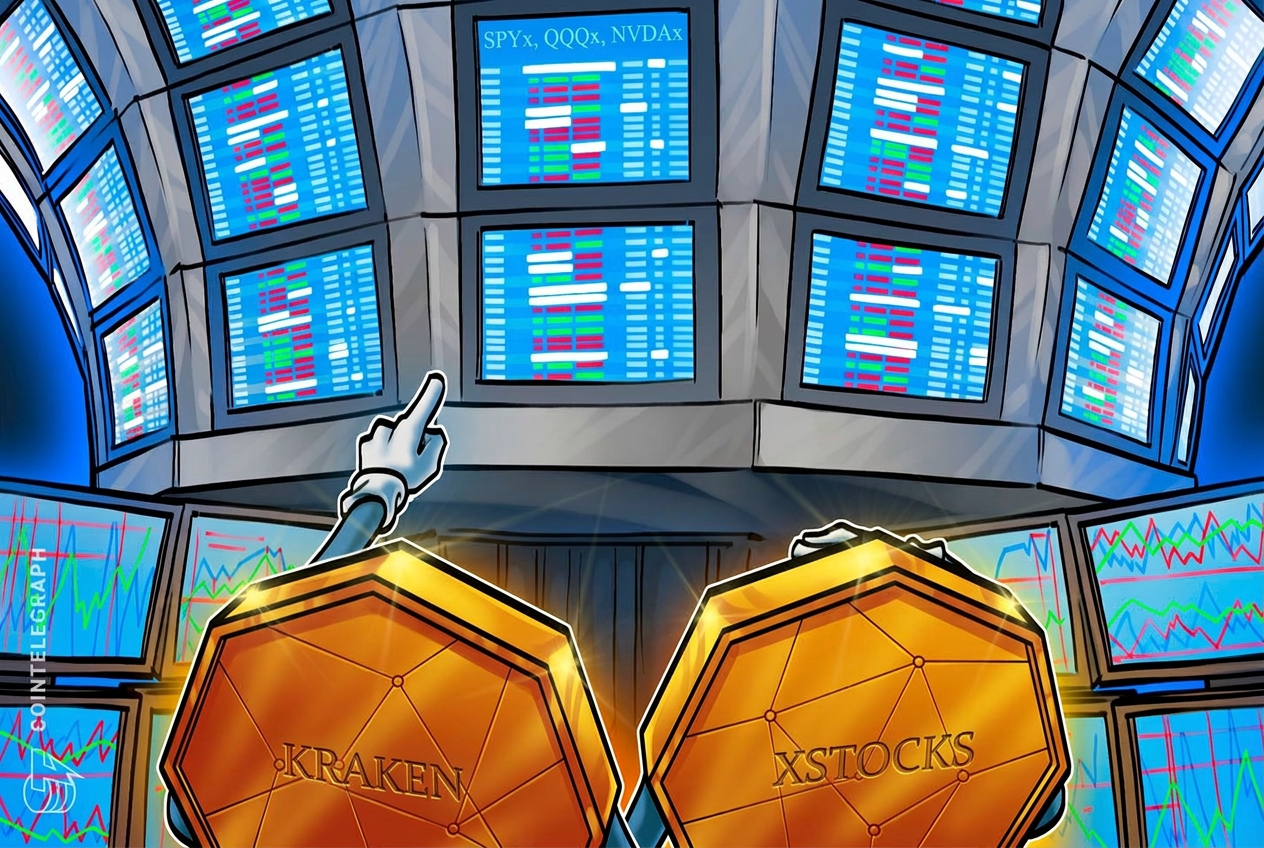
Crypto exchange Kraken has officially launched onchain yield vaults for select tokenized stocks and Exchange Traded Funds (ETFs), marking a significant stride in bridging traditional financial assets with the burgeoning decentralized finance (DeFi) ecosystem. The initiative, announced on Monday, enables eligible clients to generate returns by lending these tokenized assets through various decentralized finance protocols, directly integrating the efficiency and composability of blockchain into conventional investment vehicles.
Pioneering a New Investment Frontier: xStocks Vaults
The newly introduced xStocks vaults support tokenized versions of highly popular market indices and individual equities, including the SPDR S&P 500 ETF (SPYx), the Invesco QQQ ETF (QQQx), and Nvidia (NVDAx). This selection reflects a strategic focus on assets with high liquidity and broad investor interest, aiming to provide a familiar entry point for those exploring the intersection of traditional finance and blockchain technology. The core mechanism behind these vaults involves clients depositing their xStocks, which are then lent out through various onchain markets to generate yield. This yield is subsequently paid back to the clients in the same tokenized asset they deposited, fostering a seamless and integrated earning experience. Withdrawal requests are processed within a transparent timeframe of three days, balancing the need for liquidity with the operational realities of decentralized lending protocols.
This expansion builds upon the successful foundation of Kraken’s existing DeFi Earn infrastructure, which was first launched in January. Kraken DeFi Earn has rapidly gained traction, attracting over $800 million in deposits since its inception, according to company statements. The robust performance and growing user adoption of DeFi Earn provided a clear impetus and proven framework for extending similar yield-generating opportunities to tokenized traditional assets. This continuity in infrastructure underscores Kraken’s commitment to leveraging established and tested systems for its innovative offerings, aiming to instill confidence and reliability in its evolving suite of products.
The Mechanics of Onchain Yield Generation: Powering the Veda-Sentora Partnership
The operational backbone of the xStocks vaults is powered by Veda, a specialized platform designed to facilitate and manage these complex onchain interactions. Complementing Veda’s infrastructure, Sentora plays a crucial role in designing and actively managing the sophisticated lending strategies employed to generate optimal and sustainable yield. This dual-pronged approach combines robust platform technology with expert strategic oversight, aiming to maximize returns while diligently managing inherent risks within the dynamic DeFi landscape.
Assets deposited into the xStocks vaults are lent through prominent DeFi markets, notably Kamino on the Solana blockchain. Solana, known for its high throughput and low transaction costs, provides an efficient environment for these lending operations. Sentora’s responsibilities extend to setting precise exposure limits for each asset, continuously monitoring critical market conditions such as collateralization ratios, liquidity pools, and the accuracy of oracle data feeds. These measures are paramount in mitigating potential risks associated with decentralized lending, including market volatility, smart contract vulnerabilities, and oracle manipulation, thereby safeguarding client assets and ensuring the integrity of the yield generation process. The meticulous management by Sentora highlights the sophisticated risk management frameworks Kraken is implementing to ensure the security and stability of its DeFi offerings.
Geographic Availability and Regulatory Considerations
Kraken’s xStocks vaults are strategically made available to eligible clients across the European Economic Area (EEA) and other selected international markets. This broad regional availability reflects Kraken’s global presence and its aim to serve a diverse client base. However, the service is explicitly excluded in several key jurisdictions, including the United States, the United Kingdom, Canada, Australia, and the United Arab Emirates. This exclusion is a direct reflection of the varying and often complex regulatory landscapes governing digital assets, particularly those that represent traditional securities, across different nations.
The regulatory environment for tokenized securities remains fragmented and continues to evolve globally. In many jurisdictions, tokenized stocks and ETFs are viewed through the lens of existing securities laws, potentially subjecting them to stringent licensing, disclosure, and operational requirements that differ significantly from those applied to native cryptocurrencies. Kraken’s decision to restrict access in certain regions underscores a cautious and compliant approach to navigating these regulatory ambiguities, prioritizing adherence to local laws and safeguarding its operational integrity in the face of ongoing legislative developments. This measured rollout strategy allows Kraken to offer innovative services while remaining adaptable to the rapidly changing global regulatory framework.
The Explosive Growth of Tokenized Equities: A Broader Market Trend
Kraken’s entry into the tokenized equities yield space comes at a time of unprecedented growth in the broader market for tokenized real-world assets (RWAs). The distributed value of tokenized stocks and ETFs has witnessed an extraordinary surge, climbing to approximately $2.84 billion. This figure represents a staggering increase from roughly $540 million just one year ago, according to comprehensive data compiled by RWA.xyz. This meteoric rise underscores a fundamental shift in how investors perceive and interact with traditional assets, increasingly recognizing the inherent advantages offered by blockchain technology.
The concept of tokenizing traditional assets involves representing ownership of real-world assets—be it stocks, bonds, real estate, or commodities—as digital tokens on a blockchain. This process offers several compelling benefits:
- Fractional Ownership: Tokens enable the division of high-value assets into smaller, more affordable units, democratizing access for a wider range of investors.
- Enhanced Liquidity: Tokenization can potentially unlock liquidity for traditionally illiquid assets by enabling 24/7 trading on global blockchain networks.
- Increased Transparency: Blockchain’s immutable ledger provides a transparent and verifiable record of ownership and transactions.
- Reduced Costs and Intermediaries: Streamlining processes can cut down on administrative fees and the need for multiple intermediaries.
- Composability with DeFi: Tokenized assets can seamlessly integrate into decentralized finance protocols for lending, borrowing, and other yield-generating activities, as demonstrated by Kraken’s new vaults.
The rapid expansion of this sector indicates a growing institutional and retail appetite for leveraging blockchain’s efficiencies without abandoning the stability and familiarity of traditional asset classes. This trend is not limited to equities; tokenized bonds, real estate, and even intellectual property are emerging as significant areas of innovation within the RWA landscape, signaling a broader convergence between traditional finance and blockchain.
Kraken’s Strategic Vision and the Future of Finance
Kraken’s move into onchain yield for tokenized stocks is not an isolated event but rather a calculated step within its broader strategic vision to serve as a bridge between centralized finance (CeFi) and decentralized finance (DeFi). As one of the oldest and most respected cryptocurrency exchanges, Kraken has consistently demonstrated a commitment to innovation while prioritizing security and regulatory compliance. The success of its initial DeFi Earn offerings, which have attracted substantial deposits, speaks to a strong market demand for transparent and accessible yield-generating products.
By extending these capabilities to tokenized traditional assets, Kraken is positioning itself at the forefront of a financial paradigm shift. This initiative has several profound implications:
- Democratization of Access: It allows a broader global audience, particularly in regions where traditional investment avenues might be less accessible or efficient, to participate in the performance of leading global equities and ETFs.
- Efficiency and Innovation: It showcases the potential for blockchain to streamline traditional financial processes, reduce friction, and introduce novel investment strategies.
- Mainstreaming DeFi: By integrating familiar assets like SPY and NVDA into DeFi protocols, Kraken helps to demystify and legitimize decentralized finance for a more mainstream audience, potentially drawing in new capital and users who were previously hesitant to venture into native crypto assets.
- Competitive Advantage: This offering differentiates Kraken from many competitors who primarily focus on native cryptocurrency staking or lending, giving it an edge in attracting a hybrid investor base.
The collaboration with specialized entities like Veda and Sentora further highlights a trend within the crypto industry towards unbundling and specialization, where exchanges partner with experts to manage specific, complex aspects of their offerings, particularly in risk management and strategy optimization for DeFi protocols. This collaborative model allows Kraken to focus on its core exchange operations while leveraging external expertise for niche, high-value services.
Challenges and Risk Mitigation in a Nascent Market
While the potential benefits are substantial, the landscape of tokenized assets and DeFi lending is not without its challenges and risks. Kraken’s explicit exclusion from certain major markets underscores the ongoing regulatory uncertainties. Beyond regulatory hurdles, operational risks inherent in DeFi include:
- Smart Contract Risk: Vulnerabilities in the underlying smart contracts that govern the vaults or lending protocols could lead to loss of funds. Kraken and its partners likely undergo rigorous auditing, but residual risks remain.
- Market Risk: The value of the underlying tokenized assets can fluctuate, affecting the principal amount. While yield is paid in the same asset, the fiat value of that yield is subject to market movements.
- Liquidity Risk: Although the selected assets are generally liquid, unforeseen market events could impact the ability to efficiently lend or retrieve assets from DeFi pools, potentially delaying withdrawals beyond the stated three-day window under extreme circumstances.
- Oracle Risk: DeFi protocols rely on external data feeds (oracles) for pricing and collateralization. Inaccurate or manipulated oracle data could lead to incorrect liquidations or pricing. Sentora’s monitoring efforts are crucial here.
- Counterparty Risk: While DeFi aims to minimize traditional counterparty risk, interactions with various protocols introduce new forms of operational and technical counterparty risk within the decentralized ecosystem.
Kraken addresses these concerns through its partnership with Sentora, which actively monitors collateral, liquidity, and oracle conditions, and by building on the established infrastructure of Kraken DeFi Earn, which has proven its resilience. Transparency in withdrawal processing times and clear communication about the underlying mechanisms are also vital components of Kraken’s risk management strategy, aiming to provide users with a comprehensive understanding of the associated considerations.
Conclusion: A Glimpse into the Future of Interconnected Finance
Kraken’s launch of onchain yield vaults for tokenized stocks and ETFs represents more than just a new product offering; it symbolizes a significant evolution in the financial landscape. It is a tangible step towards a future where traditional and decentralized finance are not disparate entities but rather interconnected components of a more efficient, accessible, and innovative global financial system. As the market for tokenized real-world assets continues its rapid expansion, and as regulatory clarity gradually emerges, Kraken’s pioneering efforts are likely to set a precedent for how other major financial institutions and crypto exchanges approach the integration of traditional assets into the dynamic world of DeFi. This initiative not only provides novel opportunities for investors but also pushes the boundaries of what is possible at the intersection of blockchain technology and mainstream finance, signaling a promising era of financial convergence.