Lina Wu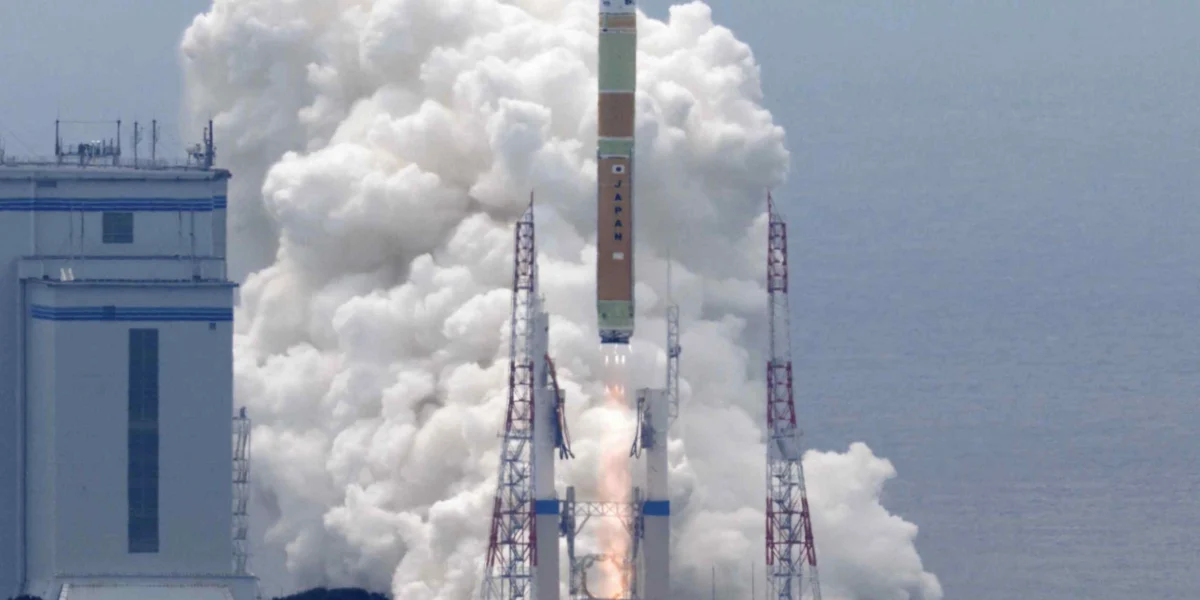
TOKYO – Japanese lunar exploration startup ispace announced on Wednesday its strategic decision to employ the nation’s H3 heavy-lift rocket for its ambitious lunar lander mission scheduled for 2028. This pivotal choice marks a significant milestone, as it will be the company’s first undertaking to leverage a Japan-manufactured launch vehicle for its extraterrestrial endeavors. The partnership underscores a growing synergy between emerging private space ventures and established national space programs, aiming to propel Japan’s presence in the global space economy.
A New Era for Japanese Lunar Aspirations
The selection of the H3 rocket, developed by the Japan Aerospace Exploration Agency (JAXA) and Mitsubishi Heavy Industries (MHI), is a testament to its evolving capabilities and the strategic imperative to foster a robust domestic launch infrastructure. The H3 rocket, a successor to the H-IIA and H-IIB series, is designed to be more cost-effective and versatile, capable of launching a wide array of payloads, from satellites to deep-space probes. Its successful development and deployment are crucial for Japan’s long-term space strategy, which includes ambitious plans for lunar exploration, asteroid sample return missions, and potentially human spaceflight.

ispace’s decision to integrate the H3 rocket into its operational roadmap for 2028 is not merely a logistical choice; it represents a confluence of national technological prowess and private sector innovation. The company, which has already garnered international attention for its participation in NASA’s Commercial Lunar Payload Services (CLPS) initiative, sees this domestic launch capability as a key enabler for future missions. It aligns with a broader trend of national space agencies supporting commercial partners to reduce costs and accelerate the pace of space exploration.
Chronology of ispace’s Lunar Journey and the H3 Partnership
ispace’s journey towards this 2028 mission has been marked by significant milestones and learning experiences. Founded in 2010, the company has focused on developing lunar landers and rovers with the ultimate goal of providing transportation services to the Moon. Their initial ambitions were keenly observed during the Google Lunar XPRIZE competition, where they were among the finalists.
Following the conclusion of the XPRIZE, ispace continued its development trajectory. A critical moment arrived in April 2023 with their first lunar lander mission, the Hakuto-R Mission 1. This mission, launched aboard a SpaceX Falcon 9 rocket, aimed to land a payload on the Moon. While the lander successfully reached lunar orbit, the final descent and landing phase unfortunately resulted in a loss of contact and presumed crash. This experience, though disappointing, provided invaluable data and lessons learned for the ispace team.

The subsequent Hakuto-R Mission 2, also launched on a Falcon 9 in late 2023, successfully delivered its payload to the lunar surface, demonstrating the company’s resilience and its ability to learn from past challenges. These missions have provided a crucial foundation for ispace’s future endeavors.
The announcement of the 2028 mission using the H3 rocket signifies a new chapter. The H3 rocket’s maiden flight occurred in March 2023, carrying an Earth observation satellite. A subsequent launch in July 2023 successfully deployed a constellation of satellites. These early successes have instilled confidence in the H3’s reliability and performance, making it an attractive option for ispace.
The decision to partner with JAXA and MHI for the H3 launch underscores a strategic shift, likely influenced by several factors:

- National Strategic Alignment: By utilizing a domestic launcher, ispace aligns itself more closely with Japan’s national space objectives, potentially leading to enhanced governmental support and collaboration.
- Cost-Effectiveness and Predictability: While international launch providers offer competitive pricing, a domestic option can sometimes provide greater cost predictability and reduce reliance on foreign launch schedules and services, especially as Japan’s own space capabilities mature.
- Technological Synergies: Collaboration with JAXA and MHI on the H3 program could foster deeper technological exchanges, benefiting both ispace’s lunar technology development and Japan’s rocket engineering expertise.
- Future Mission Planning: As ispace plans more complex and frequent missions, securing reliable and accessible launch capacity is paramount. A domestic heavy-lift capability like the H3 is a strategic asset.
Supporting Data and Technological Capabilities
The H3 rocket represents a significant advancement in Japanese launch vehicle technology. It is designed to be a flexible and scalable platform, capable of lifting payloads ranging from approximately 4 to 6.5 tons into geostationary transfer orbit, depending on the configuration. For lunar missions, its capability to deliver significant mass to translunar injection trajectories is critical. The rocket features a new, more powerful first-stage engine (LE-9) and a simplified upper stage, contributing to improved performance and reduced costs compared to its predecessors.
ispace’s lunar landers, exemplified by the Hakuto-R series, are designed to carry a variety of payloads, including scientific instruments, rovers, and potentially even commercial goods. The company’s vision extends beyond simple delivery; they aim to establish a recurring lunar transportation service, paving the way for more extensive lunar infrastructure and activities. The success of their 2028 mission, powered by the H3, will be a crucial step in realizing this vision and demonstrating the viability of their business model.
The Japanese government has been actively promoting the commercial space sector, recognizing its potential for economic growth and technological advancement. Initiatives like the "Space Industry Vision 2030" aim to foster a vibrant ecosystem for private space enterprises. ispace’s collaboration with the H3 program is a direct manifestation of these policies, showcasing the government’s commitment to supporting domestic space startups.

Official Responses and Industry Implications
While specific official statements from JAXA or MHI directly pertaining to ispace’s 2028 launch on the H3 are yet to be detailed in this initial report, the strategic alignment is clear. JAXA has consistently expressed its commitment to leveraging the H3 rocket for a variety of national and international missions, including those involving commercial entities. The successful operation of the H3 is paramount for JAXA’s own ambitious plans, such as sample return missions from celestial bodies and contributing to international lunar exploration initiatives like the Artemis program.
The implications of this partnership extend beyond the immediate mission. It signals a strengthening of Japan’s capabilities in the global launch services market. As more private companies venture into space, the demand for reliable and diverse launch options is growing. By offering the H3 as a platform for commercial lunar missions, Japan positions itself as a key player in this expanding market.
For ispace, this decision could enhance their competitive edge. While relying on established international launch providers has its advantages, securing a domestic launch capability provides a degree of autonomy and predictability that is invaluable for long-term mission planning. It also potentially opens doors for further collaboration with Japanese industries and research institutions, fostering a more integrated national space ecosystem.

The broader aerospace and defense industries will be closely watching this development. The success of ispace’s 2028 mission on the H3 could validate the concept of national launchers supporting ambitious private space ventures, potentially influencing similar partnerships in other countries. It also underscores the increasing intersection between government-led space programs and private enterprise, a trend that is reshaping the future of space exploration and utilization.
The 2028 mission will not only be a test of the H3 rocket’s capabilities for deep-space missions but also a critical demonstration of ispace’s technological maturity and operational readiness. Success would solidify Japan’s position as a significant contributor to the burgeoning lunar economy and a formidable force in the global space race. The journey to the Moon, powered by domestic innovation, is set to reach a new crescendo.