Lina Wu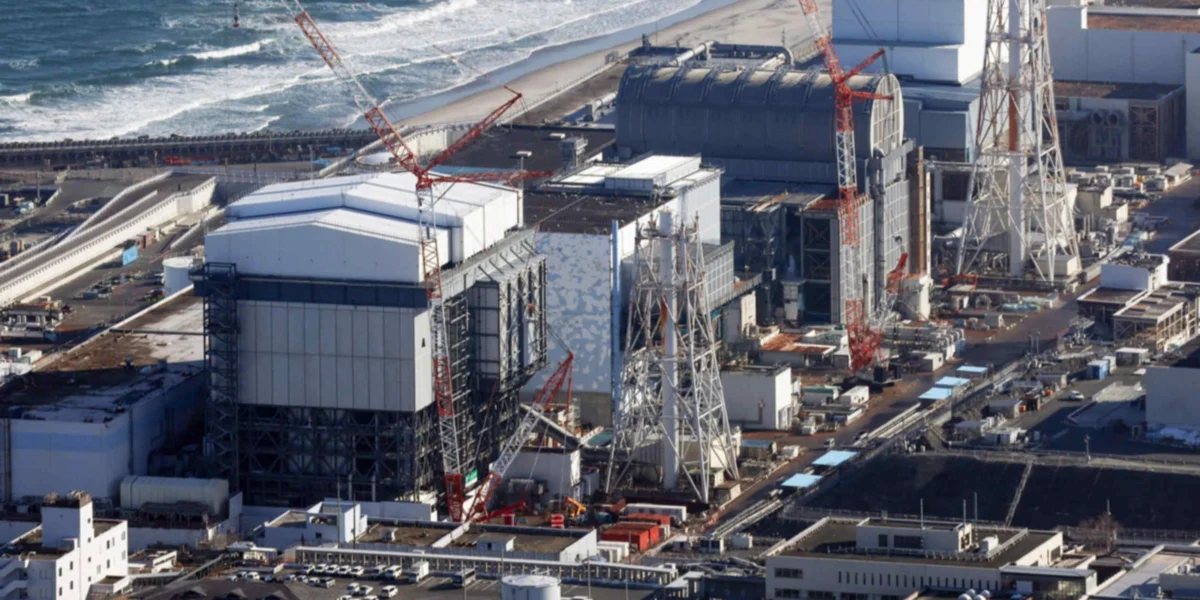
The Japanese government and Tokyo Electric Power Co. Holdings (TEPCO) are poised to establish a new consortium, potentially as early as the current fiscal year, to spearhead the complex and hazardous task of removing radioactive debris from the Fukushima Daiichi nuclear power plant. This initiative signals a significant evolution in the long-term decommissioning process, integrating advanced artificial intelligence (AI) robotics and drone technology to navigate the unprecedented challenges posed by the damaged reactors. The consortium’s formation underscores the persistent difficulties and the strategic pivot towards technological innovation as decommissioning efforts progress.

The Scale of the Challenge: A Radioactive Legacy
The Fukushima Daiichi disaster, triggered by a magnitude 9.0 earthquake and subsequent tsunami on March 11, 2011, resulted in meltdowns in three of the plant’s six reactors. This catastrophic event released significant amounts of radioactive material into the environment, necessitating a multi-decade decommissioning plan. Central to this plan is the removal of approximately 880 tons of highly radioactive debris from within the containment buildings of the damaged reactors. This material, a mixture of melted fuel, structural components, and contaminated water, represents one of the most formidable nuclear cleanup challenges in history.
The sheer scale and intensity of the radiation within the reactor buildings have rendered human entry extremely dangerous, if not impossible, for extended periods. Traditional methods of remote handling, while employed, have proven insufficient for the delicate and intricate work required to safely extract and contain this debris. The decision to heavily invest in and deploy AI-powered robots and drones reflects a recognition that these advanced technologies offer a safer, more efficient, and potentially faster pathway to progress.

A New Era of Decommissioning: AI and Robotics Take Center Stage
The planned consortium will bring together government agencies, TEPCO, and potentially private sector technology firms specializing in robotics, AI, and radiation management. The core objective will be to accelerate the development, testing, and deployment of sophisticated autonomous systems designed to operate in high-radiation environments. These systems are envisioned to perform a range of critical tasks, including:
- Debris Identification and Characterization: Advanced imaging and sensor technology integrated into robots and drones will be used to map the internal environment of the reactors, identify the composition and location of debris, and assess radiation levels with unprecedented accuracy.
- Remote Manipulation and Extraction: Articulated robotic arms, guided by AI, will be capable of performing intricate manipulation tasks, such as grasping, cutting, and lifting radioactive debris. The AI will enable these robots to adapt to unforeseen obstacles and optimize their movements for safety and efficiency.
- Hazardous Environment Mapping and Monitoring: Drones equipped with specialized sensors will provide real-time visual and radiological data from areas inaccessible to ground-based robots or human operators, creating detailed 3D models of the reactor interiors.
- Containment and Transport: Once debris is extracted, robotic systems will be crucial for safely packaging and transporting it to designated interim storage facilities, minimizing human exposure.
The integration of AI is particularly critical. Machine learning algorithms can be trained on vast datasets of simulated and real-world robotic operations in hazardous environments. This will allow the robots to learn from experience, improve their decision-making capabilities, and execute complex tasks with a higher degree of autonomy. The goal is to move beyond pre-programmed robotic movements towards systems that can intelligently assess situations and adapt their actions in real-time.

Timeline and Chronology of Decommissioning Efforts
The Fukushima Daiichi decommissioning process is a marathon, not a sprint, with an estimated timeline stretching for decades. The establishment of this new consortium marks a crucial phase within this extended effort:
- March 11, 2011: Earthquake and tsunami strike Japan, leading to the Fukushima Daiichi nuclear disaster and meltdowns in Units 1, 2, and 3.
- Post-2011: Initial efforts focus on stabilizing the plant, cooling damaged reactors, and containing radioactive releases. This includes the construction of ice walls and the ongoing management of contaminated water.
- Early 2010s – Mid-2020s: Planning and development of debris removal strategies begin. Challenges include understanding the precise state of the melted fuel and the structural integrity of the reactor buildings. Remote-controlled robots and drones are gradually introduced for initial surveys and some basic manipulation tasks.
- Mid-2020s: TEPCO and the government begin to prioritize the development of more advanced AI-driven robotic solutions to address the complex debris removal.
- Present (Late 2026): The Japanese government and TEPCO announce their intention to launch a dedicated consortium to accelerate the deployment of AI robots and drones for debris removal, targeting establishment within the current fiscal year.
- Future Decades: The consortium’s work will span several decades, with the ultimate goal of complete decommissioning, including the removal of spent fuel from all reactors and the eventual demolition of the plant structures.
The establishment of the consortium signifies a shift from foundational stabilization to the more physically demanding and technologically intensive phase of dismantling and debris removal. It acknowledges that the initial plans, while necessary, required a significant technological leap to overcome the unique hazards of Fukushima.

Supporting Data and Technological Advancements
The sheer volume of radioactive material necessitates a robust technological approach. The 880 tons of debris are not uniform; they represent a highly challenging mixture of molten fuel (corium), structural materials, and other contaminants. The radiation levels in some areas within the reactor buildings are estimated to be in the hundreds of Sieverts per hour, far exceeding safe limits for human exposure even with extensive protective gear.
Previous attempts at debris removal have highlighted the limitations of current technology. For instance, robotic probes have struggled with navigating collapsed structures and the extreme heat and radiation. The development of AI-powered systems aims to overcome these hurdles:

- Radiation-Hardened Electronics: New generations of robots and drones will incorporate radiation-hardened components, allowing them to operate for longer durations in high-radiation environments.
- Advanced Sensor Fusion: AI will enable the fusion of data from multiple sensors (e.g., cameras, lidar, gamma spectrometers) to create a comprehensive understanding of the environment and the debris.
- Dexterous Manipulation: Robotic end-effectors (hands) are being designed with increased dexterity and sensing capabilities to handle delicate or irregularly shaped debris without causing further damage or contamination.
- AI-Powered Pathfinding and Navigation: Algorithms will allow robots to autonomously navigate complex, debris-strewn environments, avoiding obstacles and identifying optimal routes for debris extraction.
Official Statements and Reactions (Inferred)
While specific official statements are not yet public, the joint announcement from the Japanese government and TEPCO strongly implies a unified commitment to this new technological direction.
Government Perspective (Inferred): The government’s involvement underscores the national importance of the Fukushima cleanup. They are likely motivated by a desire to demonstrate progress, ensure public safety, and uphold Japan’s international reputation in nuclear safety and technology. The consortium’s formation suggests a willingness to invest heavily in cutting-edge solutions and to foster collaboration between public and private sectors. Officials would likely emphasize the commitment to a safe and thorough decommissioning process, recognizing the long-term implications for the region and the nation.

TEPCO’s Perspective (Inferred): As the plant operator, TEPCO bears the primary responsibility for the decommissioning. They have consistently faced immense technical and financial challenges. The embrace of AI and advanced robotics indicates a pragmatic approach to overcoming these obstacles. TEPCO would likely highlight the potential for increased efficiency, reduced human risk, and the ability to tackle tasks that were previously considered intractable. They might also express a commitment to sharing lessons learned and technologies developed through this process, contributing to the global knowledge base on nuclear decommissioning.
Potential Industry Reactions (Inferred): Technology companies specializing in robotics, AI, and specialized engineering solutions would likely view this initiative as a significant opportunity. The Fukushima project represents a high-profile, long-term contract that could drive innovation and showcase their capabilities on a global scale. This could lead to increased investment in research and development within these sectors, particularly in areas related to hazardous environment operations.

Broader Impact and Implications
The successful deployment of AI and advanced robotics in the Fukushima Daiichi decommissioning has far-reaching implications beyond the immediate cleanup effort:
- Advancement of Robotics and AI: The project will serve as a crucial testbed for next-generation robotics and AI, pushing the boundaries of what these technologies can achieve in real-world, high-stakes applications. This could lead to breakthroughs applicable in other hazardous industries, such as deep-sea exploration, disaster response, and space exploration.
- Nuclear Decommissioning Best Practices: The lessons learned and technologies developed at Fukushima could establish new global benchmarks for nuclear decommissioning. This is particularly relevant as aging nuclear power plants worldwide approach the end of their operational lives.
- Economic and Social Revitalization: While the cleanup is a monumental task, progress in decommissioning can signal renewed hope for the affected regions. The development and deployment of advanced technologies can also create new jobs and economic opportunities in the region, fostering a sense of forward momentum.
- Public Perception of Nuclear Technology: Demonstrating a safe and effective approach to managing the aftermath of a nuclear disaster, particularly through advanced technological solutions, could influence public perception of nuclear power and its associated risks and benefits. It highlights the ongoing commitment to responsible stewardship of nuclear materials.
- International Cooperation and Knowledge Sharing: The consortium’s work will likely involve international collaboration, fostering a global exchange of knowledge and expertise in nuclear safety, disaster management, and advanced robotics.
The establishment of this consortium marks a pivotal moment in the protracted and complex journey of decommissioning Fukushima Daiichi. By leveraging the power of artificial intelligence and advanced robotics, Japan is charting a new course, aiming to navigate the radioactive legacy of the disaster with greater safety, efficiency, and technological sophistication. The success of this endeavor will not only be measured in tons of debris removed but also in the advancements it spurs and the hope it offers for the future.