Lina Wu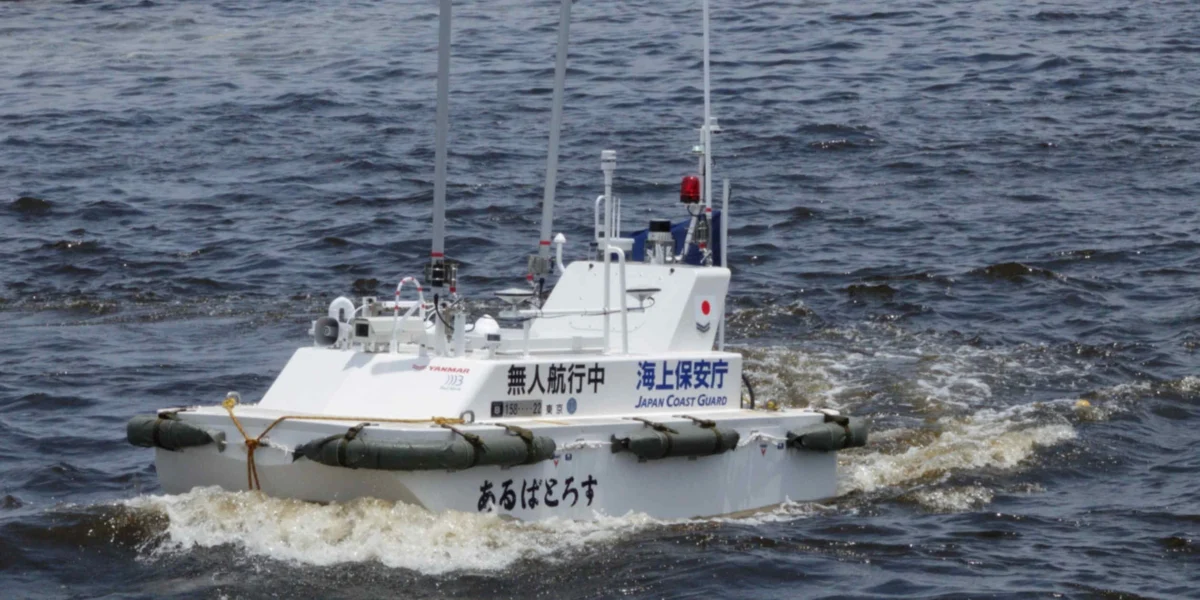
The Japan Coast Guard is piloting Yanmar’s pioneering uncrewed gas detection boat, a significant technological leap designed to enhance the safety and efficiency of responding to hazardous gas leaks following maritime incidents, a development poised to redefine emergency response protocols in Japanese waters. This advanced vessel, tested near the bustling port of Yokohama, represents a critical step towards automating dangerous tasks, thereby safeguarding human responders and accelerating the identification and mitigation of potential environmental and public health threats.
A New Era in Maritime Hazard Response
The core innovation lies in Yanmar Holdings’ fully automated boat navigation system, integrated into a specialized craft engineered for the precise detection of a range of dangerous gases. Traditional methods of gas detection in maritime accident scenarios often involve dispatching manned vessels into potentially hazardous zones, exposing coast guard personnel to risks associated with volatile substances, confined spaces, and the general instability of a compromised vessel or infrastructure. The introduction of an uncrewed system, capable of navigating autonomously and collecting vital data, directly addresses these inherent dangers.
The testing phase, which commenced recently near Yokohama, a major international port and a hub of industrial activity, is crucial. Yokohama’s complex maritime environment, characterized by a high volume of shipping traffic, extensive port facilities, and nearby industrial complexes, presents a realistic and challenging backdrop for evaluating the boat’s capabilities. The proximity to such a vital economic and logistical center underscores the immediate relevance and potential impact of this technology on Japan’s maritime security and economic continuity.
Background: The Evolving Threat Landscape
Maritime accidents, though infrequent, can have catastrophic consequences. Beyond the immediate danger to life and vessel integrity, incidents involving the spillage or release of hazardous materials, such as chemicals, fuels, or liquefied gases, pose significant risks. These substances can contaminate marine ecosystems, threaten coastal communities through airborne dispersion, and create explosive atmospheres, thereby escalating the danger for initial responders.
Historically, the response to such events has relied on a combination of specialized equipment operated by trained personnel. This often involves deploying floating booms, utilizing airborne sensors, and, critically, sending manned boats equipped with gas detection instruments into the vicinity of the incident. The time taken to assess the situation, the inherent risks to human crews, and the logistical complexities of deploying such missions under duress have been persistent challenges.
The development of uncrewed surface vessels (USVs) for hazardous environments has been a growing area of interest across various industries, including defense, environmental monitoring, and emergency services. Yanmar’s initiative taps into this global trend, adapting advanced robotics and sensor technology for a specific and critical maritime application. The company’s long-standing expertise in marine engineering and engine technology provides a strong foundation for developing robust and reliable vessels for demanding operational conditions.
Chronology of Development and Testing
While specific dates for the entirety of Yanmar’s development process are not publicly detailed, the testing near Yokohama signifies a mature stage in the project. It is understood that Yanmar has been engaged in research and development for autonomous marine systems for several years, building upon its established reputation. The collaboration with the Japan Coast Guard suggests a phased approach, likely involving initial prototype development, laboratory testing, and then progressively more complex real-world simulations.
The recent deployment near Yokohama can be viewed as a crucial validation phase. This period would involve rigorous testing of the boat’s navigation system under various sea conditions, its ability to accurately detect and report specific gases, its communication systems, and its overall reliability in a simulated emergency scenario. The involvement of the Japan Coast Guard, a highly professional and operationally experienced organization, ensures that the technology is being evaluated against stringent real-world operational requirements.
It is plausible that the testing protocol included scenarios simulating different types of maritime accidents, such as a collision involving a chemical tanker, a leak from a submerged pipeline, or an incident at a port facility involving the release of volatile organic compounds. The data collected during these tests would be instrumental in refining the boat’s algorithms, sensor calibration, and operational parameters.
Supporting Data and Technological Advancements
The uncrewed gas detection boat is equipped with a suite of advanced sensors capable of identifying a broad spectrum of hazardous gases. These might include:
- Flammable Gases: Such as methane, propane, and hydrogen, which pose explosion risks.
- Toxic Gases: Including hydrogen sulfide, chlorine, and ammonia, which can cause severe health effects or fatalities.
- Oxygen Depletion Sensors: To identify areas where oxygen levels have been dangerously reduced, posing an asphyxiation risk.
The autonomous navigation system leverages a combination of technologies, including:
- Global Navigation Satellite Systems (GNSS): For precise positioning.
- Inertial Navigation Systems (INS): To maintain orientation and track movement when GNSS signals are unavailable.
- LiDAR and Radar: For obstacle detection and avoidance, ensuring safe navigation around other vessels, structures, and debris.
- Advanced Sonar: Potentially for subsurface threat detection or monitoring of submerged leaks.
- Artificial Intelligence (AI) and Machine Learning (ML): To interpret sensor data, optimize navigation routes in complex environments, and potentially predict gas dispersion patterns.
The boat’s operational range and endurance would also be critical factors, allowing it to cover significant areas of water without constant human supervision. Its ability to transmit real-time data wirelessly to a command center is paramount for informed decision-making by emergency responders. This data would include gas concentrations, precise location, environmental conditions (wind speed, direction, temperature), and visual imagery from onboard cameras.
Official Responses and Stakeholder Perspectives
While direct quotes from Yanmar Holdings and the Japan Coast Guard regarding the specific testing are not yet available in the provided excerpt, the initiative itself speaks volumes.
Japan Coast Guard: The Coast Guard’s commitment to testing this technology underscores its proactive approach to modernizing its fleet and operational capabilities. By embracing uncrewed systems, the service aims to:
- Enhance Personnel Safety: Removing human operators from immediate danger is a primary objective.
- Improve Response Time: Autonomous deployment can be initiated more rapidly than manned missions.
- Increase Operational Efficiency: Reducing the need for large crews and complex logistics for certain hazardous tasks.
- Gather More Comprehensive Data: Uncrewed platforms can potentially operate for longer durations and in more challenging conditions.
Yanmar Holdings: For Yanmar, this project represents a significant advancement in its diversification into advanced robotics and autonomous solutions. The company’s strategic focus on innovation in this domain positions it as a key player in the emerging market for uncrewed marine technology. Success in this project could lead to broader applications for their systems in other maritime sectors, including environmental monitoring, infrastructure inspection, and even offshore energy operations.
Inferred Reactions: It is logical to infer that other maritime stakeholders, such as port authorities, shipping companies, and environmental agencies, would view this development with keen interest. The potential for faster, safer, and more effective responses to hazardous incidents could translate into reduced economic disruption, minimized environmental damage, and enhanced public safety.
Broader Impact and Implications
The successful integration and deployment of Yanmar’s uncrewed gas detection boat could have far-reaching implications for maritime safety and environmental protection in Japan and beyond.
- Standardization of Uncrewed Response: This initiative could pave the way for the standardization of uncrewed vessel usage in emergency response, encouraging other nations and organizations to adopt similar technologies.
- Technological Advancement: The development process itself drives innovation in sensor technology, AI, navigation systems, and marine robotics.
- Economic Benefits: Faster incident resolution can lead to reduced cleanup costs, less downtime for port operations, and a quicker return to normal economic activity following an incident.
- Environmental Stewardship: More rapid detection and containment of hazardous spills can significantly mitigate long-term environmental damage to marine life and coastal areas.
- Workforce Evolution: While automation may raise questions about human roles, it also signifies an evolution of the maritime workforce, with a greater emphasis on technical expertise in operating, maintaining, and interpreting data from advanced autonomous systems.
The testing near Yokohama is not merely a technological demonstration; it represents a strategic investment in the future of maritime safety. As the world’s maritime activities continue to grow in complexity and scale, the need for intelligent, autonomous, and safe response capabilities becomes increasingly critical. Yanmar’s uncrewed gas detection boat stands as a testament to Japan’s commitment to leveraging cutting-edge technology to meet these evolving challenges, promising a safer and more secure maritime future. The continued progress and eventual widespread adoption of such systems will be closely watched by the global maritime community.