Lina Wu
TOKYO — The United States has formally requested that the Japanese government significantly increase its financial contribution to hosting American forces stationed in Japan. Negotiations are currently underway for a new host-nation support budget, with the U.S. seeking more than 3 trillion yen (approximately $18.8 billion) over a five-year period. This proposed figure represents a near threefold increase compared to the current spending levels, a development that underscores shifting geopolitical priorities and the evolving security landscape in the Indo-Pacific region.
Escalating Security Concerns and the Rationale for Increased Funding
The substantial increase in the U.S. request is widely understood to be driven by a confluence of factors, primarily the escalating assertiveness of China in the Indo-Pacific and the ongoing strategic competition between Washington and Beijing. The presence of U.S. military bases in Japan is a cornerstone of American power projection and a critical deterrent against potential aggression in the region. Maintaining and enhancing these facilities, along with the logistical and operational readiness of U.S. forces, requires substantial investment.
Host-nation support, formally known as the Special Measures Agreement (SMA) in Japan, covers the costs borne by Japan for the presence of U.S. forces, including expenses related to personnel, facilities, and joint training exercises. These costs encompass everything from local labor for base operations to utilities, construction, and the relocation of U.S. military families. The current SMA, which expired in March 2021, was extended on a year-to-year basis, reflecting the complexities of the negotiations. The U.S. desire for a multi-year agreement with a significantly higher financial commitment signals a long-term strategic vision for reinforcing its military posture in the region.
A Timeline of Negotiations and Past Agreements
The history of host-nation support negotiations between the U.S. and Japan is marked by periods of intense discussion and, at times, political friction. The current request follows a pattern of increasing financial contributions from Japan. Under the previous SMA, which was in effect from 2016 to 2021, Japan contributed approximately 189.9 billion yen annually, totaling around 950 billion yen over five years. This new proposal, exceeding 3 trillion yen over five years, represents a dramatic escalation.
The discussions leading up to this request have likely been ongoing for an extended period, involving diplomatic channels and defense ministries of both nations. The U.S. has consistently emphasized the importance of burden-sharing and the need for allies to contribute more significantly to collective security. Japan, under its post-war pacifist constitution, has historically been a strong supporter of the U.S.-Japan alliance, providing substantial financial and logistical backing for U.S. forces. However, the scale of the current U.S. request is unprecedented and is expected to generate considerable debate within Japan.
Supporting Data: The Economic and Strategic Significance of U.S. Forces in Japan
The economic impact of U.S. military bases in Japan is substantial. While precise figures fluctuate, the U.S. military presence supports thousands of local jobs and injects billions of yen into regional economies through procurement and services. Strategically, Japan hosts approximately 54,000 U.S. military personnel across numerous bases, including the U.S. Naval Base Yokosuka, homeport to the U.S. Seventh Fleet, and the U.S. Air Force’s Kadena Air Base in Okinawa, a critical hub for air power projection.
The increasing costs associated with maintaining advanced military equipment, personnel readiness, and operational tempo for these forces in a dynamic geopolitical environment are a key driver for the U.S. request. Furthermore, the need for modernization of infrastructure at these bases to accommodate new weapon systems and evolving operational doctrines also contributes to the increased financial demands. For instance, the ongoing development of missile defense systems and the potential deployment of new long-range strike capabilities require significant investment in facilities and support infrastructure.
Reactions and Potential Implications
While official statements from both the U.S. and Japanese governments are likely to be measured and emphasize the strength of the alliance, the magnitude of the proposed increase is expected to be met with scrutiny within Japan. Opposition parties and segments of the public may question the affordability and necessity of such a substantial financial commitment, particularly given Japan’s own economic challenges and aging population.
Potential Economic Impact on Japan: A nearly threefold increase in host-nation support would place a significant strain on Japan’s national budget. The allocation of such funds would necessitate difficult choices in other areas of public spending, potentially leading to debates about defense spending priorities versus social welfare programs.
Geopolitical Implications: The U.S. request underscores the growing perceived threat from China and the U.S. commitment to a strengthened Indo-Pacific strategy. A successful negotiation and increased Japanese contribution would signal a robust and unified front against regional destabilization. Conversely, prolonged or unsuccessful negotiations could create uncertainty and potentially strain the alliance.
Alliance Dynamics: The negotiation process itself will be a test of the U.S.-Japan alliance’s resilience and the diplomatic skills of both governments. Japan’s response will also be closely watched by other U.S. allies in the region, as it could set a precedent for future burden-sharing arrangements.
The Path Forward: A Delicate Balancing Act
The coming months will be crucial as Japan deliberates on the U.S. proposal. The Japanese government, led by Prime Minister Fumio Kishida, will need to weigh the strategic imperatives of the alliance against domestic economic realities and public opinion. The Ministry of Defense and the Ministry of Foreign Affairs will be at the forefront of these discussions, engaging in detailed negotiations with their U.S. counterparts.
Key considerations for Japan will include:
- Verification of Costs: Ensuring that the proposed funding accurately reflects the actual costs incurred by hosting U.S. forces.
- Fairness and Burden-Sharing: Assessing whether the proposed increase aligns with the principles of equitable burden-sharing within the alliance.
- Domestic Consensus: Building political and public support for any agreement reached.
- Strategic Alignment: Confirming that the increased contribution directly supports shared security objectives in the Indo-Pacific.
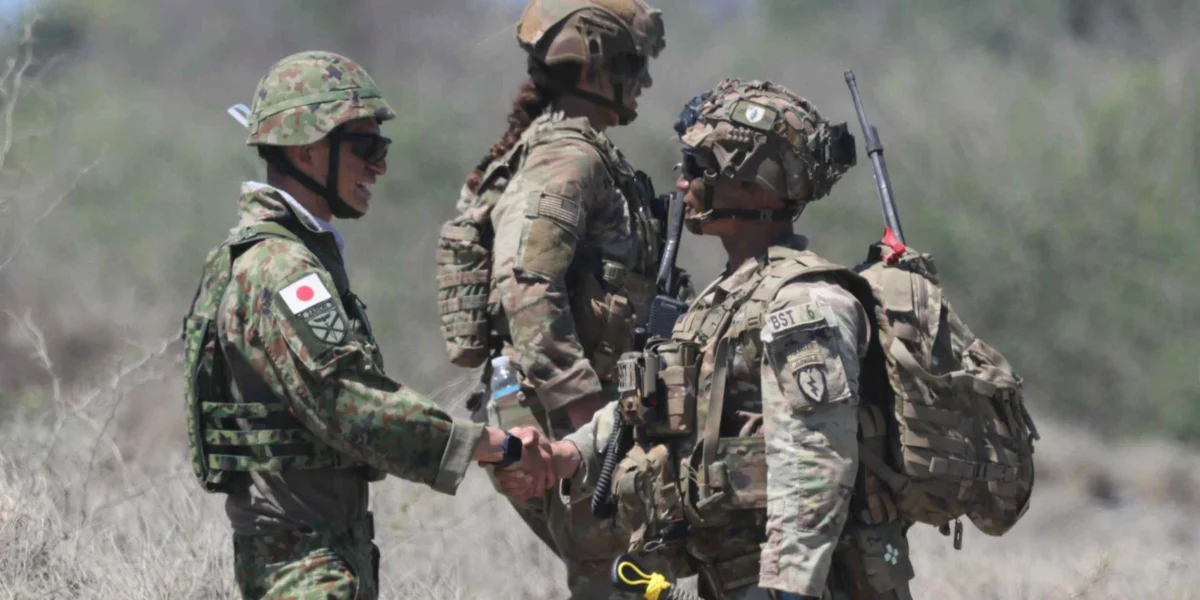
The U.S.-Japan alliance remains a linchpin of regional security. The current negotiations over host-nation support are a clear indicator of the evolving strategic environment and the shared commitment of both nations to maintaining peace and stability in the Indo-Pacific. The outcome of these discussions will have significant implications for the future of regional security and the enduring strength of one of the world’s most important bilateral alliances. The sheer scale of the U.S. request, however, signals a new era in these long-standing negotiations, demanding careful consideration and robust diplomatic engagement from both Tokyo and Washington. The image of Japanese and American soldiers, as depicted in the accompanying photograph from the Balikatan exercise, symbolizes the deep operational ties that underpin this crucial alliance, ties that will now be tested by the economic realities of intensified regional competition.