Gilang Muhammad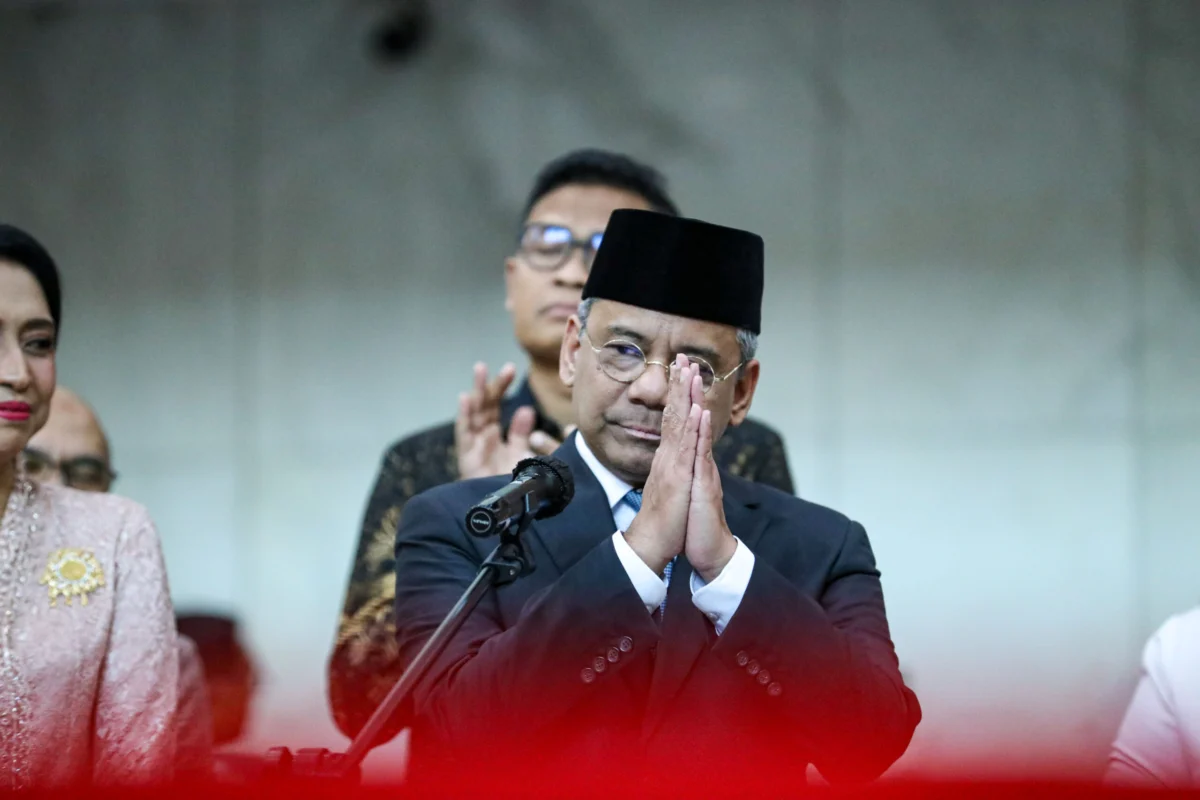
Indonesia, Southeast Asia’s largest economy, has appointed Suahasil Nazara as its new Finance Minister, marking the third such change in the critical economic portfolio within two years. The significant reshuffle, which saw Nazara sworn in on September 14, 2026, just hours after his predecessor Purbaya Yudhi Sadewa was dismissed, places a renewed spotlight on the nation’s economic stability, fiscal prudence, and the delicate balance between government policy and central bank independence. This pivotal appointment comes at a challenging juncture, with analysts widely flagging the imperative for a departure from what has been described as "interventionist" policymaking and a steadfast commitment to fiscal discipline.
President Prabowo Subianto’s decision to replace Purbaya Yudhi Sadewa with his deputy, Suahasil Nazara, sends a clear signal to domestic and international markets. The move follows a period of considerable economic turbulence, characterized by external pressures from global conflicts and internal policy uncertainties that had begun to erode investor confidence. Nazara, a seasoned technocrat with extensive experience within the Ministry of Finance, is now tasked with navigating a complex landscape defined by ambitious growth targets, constrained fiscal space, and heightened scrutiny over the autonomy of key economic institutions.
A Critical Juncture for Southeast Asia’s Largest Economy
Indonesia’s economic trajectory has been under intense pressure throughout 2026. The reverberations of the Iran war-led energy crisis have sent global energy prices soaring, directly impacting Indonesia’s import bill and substantially driving up the cost of energy subsidies. These escalating subsidy expenditures have, in turn, placed immense strain on the national budget, necessitating difficult cuts to crucial flagship development programs. The financial markets have reacted negatively to this environment of uncertainty and fiscal strain, with the benchmark stock index experiencing a decline of more than 25% over the year. Compounding this, the Indonesian rupiah had tumbled to historic lows against the U.S. dollar in June, signaling deep-seated concerns among investors regarding the nation’s economic resilience and policy direction.
This backdrop of economic vulnerability provides the immediate context for Nazara’s appointment. The perceived policy uncertainty under the previous minister had led to credit rating outlook downgrades from prominent agencies like Fitch and Moody’s, despite the country’s Gross Domestic Product (GDP) growth climbing to a three-year high of 5.6% in May 2026. While robust growth figures offered a glimmer of hope, the underlying fiscal pressures and the perceived unpredictability of economic policy overshadowed these achievements, contributing to the broader sentiment of unease.
The Predecessor’s Tenure: A Year of Turbulence
Purbaya Yudhi Sadewa’s one-year tenure as Finance Minister was marked by significant challenges and a combative relationship with certain market segments. Appointed less than two years prior to his dismissal, his period in office coincided with a global economic slowdown and a surge in commodity prices, particularly energy. While the administration aimed to cushion its citizens from the full impact of these external shocks through subsidies, the sheer scale of these interventions became fiscally unsustainable.
Under Purbaya, concerns regarding the government’s commitment to fiscal prudence grew among investors and rating agencies. The explicit policy uncertainty cited by Fitch and Moody’s in their credit outlook downgrades underscored the market’s discomfort. These downgrades typically signal an increased risk for investors, potentially leading to higher borrowing costs for the government and Indonesian corporations, and further weakening the currency. Although the official budget deficit for 2026 was projected to widen to 2.85% of GDP – still within the legally mandated limit of 3% – the path to achieving this and the broader fiscal management strategies were viewed with skepticism. The substantial market losses and the rupiah’s depreciation during this period were direct reflections of this eroding confidence.
Suahasil Nazara: A Return to Technocratic Prudence?
The appointment of Suahasil Nazara is largely being interpreted as a move to restore stability and credibility to Indonesia’s economic leadership. Nazara is not a new face within the Ministry of Finance; he served as Deputy Finance Minister for seven years prior to this elevation and previously led the ministry’s fiscal policy agency from 2015 to 2019. His long-standing career within the finance ministry, often associated with the highly respected tenure of former Finance Minister Sri Mulyani Indrawati, positions him as a known and trusted technocrat.
Analysts have largely welcomed his appointment. Qi Hang Tay, senior Asia analyst at the Economist Intelligence Unit, highlighted Nazara’s "deep Finance Ministry experience and strong links to the Sri Mulyani era." Tay further elaborated that Nazara’s internal pedigree "lowers transition risk" significantly, as he possesses an intimate understanding of Indonesia’s complex budget machinery and fiscal operations. This familiarity is expected to facilitate a smoother policy implementation process and reduce the potential for further disruptions.
Gareth Leather, senior Asia economist at Capital Economics, described Nazara’s appointment as "a welcome development," cautiously adding that more tangible evidence of improvements in policymaking would be necessary before concluding that Indonesia has "truly turned a corner." Nevertheless, the initial market reaction has been positive. Following the pivot towards greater fiscal discipline in the month leading up to Nazara’s appointment, the rupiah had already shown signs of strengthening, trading at 17,680 per dollar on Wednesday, September 11, 2026. DBS Bank economist Radhika Rao anticipates the currency to stabilize further, trading within a near-term range of 17,600 to 17,800, with enhanced fiscal credibility expected to underpin the bond market and provide critical support to the rupiah.
In his inaugural remarks as Finance Minister, Nazara wasted no time in addressing the core concerns of the market. He explicitly vowed to safeguard the budget’s credibility and pledged to maintain the fiscal deficit below the crucial 3% of GDP threshold. These early statements are seen as encouraging signs of a commitment to prudent fiscal management, a stark contrast to the perceived uncertainty of the preceding period.
Navigating Fiscal Constraints Amidst Ambitious Growth Agendas
Despite the initial optimism surrounding Nazara’s appointment, significant challenges lie ahead, particularly concerning the delicate balance between fiscal discipline and President Prabowo Subianto’s ambitious growth agenda. President Prabowo has championed various expensive programs aimed at boosting economic expansion and delivering on campaign promises. However, the fiscal space to fund these initiatives is becoming increasingly limited due to persistent economic pressures and the need to maintain budget credibility.
"The key constraint is that Nazara has to fund Prabowo’s expensive growth agenda with increasingly limited fiscal space," noted Qi Hang Tay of the EIU. This necessitates a strategic and disciplined approach to government spending. Analysts anticipate that Nazara’s tenure will likely usher in a period of less expansionary fiscal policy compared to what might have been pursued under a different leadership. This shift is also expected to foster a more conciliatory and cooperative relationship with Bank Indonesia, the central bank, as both institutions strive to ensure overall economic stability.
The 2027 budget, currently in its planning stages, will serve as a crucial early indicator of Nazara’s policy direction. His decisions regarding fiscal spending allocations, revenue assumptions, and the projected deficit will provide significant clues on whether a genuine shift in policymaking is underway. The challenge will be to identify and potentially trim or delay programs that have, so far, failed to deliver quick economic velocity relative to their cost, while still protecting fiscal credibility.
The Shadow of Central Bank Autonomy
Beyond the immediate fiscal concerns, Nazara’s appointment is also viewed through the lens of growing unease regarding the independence of Indonesia’s central bank, Bank Indonesia (BI). This leadership reshuffle at the Ministry of Finance comes weeks after Bank Indonesia Governor Perry Warjiyo abruptly resigned in July 2026. These changes, occurring in close succession, have intensified scrutiny over the extent of control President Prabowo now wields over both fiscal and monetary policy.
Concerns about central bank autonomy were further amplified by several preceding events. In February 2026, President Prabowo’s nephew, Thomas Djiwandono, was named a deputy governor of Bank Indonesia. While Djiwandono possesses relevant experience, his familial ties to the president raised eyebrows among observers worried about potential political influence on an institution designed to be independent. Subsequently, on September 1, 2026, parliament officially picked senior deputy governor Destry Damayanti as Bank Indonesia’s first woman governor. While her appointment was generally welcomed for its historical significance and her professional background, the sequence of events has led some to question the underlying dynamics of these high-level personnel changes.
Joshua Kurlantzick, a senior fellow at the Council on Foreign Relations, articulated these concerns, describing Nazara’s elevation as "a further, and worrisome, sign of the consolidation of economic power in the hands of Prabowo." Kurlantzick specifically stressed his worries over the independence of Bank Indonesia, highlighting a broader trend that suggests a potential move away from the "more populist and interventionist policymaking that has characterized Prabowo’s presidency so far," as noted by Gareth Leather. However, Kurlantzick’s perspective indicates that not everyone views these appointments as entirely reassuring, particularly regarding the long-term health of institutional checks and balances.
Market Sentiment and Economic Indicators
The stability of the rupiah and the performance of Indonesia’s bond market will be key barometers of investor confidence in the new economic team. The strengthening of the rupiah from its historic lows in June, coupled with the stabilization projected by DBS Bank, suggests that early signals of fiscal discipline have resonated positively. A credible fiscal policy, championed by Nazara, is crucial for anchoring the bond market, ensuring that the government can finance its operations and debt at manageable costs.
However, the path to sustained recovery remains contingent on consistent policy signals. As Gareth Leather emphasized, "The new finance minister will need to be much clearer about his priorities and provide investors with more consistent signals on fiscal policy." The credit rating outlooks from Fitch and Moody’s, which were downgraded during Purbaya’s tenure due to policy uncertainty, will also be closely watched. A consistent, predictable, and prudent fiscal approach under Nazara could potentially lead to a revision of these outlooks, signaling improved confidence in Indonesia’s economic management.
Looking Ahead: The 2027 Budget and Beyond
The true test of Nazara’s influence and the direction of Indonesia’s economic policy will unfold in the coming months. The finalization and presentation of the 2027 budget will be the first major policy document reflecting his priorities. This budget will offer crucial insights into the government’s approach to fiscal spending, revenue generation, and deficit management.
On the monetary side, a clearer separation between fiscal policy and the central bank’s operations will be another vital signal. Analysts will be observing whether the government reduces its reliance on Bank Indonesia to support growth or absorb a larger share of the financing burden. A genuine commitment to central bank independence would involve the government refraining from leaning on BI for quasi-fiscal activities, allowing the central bank to focus squarely on its mandate of price stability.
As Tay concluded, the test for Nazara is whether he can effectively trim or delay programs that have, thus far, failed to deliver quick economic velocity relative to their cost. "If he does that while protecting fiscal credibility, that would point to a genuine shift," he stated. "But if spending ambitions remain unchanged and the adjustment is mostly rhetorical, it would look more like business as usual." The next few months will be critical in determining whether Indonesia is indeed pivoting towards a new era of technocratic prudence and institutional integrity, or if the recent changes are merely a temporary realignment in a complex political and economic landscape. The eyes of both domestic and international investors will be fixed on Jakarta, awaiting tangible evidence of a sustained commitment to sound economic governance.