Gilang Muhammad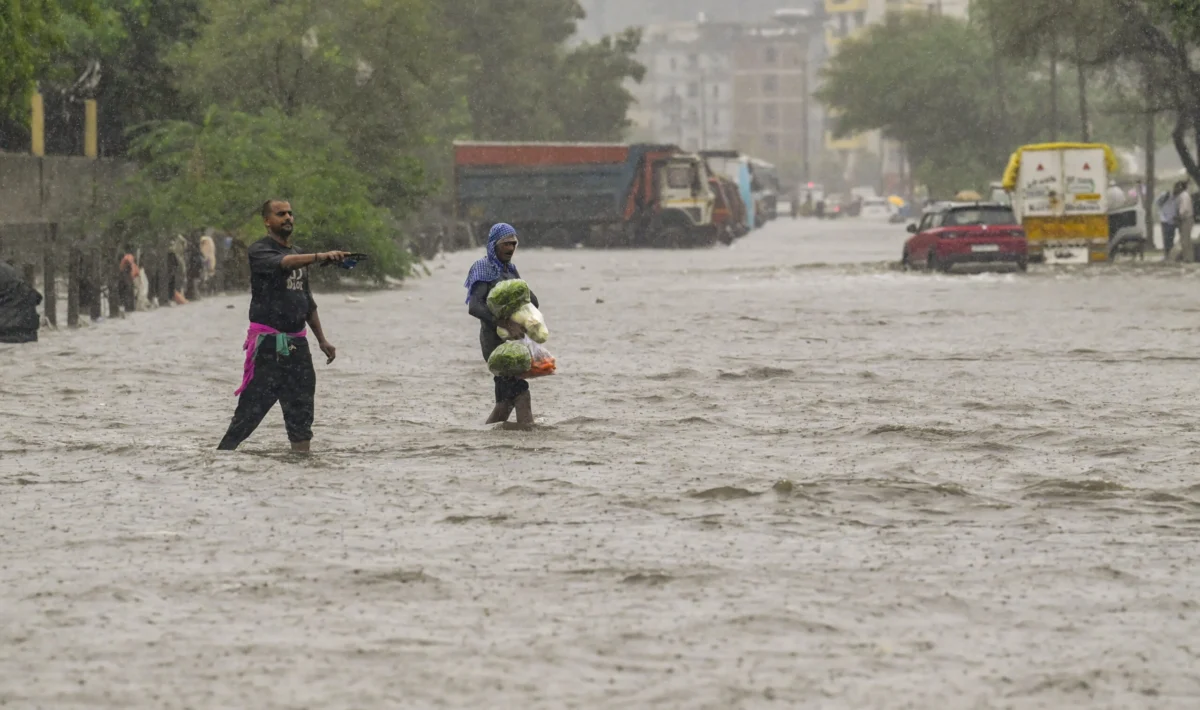
India’s consumer price inflation registered a significant rise to 4.38% in June 2026, an notable acceleration from 3.93% recorded in May, as the nation grapples with a confluence of adverse factors. Heightened geopolitical tensions stemming from the U.S.-Iran conflict and an increasingly erratic monsoon season have exerted substantial upward pressure on both food and fuel prices, intensifying cost burdens across the world’s fastest-growing major economy. This headline inflation figure surpassed the consensus expectation of economists, who, according to a Reuters poll, had projected a more modest 4.30% increase, underscoring the unexpected severity of the price surge.
The Anatomy of June’s Inflationary Spike
The detailed breakdown of the Consumer Price Index (CPI) for June 2026, released by India’s Ministry of Statistics and Program Implementation (MoSPI) on Monday, painted a challenging picture. The year-on-year inflation rate based on the All India Consumer Food Price Index (CFPI) escalated to 5.32% for the month, demonstrating the potent impact of agricultural supply disruptions and elevated input costs on household budgets. This sharp increase in food inflation is particularly concerning given its disproportionate effect on lower-income segments of the population, for whom food constitutes a larger portion of their expenditure basket. Simultaneously, the transport sector witnessed a considerable inflationary surge, with prices rising 4.3% in June, a stark acceleration from the 1.75% increase observed in May. This upward trajectory in transport costs is directly attributable to the escalating global oil prices, which have a pervasive effect on logistics, supply chains, and ultimately, the cost of goods and services across the economy.
The urban and rural components of inflation also revealed a broad-based pressure. While urban CPI often reflects the impact of services and manufactured goods more acutely, rural CPI is highly sensitive to food and fuel prices, making the current scenario particularly challenging for the vast agrarian population. The MoSPI’s comprehensive data highlighted that various sub-groups within the food and beverages category, such as cereals, pulses, vegetables, and edible oils, contributed significantly to the overall food inflation, reflecting a widespread increase in agricultural commodity prices. This broad-based increase suggests that the inflationary pressures are not isolated to a few commodities but are rather systemic, driven by underlying supply-side vulnerabilities and external shocks.
Geopolitical Echoes: The U.S.-Iran Conflict and Oil Market Volatility
A primary catalyst for the surge in fuel prices, and consequently transport inflation, has been the renewed hostilities between the United States and Iran. Following a brief and fragile ceasefire in June, tensions in the Middle East reignited last week, sending tremors through global energy markets. The crux of this geopolitical standoff lies in the control of the Strait of Hormuz, a narrow yet critically important maritime chokepoint. Situated between the Persian Gulf and the Gulf of Oman, this strait is one of the world’s most vital trade routes for global energy supplies, through which an estimated one-fifth of the world’s total petroleum consumption, and a third of the world’s liquefied natural gas (LNG), passes daily. Any disruption or perceived threat to navigation through this strait invariably triggers a sharp increase in global oil prices, reflecting market anxiety over potential supply shortages.
India, a nation heavily reliant on energy imports to fuel its rapid economic expansion, finds itself particularly vulnerable to these geopolitical developments. The South Asian giant imports nearly 85% of its total fuel needs, making it highly susceptible to fluctuations in international crude oil prices. Furthermore, India’s dependence on the Strait of Hormuz is profound: approximately 50% of its crude oil imports, 60% of its liquefied natural gas (LNG), and virtually all of its liquefied petroleum gas (LPG) supplies transit through this strategic waterway. A sustained period of elevated oil prices not only inflates India’s import bill, putting pressure on its current account deficit and foreign exchange reserves, but also translates directly into higher domestic petrol, diesel, and cooking gas prices. This, in turn, cascades across the economy, increasing operational costs for industries, freight charges for goods, and daily expenses for ordinary citizens, thereby feeding into headline inflation.
Historically, geopolitical instability in the Middle East has repeatedly demonstrated its capacity to roil global energy markets and inflict economic pain on oil-importing nations like India. The current escalation between the U.S. and Iran serves as a potent reminder of this enduring vulnerability, forcing policymakers to contend with external shocks that are beyond their immediate control. The immediate aftermath of such conflicts often sees a flight to safety in financial markets, weakening emerging market currencies like the Indian Rupee, which further exacerbates the cost of imports.
The Monsoon Conundrum: El Niño, Rainfall Deficits, and Agricultural Resilience
Compounding the external energy shock is an internal environmental challenge: the specter of an unpredictable monsoon season, heavily influenced by the El Niño phenomenon. El Niño, a naturally occurring climate pattern characterized by the warming of ocean surface temperatures in the central and eastern tropical Pacific Ocean, significantly impacts global weather patterns, often leading to reduced rainfall in parts of South Asia. For India, where agriculture remains a cornerstone of the economy, employing a substantial portion of the workforce and contributing significantly to the GDP, the monsoon is quite literally the lifeline. A good monsoon ensures abundant harvests, stable food prices, and robust rural incomes, while a deficient or erratic one can trigger widespread agricultural distress, crop failures, and inflationary spikes in food commodities.
The current monsoon season has been particularly perplexing and challenging. Despite initial concerns of a "parched June," which saw a significant rainfall deficit, the monsoon advanced rapidly in early July, bringing copious downpours to several regions. This rapid progression led to a reduction in the all-India rainfall deficit from a alarming 40% to a more manageable 15% as of July 8, according to S&P Global-owned Indian research and rating firm Crisil. The heavy rainfall was visibly evident in cities like New Delhi, where images captured on July 9, 2026, showed people navigating severely waterlogged roads in areas like Gazipur Sabzi Mandi. Such localized flooding, while providing much-needed relief from heat, stands in stark contrast to the broader concerns of an overall deficient monsoon.
However, the India Meteorological Department (IMD) has issued a forecast projecting July rainfall to be approximately 6% below the long-period average, indicating that the overall deficit risk persists. Furthermore, Crisil’s analysis highlighted a critical issue: the "swings between rainfall scarcity and surplus" can be "as disruptive to agriculture as a weak monsoon itself." Such erratic patterns influence critical agricultural decisions, impacting sowing schedules, crop health, and ultimately, the yield and quality of harvests. Farmers, faced with unpredictable weather, may delay planting or switch to less water-intensive crops, affecting the supply of staple food items. Excessively heavy rainfall in short bursts can also lead to waterlogging and crop damage, negating the benefits of the rain. The cumulative effect of these challenges is a heightened risk of crop shortages, which directly translates into upward pressure on food prices and contributes significantly to the overall consumer price inflation.
The Reserve Bank of India’s Stance and Future Economic Outlook
Against this backdrop of rising inflation and multifaceted economic pressures, India’s central bank, the Reserve Bank of India (RBI), finds itself in a precarious position. Last month, the RBI opted to keep interest rates unchanged, a decision reflecting a cautious approach amidst global uncertainties and domestic inflationary risks. However, the central bank simultaneously signaled its anticipation of rising inflation and a tempering of economic growth in the financial year ending March 2027.
The RBI’s updated forecasts paint a stark picture: it projects headline inflation to shoot up to 5.1% for the financial year, driven primarily by consumers facing higher fuel prices and the country confronting the risk of crop shortages exacerbated by weather-related disruptions from El Niño. Crucially, the central bank also pegged core inflation – which excludes volatile food and fuel prices – at 4.7% for the same period. While core inflation has historically been a key focus for the RBI in assessing underlying demand-side pressures, the current scenario presents a unique challenge. Prolonged periods of elevated energy and food prices invariably lead to a "second-round effect," where these costs seep into other sectors of the economy, increasing input costs for manufacturing, transportation expenses, and overall operational expenditures for businesses. This eventually translates into higher prices for non-food and non-fuel items, causing core inflation to rise even without a significant surge in demand.
The RBI’s monetary policy committee faces a delicate balancing act. On one hand, persistent inflation, especially food inflation, erodes household purchasing power and can dampen consumer sentiment, potentially slowing economic growth. On the other hand, aggressive interest rate hikes to curb inflation could stifle investment and economic activity, particularly when growth is already projected to temper. The central bank’s communication strategy will be crucial in anchoring inflation expectations and guiding market sentiment, while its actions will need to be calibrated to address the supply-side nature of the current inflationary pressures, which are often less responsive to monetary policy tools alone.
Broader Economic Implications and Consumer Impact
The confluence of geopolitical instability and climate variability poses significant broader economic implications for India. For households, particularly those with fixed incomes, the rise in food and fuel prices translates directly into a reduction in real income and purchasing power. This can lead to a tightening of discretionary spending, impacting sectors such as retail, consumer durables, and services. Small and medium enterprises (SMEs), which often operate on thin margins, will face increased operational costs due to higher fuel and raw material prices, potentially impacting their profitability and capacity for job creation.
The agricultural sector, already vulnerable to monsoon vagaries, will experience further stress. While some farmers might benefit from higher commodity prices, those facing crop losses due to erratic weather or struggling with increased input costs (like diesel for irrigation) will see their incomes erode. This could exacerbate rural distress and potentially lead to a shift of labor from agriculture to other sectors, with varying degrees of success.
From a macroeconomic perspective, the government’s fiscal space might also come under pressure. If inflation remains elevated, there could be calls for interventions such as targeted subsidies on essential commodities or fuel tax cuts, which would impact government revenues and potentially widen the fiscal deficit. Moreover, sustained high inflation could deter foreign investment, as investors seek economies with greater price stability.
The current situation underscores the interconnectedness of global events and domestic realities. India’s economic trajectory in the coming months will largely depend on the de-escalation of the U.S.-Iran conflict, the performance of the remaining monsoon season, and the adeptness of the Reserve Bank of India and the government in navigating these complex and often unpredictable challenges. The resilience of the Indian economy and its consumers will be thoroughly tested as these multi-pronged pressures continue to unfold.