Farhan Pambudi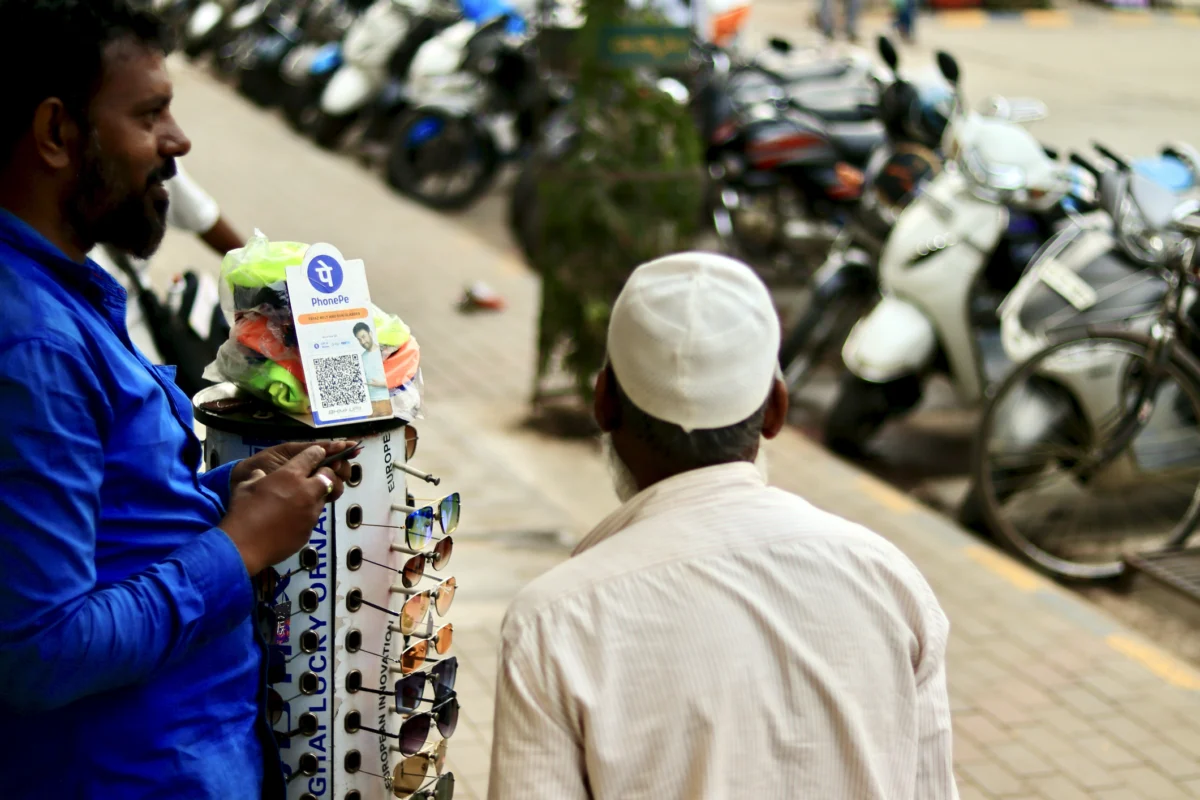
The National Payments Corporation of India (NPCI) has announced a significant shift in the country’s digital payment landscape by introducing a merchant discount rate (MDR) for high-value transactions on the Unified Payments Interface (UPI). Starting October 15, certain transactions exceeding ₹2,000 (approximately $21) will attract a 0.4% merchant fee, marking the end of a four-year period where the service was entirely free for businesses. This move is designed to address the growing operational costs of a network that now handles billions of transactions every month, moving the system toward a self-sustaining financial model.
While the new fee structure represents a fundamental change for merchants, the NPCI emphasized that the service remains free for consumers. The decision follows years of deliberation within the Indian government and the financial sector regarding the long-term viability of a zero-fee payment infrastructure. By targeting only larger transactions, authorities aim to protect small-scale commerce while generating the revenue necessary to maintain and secure India’s most critical piece of financial technology.
Detailed Breakdown of the New Fee Structure
The new pricing regime is nuanced, designed to balance the need for revenue with the goal of maintaining high adoption rates. The primary change is the 0.4% fee on UPI transactions above ₹2,000. However, the NPCI has implemented several safeguards and sector-specific variations to prevent the costs from becoming prohibitive for businesses or slowing the momentum of digital adoption.
For very large transactions, the merchant fee is capped at ₹300 (about $3) for payments of ₹75,000 ($783) or more. This ensures that high-ticket purchases, such as electronics or luxury goods, do not incur exorbitant processing costs that would drive merchants back to traditional banking methods or cash. Conversely, transactions of ₹2,000 or less—which constitute the vast majority of daily UPI activity—remain entirely free for merchants.
Furthermore, small-scale businesses are granted a significant exemption. Merchants who receive a total of up to ₹100,000 (about $1,041) per month through the UPI network will not be subject to the new charges, regardless of individual transaction sizes. This protection is aimed at the millions of "kirana" stores (small neighborhood grocery shops) and street vendors who have become the face of India’s digital revolution.
Certain specialized sectors will also follow a different fee schedule. For transactions above ₹2,000 in the railway, telecommunications, insurance, and fuel sectors, a flat fee of ₹5 (approximately 5 cents) will be applied. In the capital markets, transactions will attract a significantly lower rate of 0.02%, also capped at ₹300. These variations reflect the different margin structures and transaction volumes inherent in these specific industries.
The Evolution of UPI: A Chronological Context
The introduction of fees is the latest chapter in the rapid evolution of the Unified Payments Interface, which launched in 2016. To understand the significance of this shift, it is essential to view the timeline of UPI’s development and the policy decisions that led to this moment.
2016 – The Launch: UPI was introduced by the NPCI under the guidance of the Reserve Bank of India (RBI). It was designed as an interoperable system that allowed instant bank-to-bank transfers via mobile devices using a simple Virtual Payment Address (VPA) or QR code.
2017-2019 – Adoption Phase: UPI saw steady growth, bolstered by the 2016 demonetization exercise. During this period, various merchant fees existed, similar to those for debit cards.
January 2020 – The Zero-MDR Policy: In a bold move to eliminate all barriers to digital payment adoption, the Indian government scrapped merchant fees for UPI and RuPay transactions. This policy was instrumental in making UPI the dominant payment method in the country, as merchants no longer had to worry about losing a percentage of their sales to processing fees.
2021-2023 – Explosive Growth and Subsidy Regime: As transaction volumes skyrocketed, the cost of maintaining the infrastructure—servers, cybersecurity, and settlement systems—grew exponentially. To support banks and payment service providers (PSPs) who were losing revenue due to the zero-MDR policy, the Indian government began providing annual subsidies, often totaling billions of rupees, to cover operational losses.
August 2026 (Projected/Current Cycle) – Legislative Groundwork: The government amended India’s payments laws to provide a legal framework for the reintroduction of merchant fees. This was followed by a notification in September 2026 clarifying that while small transactions must remain free, larger transactions could finally be monetized.
October 15, 2026 – Implementation: The new fee structure officially takes effect, transitioning UPI from a government-subsidized utility to a market-linked financial service.
Financial Necessity and Operational Costs
The transition to a fee-based model is driven by the sheer scale of the UPI ecosystem. According to the latest data from the NPCI, the network processed 24.51 billion transactions in August alone, with a total value of ₹29.9 trillion (approximately $312 billion). This level of activity requires a massive underlying infrastructure that must be continuously upgraded to handle peak loads and prevent system failures.
Industry estimates cited by the NPCI suggest that the annual cost of operating the UPI network is approximately ₹200 billion ($2.1 billion). These costs encompass server maintenance, data storage, real-time fraud monitoring, cybersecurity protocols, and technical support for the hundreds of banks and fintech apps integrated into the system.
The NPCI has stated that the revenue generated from the new 0.4% fee will be distributed among the various participants in the UPI ecosystem. This includes the "remitter bank" (the customer’s bank), the "beneficiary bank" (the merchant’s bank), and the payment service providers (such as PhonePe, Google Pay, or Paytm). This distribution is intended to provide these entities with the capital needed to invest in further infrastructure expansion, particularly in rural areas where digital penetration is still growing.
Impact on the Fintech Ecosystem and Market Players
The reintroduction of fees is expected to provide a significant revenue boost to India’s fintech sector. For years, major players like PhonePe, Google Pay, and Paytm have struggled to find a clear path to profitability despite commanding massive market shares. Because they were prohibited from charging for UPI transactions, these companies had to rely on cross-selling other financial products, such as insurance, loans, or wealth management services.
With the new fee structure, these platforms will finally receive a direct cut of the transaction value for high-value payments. This change is particularly timely for companies like PhonePe and Razorpay, which are eyeing initial public offerings (IPOs). A predictable and scalable revenue stream from their core payment processing services makes these companies far more attractive to institutional investors and provides a more stable foundation for long-term growth.
However, the move also introduces new competitive dynamics. While UPI has been the "free" alternative to credit and debit cards, the 0.4% fee brings it closer to the cost of traditional card networks, although it remains significantly cheaper. For comparison, credit card merchant fees typically range from 1.5% to 2.5%, and debit card fees are capped at 0.9%. By keeping the UPI fee at 0.4%, the NPCI maintains a competitive advantage for the network while still capturing value.
Merchant Reactions and Potential Economic Implications
The primary concern regarding the new fees is whether merchants will accept the additional cost or attempt to bypass it. The NPCI has explicitly stated that merchants are not allowed to pass these charges on to customers. In theory, a consumer should pay the same price for a ₹5,000 item regardless of whether they use cash or UPI.
In practice, businesses with thin profit margins may find the 0.4% fee burdensome. While the NPCI argues that the fee is low enough to be absorbed, some retailers might encourage customers to use other payment methods for large purchases or offer small discounts for cash payments to avoid the charge. However, given the ubiquity of UPI and the convenience it offers both parties—eliminating the need for cash handling and change—most analysts believe the "stickiness" of the platform will prevent a significant migration away from digital payments.
Former Chief Economic Adviser Krishnamurthy Subramanian has raised important questions regarding the "social benefits" of UPI. He noted that UPI functions as "Digital Public Infrastructure" (DPI). By bringing millions of small businesses into the formal economy and reducing the nation’s reliance on physical cash, UPI provides value that exceeds the direct cost of transactions. The debate now centers on whether the move toward financial self-sustainability might inadvertently slow the broader goal of total formalization of the economy.
Broader Implications: Cash vs. Digital
Despite the meteoric rise of UPI, India remains a dual-economy where cash continues to play a major role. Recent data from the Reserve Bank of India (RBI) shows that currency in circulation is still growing at double-digit rates. While UPI has replaced cash for many small, daily transactions, cash is still frequently used for high-value purchases, often to avoid the digital "paper trail" or to bypass potential fees.
The NPCI’s decision to keep 95% of merchant transactions (those under ₹2,000) free is a strategic attempt to ensure that the "habit" of using UPI is not broken. By only taxing the top 5% of transactions by volume—which likely represent a much larger share of the total value—the authorities hope to generate sufficient revenue without discouraging the average user or the small-scale merchant.
As the October 15 deadline approaches, the focus will shift to the implementation phase. The NPCI and the RBI are expected to monitor merchant behavior closely to ensure that the new fees do not lead to "surcharging" or a resurgence in cash-only policies for large transactions. If successful, this move could provide a blueprint for other nations looking to build sustainable, high-volume digital payment networks without relying indefinitely on government subsidies.