Gilang Muhammad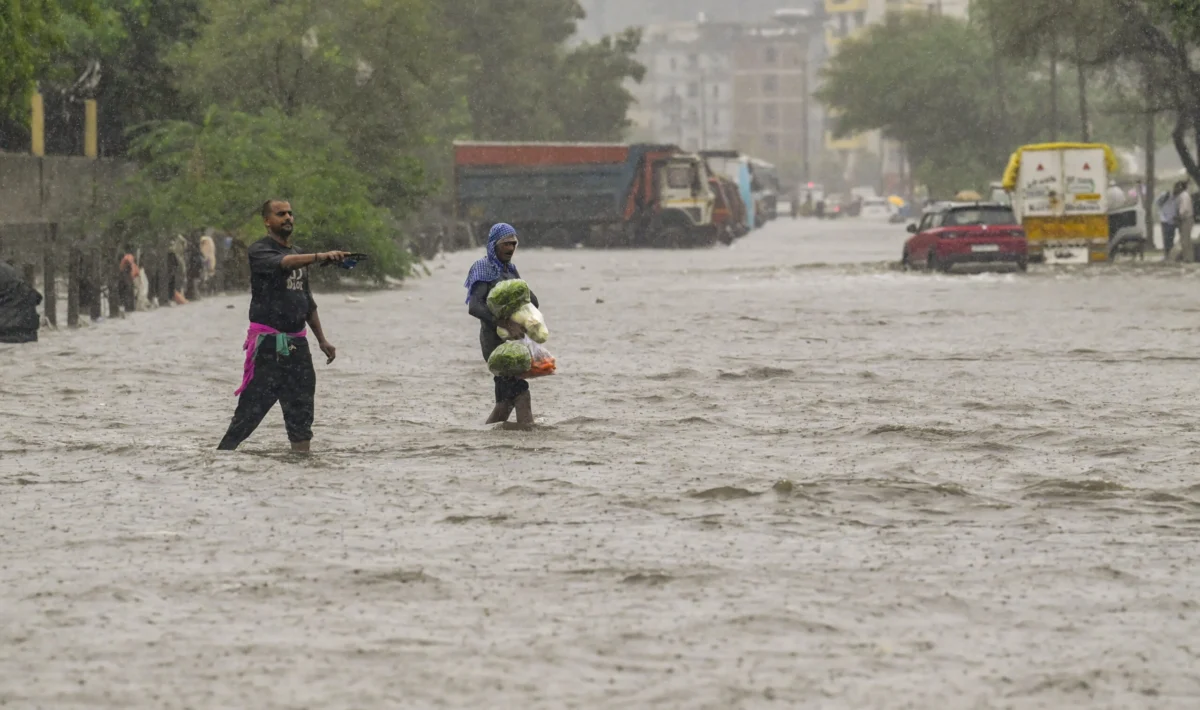
New Delhi, India – India’s consumer price inflation (CPI) escalated sharply to 4.38% in June, marking a significant increase from 3.93% recorded in May. This upward trajectory, which surpassed economists’ expectations of a 4.30% rise according to a Reuters poll, is largely attributed to a confluence of external geopolitical factors—specifically the resurgence of hostilities in the U.S.-Iran conflict—and internal climatic challenges, primarily a weak monsoon season exacerbated by the looming threat of El Niño. These dual pressures have exerted considerable upward force on food and fuel prices, adding significant cost burdens across the nation’s economy and impacting the everyday lives of millions of Indian citizens. The rising inflation figures present a complex challenge for policymakers in the Reserve Bank of India (RBI) and the government, as they strive to balance economic growth with price stability in the world’s fastest-growing major economy.
Inflationary Pressures Intensify Across Key Sectors
The latest data released by India’s Ministry of Statistics and Program Implementation on Monday painted a clear picture of intensifying inflationary pressures. The overall CPI increase to 4.38% in June underscores a broad-based rise in prices. A critical component of this surge is reflected in the All India Consumer Food Price Index (CFPI), which registered a year-on-year inflation rate of 5.32% for June. Food inflation is a particularly sensitive metric in India, directly impacting household budgets, especially for lower-income segments, and often triggering broader inflationary expectations. The jump in CFPI highlights vulnerabilities in the agricultural supply chain and the profound effect of weather-related disruptions on essential commodities.
Beyond food, the transportation sector also witnessed a notable acceleration in price increases. Transport inflation surged to 4.3% in June, a substantial jump from the 1.75% rise recorded in May. This acceleration is a direct consequence of escalating global fuel prices, which quickly translate into higher operational costs for logistics, public transport, and personal conveyance. The ripple effect of increased transport costs permeates the entire economy, raising the prices of goods and services as they move from production to consumption centers, thereby contributing to the broader inflationary spiral. These figures signal that the inflationary environment is not confined to one or two categories but is manifesting across critical sectors that directly influence daily expenses and business operations. The current inflation rate, while still within the RBI’s mandated target band of 2-6%, is steadily approaching the upper end, raising concerns about its trajectory if external and internal pressures persist.
The Geopolitical Shadow: US-Iran Conflict and Global Oil Markets
A primary external driver of India’s recent inflation surge is the renewed escalation of the U.S.-Iran conflict. After a brief period of ceasefire in June, hostilities between the two nations regrettably resumed last week, sending tremors through global energy markets. The crux of this geopolitical tension lies in the contest for control over the Strait of Hormuz, a narrow yet profoundly strategic waterway. The Strait of Hormuz is one of the world’s most vital choke points for global energy supplies, through which an estimated 20% of the world’s total petroleum liquids and a significant portion of liquefied natural gas (LNG) pass daily. Any disruption or perceived threat to navigation in this strait immediately triggers volatility in global oil prices.
Indeed, global oil prices have seen a significant uptick as the U.S. and Iran engage in renewed brinkmanship over this crucial maritime route. For India, the implications of this conflict are particularly severe due to its high dependency on energy imports. As the world’s third-largest crude oil importer and consumer, India relies on foreign sources for nearly 85% of its fuel needs. Furthermore, the Strait of Hormuz serves as an indispensable conduit for India’s energy security: approximately 50% of its crude oil imports, 60% of its liquefied natural gas (LNG), and almost all of its liquefied petroleum gas (LPG) supplies transit through this strait.
The resumption of hostilities translates directly into an "imported inflation" challenge for India. Higher global crude oil prices mean increased costs for Indian refiners and, subsequently, higher prices at the pump for petrol and diesel. This surge in fuel prices has a cascading effect: it drives up transportation costs for goods, from agricultural produce to manufactured products, ultimately pushing up consumer prices across the board. The Ministry of Petroleum and Natural Gas is expected to closely monitor these developments, potentially exploring alternative supply routes or strategic reserves to mitigate immediate shocks. Economists, meanwhile, have warned that prolonged instability in the Middle East and sustained high oil prices could significantly derail India’s economic recovery and make the RBI’s inflation management task considerably more challenging. The government may also face pressure to consider fiscal measures, such as excise duty adjustments, to cushion consumers from the full impact of global price rises, although such measures would have implications for government revenues.
El Niño’s Specter and Monsoon’s Unpredictability
Compounding the external energy shock is the internal challenge posed by the Indian monsoon, amplified by the pervasive threat of El Niño. El Niño, a climate phenomenon characterized by the warming of surface waters in the eastern tropical Pacific Ocean, historically has a strong correlation with deficient monsoon rainfall in India. A weak monsoon directly impacts agricultural output, which forms a significant portion of India’s economy and employment, particularly in rural areas.
The current monsoon season has presented a mixed and unpredictable picture. Following a "parched June," which saw an alarming 40% deficit in all-India rainfall, the monsoon currents advanced rapidly in early July. This swift progression helped to alleviate some of the immediate concerns, reducing the overall rainfall deficit to 15% as of July 8. While this recovery offered a glimmer of hope, the India Meteorological Department (IMD) has tempered expectations, forecasting that July rainfall will still come in at 6% below the long-period average (LPA). The LPA is a 50-year average of monsoon rainfall, serving as a benchmark for assessing the health of the monsoon. A deficiency below the LPA for July, a critical month for sowing and crop growth, remains a significant concern.
The analysis from S&P Global-owned Indian research and rating firm Crisil highlights a crucial aspect of this meteorological variability: "These swings between rainfall scarcity and surplus ‘can be as disruptive to agriculture as a weak monsoon itself’." Such erratic patterns complicate farmers’ decisions regarding sowing, irrigation, and crop management. For instance, initial dry spells can delay sowing, while subsequent heavy, localized downpours can lead to waterlogging and crop damage in certain regions, even as other areas remain dry. This unpredictability adversely affects crop health, reduces expected yields, and ultimately impacts rural incomes, which in turn influences broader consumer demand and economic activity. Key kharif crops such as paddy, pulses, oilseeds, and coarse cereals are particularly vulnerable to these variations. Agricultural experts and the Ministry of Agriculture and Farmers’ Welfare are likely engaged in continuous monitoring of crop conditions and advising farmers on contingency measures, such as drought-resistant varieties or alternative cropping patterns. The cumulative effect of a deficient monsoon, especially under the influence of El Niño, points towards a potential reduction in agricultural output, which would directly feed into higher food inflation in the coming months, adding another layer of complexity to India’s inflation battle.
Reserve Bank of India’s Stance and Future Outlook
Against this backdrop of rising inflation and multifaceted economic pressures, the Reserve Bank of India (RBI) faces a delicate balancing act. Last month, the central bank opted to keep its benchmark interest rates unchanged, signaling a cautious approach amidst evolving economic conditions. However, this decision was accompanied by clear forward guidance reflecting heightened concern over the inflationary outlook. The RBI explicitly stated its expectation for inflation to rise and for economic growth to temper in the financial year ending March 2027 (FY27).
Specifically, the RBI forecasts headline inflation to "shoot up to 5.1%" for FY27, a significant increase from current levels and closer to the upper end of its comfort zone. This projection incorporates the anticipated impact of higher fuel prices stemming from geopolitical tensions and the risk of crop shortages induced by weather-related disruptions, including El Niño. Alongside this, the central bank has pegged core inflation—a measure that excludes volatile food and fuel prices—at 4.7% for the same period. The RBI has repeatedly emphasized its focus on core inflation as a more stable indicator of underlying demand pressures and the stickiness of price increases in the economy.
While core inflation has not yet become a major concern compared to headline figures, the RBI acknowledges a critical transmission mechanism: prolonged periods of higher energy and food prices inevitably lead to an increase in core inflation. This occurs through various channels, including higher input costs for manufacturers (e.g., raw materials, packaging), increased transportation expenses for businesses, and elevated operational costs across sectors. These cost pushes eventually get passed on to consumers in the form of higher prices for a wider array of goods and services, embedding inflation more deeply into the economy. Monetary policy decisions by the RBI will be heavily contingent on the evolution of these factors. Governor Shaktikanta Das and the Monetary Policy Committee (MPC) are expected to reiterate their data-driven approach, maintaining a vigilant stance to ensure price stability while also supporting growth. Analysts widely anticipate that should inflation continue its upward trajectory and show signs of becoming entrenched, the RBI may be compelled to consider a shift in its monetary policy stance, potentially including interest rate adjustments, to rein in price pressures.
Broader Economic Implications and The Way Forward
The confluence of surging inflation, geopolitical energy shocks, and domestic agricultural vulnerabilities presents a formidable challenge for India’s economic managers. The implications of sustained high inflation are far-reaching, affecting various stakeholders across the economy.
For consumers, rising prices erode purchasing power, forcing households to spend a larger proportion of their income on essential goods like food and fuel. This can lead to a reduction in discretionary spending, impacting sectors such as retail, hospitality, and consumer durables. Lower purchasing power can also exacerbate income inequality, disproportionately affecting vulnerable populations.
Businesses face a double whammy of higher input costs and potentially weaker consumer demand. Increased expenses for raw materials, energy, and transportation can squeeze profit margins, making it challenging for companies to invest in expansion, innovation, or job creation. Small and medium-sized enterprises (SMEs), which are often less resilient to cost shocks, could be particularly impacted.
For the government, managing inflation while fostering economic growth becomes a tightrope walk. Fiscal policy tools, such as targeted subsidies or tax adjustments, might be considered to alleviate consumer burden, but these also carry implications for the national budget and fiscal deficit targets. Maintaining investor confidence, both domestic and international, is crucial for sustaining capital inflows and supporting India’s ambitious growth agenda. Persistent high inflation could make India a less attractive destination for foreign direct investment (FDI) if it signals macroeconomic instability.
From an international perspective, India’s inflation story is watched closely. As a major global economy, its price stability has ripple effects. If India’s inflation remains elevated compared to its peers, it could affect trade competitiveness and currency stability.
Looking ahead, policymakers face a complex matrix of decisions. The immediate focus will be on mitigating the impact of external shocks through diplomatic efforts to de-escalate geopolitical tensions and by exploring diversified energy supply chains. Domestically, effective management of the monsoon’s impact on agriculture will be paramount, requiring proactive measures in crop planning, water management, and ensuring timely availability of agricultural inputs. The RBI’s monetary policy will remain central to guiding inflation expectations and ensuring financial stability. While India has demonstrated remarkable resilience in sustaining its growth momentum, the current inflationary pressures underscore the interconnectedness of global and local factors, demanding a comprehensive and agile policy response to safeguard the nation’s economic future and ensure equitable prosperity for its vast population. The coming months will be critical in determining whether these inflationary headwinds can be successfully navigated without derailing India’s impressive economic trajectory.