Ella Zulfa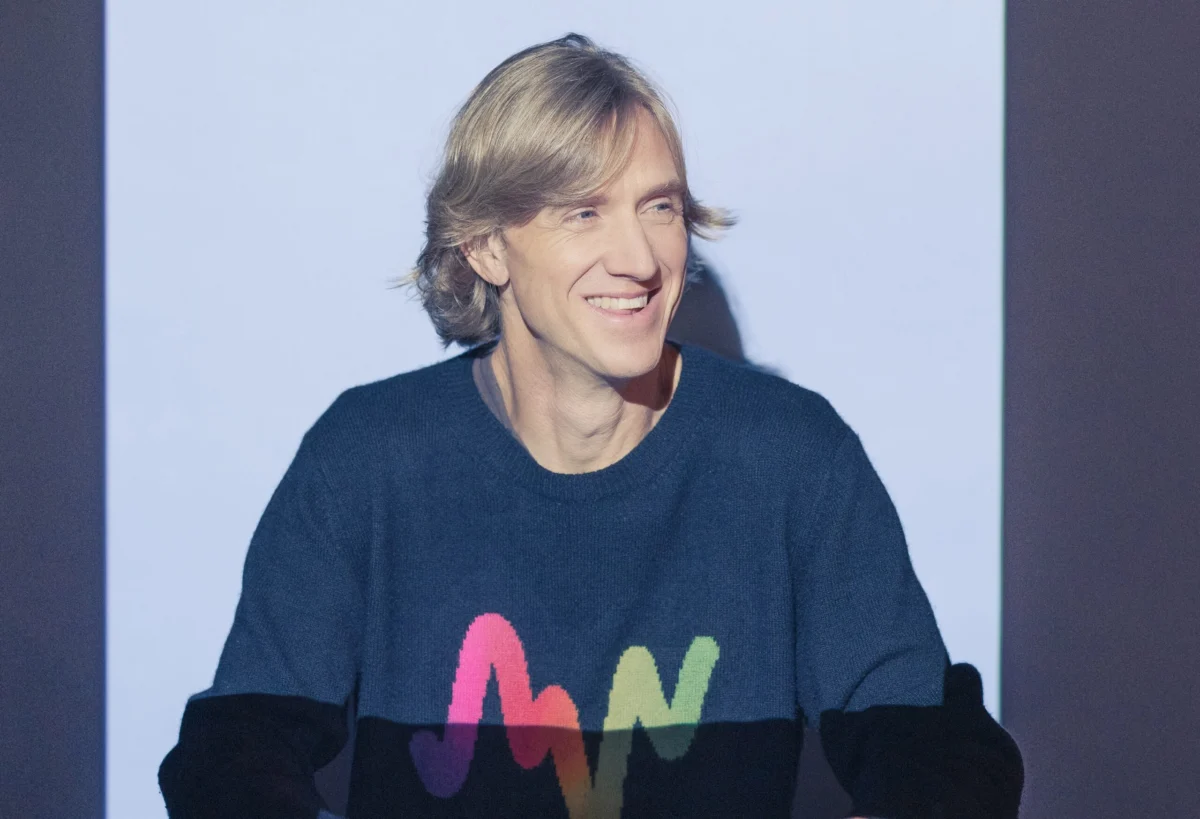
Ian Rogers, a pivotal figure in shaping the digital landscape of the internet age, is now directing his formidable expertise towards a new frontier: the security of digital assets and personal identity. Having played a crucial role in transforming the MP3 player from a nascent technology into a valuable acquisition for Yahoo, orchestrating the sale of Beats to Apple, and spearheading the launch of Apple Music, Rogers is now a driving force behind Ledger, a $1.5 billion security startup. From his base in rural Italy, Rogers, as Chief Human Agency Officer, is at the forefront of developing what he believes will be the next dominant consumer platform – one built not on entertainment, but on robust financial and identity security.
From Indiana’s Digital Dawn to Global Tech Icon
Rogers’ journey began in Indiana, where his fascination with computer science ignited in the early 1990s, coinciding with the explosive growth of the World Wide Web. He recalls this period as a transformative era for the burgeoning field. "It was a great time to study computer science because when I started, it was sort of like rocket science to people, and then by the end, people were trying AOL," Rogers shared in an interview with Entrepreneur. His early immersion allowed him to be present at the genesis of the web, contributing to the creation of some of its very first websites.
This early exploration into the digital realm soon intertwined with his passion for music. Rogers famously left graduate school to tour with a band, a decision that ultimately led him to California. It was there that his entrepreneurial spirit took flight. He was instrumental in developing a popular MP3 player, a groundbreaking device at the time, which he successfully sold to AOL in 1999. Not content to rest on his laurels, he went on to create another music application that captured the attention of Yahoo, leading to its acquisition. Rogers then assumed leadership of Yahoo Music, helming the division from 2003 to 2008, a period marked by significant innovation in digital music distribution and consumption.
His career trajectory continued its upward climb with the co-founding of Beats Music, a venture that revolutionized the music streaming experience. The immense success of Beats Music culminated in its acquisition by Apple in 2014. Rogers then transitioned to Apple, taking on the role of Senior Director of Apple Music and playing a lead role in the highly anticipated launch of the music streaming service in 2015. This personal investment in Apple Music remains a point of pride for Rogers, who recounted a poignant moment where his wife questioned his allegiance to Apple Music over Spotify. His simple, yet profound, answer: "Because I built it."
Rogers’ tenure at Apple profoundly influenced his understanding of product development and consumer behavior. He distilled a crucial insight: the power of an ecosystem. "When you buy an iPhone, you’re not buying a piece of hardware," he explained. "You’re buying blue bubbles instead of green bubbles; you’re buying AirDrop; you’re buying FaceTime. That’s part of the experience of being an Apple user versus being an Android user." This concept of an integrated, seamless user experience, which Apple had mastered from the iPod era through to the modern iPhone, became a cornerstone of his operational philosophy.
Following his impactful work at Apple, Rogers embarked on a new challenge in Paris, serving as the Chief Digital Officer for LVMH, the global luxury goods conglomerate. In this role, he was tasked with modernizing a historically brick-and-mortar business, successfully guiding the group’s e-commerce presence from a modest 3% in 2015 to a comprehensive 100% online operation, a transition significantly accelerated by the global pandemic.
Ledger: Securing the Future of Digital Assets and Identity
The foundational premise of Ledger, founded in 2014 by Nicolas Bacca, Eric Larcheveque, and Joel Pobeda, resonated deeply with Rogers’ evolving vision. The company’s core innovation lies in leveraging the same secure chip technology found in credit cards and passports to safeguard digital assets. Ledger designs and manufactures physical hardware cryptocurrency wallets, which are essentially secure vaults for private keys – the cryptographic credentials required to access and manage digital currencies. By keeping these sensitive keys entirely offline, Ledger devices offer a robust defense against the ever-present threat of online hacking.
Rogers joined Ledger in 2021 as Chief Experience Officer and, in a strategic evolution of his role, now serves as Chief Human Agency Officer. This title change reflects Ledger’s increasing focus on artificial intelligence security and the critical human element within it. "AI security is a top three problem for humanity at the moment," Rogers stated, underscoring the urgency and scale of the challenge. He elaborated, "What I realized is that that’s not about AI; it’s actually about humans. The job here is keeping humans secure and in control." This perspective highlights a shift from a purely technological approach to one that prioritizes user empowerment and autonomy in an increasingly complex digital world.
Ledger’s flagship product, the Nano Gen 5 hardware wallet, priced at $179, is marketed with the promise to "protect your assets and identity." The company has achieved significant market penetration, having sold over eight million devices globally. This widespread adoption is a testament to the growing demand for secure solutions in the burgeoning cryptocurrency and digital identity space. The company’s last reported valuation in 2021 stood at a substantial $1.5 billion, indicating strong investor confidence in its mission and technology.
A Glimpse into the Future: AI Agents and Founder Wisdom
Looking ahead, Rogers offers compelling insights for aspiring entrepreneurs and individuals navigating the evolving technological landscape. He firmly believes that the ability to manage AI agents will become an essential skill for everyone. "We will all become the managers of AI agents," he predicts. "The same way that we’re all kind of information peddlers today, we’re having an intelligence revolution that is actually computers taking actions on our behalf."
Rogers envisions a future where humans will define the parameters and validate the outcomes of tasks, while AI agents handle the intermediate processes. "Therefore, the same way that we all have computers on our desks today, we will all be having agents on our desks tomorrow," he stated. His advice to anyone starting their career today is unequivocal: "And so, if I were 25 years old, I would be building skills at managing agents. Period." He advocates for a hands-on approach, much like his own early engagement with web technologies, encouraging individuals to experiment with and master these emerging tools.
For founders, Rogers imparts a hard-won lesson drawn from his extensive experience: the critical importance of market selection and identifying genuine pain points. He candidly admits, "I think the main thing I’ve gotten wrong in my career is sizing the market relative to my own personal interest." He draws a parallel to common entrepreneurial endeavors born from personal familiarity, noting, "There’s a joke that every college student has a business idea that’s about either music or bars, because that’s what they know."
What truly impresses Rogers today are founders who delve into complex, often overlooked, yet essential sectors such as logistics and insurance. These entrepreneurs, he observes, possess the ability to "uncover real pain." His core philosophy for innovation is elegantly simple: "You find the pain, and then you make a painkiller. You don’t make a painkiller and then go looking for pain." This principle underscores the value of problem-first innovation, where solutions are meticulously crafted to address deeply felt needs, ensuring relevance and market impact. This approach, coupled with his visionary leadership, positions Ian Rogers and Ledger at the forefront of a new era of digital security and human empowerment.