Putri Inara
The psychological mechanism driving digital subscriptions is fundamentally rooted in the promise of future value, a concept that necessitates a strategic shift from merely producing content to actively curating a brand’s historical excellence. In the competitive landscape of digital publishing, the decision of a reader to subscribe—whether via RSS, email newsletters, or social media follows—is rarely a spontaneous act; rather, it is a calculated response to the perceived future utility of the creator’s output. To secure this commitment, professional bloggers and digital publishers must intentionally cultivate a sense of anticipation, convincing the audience that the content yet to be produced will match or exceed the quality of what has already been consumed.
The Core Principle of Anticipatory Content Strategy
The primary challenge for any digital publisher is bridging the gap between a visitor’s current consumption and their future loyalty. Industry data suggests that the average bounce rate for blogs ranges between 70% and 90%, meaning the vast majority of first-time visitors will never return unless a specific mechanism triggers a deeper connection. The most effective method for establishing this connection is the "quality guarantee" provided by past performance. When a reader encounters a high-value post, they subconsciously apply the "Halo Effect," assuming that future content from the same source will carry the same level of authority, utility, or entertainment.
Strategic anticipation is not built on vague promises or "coming soon" teasers alone; it is built on the visible evidence of a creator’s capabilities. By highlighting current and past quality content, publishers provide a roadmap of what the reader can expect. This serves as a silent advertisement for a continued relationship, transforming a transient visitor into a long-term subscriber.
Implementing High-Visibility Content Hubs: The "Sneeze Page"
One of the most technically effective strategies for building authority and anticipation is the implementation of "Sneeze Pages." This term, popularized within the digital publishing community, refers to a specialized landing page or a curated archive designed to propel readers deep into the blog’s ecosystem. Unlike a standard chronological archive, a Sneeze Page categorizes the most impactful, "evergreen" content into thematic clusters.
The strategic utility of a Sneeze Page is twofold. First, it immediately establishes the publisher as a comprehensive authority on a specific subject. For instance, a photography blog might feature a Sneeze Page titled "Essential Techniques for Low-Light Portraits." By presenting ten high-quality articles on this niche topic, the publisher demonstrates a depth of knowledge that justifies a subscription. Second, these pages significantly increase page views per session. Data from top-tier blogs indicates that users who land on a curated "Best Of" or "Sneeze Page" have a 40% higher probability of subscribing compared to those who land on a standard daily post.
Data-Driven Layouts and the Use of Heat Mapping
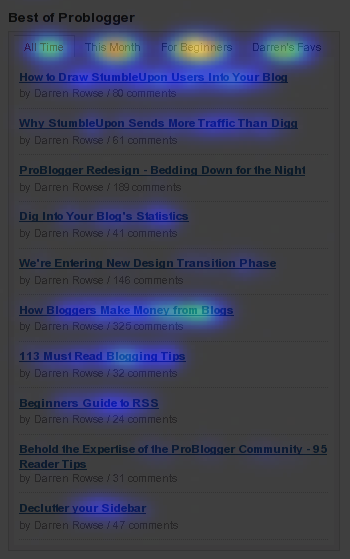
The placement of "Best Of" sections is a critical component of audience retention. To optimize these sections, professional publishers often utilize heat-mapping tools such as CrazyEgg or Hotjar. These tools provide visual representations of user engagement, revealing which areas of a website receive the most "eye-tracking" and click activity.
Historical data from ProBlogger’s own design iterations showed that "Best Of" sections placed prominently on the front page or in the upper-right sidebar consistently registered as "hot zones." This engagement indicates that readers are actively looking for a curated entry point into the site’s archives. By analyzing this data, publishers can move their most "subscriber-worthy" content into these high-traffic zones, thereby maximizing the conversion rate of casual readers into loyal followers.
The Chronology of Digital Audience Retention
The strategies used to build anticipation have evolved alongside the technical capabilities of the web. Understanding this timeline provides context for current best practices:
- 2004–2008: The RSS Era. During this period, the focus was on "frequency and consistency." Anticipation was built by posting at the same time every day, training readers to check their RSS feeds for updates.
- 2009–2014: The Pillar Content Phase. As the blogosphere became saturated, the strategy shifted toward "Pillar Content"—massive, 3,000-word guides that served as permanent resources. Anticipation was created by interlinking these pillars to create an "encyclopedic" feel.
- 2015–Present: The Personal Brand and Newsletter Era. Modern strategies focus on the "Sneeze Page" and landing page optimization. The emphasis is on "curation over volume," where publishers use sophisticated plugins to show first-time visitors content tailored to their specific search queries.
Leveraging Landing Pages and Search Intent
Advanced digital publishing now utilizes "Landing Site" plugins and scripts that detect a user’s referral source. For example, if a reader arrives via a Google search for "how to monetize a blog," the website can dynamically display a welcome bar or a sidebar widget featuring the blog’s top five articles on monetization.

This level of personalization creates an immediate sense of anticipation. The reader feels that the site is a bespoke resource for their specific needs. By matching content to search intent, publishers can achieve subscription rates that are significantly higher than the industry average. This tactic reinforces the idea that the publisher understands the reader’s challenges and will continue to provide solutions in the future.
Internal Linking and the "Authority Loop"
Regularly interlinking new posts with previous high-quality work is a fundamental requirement for building anticipation. This practice, often referred to as creating an "Authority Loop," ensures that a reader never reaches a "dead end" on a website. Every article should serve as a gateway to another piece of valuable information.
From a journalistic and SEO perspective, internal linking serves two purposes. It distributes "link equity" throughout the site, improving the search rankings of older posts, and it keeps the reader within the site’s ecosystem longer. The more time a reader spends consuming high-quality past content, the more they become "primed" to anticipate future posts. Each internal link acts as a micro-demonstration of the publisher’s expertise.
Expert Perspectives on Digital Credibility
Industry experts emphasize that the technical aspects of blog design must be supported by an unwavering commitment to content quality. Darren Rowse, a pioneer in the field of professional blogging, has frequently stated that "great content is the number one priority." However, Rowse also notes that the failure of many talented writers lies in their inability to "surface" their best work.
"Your current and past posts are your most effective advertisements for a continued relationship," Rowse observed in his analysis of audience growth. This sentiment is echoed across the digital marketing sector, where the "rule of seven"—the idea that a consumer needs to see a brand’s message at least seven times before taking action—is applied to content consumption. By highlighting past work, a blogger facilitates those seven "touchpoints" in a single session.
Broader Implications for the Creator Economy
The shift toward intentional anticipation-building has broader implications for the creator economy. As the barrier to entry for digital publishing continues to drop, "authority" has become the primary currency of the internet. Readers are no longer just looking for information; they are looking for trusted curators.
By using sneeze pages, heat-mapped sidebars, and strategic interlinking, a publisher moves away from the "treadmill" of daily posting and toward the creation of a "digital library." This transition is essential for long-term sustainability. It allows the publisher to monetize their "back catalog" of content while building a subscriber base that is loyal to the brand’s voice and expertise rather than just a single viral post.
Conclusion and Future Outlook
Building anticipation is a multi-faceted discipline that combines psychology, data analysis, and technical site architecture. While the methods—such as sneeze pages and landing site optimization—provide the framework, the quality of the content remains the engine of growth. As digital platforms continue to evolve, the ability to curate one’s own history will remain a defining characteristic of successful publishers.
The strategy of highlighting past excellence to promise future value is not "rocket science," but it requires a level of intentionality that many casual bloggers overlook. For those seeking to build a professional-grade audience, the lesson is clear: your archives are not a graveyard of old ideas, but a powerful engine for future growth. By treating every past post as a preview for the next, publishers can create a self-sustaining cycle of anticipation and subscription that ensures long-term viability in an ever-changing digital landscape.