Ella Zulfa
In 2022, YuChiang Cheng’s investment in Hero Bread on behalf of 444 Capital and his subsequent role as interim chief marketing officer marked a pivotal moment for the low-carb, zero-sugar bread brand. At that juncture, Hero Bread stood at a critical crossroads, facing an uncertain future despite its innovative product offering. The company, founded in 2019 by Cole Glass to cater to his severe food allergies, had initially pursued an ambitious partnership with Subway. This collaboration, initiated in October 2021, aimed to leverage Subway’s vast retail footprint to introduce Hero Bread’s macro-friendly products to a broad consumer base. The underlying philosophy was simple: let people taste the difference, and adoption would follow.
However, the reality of the Subway partnership proved far more challenging than anticipated. By the time Cheng joined, it was evident that the unit economics of the deal were unsustainable. Hero Bread, a relatively nascent company, lacked the necessary scale and infrastructure to service the massive demands of a national fast-food chain. "We were just too small at the time and couldn’t service it, didn’t have the resources and all the infrastructure put in place to effectively deliver that," Cheng recounted. This realization led to a difficult but necessary decision: Hero Bread had to withdraw from the Subway deal, a move that underscored the company’s precarious financial situation and the urgent need for a strategic realignment. The company was, by all accounts, running out of capital, and the grand vision of widespread Subway availability had become a near-term impossibility.
The Direct-to-Consumer Resurgence: Rebuilding from the Ground Up
Facing this existential threat, Cheng initiated a significant strategic pivot, shifting the company’s focus towards a direct-to-consumer (DTC) model. This approach offered several key advantages. Primarily, it allowed Hero Bread to establish a more direct feedback loop with its customers, enabling rapid iteration and product development based on real-time consumer insights. Furthermore, the DTC channel provided a robust platform for fostering word-of-mouth marketing, a crucial element for a niche product aiming to disrupt established consumer habits. This customer-centric approach proved instrumental in revitalizing the brand and laying the groundwork for future expansion.
The effectiveness of this new strategy was soon evident. In November 2023, Cheng assumed the role of CEO, inheriting a company that had weathered a significant storm and was now charting a course toward renewed growth. Under his leadership, Hero Bread has experienced a remarkable turnaround. This resurgence was underscored by a significant funding round announced in June 2024. In a testament to the company’s revitalized prospects, Hero Bread successfully raised $21 million in less than 90 days. The round was co-led by prominent investment firms Cleveland Avenue, DNS Capital, and Composite Ventures, bringing the company’s total funding to date to over $68.5 million.

This influx of capital provided the resources needed to fuel further expansion and innovation. The financial health of the company has also improved dramatically. Hero Bread achieved an impressive $54 million in annual revenue in the past year, a stark contrast to its earlier struggles. Concurrently, the company has aggressively expanded its retail presence. In just two years, Hero Bread has more than doubled its retail footprint, growing from approximately 4,000 to 10,000 retail locations. This expansion includes a significant recent launch in Target, a major retail powerhouse, signaling the brand’s broader market acceptance.
Experimentation and Expansion: Finding the Right Retail Fit
Despite its successful push into mainstream retail, a goal many direct-to-consumer brands aspire to, Hero Bread has no intention of abandoning its DTC strategy. Instead, the company is embracing a dual-channel approach, recognizing the unique strengths of both DTC and brick-and-mortar retail. This nuanced strategy is often referred to as the "third chapter" of Hero Bread’s growth playbook.
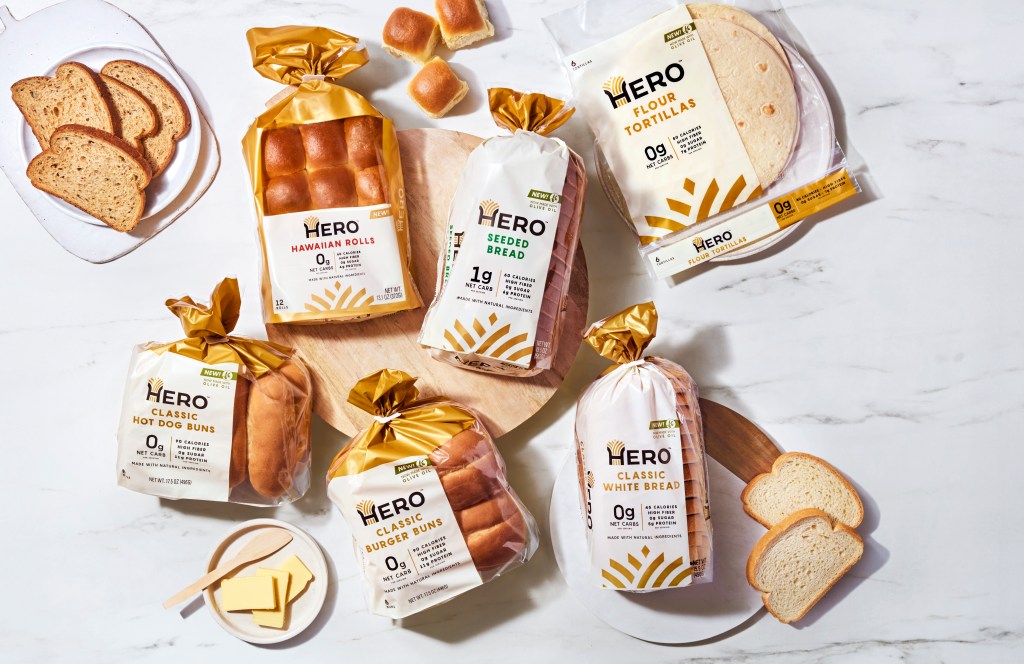
Following the withdrawal from the Subway partnership, Hero Bread initially focused on a core set of five SKUs: white bread, seeded bread, burger buns, hot dog buns, and flour tortillas. This curated selection was strategically chosen to represent everyday staples that would encourage repeat purchases, a vital component for sustainable retail success. However, the path to retail shelves was not immediately clear-cut. The company faced a critical question: which retail channels would best align with its product offering?
"It’s a very mainstream taste profile," Cheng explained. "So there was a lot of debate, if this is going to be more of a Publix, Target type product, or is this going to be more of a natural Whole Foods, Sprouts, type of product." To answer this, Hero Bread adopted an experimental approach. The company strategically launched its products in a diverse range of retailers, including Market District, Publix, and Sprouts. The initial plan was to observe performance and then double down on the channels that demonstrated the strongest traction.
Remarkably, within six months, Hero Bread’s products showed impressive sales figures across all three initial retail partners. This broad-based success allowed the company to deviate from the typical CPG strategy of focusing on a single retail channel. Instead, Hero Bread opted to partner with retailers that exhibited genuine enthusiasm for the brand, irrespective of their specific market positioning. This agile and inclusive retail strategy proved to be a key differentiator, allowing the company to maximize its reach without prematurely limiting its potential.

The Synergy of DTC and Retail: Affordability Meets Exclusivity
The expansion into retail offers significant advantages for CPG brands, primarily through economies of scale. "You can move tons of pallets on a truck much more affordably than you can send individual packages through e-commerce," Cheng noted. This inherent cost efficiency typically translates to more affordable pricing for consumers in brick-and-mortar stores.
The DTC channel, conversely, serves a different, yet equally crucial, purpose. It offers a more personalized and curated purchasing experience, allowing Hero Bread to offer not only its staple products but also a range of exclusive, premium offerings that might not be economically viable for mass retail. This includes items within Hero Bread’s "Crafted Collection," such as artisanal croissants, lemon poppy seed scones, and shortbread biscuits. These products are meticulously prepared, often in small batches, with high-quality ingredients like brown butter made by a Michelin-starred chef.
"These are small-batch, largely handmade products that are exclusive to hero.co, where it just wouldn’t make economic sense for us to hand-roll 300,000 to 400,000 croissants," Cheng elaborated. This strategy allows Hero Bread to cater to a segment of its customer base seeking unique, high-quality baked goods while simultaneously maintaining the accessibility of its core product line in retail.
Furthermore, the DTC platform acts as an invaluable testing ground for new product development. Hero Bread’s recent successful launch of bagels exemplifies this approach. The company introduced bagels as a limited-edition offering online in December 2024. "We weren’t sure if people would want to buy bagels from us," Cheng admitted, "so we initially made them in smaller batches, sold them at hero.co, and they quickly became one of our best-selling items." This successful online debut provided the data and consumer validation needed to confidently bring bagels to retail shelves, which they did within six months of their online introduction. This iterative process of testing, learning, and scaling is a cornerstone of Hero Bread’s modern growth strategy.
The company’s recent collaboration on pretzel bites with Auntie Anne’s further illustrates the synergistic potential of their dual-channel approach. This partnership, which leverages the iconic brand recognition of Auntie Anne’s with Hero Bread’s low-carb formulation, highlights the innovative possibilities that arise when distinct market strengths are combined. Such collaborations not only expand reach but also introduce the brand to new consumer demographics.
A Philosophy of Resilience: Embracing Challenges for Future Growth
YuChiang Cheng’s leadership philosophy emphasizes resilience and the courage to persevere through adversity. He views entrepreneurial success not solely by the number of victories, but by the tenacity to continue striving despite setbacks. "It’s how many times you can try again, regardless of how many times you’ve fallen down or how much blood you get on your face," Cheng stated. "There is a level of courage that is really necessary."
This deep-seated resilience has been instrumental in guiding Hero Bread through its critical formative years, demanding a constant and enthusiastic willingness to adapt to evolving market conditions and unforeseen challenges. The company’s journey from the brink of failure following the Subway deal to its current position as a significant player in the CPG market is a testament to this adaptive spirit.
Looking ahead, Hero Bread remains committed to its core mission of making healthier bread options accessible to a wider audience. "We’re always trying to meet the consumer where they are," Cheng affirmed. "There’s a specific Hero fan, and then there’s the overarching bread fan. We believe that the more people who try us, the more people who will believe [in us]." This consumer-centric philosophy, coupled with a strategic blend of DTC innovation and broad retail expansion, positions Hero Bread for continued growth and success in the dynamic food industry. The company’s story serves as a powerful case study in how strategic adaptation, unwavering consumer focus, and a resilient leadership mindset can transform a struggling brand into a thriving enterprise.