Farhan Pambudi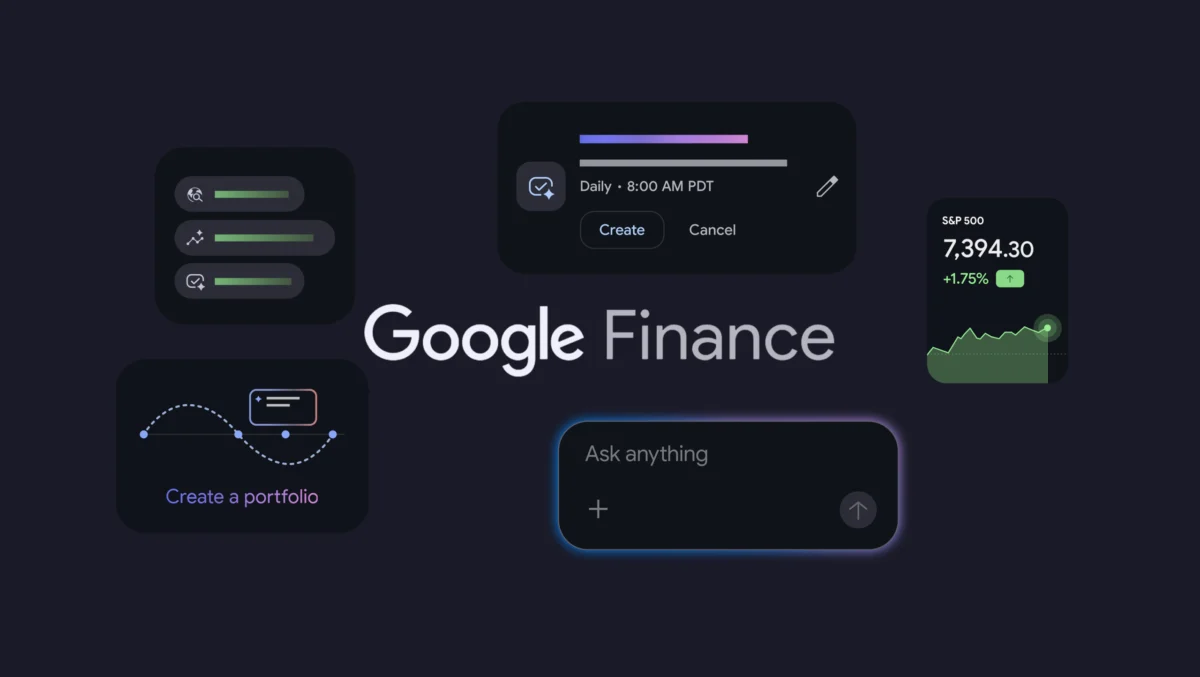
Google has officially announced the launch of a dedicated mobile application for Google Finance, marking a significant strategic pivot for the platform as it transitions from a web-based utility into a comprehensive, AI-driven financial ecosystem. The new application, which debuted on the Android platform this Thursday, is designed to provide retail investors with a centralized hub for real-time market data, personalized watchlists, and curated financial news. In addition to the mobile launch, Google has moved its revamped web experience out of beta, introducing a suite of sophisticated artificial intelligence tools intended to demystify market volatility and streamline portfolio management.
The centerpiece of this update is the integration of "Key Moments," an AI-powered feature that leverages Google’s advanced language models to synthesize news and data into concise explanations of stock price fluctuations. By answering the fundamental investor question of "why" a stock is moving, Google aims to lower the barrier to entry for casual traders while providing a high-speed research tool for more experienced market participants. The move signals Google’s intent to compete directly with established financial information heavyweights such as Yahoo Finance, Bloomberg, and the integrated stock tracking features of Apple’s iOS ecosystem.
Evolution and Chronology of Google Finance
The launch of a standalone app represents a full circle for Google Finance, which has seen various iterations since its inception in March 2006. For much of its early life, Google Finance was viewed as a secondary tool compared to the company’s core search and advertising businesses. However, the rise of retail investing over the last five years has necessitated a more robust mobile presence.
In 2017, Google Finance underwent a controversial redesign that stripped away many legacy features, including detailed portfolio tracking, in favor of a simplified interface integrated into Google Search. This move was met with resistance from long-term users who relied on the platform for historical data and personal investment management. Recognizing this gap, Google began a multi-year effort to rebuild the service.
In August 2025, the company launched a beta version of a revamped web experience, reintroducing portfolios and testing AI-driven news feeds. The current 2026 rollout represents the culmination of that testing phase, bringing those features to a global audience and finally providing the dedicated mobile experience that users have requested for nearly a decade. Following the initial Android release, Google has confirmed that an iOS version is currently in development and is expected to launch in the coming months.
Advanced AI Features and Task Automation
The new Google Finance experience is heavily anchored in the company’s broader "AI-first" strategy. Beyond the "Key Moments" feature, the platform now includes an AI research assistant capable of performing complex portfolio analysis through natural language prompts. Users can interact with a chatbot to ask specific questions about their holdings, such as identifying sectors where they may be over-leveraged or requesting a summary of how geopolitical events are impacting their specific assets.

A particularly novel addition is the "Tasks" functionality. This allows users to set up automated, natural-language "background jobs." For example, a user can instruct the AI to "provide a weekly briefing every Friday at 4:00 PM analyzing how my tech stocks performed relative to the Nasdaq 100." Once established, the AI works in the background, processing real-time data and news to deliver tailored insights without further user intervention.
Google is also simplifying the process of portfolio creation. While users can still manually enter tickers and share counts, the new system allows for the uploading of financial documents or the use of descriptive prompts to populate a digital dashboard. These portfolios are now synchronized across the web and mobile versions, ensuring a seamless transition for users moving between desktop research and on-the-go monitoring.
Competitive Landscape and Market Context
The release of a dedicated Google Finance app places the tech giant in a high-stakes competition for the attention of the retail investor. According to industry data, the retail trading boom that accelerated during the 2020-2022 period has resulted in a permanent shift in market demographics, with millions of new participants seeking accessible, high-quality financial data.
Yahoo Finance currently leads the "free" financial information category, boasting a robust mobile app with integrated brokerage links. Meanwhile, platforms like Robinhood and Webull have integrated social sentiment and news feeds directly into their trading interfaces to keep users within their apps. Google’s entry into this space leverages its greatest competitive advantage: its dominance in search and information retrieval.
By integrating financial data directly with its news indexing capabilities, Google can offer a level of context that smaller firms may struggle to match. Furthermore, the integration with the broader Google ecosystem—such as Google Workspace and Google Assistant—suggests a future where financial alerts and portfolio updates are deeply embedded in a user’s daily digital routine.
Strategic Implications for the Financial Information Industry
Analysts suggest that Google’s move is less about generating direct revenue through the app and more about data ecosystem retention. By providing a best-in-class finance tool, Google ensures that users do not migrate to third-party platforms for high-intent searches related to the stock market. This, in turn, bolsters Google’s advertising profile by keeping high-value users within its logged-in environment.
The introduction of AI-powered summaries also addresses a growing problem in the digital age: information overload. The modern investor is inundated with thousands of headlines, SEC filings, and social media rumors every day. Google’s "Key Moments" and automated tasks act as a filtration layer, using machine learning to distinguish between "noise" and "signal." This capability is likely to set a new standard for what consumers expect from free financial tools, potentially forcing competitors to accelerate their own AI development cycles.

However, the reliance on AI for financial explanations also brings challenges. The industry remains cautious about "hallucinations"—instances where AI models might confidently present incorrect information. Google has emphasized that its financial AI is grounded in real-time data feeds and reputable news sources, but the accuracy of AI-generated market "explanations" will undoubtedly be a point of scrutiny for regulators and users alike.
Technical Enhancements and Future Roadmap
The new Google Finance app is built to handle the high-velocity data requirements of modern markets. It provides real-time price updates for major global indices, individual equities, currencies, and cryptocurrencies. The infrastructure supports global portfolio tracking, allowing users to monitor investments across multiple exchanges and currencies with automatic conversion and performance metrics.
Google has also signaled that this launch is only the beginning of a broader rollout of features. The company has explicitly mentioned that the ability to listen to live earnings calls will be integrated into the app in the near future. This would place Google Finance in direct competition with specialized apps like Quartr or Bloomberg’s terminal-lite mobile offerings, which cater to users who want to hear directly from corporate executives.
Additionally, the company plans to expand the "Tasks" feature to include more complex triggers, such as alerting users when specific technical indicators are met or when a company in their watchlist releases a specific type of regulatory filing.
Broader Impact on Retail Investing
The democratization of sophisticated financial analysis tools has the potential to significantly impact market dynamics. When a large segment of the retail population has access to AI that can instantly explain a 5% drop in a major tech stock, it may lead to more rational market behavior—or, conversely, it could accelerate "herd" movements if the AI suggests a common narrative for selling.
From a consumer perspective, the availability of a free, high-quality, ad-supported (or ecosystem-supported) app reduces the need for expensive premium subscriptions for basic market research. This aligns with a broader trend of "institutional-grade" tools becoming available to the general public, a trend previously seen with the rise of commission-free trading and fractional shares.
As Google Finance moves out of beta and onto the home screens of millions of Android users, the financial information sector faces a new era of competition. Google’s ability to synthesize vast amounts of data through AI, combined with its massive existing user base, positions it as a formidable player in the quest to become the primary interface for the world’s investors. The upcoming iOS launch and the addition of live audio features will be the next critical milestones in determining whether Google can displace long-standing incumbents in the financial media landscape.