Farhan Pambudi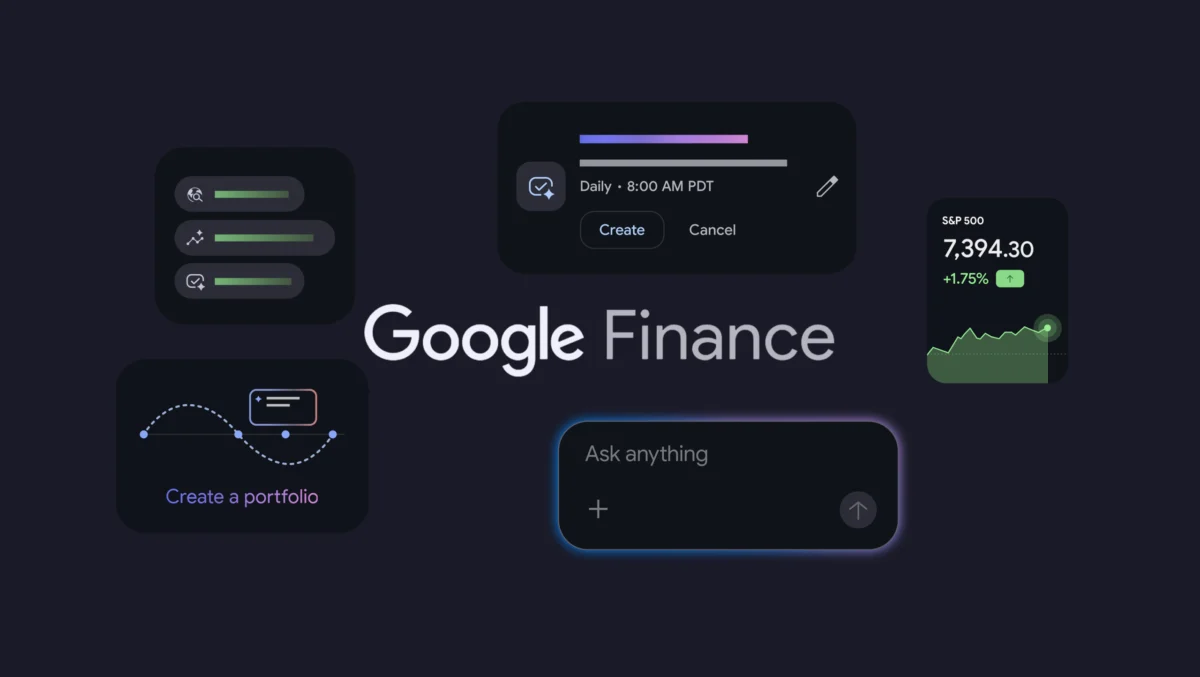
Google has officially launched a dedicated mobile application for Google Finance, marking a significant strategic pivot in the company’s efforts to capture a larger share of the retail investment information market. Announced on Thursday, the new application aims to provide a centralized hub for investors, integrating real-time market data, personalized watchlists, and live financial news with advanced artificial intelligence features designed to demystify market volatility. The move represents the first time Google has offered a standalone mobile experience for its finance vertical, which had previously functioned primarily as a tab within Google Search or a mobile-optimized web interface.
The launch begins with an immediate rollout for Android users, while an iOS version is slated for release in the coming months. Beyond simple price tracking, the app introduces Google’s "Key Moments" feature, an AI-driven tool that analyzes vast amounts of financial data and news to provide concise explanations for why specific stocks are moving. This functionality is intended to bridge the gap between raw data and actionable insight, catering to a growing demographic of retail investors who require context alongside real-time statistics.
A Strategic Shift in the Financial Information Landscape
The introduction of a standalone Google Finance app is viewed by industry analysts as a direct challenge to established incumbents in the financial media and brokerage sectors. For years, Yahoo Finance has maintained a dominant position as the primary destination for retail market data, while platforms like Robinhood and Bloomberg have catered to different ends of the investor spectrum. By launching a dedicated app, Google is signaling its intent to move beyond being a mere conduit for search queries and becoming a destination platform for financial management.
This transition occurs at a time when the retail investment market remains robust, despite broader economic fluctuations. Data from various market research firms indicates that the "democratization of finance," accelerated during the 2020-2021 period, has led to a permanent increase in the number of individual investors managing their own portfolios. Google’s entry into this space with a high-utility, AI-integrated app suggests the company sees an opportunity to leverage its existing Search dominance to capture high-value user engagement.
Chronology of Google Finance: From Search Tab to Standalone Platform
To understand the significance of this launch, one must look at the evolution of Google Finance over the past two decades. Launched in 2006, the service was initially a competitor to Yahoo Finance and MSN Money. However, for much of the 2010s, the platform saw limited innovation, leading many to believe Google had deprioritized the vertical.
In 2017, Google significantly redesigned the interface, integrating it more deeply into Google Search. While this increased visibility, some power users criticized the removal of advanced charting tools and portfolio features. Recognizing the need for a more robust toolset in the age of generative AI, Google began testing a revamped web experience in late 2025. This beta period allowed the company to refine its AI integrations, leading to the current rollout where the web experience has officially exited beta. The new mobile app serves as the culmination of this multi-year effort to modernize the platform for a mobile-first, AI-driven era.

Advanced AI Integration and the "Key Moments" Feature
The centerpiece of the new Google Finance experience is the integration of Google’s proprietary Large Language Models (LLMs). The "Key Moments" feature is designed to solve a common problem for retail investors: the "information overload" that occurs during periods of high market volatility. When a stock experiences a significant price swing, the AI scans news headlines, earnings reports, and market sentiment to provide a natural-language summary of the underlying causes.
Furthermore, Google is introducing a suite of AI-powered "Tasks" available on the web, with mobile integration expected shortly. These tasks allow users to set up natural-language prompts for automated market monitoring. For example, a user can request a "weekly briefing on the performance of green energy stocks in my watchlist" or a "summary of how recent interest rate decisions have impacted my tech holdings." This move toward "agentic" AI—where the tool performs background research and synthesizes data without constant user input—represents a shift in how financial information is consumed.
Global Rollout of Portfolio Management and Dashboarding
Parallel to the app launch, Google is rolling out a comprehensive portfolio management system globally. This feature allows users to aggregate their holdings into a single dashboard to track performance over time. To lower the barrier to entry, Google has implemented multiple ways to build these portfolios. Users can manually enter data, upload financial files, or use a chatbot interface to describe their investments.
Once a portfolio is established, the AI research tool becomes significantly more personalized. Users can ask the system complex questions such as, "What sectors are currently underrepresented in my portfolio based on current market trends?" or "How would a 10% drop in the price of oil affect my overall holdings?" This level of analysis, which was previously the domain of professional financial advisors or expensive Bloomberg Terminal subscriptions, is now being made available to the general public for free.
Competitive Pressures and Market Data Considerations
The launch of the Google Finance app places the tech giant in direct competition with several tiers of financial services:
- Financial News Aggregators: Platforms like Yahoo Finance and Investing.com, which rely on ad revenue and premium subscriptions for market data and news.
- Retail Brokerages: While Google Finance does not currently support direct trading, its role as a "pre-trade" research tool competes for the attention of users who might otherwise spend time within the apps of Robinhood, Charles Schwab, or E*TRADE.
- Institutional Tools: By offering AI-powered portfolio analysis, Google is encroaching on the territory of "lite" institutional tools used by semi-professional traders.
Market analysts suggest that Google’s primary advantage is its ecosystem. With hundreds of millions of users already logged into Google accounts, the friction of adopting Google Finance is significantly lower than that of its competitors. The automatic syncing of watchlists between Google Search, the Finance web portal, and the new mobile app creates a "sticky" user experience that is difficult for standalone apps to replicate.
Official Positioning and Future Roadmap
While Google has been cautious about positioning itself as a financial advisor, the company’s messaging emphasizes "empowerment" and "clarity." In official communications, Google representatives have stated that the goal is to provide users with the tools they need to make informed decisions, rather than providing direct investment advice.

The roadmap for the application is already being socialized. Beyond the iOS launch, Google has confirmed that the ability to listen to live earnings calls will be integrated directly into the app. This feature is particularly relevant for "earnings season," where retail investors often struggle to find accessible links to corporate webcasts. By hosting these calls and potentially providing AI-generated transcripts and summaries in real-time, Google could become the definitive platform for corporate earnings coverage.
Implications for Data Privacy and Transparency
As with any Google product that handles sensitive user data, the launch of a dedicated finance app raises questions regarding data privacy. Portfolios contain detailed information about a user’s wealth and investment preferences. Google has maintained that this data is used to personalize the user experience and provide the requested AI insights. However, the aggregation of financial data adds another layer to the comprehensive profile Google maintains on its users, which is a point of consideration for privacy-conscious investors.
The company has also addressed the "hallucination" risks associated with AI-generated financial summaries. Google Finance utilizes a "grounding" technique where the AI’s responses are strictly tied to verified news sources and real-time market data feeds, minimizing the risk of the system generating false information regarding stock prices or corporate events.
Conclusion: A New Era for Retail Financial Tools
The launch of the Google Finance mobile app and the expansion of its AI-driven web features mark a turning point in the accessibility of sophisticated financial tools. By moving out of the beta phase and into a dedicated mobile experience, Google is validating the importance of the retail investor segment.
As the platform evolves to include live earnings calls and more advanced natural-language processing capabilities, the line between "search engine" and "financial assistant" will continue to blur. For the broader fintech industry, Google’s aggressive move serves as a reminder that the integration of artificial intelligence is no longer an optional feature, but a fundamental requirement for any platform seeking to help users navigate the complexities of the global markets. The success of this initiative will likely be measured not just by app downloads, but by Google’s ability to remain the primary gateway through which the world accesses financial information.