Reynand Wu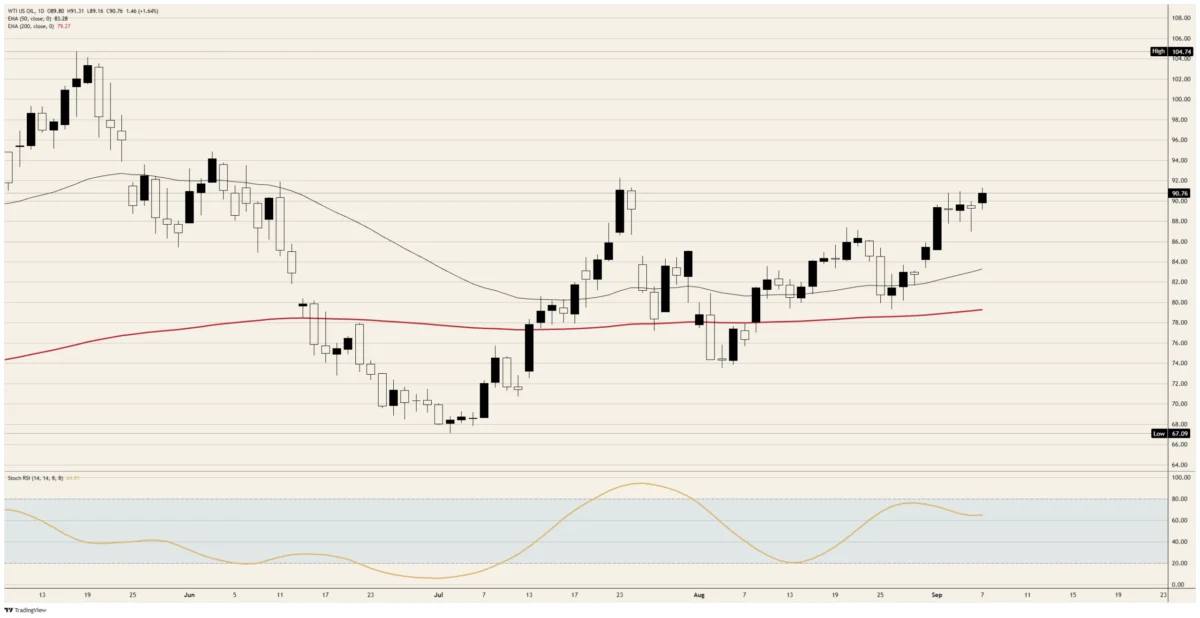
Crude oil prices have maintained their upward momentum, trading just under $91.00 after a significant 1.6% surge on Monday, extending a rally that has seen benchmarks climb roughly $10 from the $81.00 mark over the past nine trading sessions. This persistent ascent in oil prices is not driven by a simple deficit in crude production; rather, it reflects a complex interplay of geopolitical tensions impacting transit routes and a pronounced global shortage in refining capacity. The market’s focus has shifted from the sheer volume of oil being pumped to the critical questions of "where can these barrels go" and "what can be done with them once they arrive." Monday’s events underscored the latter, highlighting the vulnerability of processing infrastructure in an already constrained energy landscape.
The Dual Pressure Points: Geopolitics and Refining Capacity
The current rally in crude oil is distinct from previous surges driven by outright supply cuts. Instead, it is a consequence of two primary factors converging: heightened geopolitical risks threatening key maritime transit routes and crucial processing facilities, and a structural deficiency in global refining capabilities that is manifesting as a severe shortage of refined products like diesel and gasoline, even amidst relatively stable crude inventories. This creates a paradoxical situation where the raw material is available, but the infrastructure to transform it into usable fuel is under stress, leading to inflated product prices that are then feeding back into crude valuations.
Geopolitical Volatility: Attacks on Infrastructure and Maritime Tensions
The fragile geopolitical environment in the Middle East remains a primary catalyst for market uncertainty. Recent developments underscore the region’s outsized influence on global energy flows, particularly concerning the Red Sea and the Strait of Hormuz.
-
Targeting the Red Sea Gateway: The Jizan Refinery Strikes
On Monday, Saudi Aramco’s Jizan refinery, a critical 400,000 barrel-per-day facility strategically located on Saudi Arabia’s Red Sea coast, was reportedly struck again. This incident, confirmed by a Financial Times report citing sources with knowledge of the matter, marks the third such attack on the plant in recent months, following strikes last month and in July. While Saudi Aramco has not yet issued an official comment, damage assessments are reportedly underway. One source indicated the scale of Monday’s attack was comparable to the previous month’s incident, which briefly interrupted operations.
The Jizan refinery holds immense strategic importance. Its location on the Red Sea positions it as a vital outlet for Saudi crude exports, offering an alternative route that bypasses the volatile Strait of Hormuz. Repeated attacks on this facility not only threaten Saudi Arabia’s refining output but also signal an escalation in regional conflicts, particularly those linked to the ongoing Houthi insurgency in Yemen, which has previously claimed responsibility for similar strikes. The targeting of refining infrastructure, rather than just oil fields, has a direct and immediate impact on the availability of refined products, exacerbating the global shortage. -
Escalating Tensions in the Strait of Hormuz
Adding to the regional instability, the weekend saw American forces conduct strikes on Iranian vessels. In response, Tehran is reportedly preparing to declare a restricted shipping zone in the Gulf and map out a new, self-designed corridor through the Strait of Hormuz. This move, if implemented, could severely disrupt global maritime trade. The Strait of Hormuz, a narrow waterway connecting the Persian Gulf to the Arabian Sea, is arguably the world’s most critical oil chokepoint, with approximately 20% of the world’s total petroleum liquids consumption and about one-third of global liquefied natural gas (LNG) transiting through it.
Recent data highlights the impact of these escalating tensions: an average of roughly 10 commodity vessels per day crossed the Strait in the latest 10-day period, marking the lowest rate since May. Iran’s stated condition for keeping the vital waterway open is that countries "attacking it stop first," a clear reference to recent US actions. These developments fundamentally represent transit and refining stories, not production stories. The Strait of Hormuz facilitates the movement of barrels, not their creation, and the Jizan refinery converts crude into products, rather than pumping it from the ground. The threat of disruption to either function, therefore, has profound implications for global energy security and prices.
The Refining Bottleneck: Abundant Crude, Scarce Products
Perhaps the most perplexing aspect of the current market dynamic is the disconnect between crude oil availability and refined product scarcity. This paradox underscores a deep-seated structural issue within the global energy complex: a significant shortage of refining capacity.
-
A Paradoxical Inventory Landscape
Data from the United States, a bellwether for global energy consumption, paints a stark picture. Commercial crude oil inventories are currently about 1% above their five-year average, indicating that there is no immediate shortage of raw crude. However, the situation for refined products is dramatically different. Distillate stocks, which encompass essential fuels like diesel and heating oil, sit an alarming 14% below their five-year average. The week leading up to August 21 saw these stocks fall to the lowest seasonal level in the Energy Information Administration (EIA) record, and the lowest for any August since 1951 – a nearly three-quarter-century low. Gasoline inventories, which originate from the same refineries and crude barrels, are also struggling, sitting 17% below their own record levels. This profound imbalance clearly indicates that the problem is not a lack of crude oil, but rather an insufficient capacity to process that crude into usable fuels. -
Soaring Refining Margins and Retail Prices
The consequences of this refining crunch are evident in market prices. The New York Harbor diesel crack spread, a key indicator of refining profitability, reached roughly $107 per barrel on September 1. This is a staggering figure when compared to the $60s and low $70s seen during the record week of June 2022, when crude oil prices themselves were significantly higher. Simultaneously, retail diesel prices printed an all-time high of $5.85 a gallon on September 4. This creates a critical economic disconnect: crude oil is currently cheaper than it was in 2022, yet the refined fuel is considerably dearer. This widening gap is the definitive signature of a refining shortage, not a supply shortage of crude itself. Refiners are able to command exceptionally high margins due to the scarcity of their output, passing these costs directly onto consumers. -
The Contradictory Inventory Report (Week to August 28)
Adding another layer of complexity, last week’s inventory report from the EIA presented a seemingly contradictory narrative that, upon closer inspection, reinforces the refining crisis. Crude oil stocks drew down by 4.45 million barrels in the week to August 28. This was the first decline in five weeks and four times the expected draw, suggesting robust demand from refineries eager to process crude. However, distillates, instead of drawing down further to meet demand, actually built by 0.796 million barrels, directly contrasting forecasts for a 1.3 million barrel drop. This counterintuitive build in distillates, despite critically low stock levels, could indicate that refineries are struggling to optimize their output or are facing operational constraints that prevent them from pushing production harder, or that overall demand destruction is setting in at the margin due to record high prices, even as overall supply remains tight.
OPEC+ Stance: Acknowledging Constraints, Not Resolving Them
Against this backdrop of geopolitical tension and refining scarcity, the Organization of the Petroleum Exporting Countries and its allies (OPEC+) held their latest meeting over the weekend. Their decision to leave October output unchanged, following six consecutive months of increases, reflects a nuanced understanding of the current market, though it does little to address the fundamental issues.

-
October Output Unchanged: A Strategic Pause
OPEC+ members, still working towards new quotas for the coming months, opted for a pause in output adjustments. For the past six months, the group had been gradually unwinding previously implemented cuts, injecting barrels into a market that, at the time, possessed sufficient buffering capacity to absorb them. The current decision to hold steady suggests a recognition that adding more crude to the market would not resolve the prevailing challenges, particularly given the issues with transit and refining. -
The Geography of Spare Capacity
A significant portion of OPEC+’s vaunted spare capacity is geographically concentrated within the Gulf region. This poses a critical challenge: any additional barrels brought online from this capacity would, by necessity, have to traverse the Strait of Hormuz. Given the heightened geopolitical risks and Iran’s recent threats concerning the Strait, deploying this spare capacity becomes inherently problematic and risky. Saudi Arabia, recognizing this vulnerability, has already been actively shifting more of its crude exports westward, away from the Gulf and through Red Sea ports like Jizan. This strategic rerouting highlights the growing concern over the security of the Strait of Hormuz as a reliable export channel. -
The Limits of Production-Focused Policy
The core mandate and operational capability of OPEC+ revolve around managing crude oil production. Their primary tool is the "tap" that controls the flow of raw barrels from the ground. However, the current crisis is largely a "refining shortage," which cannot be addressed by simply pumping more crude. Building new refineries, or significantly expanding existing ones, is a capital-intensive and time-consuming endeavor, often taking years to permit, construct, and bring online. Therefore, while OPEC+ can certainly influence the supply side of crude, it is effectively powerless to resolve the bottlenecks in the downstream refining sector. The group can only turn the tap that is already open; it cannot build the plants that are desperately needed.
Economic Repercussions: Inflationary Pressures and Monetary Policy
The sustained rally in crude oil and the record-high prices for refined products have significant economic implications, particularly for global inflation and the monetary policy decisions of central banks like the U.S. Federal Reserve.
-
Fueling Inflationary Headwinds
The surging cost of fuels, especially diesel, directly translates into broader inflationary pressures across economies. Diesel is the lifeblood of global logistics, powering trucking, shipping, and heavy machinery. Record diesel prices increase transportation costs for virtually all goods, from food to manufactured products, which are then passed on to consumers.
Upcoming economic data releases are expected to reflect this energy pass-through. The Producer Price Index (PPI), due Thursday at 12:30 GMT, is seen rising by 0.4% on the month, following a flat July, and reaching 5.3% year-over-year, up from 4.7%. This indicates that higher energy costs are already embedded in producer prices. The Consumer Price Index (CPI), which follows on Friday at 12:30 GMT, is anticipated to show a 0.4% monthly increase after a modest 0.1% rise, with the annual rate holding steady at 3.4%. These figures will confirm the inflationary impact of elevated energy costs, making the task of central banks more challenging. -
The Federal Reserve’s Dilemma
Higher and persistent inflation, driven in part by energy prices, puts the U.S. Federal Reserve in a difficult position. The central bank’s primary mandate includes price stability, and a resurgence in inflationary pressures could compel it to maintain a hawkish stance or even resume interest rate hikes. The upcoming Federal Reserve meeting on September 15-16 is closely watched, with market participants currently pricing in a near 58% probability of a quarter-point rate hike.
The value of the U.S. Dollar also plays a crucial role. Crude oil is predominantly quoted in U.S. Dollars, meaning a stronger Dollar makes oil more expensive for international buyers holding other currencies, potentially dampening demand and capping price rallies. Conversely, a weaker Dollar makes oil more affordable and can fuel price increases. On Monday, the Dollar Index (DXY) was sitting at two-week lows, which contributed to the "easy run" for crude oil prices. However, a Fed decision to hike rates would likely strengthen the Dollar, thereby exerting downward pressure on oil prices. This creates a paradox: the current "chokepoint rally" in oil is feeding the very inflation data that could trigger Fed action, leading to a stronger Dollar and potentially taking "a piece of it back," all unfolding on a pre-published economic calendar.
Market Outlook and Technical Analysis
The technical indicators for crude oil suggest a market that, while extended, retains bullish momentum, though it remains highly susceptible to geopolitical and fundamental developments.
-
Current Price Action and Bias
Crude oil is currently trading just under $91.00. The immediate bias remains bullish as long as the $89.00 handle holds, with the $92.00 area being the primary objective for bulls. The daily Stochastic Relative Strength Index (Stoch RSI) sits near 65. Notably, it has not yet reached overbought territory despite a $10 advance, a characteristic reading for a "grind" higher rather than a rapid "squeeze." Intraday measures, however, have already worked off Monday’s push, suggesting some consolidation before the next move. The bullish bias would be invalidated by a daily close beneath $87.00, which would push the price back below Friday’s low. -
Key Resistance Levels
Immediate resistance is encountered just shy of $91.50, Monday’s high. The critical overhead level is the $92.00 area, which represents the late-July peak and has acted as a significant cap on the broader advance. A decisive daily close above $92.00 would open the path to the $93.00 and $94.00 shelf from early June. Beyond these, the May highs just below $105.00 present the extreme upside target. -
Key Support Levels
On the downside, the $89.00 handle provided robust support on Monday, with the session low marginally above it. The first significant floor beneath this level is Friday’s low, just under $87.00. Should this fail, the price would move into untested structure until the $85.00 area. The 50-day Exponential Moving Average (EMA) sits just above $83.00, roughly $7.50 beneath the current price, indicating how extended this recent rally has become. The longer-term 200-day EMA, near $79.00, is not currently in play, reflecting the strong upward trajectory. -
Event-Driven Sensitivity
The market’s sensitivity to news is exceptionally high. A damage assessment from the Jizan refinery that indicates worse consequences than last month’s strike could accelerate the topside movement faster than any technical chart level. Conversely, any credible improvement in the passage through the Strait of Hormuz, such as a de-escalation of tensions or clearer guarantees for shipping, could trigger a rapid downside correction.
In conclusion, the global oil market is at a critical juncture, with prices driven by a confluence of geopolitical instability, particularly in key transit regions, and a persistent structural shortage in global refining capacity. While crude oil supplies appear adequate, the ability to process and transport them efficiently remains severely constrained. This dynamic is fueling inflation and complicating monetary policy, suggesting that crude prices will remain highly volatile and sensitive to regional developments and economic data in the coming weeks.