 Ena Muazin

Frankfurt – The German real estate market is navigating a complex landscape marked by elevated construction costs, rising interest rates, and a subdued economic climate. This challenging environment is increasingly reflected in lending activity, as recent data from the Association of German Pfandbrief Banks (VDP) indicates a slowdown in the momentum of real estate financing, despite an overall increase in loan volume during the first nine months of 2026.
Property Financing Trends: A Mixed Picture
The VDP’s latest financing data reveals that member institutions originated €116.9 billion in new real estate loans between January and September 2026. This represents a 5.9% increase compared to the same period in the previous year, when €110.4 billion in loans were committed. While this growth signals a degree of resilience, a closer examination of quarterly figures points to a discernible deceleration.
The third quarter of 2026 saw a significant dip in new loan commitments, with €36.5 billion disbursed. This marks a decrease from €40.6 billion in the second quarter and €39.8 billion in the first quarter. On a year-over-year basis, the growth rate in the third quarter had dwindled to a mere 0.6%, underscoring the waning momentum in the market.
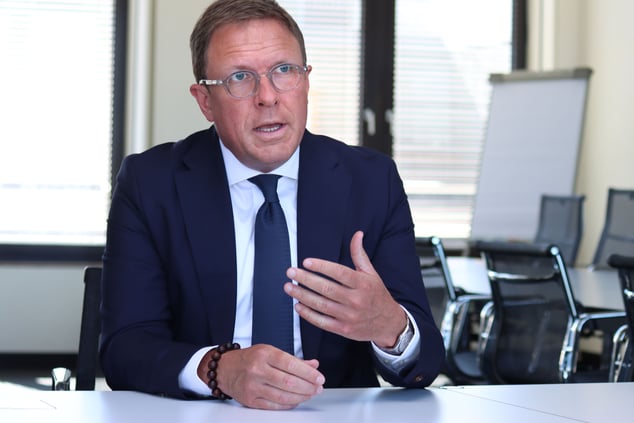
Jens Tolckmitt, CEO of the VDP, acknowledged this trend. "The real estate lending of the Pfandbrief banks has shown positive development so far this year," Tolckmitt stated. "However, the dynamism of the first half of the year has indeed eased in the third quarter."
Economic Factors Influencing the Market
The headwinds affecting the German real estate sector are multifaceted. High inflation rates experienced in the preceding years have contributed to increased construction material and labor costs, making new development projects more expensive. Concurrently, the European Central Bank’s monetary policy has led to a significant rise in interest rates, increasing the cost of borrowing for both developers and potential buyers. This has directly impacted mortgage rates, which have climbed steadily. Data from Baufi24, a mortgage broker, indicates that in October 2026, the average interest rate for a ten-year fixed-rate mortgage stood at 4.48%, up from 4.25% in September and 3.7% in the summer months. This upward trend in borrowing costs dampens demand and can make previously viable investment calculations untenable.

Furthermore, the broader economic outlook for Germany has been characterized by sluggish growth. Uncertainties related to global trade, geopolitical tensions, and domestic industrial challenges have contributed to a cautious business sentiment, which often translates into reduced investment appetite in the real estate market.
Segment Analysis: Multifamily Homes Lead the Pack
Despite the overall slowdown, certain segments of the real estate market are exhibiting divergent performance. The VDP data highlights a notable contrast between the financing of owner-occupied residential properties and that of multi-family homes.
In the first nine months of 2026, loans for residential properties collectively amounted to €72.7 billion, a 4% increase year-over-year. Within this category, multi-family homes emerged as the strongest performer. Financing for these properties surged by 12% to €19.6 billion, positioning them as the clear growth leader in the residential real estate sector. This robust performance suggests a continued investor interest in rental properties, potentially driven by factors such as the ongoing housing shortage in many urban centers and the perceived stability of rental income.
Conversely, the market for owner-occupied single- and two-family homes showed more modest growth. Loan commitments in this segment rose by a mere 1.8% to €33.8 billion. The financing of condominiums experienced stagnation, remaining at €15.5 billion. This disparity signals a potential shift in investment strategies, with a greater focus on larger rental portfolios rather than individual home purchases. For prospective buyers and investors, this indicates a more dynamic financing environment for multi-unit residential buildings compared to single-family homes and condominiums, suggesting a stronger underlying demand for income-generating rental properties.
Commercial Real Estate Recovers
Beyond the residential sector, commercial real estate financing is also showing signs of recovery. The volume of loans for commercial properties increased by 9.1% in the first nine months of 2026, reaching €44.2 billion. Retail properties, encompassing shopping centers and other retail outlets, recorded the most significant growth within the commercial segment. Loan commitments for these assets climbed from €9.6 billion to €11.3 billion, representing an increase of approximately 17.7%. This surge in financing for retail spaces could indicate a renewed confidence in the retail sector, possibly driven by adaptation to new consumer behaviors and the revitalization of physical retail experiences.
Office properties also saw a substantial increase in financing. The new business volume for office real estate rose by around 12%, from €20.7 billion to €23.2 billion. Offices continue to represent the largest segment within commercial real estate financing, underscoring their persistent importance in the market, despite ongoing discussions about the future of work and remote employment.
Outlook for the Remainder of the Year and Beyond
Looking ahead to the fourth quarter of 2026, the Pfandbrief banks anticipate a subdued performance. "The noticeably increased interest rates are burdening both the price development of real estate and the financing business of the banks," Tolckmitt explained. The VDP forecasts weak new business for the final three months of the year, with overall growth for 2026 expected to be largely flat.
The sustained high level of construction costs, coupled with the elevated interest rate environment, presents a significant challenge for the real estate industry. Developers are facing increased financing costs and potentially lower profit margins, which could lead to a slowdown in new construction projects. Potential buyers are grappling with higher mortgage payments, impacting affordability and demand.
The VDP’s outlook suggests that the market is likely to remain in a period of adjustment. While the overall increase in lending volume in the first nine months provides some positive context, the deceleration observed in the third quarter and the cautious outlook for the fourth quarter indicate that the market is sensitive to prevailing economic conditions.
Deeper Analysis and Implications
The divergence in performance between multi-family homes and single-family residences is a significant indicator of market sentiment. The robust growth in multi-family financing suggests a strategic pivot by investors towards assets with more predictable income streams. In an environment of rising costs and economic uncertainty, rental properties can offer a more stable return compared to the direct ownership of a primary residence, where market fluctuations can have a more immediate impact on personal finances.
The recovery in commercial real estate, particularly in the retail and office sectors, is a positive signal, but it is important to contextualize this growth. The increases are measured against potentially lower bases in the previous year, and the long-term impact of evolving work patterns and consumer habits on these sectors remains a subject of ongoing observation. The financing of retail properties, in particular, may reflect a strategic adaptation to omnichannel retail strategies and a focus on experiential retail, rather than a simple return to pre-pandemic levels of demand.
The German real estate market is at a crucial juncture. While the VDP data indicates a general increase in lending, the underlying trends reveal a market grappling with significant economic pressures. The coming months will be critical in determining whether the market can regain momentum or if the current slowdown represents a more prolonged period of recalibration. The continued monitoring of interest rate policies, inflation figures, and overall economic growth will be essential in forecasting the future trajectory of Germany’s real estate financing landscape. The resilience shown by the multi-family housing sector and the nascent recovery in commercial real estate offer glimmers of optimism, but the overarching challenges posed by high costs and rising interest rates will undoubtedly continue to shape market dynamics.