Gilang Muhammad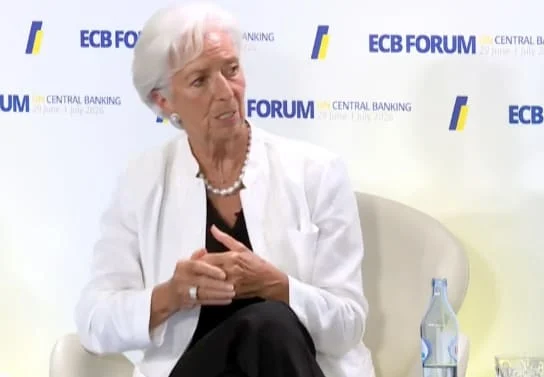
Frankfurt, Germany – A sudden and severe escalation of military exchanges between the United States and Iran has sent global oil prices soaring, plunging financial markets into uncertainty and casting a palpable shadow over the European Central Bank’s (ECB) keenly anticipated interest rate decision next week. Investors across the Eurozone and beyond are recalibrating their expectations for the ECB’s July 22 monetary policy meeting, as the renewed energy price shock threatens to derail previous forecasts for a potential pause in interest rate hikes.
The dramatic developments in the Middle East have reignited fears of a broader supply disruption, propelling international benchmark Brent crude futures above $85 per barrel early on Wednesday. This marks a significant and rapid reversal from just last week, when oil prices had settled closer to pre-conflict levels around $70, following a brief period of de-escalation. The Eurozone, a region heavily reliant on energy imports, finds itself particularly vulnerable to such price volatility, amplifying the intricate challenge confronting ECB policymakers.
A Volatile Geopolitical Landscape: The Strait of Hormuz at Stake
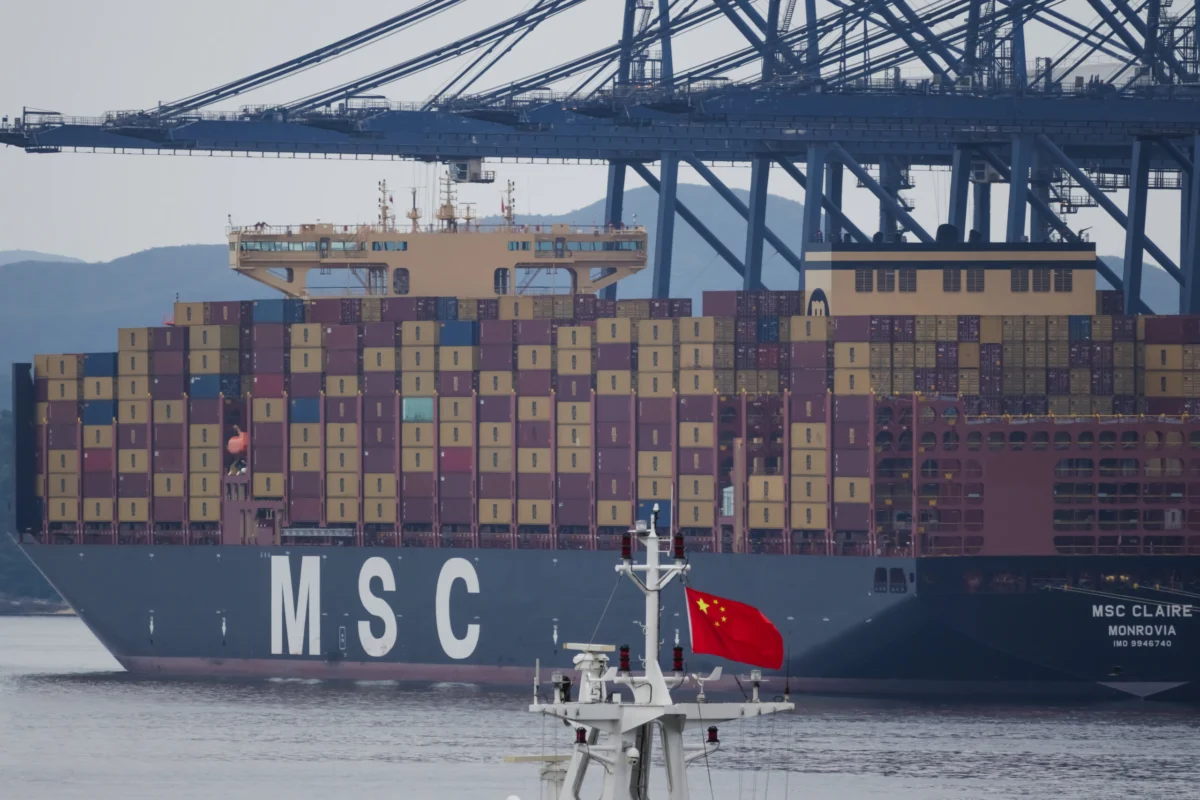
The current crisis stems from several consecutive days of what have been described as targeted "exchanges" between U.S. and Iranian forces, primarily concentrated around the strategically vital Strait of Hormuz. This narrow waterway, connecting the Persian Gulf to the open ocean, is a choke point through which approximately 20% of the world’s total petroleum liquids consumption, and roughly one-third of all seaborne traded oil, passes daily. Even minor disruptions or threats to navigation in this area can send immediate shockwaves through global energy markets.
Reports from maritime security firms and intelligence sources indicate a series of incidents over the past 72 hours, including alleged drone incursions, naval maneuvers, and targeted missile strikes on what both sides claim were military assets or facilities in the vicinity of the Strait. While neither Washington nor Tehran has declared a full-scale conflict, the intensity and frequency of these exchanges have rapidly escalated beyond previous flashpoints, leading to heightened alert levels for international shipping and prompting significant re-routing by some oil tankers. This perceived threat to unhindered passage has directly fueled market speculation about potential supply shortages, driving up futures prices. The inherent unpredictability of the situation, with limited clear communication channels between the antagonists, further exacerbates market anxiety.
ECB’s Policy Tightrope: Balancing Inflation and Recession Risks
The resurgence in energy costs arrives at a particularly delicate juncture for the European Central Bank. The institution has navigated a tumultuous path over the past year and a half, initially embarking on an aggressive easing cycle in the first half of 2025. During this period, the ECB slashed interest rates four times, bringing its key deposit rate down from 3% at the start of 2025 to a low of 2% by mid-June of that year. This decisive move was a response to decelerating economic growth and a perceived moderation in inflationary pressures following an earlier period of elevated prices.
However, this dovish stance was abruptly reversed last month. In a move that surprised many analysts, the ECB hiked its key interest rate by 25 basis points in June 2026, pushing it to the current level of 2.25%. This policy pivot was necessitated by a stubborn resurgence in inflation, largely driven by earlier, pre-conflict energy cost increases and persistent supply-side constraints. Headline inflation, which had hovered tantalizingly close to the ECB’s 2% target before the renewed outbreak of the Iran conflict, accelerated sharply to a peak of 3.2% in May. While initial estimates suggested a slight easing to 2.8% last month, largely due to core inflation being restricted to 2.4% – indicating limited "second-round" inflation effects in the broader economy – the current spike in oil prices threatens to undo this fragile progress.
"The renewed outbreak of military conflict in the Middle East and the fresh rise in oil prices underscore that the situation remains extremely volatile and the uncertainty is similarly high," Bundesbank President Joachim Nagel, a prominent and often hawkish member of the ECB’s Governing Council, told Reuters on Wednesday. His remarks highlight the precarious position of the central bank. "It remains advisable to react with caution, but to act decisively if necessary. Monetary policy will maintain its vigilant stance." Nagel’s emphasis on both caution and decisive action reflects the deep divisions that often characterize the Governing Council’s debates, particularly during periods of high economic uncertainty.
Chronology of a Policy Reversal and Geopolitical Shock
- Early 2025: ECB commences an aggressive easing cycle, cutting its key deposit rate from 3% to 2% over four successive meetings, citing moderating inflation and weakening growth.
- Late 2025 – Early 2026: Geopolitical tensions involving Iran begin to simmer, leading to minor fluctuations in oil prices but no sustained upward trend. Eurozone inflation remains relatively contained.
- May 2026: Eurozone headline inflation unexpectedly accelerates to a peak of 3.2%, fueled by a combination of recovering demand and supply-side pressures.
- June 11, 2026: In a significant policy reversal, the ECB hikes its key interest rate by 25 basis points to 2.25%, citing persistent inflationary pressures and a need to anchor inflation expectations. This move signals an end to the easing cycle.
- Mid-June 2026: Oil prices briefly stabilize around $70 per barrel, leading market participants to anticipate a potential hold on rates at the upcoming July meeting.
- Late June – Early July 2026: A sudden and intense escalation of U.S.-Iran military exchanges around the Strait of Hormuz begins. Reports emerge of shipping disruptions and heightened military activity.
- July 1, 2026: Christine Lagarde, President of the European Central Bank, speaks at the ECB Forum in Sintra, Portugal, likely addressing the evolving economic landscape and central bank strategy, though specific remarks on the immediate conflict are not yet publicly detailed.
- July 3, 2026: Brent crude futures surge above $85 per barrel, directly in response to the Middle East tensions, shattering hopes for stable energy costs.
- July 22, 2026: Scheduled date for the ECB’s next monetary policy meeting, where policymakers must weigh inflation risks against fragile economic growth.
The Energy Import Bill and Its Economic Toll
The price of oil is not merely a headline figure; it holds profound implications for the Eurozone economy. According to the most recent available data from Eurostat (2024), the Eurozone imported a staggering 57% of its energy needs, underscoring its deep vulnerability to external energy shocks. A sustained period of high oil prices acts as a significant tax on consumers and businesses, raising production costs, dampening discretionary spending, and eroding purchasing power. This directly impacts economic growth, which has already shown signs of fragility.
The Eurozone economy contracted by 0.2% year-on-year in the first quarter of 2026, signaling a technical recession. This economic fragility presents a formidable challenge to the ECB. While a hawkish stance is necessary to combat inflation, an overly restrictive monetary policy could inadvertently tip the already struggling Eurozone economy into a deeper and more prolonged downturn. Policymakers are acutely aware of this tightrope walk, striving to tame inflation without stifling the nascent signs of recovery in certain sectors.
Market Repricing and the Path Forward
Prior to the latest geopolitical flare-up, the fall in oil prices in June had led many investors to effectively rule out an ECB rate hike at the upcoming July meeting. However, the current market pricing reflects a renewed degree of uncertainty, with some analysts now assigning a roughly 20% chance of a further hike. Beyond the immediate decision, market participants still anticipate two additional 25 basis point rate increases by next spring, which would take the ECB’s key deposit rate to 2.75%. This reflects a longer-term view that inflationary pressures, particularly from energy, will remain elevated, forcing the ECB to continue its tightening cycle.
The divergence between the expected paths of the ECB and the U.S. Federal Reserve is also becoming more pronounced. While the momentum in U.S. inflation is widely expected to be downwards, the situation in Europe is considerably more complex. ING rates strategists Michiel Tukker and Benjamin Schroeder noted in a recent brief that eurozone inflation data "will be pivotal in challenging the hawkish market positioning," but cautioned that "even then, those numbers will not be enough to comfort markets about second-round risks." They added, "All this uncertainty means markets’ European Central Bank pricing can continue to diverge from the Fed’s… for Europe the peak [inflation] might not be in sight yet, especially if energy prices continue to drift higher again."
This distinction underscores the unique challenges facing the Eurozone, which, unlike the U.S., is a net energy importer and more directly exposed to geopolitical risks in the Middle East. Moreover, the fragmented nature of the Eurozone economy means that inflationary pressures and economic resilience can vary significantly across member states, complicating a unified monetary policy response.
The Lagged Data Dilemma and Broader Implications
Adding another layer of complexity to the ECB’s decision-making process is the timing of crucial economic data releases. Initial estimates for second-quarter GDP growth and July inflation will not be available until July 30 and July 31, respectively. This means that next week’s interest rate decision will be made without access to the most recent comprehensive economic indicators, forcing policymakers to rely on projections and potentially incomplete real-time data. This "data lag" introduces a significant element of risk, as the economic landscape can shift rapidly, particularly in the face of sudden geopolitical events.
Austrian central bank chief Martin Kocher, another influential voice within the Governing Council, elaborated on the bank’s current focus: "At the moment we are paying particular attention to the indirect price effects of the war in the Middle East and possible second-round effects." Speaking to German newspaper Börsen-Zeitung on Wednesday, Kocher acknowledged, "We currently see no second-round effects, but must also align our monetary policy with inflation expectations." His statement suggests that while direct energy price increases are evident, the broader contagion of inflation – where higher energy costs translate into higher wages and prices across other sectors – has not yet fully materialized. However, the central bank’s mandate compels it to act pre-emptively to anchor inflation expectations, preventing a self-fulfilling prophecy of persistent price growth.
The upcoming ECB meeting is not merely about adjusting a percentage point; it is a critical test of the central bank’s agility, credibility, and ability to navigate an increasingly unpredictable global economic and geopolitical environment. The choices made next week will resonate far beyond financial markets, impacting the daily lives of millions of Eurozone citizens grappling with rising costs and economic uncertainty. As the U.S.-Iran standoff continues to evolve, the ECB’s path forward remains fraught with challenges, demanding a delicate balance between containing inflation and safeguarding economic stability.