Farhan Pambudi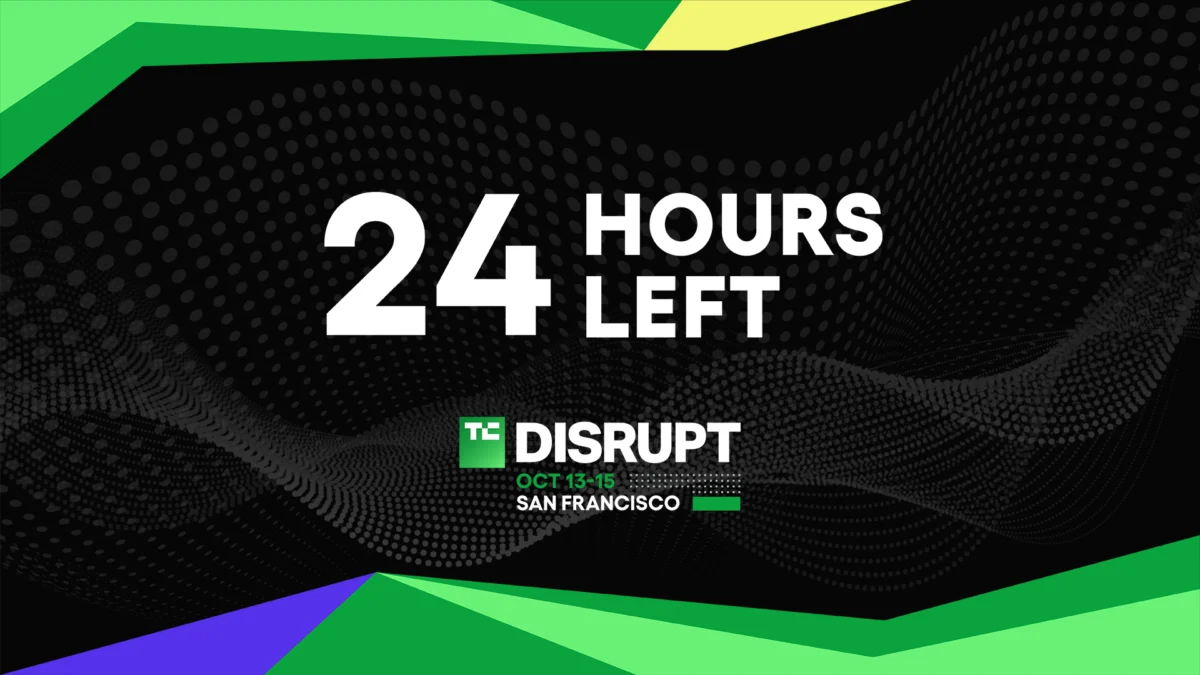
The window for securing the most cost-effective access to one of the technology industry’s flagship annual gatherings is rapidly closing as the Early Bird registration period for TechCrunch Disrupt 2026 concludes tonight, May 29, at 11:59 p.m. PT. Prospective attendees, ranging from early-stage founders to institutional investors, have only a few remaining hours to lock in savings of up to $410 per pass before ticket prices transition to the next tier of the standard pricing schedule. This deadline represents the final opportunity to access the event at its lowest available rate, a critical consideration for bootstrapped startups and independent operators looking to maximize their professional development budgets for the upcoming fiscal year.
Scheduled to take place from October 13 to October 15, 2026, at the Moscone West convention center in San Francisco, TechCrunch Disrupt remains a cornerstone of the global innovation calendar. The event is projected to draw more than 10,000 participants, creating a high-density environment for networking, capital sourcing, and strategic partnership formation. As the technology sector navigates a complex landscape of rapid artificial intelligence integration and shifting venture capital dynamics, the 2026 summit is positioned as a pivotal moment for industry leaders to align on the future of the digital economy.
The Strategic Importance of TechCrunch Disrupt in the Startup Lifecycle
TechCrunch Disrupt has historically served as more than a mere industry conference; it is a catalyst for the "momentum phase" of the startup lifecycle. For over a decade, the event has acted as a primary venue where emerging technologies are de-risked through public exposure and expert vetting. The 2026 iteration continues this tradition by offering a multifaceted platform designed to facilitate "meaningful connections and real business progress."
The core of the event’s value proposition lies in its ability to aggregate all key stakeholders of the tech ecosystem under one roof. Founders attend to raise capital and gain visibility; investors arrive to source high-quality deal flow; and operators from established tech giants look for acquisition targets or the next generation of enterprise tools. By providing a centralized location for these interactions, Disrupt reduces the friction typically associated with high-level networking in the fragmented tech landscape.
A Chronology of Innovation: From TechCrunch50 to Disrupt 2026
To understand the weight of the 2026 event, one must look at the historical trajectory of the conference. Originally launched as TechCrunch50 in 2007, the event was founded on the principle of meritocratic startup discovery. It eventually evolved into TechCrunch Disrupt, moving through various venues in New York and San Francisco before solidifying its home at Moscone West.

Over the years, the conference has been the launching pad for companies that have redefined their respective categories. Notable alumni of the Disrupt stage include Dropbox, Mint, and Fitbit—entities that utilized the platform to transition from obscure prototypes to household names. The 2026 event arrives at a time when the industry is undergoing a similar seismic shift, driven by the maturation of generative AI and the increasing urgency of climate technology. The three-day schedule in October is designed to mirror these shifts, providing a chronological narrative of where the industry has been and where it is headed over the next decade.
Deep Dive into the 2026 Program: Six Stages of Specialized Content
The 2026 agenda is structured to address the specific needs of diverse tech sectors through 200-plus sessions distributed across six industry-focused stages. This granular approach ensures that while the event is massive in scale, the content remains highly relevant to specialized practitioners.
Artificial Intelligence and Machine Learning
Given the unprecedented pace of AI development, this stage will likely dominate the conversation. Industry analysts expect the 2026 sessions to move beyond the hype of foundational models and focus instead on "Agentic AI"—autonomous systems capable of executing complex workflows without constant human oversight. Discussions will likely cover the infrastructure requirements for massive scale-up and the evolving regulatory landscape surrounding data privacy and algorithmic bias.
Fintech and Decentralized Finance
The fintech stage will examine the intersection of traditional banking and automated financial services. With interest rates and global economic policies in a state of flux, experts will provide analysis on the future of cross-border payments, the integration of AI in risk assessment, and the role of stablecoins in the global liquidity pool.
Climate Tech and Sustainability
As global mandates for carbon neutrality intensify, the climate tech stage has become one of the most high-stakes areas of the conference. The 2026 programming is expected to highlight breakthroughs in long-duration energy storage, carbon capture utilization, and the circular economy. This track attracts a specific breed of "impact investors" who are looking for scalable solutions to environmental challenges.
SaaS, Enterprise, and Cybersecurity
The backbone of the digital economy, the SaaS and cybersecurity tracks, will focus on the resilience of enterprise infrastructure. In an era of sophisticated cyber threats, the 2026 sessions will feature security architects discussing zero-trust environments and the role of automated defense systems in protecting global supply chains.

The Startup Battlefield 200: A Vetted Cohort of Excellence
One of the most anticipated features of Disrupt is the Startup Battlefield 200. This is a curated cohort of 200 startups selected from thousands of applicants globally. These companies are granted a dedicated space on the exhibition floor, providing them with direct access to the 10,000+ attendees.
From this group, a smaller subset is chosen to compete on the "Disrupt Stage" for the coveted Battlefield Cup and a significant equity-free cash prize. The selection process is rigorous, involving months of interviews and product demos by TechCrunch’s editorial team. For investors, the Battlefield 200 represents a pre-vetted shortlist of the most promising early-stage companies in the world. For the startups, it is an opportunity for "the TechCrunch bump"—a surge in interest, traffic, and funding inquiries that often follows a successful showing at the event.
Economic Implications and San Francisco’s Tech Resurgence
The hosting of Disrupt 2026 at Moscone West also carries significant weight for the local economy of San Francisco. After several years of debate regarding the city’s "doom loop" narrative, the resurgence of the AI sector has firmly re-established San Francisco as the undisputed capital of global technology.
Economic data suggests that large-scale events like Disrupt contribute tens of millions of dollars to the local hospitality and service sectors. Furthermore, the concentration of talent in the city during the week of October 13–15 creates a "halo effect," where peripheral events, hackathons, and private investor dinners happen throughout the SoMa and Financial District neighborhoods, effectively turning the entire city into a laboratory for innovation.
Incentives for Group Participation and Strategic Attendance
Recognizing that innovation is rarely a solitary endeavor, TechCrunch has implemented several pricing strategies to encourage collaborative attendance. In addition to the individual Early Bird savings, the organizers are offering a "Buy One Get One 50% Off" promotion. For larger organizations, group discounts of up to 30% are available for community passes.
These incentives are designed to help companies send cross-functional teams. For example, a startup might send its CEO to handle investor relations, its CTO to track technical trends on the AI stage, and its Head of Product to scout the 300+ exhibiting startups for potential integrations. By lowering the barrier to entry for groups, Disrupt ensures a more diverse and comprehensive representation of the workforce.

Analysis of the 2026 Speaker Roster and Industry Reactions
While the full speaker list continues to grow, the inclusion of high-caliber voices is a hallmark of the Disrupt experience. Past speakers have included luminaries such as Sam Altman of OpenAI, whose insights into the trajectory of artificial intelligence have historically set the tone for the following year’s development cycles.
Industry reactions to the 2026 announcement have been largely positive, with venture capital firms noting that the timing of the event in October is ideal for setting the stage for Q1 investment strategies. "Disrupt provides the raw data we need to understand where the friction points are in the current market," noted one Silicon Valley-based analyst. "Seeing 200 startups pitch back-to-back gives you a sense of the ‘zeitgeist’ that you simply cannot get from reading white papers or scrolling through LinkedIn."
Final Call: The Mechanics of the Deadline
As the 11:59 p.m. PT deadline approaches, the technical infrastructure for registration is expected to see a surge in traffic. Organizers recommend that interested parties complete their transactions well before the final hour to avoid potential latency issues.
The transition from Early Bird to standard pricing represents a significant jump in overhead for many participants. For a small startup, the $410 saved per ticket could be reallocated toward travel expenses or marketing materials for the exhibition floor. Once the clock strikes midnight, the automated pricing system will update across all platforms, and no further discounts at the Early Bird level will be honored.
TechCrunch Disrupt 2026 stands to be a definitive gathering for a tech industry that is currently reinventing itself. From the high-stakes competition of the Startup Battlefield to the deep-dive technical sessions across six stages, the event offers a comprehensive look at the tools, trends, and talents that will define the late 2020s. For those looking to participate in this ecosystem, the time to secure a place at the lowest possible cost is now.