Gilang Muhammad
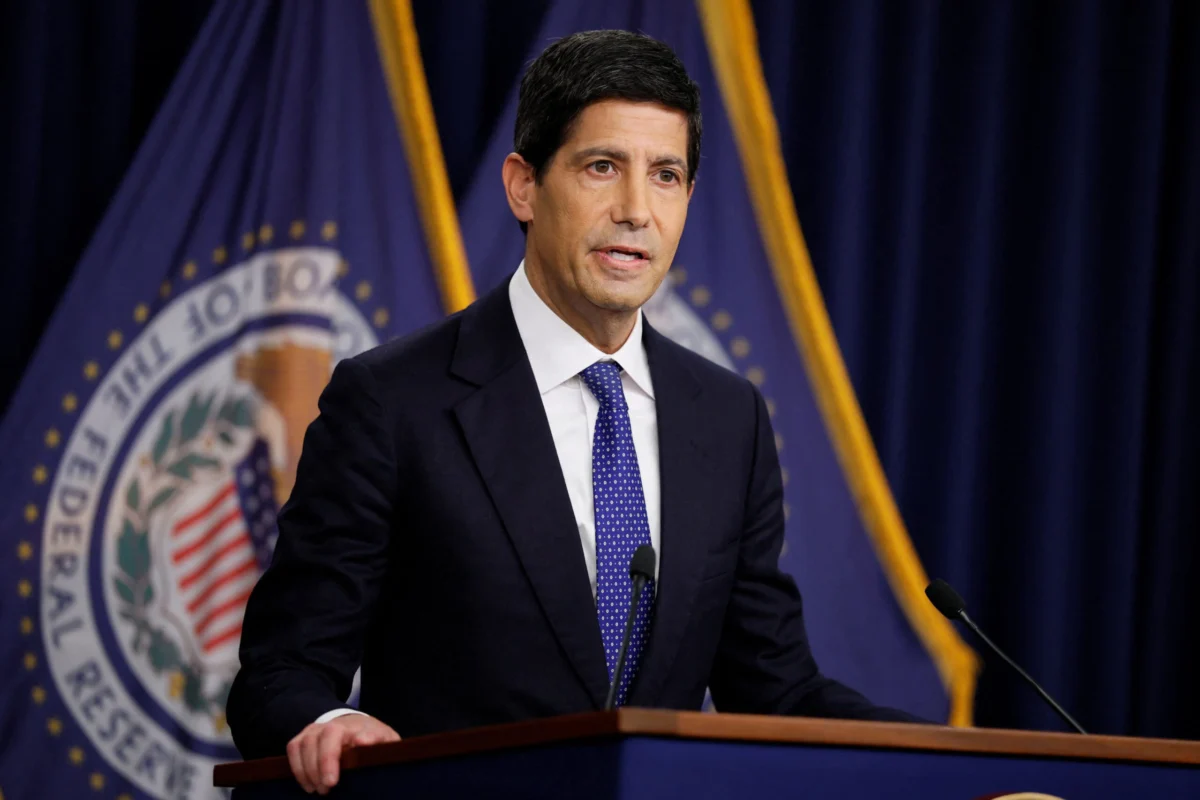
Federal Reserve Chairman Kevin Warsh, captured in a September 16, 2026, press conference following a Federal Open Market Committee (FOMC) meeting in Washington, D. D.C., U.S., has set the stage for an October monetary policy decision fraught with market speculation and potential surprise. Despite overwhelming market bets against an interest rate hike, Warsh’s distinctive communication strategy and recent economic signals suggest investors may be dangerously complacent, overlooking the possibility of a hawkish pivot. The futures market, as of Friday morning, assigned only a 15% probability to an October rate increase, a judgment largely predicated on traditional Fed communication norms that Warsh has repeatedly challenged. This divergence between market expectation and the Chairman’s deliberate ambiguity underscores a new era for Fed watchers, where established signals may no longer reliably predict policy action.
A Shift in Fed Communication: Warsh’s Deliberate Ambiguity
The core of the current market uncertainty lies in Chairman Warsh’s outspoken rejection of conventional Fed communication. Historically, Federal Reserve chairs have often employed a strategy of "forward guidance," carefully telegraphing their intentions to the market ahead of key policy meetings. This approach aimed to minimize volatility and allow financial markets to smoothly price in future rate changes. However, Warsh has explicitly distanced himself from this tradition, stating at an International Monetary Fund (IMF) event in Bangkok on Friday morning that he was "not signaling a decision one way or the other." This statement, while seemingly neutral, reinforced market perceptions of a pause, primarily because it did not actively contradict the prevailing dovish sentiment. Yet, for those attuned to Warsh’s evolving leadership style, it also left ample room for a surprise.
The implications of this shift are profound. For decades, investors and analysts meticulously dissected every word from Fed officials, from press conferences to obscure regional Fed speeches, to divine the future path of monetary policy. The New York Fed President and the Fed Vice Chairman, in particular, have often been seen as key proxies for the Chairman’s views, their public remarks acting as unofficial guidance. Under Warsh, this established framework appears to be eroding, forcing market participants to recalibrate their analytical models and accept a higher degree of unpredictability.
The Market’s Complacency: A Risky Bet on Tradition
Market complacency regarding an October rate hike is built upon several foundational assumptions, many of which are rooted in past Fed behavior. One primary assumption is that the Chairman’s top lieutenants — specifically Fed Vice Chairman Philip Jefferson and New York Fed President John Williams — speak for him, or at the very least, would not publicly contradict his ultimate policy leanings. In recent weeks, both Jefferson and Williams delivered remarks that signaled a lack of urgency for further rate increases, a stance that the markets quickly absorbed and used to reprice the probability of an October hold.
Jefferson and Williams, along with Warsh, constitute what is informally known as the "troika" — a critical decision-making team at the apex of the Federal Reserve. In previous administrations, the troika’s public alignment was a powerful signal of policy consensus. While Warsh could theoretically coordinate with the troika without overtly communicating his own views, outsiders lack certainty that the traditional conventions governing the public statements of the New York Fed president and the Fed vice chair have endured the leadership transition. This uncertainty introduces a significant vulnerability into market expectations, as what was once a reliable indicator of the Chairman’s disposition may no longer hold true.
Another critical assumption influencing market sentiment is that Warsh broadly concurs with the FOMC’s collective economic outlook. At the Bangkok event, Warsh remarked that "the world has broadly conformed to our expectations" regarding the economy since September. This statement could be interpreted as implying that recent elevated inflation readings do not fundamentally contradict the economic projections released following the September FOMC meeting. The Summary of Economic Projections (SEP), often accompanied by the "dot plot" illustrating individual FOMC members’ rate expectations, indicated that the median Fed official anticipated one more rate hike in 2026. This projection allowed for the possibility of a pause in October followed by a hike in December. However, Warsh notably disclaimed the SEP during his September press conference, stating emphatically to a reporter, "Those aren’t my forecasts." This specific rejection highlights his willingness to diverge from the committee’s consensus forecasts, further complicating efforts to predict his policy inclinations based on traditional Fed documents.
Economic Data: A Hawkish Undercurrent
Despite market expectations for a pause, a compelling case for an October rate hike can be constructed from recent inflation data, a factor Warsh could readily invoke to sway the FOMC. The Federal Reserve operates under a dual mandate from Congress: to achieve maximum employment and maintain price stability, with the latter often interpreted as targeting 2% annual inflation as measured by the Personal Consumption Expenditures (PCE) price index.
Recent economic releases have shown inflation running significantly above this target. The Consumer Price Index (CPI) rose by 3.7% year-over-year through September, while the Producer Price Index (PPI) surged by 6.3% over the same period. These figures suggest that the upcoming reading of the Fed’s preferred inflation metric, core PCE, is likely to register around 3.1% year-over-year, with headline PCE, influenced by volatile energy prices, expected to be even higher.

Chairman Warsh has been unequivocal in his stance on inflation. During his closely watched speech at the Jackson Hole Economic Symposium in late August, he addressed questions about his potential tolerance for inflation above 2% with firm clarity: "There should be no misunderstanding," Warsh declared. The Fed’s 2% PCE goal "is a firm, fixed target." This hawkish assertion at Jackson Hole, where he detailed an economy growing robustly with inflation being a greater concern than the jobs market, set the stage for the FOMC’s unanimous rate hike in September. His position then heavily relied on his assessment of loose credit conditions.
The Chicago Fed’s National Financial Conditions Index (NFCI), which gauges risk, credit, and leverage in money markets, has indeed tightened slightly since Jackson Hole, rising approximately 0.05 points. However, it remains in negative territory, indicating that overall financial conditions are still considered accommodative rather than restrictive. This data point could be interpreted by Warsh as insufficient tightening, leaving room for further rate increases to combat persistent inflationary pressures. The question for observers is whether Warsh believes the market has adequately "removed a dose of accommodation," as he phrased it on Thursday, or if more direct intervention is required. The answer, as Warsh’s communication style suggests, may only become clear at the FOMC press conference.
Chronology of Key Events Shaping the Outlook
To fully grasp the current uncertainty, it is crucial to review the recent timeline of events:
- August 28, 2026: Jackson Hole Economic Symposium. Chairman Warsh delivers a pivotal speech outlining his idiosyncratic, strongly hawkish view of the economy. He emphasizes robust growth and expresses significant concern over inflation, describing the Fed’s 2% PCE target as "a firm, fixed target." This speech significantly impacts market expectations, contributing to a unanimous FOMC vote for a rate hike in September.
- September 16, 2026: FOMC Meeting and Press Conference. The FOMC unanimously votes to raise interest rates. During the subsequent press conference, Chairman Warsh notably disclaims the Summary of Economic Projections (SEP), stating, "Those aren’t my forecasts," signaling his willingness to deviate from the committee’s collective outlook. The SEP itself suggests one more hike in 2026.
- Early October 2026: Remarks by Fed Vice Chairman Philip Jefferson and New York Fed President John Williams. Both top lieutenants deliver speeches indicating little urgency for further rate increases, aligning with a more dovish stance. Markets interpret these remarks as strong signals for an October pause, leading to significant repricing of rate hike probabilities.
- October 14, 2026: September CPI Report Release. The Consumer Price Index (CPI) shows an annual increase of 3.7%, remaining well above the Fed’s 2% target, indicating persistent inflationary pressures.
- October 15, 2026: September PPI Report Release. The Producer Price Index (PPI) reveals a substantial 6.3% year-over-year gain, suggesting ongoing cost pressures that could feed into consumer prices.
- October 16, 2026: IMF Event in Bangkok. Chairman Warsh states he is "not signaling a decision one way or the other" regarding the upcoming FOMC meeting, reinforcing his non-conventional communication approach while simultaneously leaving room for maneuver. He also remarks that "the world has broadly conformed to our expectations" since September, a statement open to various interpretations.
- Later this month (October 28, 2026): Scheduled FOMC Meeting. The critical decision point where the Fed will announce its next move on interest rates.
Implications for Market Stability and Fed Credibility
The potential for a surprise interest rate hike in October, against strong market expectations for a pause, carries significant risks. Raising rates when markets overwhelmingly anticipate otherwise is a well-known recipe for heightened volatility. Such an outcome could trigger sharp movements in equity, bond, and currency markets, potentially undermining investor confidence and disrupting financial stability.
Furthermore, a surprise decision could significantly dent the credibility of other Fed officials, particularly Vice Chairman Jefferson and New York Fed President Williams, who were perceived to have guided the market towards a hold. If their public statements are effectively overridden by the Chairman’s decision, it could weaken their future influence and make the Fed’s communication even harder to predict. This scenario would complicate the Fed’s ability to manage expectations, a crucial tool in modern monetary policy.
Chairman Warsh’s learning curve on the job is visibly steep. He may be discovering the inherent complexities of leading the Federal Reserve, an institution that relies heavily on consensus and the collective expertise of its staff and the FOMC. The Chairman cannot operate in isolation; building and maintaining broad committee support is essential for effective policy implementation. Similarly, he may come to understand that markets do not issue clear, independent signals but rather react dynamically to the Fed’s communication and actions.
The Path Ahead: Consensus or Confrontation?
As the October FOMC meeting approaches, two primary scenarios for Chairman Warsh emerge. He could enter the meeting prepared to leverage recent booming demand for AI spending, which indicates robust economic activity, and the warm readings from inflation data to persuade wavering committee members towards a rate increase. This approach would underscore his hawkish convictions and assert his leadership decisively.
Alternatively, Warsh might choose to assess the committee’s views and tack towards the middle, prioritizing consensus and minimizing market disruption. This would represent a more conventional leadership style, perhaps indicating an evolving understanding of the practicalities of steering the world’s most powerful central bank. Such a move would be a nod to the collective wisdom of the FOMC and the importance of market predictability.
Ultimately, Chairman Kevin Warsh still possesses the potential to surprise financial markets, and it would be imprudent for investors and analysts to assume otherwise. His unconventional communication style, coupled with persistent inflationary pressures and a resilient economy, creates an environment where traditional signals may prove misleading. The October FOMC meeting will not only determine the immediate path of interest rates but also offer critical insights into the future direction of Federal Reserve leadership and its engagement with global financial markets. The stakes are high, and the world watches closely for what could be a defining moment in Warsh’s nascent tenure.