Lina Wu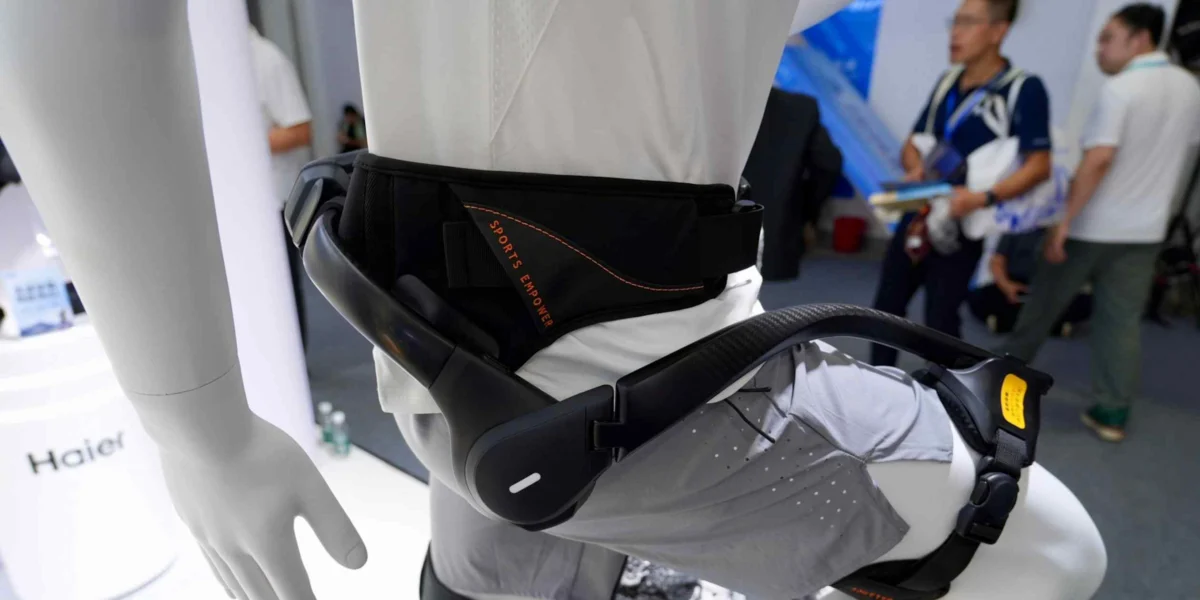
SHANGHAI — Exoskeletons, wearable devices designed to augment physical capabilities, are steadily transitioning from specialized applications in medicine and heavy industry into the fabric of daily life across China. Once confined to rehabilitation centers and manufacturing floors, these powered suits are now appearing in broader public spheres, signaling a potential shift in how physical labor and personal mobility are perceived and executed. This burgeoning integration was vividly illustrated at the recent World Robot Conference held in Beijing in August, where a diverse array of exoskeleton technologies were showcased, hinting at a future where human physical limitations are increasingly mitigated by advanced robotics.
The World Robot Conference: A Showcase of Evolving Applications
The World Robot Conference, a prominent annual event that has grown in significance over the past decade, served as a crucial platform for demonstrating the latest advancements in robotics. This year’s iteration, held in Beijing, drew considerable attention to the practical applications of exoskeletons, moving beyond purely industrial or medical contexts. Among the exhibitors was Haier Group, a well-established home appliance manufacturer, which presented its own developments in exoskeleton technology. This participation by a company traditionally associated with consumer electronics underscores the expanding market interest and potential consumer adoption of such devices.
The conference typically features a wide spectrum of robotic innovations, from autonomous vehicles and industrial automation to humanoid robots and assistive technologies. The inclusion and prominence of exoskeletons in this year’s event suggest a strategic push by Chinese technology firms to explore new frontiers in human-robot interaction and augmentation. Industry analysts attending the conference noted a marked increase in the sophistication and user-friendliness of the exhibited exoskeleton models, with a greater emphasis on lightweight materials, enhanced battery life, and intuitive control systems. These improvements are critical for transitioning exoskeletons from controlled industrial environments to more dynamic and unpredictable everyday settings.
A Timeline of Exoskeleton Development in China
The journey of exoskeletons in China can be traced back several years, with early efforts primarily focused on rehabilitation and assisting individuals with mobility impairments.
-
Early 2010s: Initial research and development efforts in China, mirroring global trends, concentrated on medical exoskeletons. These were largely bulky, complex machines used in physical therapy to help patients regain movement after strokes, spinal cord injuries, or other neurological conditions. Universities and research institutes spearheaded much of this early work.
-
Mid-2010s: As material science and robotics advanced, the focus began to broaden. Industrial exoskeletons, designed to reduce strain and prevent injuries for workers in sectors like manufacturing, construction, and logistics, started to emerge. Companies began investing in pilot programs to test these devices in real-world industrial settings. The aim was to improve worker safety, increase productivity, and mitigate the long-term health risks associated with physically demanding jobs.
-
Late 2010s – Early 2020s: The COVID-19 pandemic accelerated interest in automation and assistive technologies. While not directly related to exoskeletons, the broader societal acceptance of technological solutions for human challenges created a more fertile ground for innovation. Simultaneously, miniaturization and improvements in power efficiency began to make exoskeletons more practical for a wider range of applications. Companies started exploring consumer-facing possibilities, including those aimed at elderly care and personal assistance.
-
2023 – Present: The World Robot Conference in August 2026 represents a significant milestone, showcasing a more mature and diverse range of exoskeleton applications. The presence of companies like Haier, venturing beyond their core businesses, signals a maturing market and a growing belief in the commercial viability of these devices for everyday use. The showcased products at the conference suggest a move towards more ergonomic designs, AI-powered adaptive support, and potentially even integration with smart home or personal assistant systems.
Supporting Data and Market Trends
The growing presence of exoskeletons in China is supported by several converging trends and data points:
-
Aging Population: China’s rapidly aging population presents a significant demographic challenge and a burgeoning market for assistive technologies. As the number of elderly individuals increases, so does the demand for devices that can help maintain independence and quality of life, including those that aid with mobility and reduce physical strain. According to the National Bureau of Statistics of China, by the end of 2023, individuals aged 65 and above accounted for approximately 15.4% of the total population, a figure projected to rise significantly in the coming decades. This demographic shift is a powerful driver for the adoption of assistive technologies.
-
Labor Shortages and Workforce Demographics: While China has a large workforce, there are ongoing shifts in labor demographics, with a growing demand for skilled labor and potential shortages in physically demanding roles. Exoskeletons can play a crucial role in extending the working lives of individuals in physically taxing jobs, improving their efficiency, and reducing workplace injuries. This not only benefits employers by maintaining productivity but also supports workers by enhancing their physical well-being.
-
Technological Advancements: Rapid progress in areas such as artificial intelligence (AI), sensor technology, advanced materials, and battery technology has made modern exoskeletons more capable, lighter, and more energy-efficient. AI algorithms, for instance, can enable exoskeletons to predict user movements and provide support proactively, making them more intuitive and less cumbersome. Lightweight composites and advanced alloys are reducing the weight of these devices, making them more comfortable for prolonged use.
-
Government Support and Policy: The Chinese government has identified robotics as a key strategic industry and has implemented policies to encourage research, development, and manufacturing. Initiatives like "Made in China 2025" have aimed to foster domestic innovation and production in advanced manufacturing sectors, including robotics. This governmental backing provides a favorable environment for companies investing in exoskeleton technology.
-
Market Growth Projections: Global market research firms have projected substantial growth for the exoskeleton market, with China expected to be a significant contributor. Reports suggest that the global exoskeleton market, valued at several hundred million dollars in the early 2020s, could reach billions of dollars by the end of the decade. This growth is fueled by increasing adoption across industrial, medical, and consumer sectors.
Official Responses and Industry Reactions
While specific official statements directly addressing the everyday integration of exoskeletons may be nascent, the broader policy environment signals strong support. Government bodies responsible for industrial policy, technology innovation, and healthcare have consistently highlighted the importance of robotics and artificial intelligence. The focus has been on fostering domestic technological capabilities and addressing societal challenges through innovation.
Industry leaders and technology experts have expressed optimism about the potential of exoskeletons to transform various aspects of life. At the World Robot Conference, conversations among attendees and exhibitors frequently touched upon the ethical considerations, safety standards, and regulatory frameworks that will be necessary as these devices become more prevalent.
A hypothetical, yet logical, reaction from a representative of a major technology firm involved in exoskeleton development might be: "We are seeing a paradigm shift in how humans can interact with their physical environment. Exoskeletons are no longer just tools for specific professions; they are becoming enablers of greater human potential. Our focus is on creating devices that are not only functional but also safe, intuitive, and affordable for a broad range of users, from industrial workers to individuals seeking greater mobility in their daily lives."
Similarly, a spokesperson from a labor advocacy group might offer a perspective on worker impact: "The introduction of exoskeletons into workplaces could be a double-edged sword. On one hand, they offer the potential to significantly reduce physical strain and prevent injuries, leading to a healthier workforce. However, it is crucial that these technologies are implemented with proper training, safety protocols, and without leading to job displacement or undue pressure on workers to adopt them without adequate consideration for their well-being."
Broader Impact and Implications
The increasing integration of exoskeletons into everyday life in China carries profound implications across multiple societal domains:
-
Redefining Physical Labor: As exoskeletons become more commonplace, the nature of physically demanding jobs may evolve. They could enable individuals to perform tasks that were previously too strenuous or risky, potentially extending careers and increasing productivity. This could also lead to a reassessment of wages and working conditions in sectors that rely heavily on manual labor.
-
Enhancing Independent Living: For an aging population, exoskeletons offer a pathway to greater independence and autonomy. Devices that assist with walking, lifting, and other daily activities could significantly improve the quality of life for seniors, reducing their reliance on caregivers and allowing them to remain active participants in society.
-
Accessibility and Inclusion: Beyond the elderly, exoskeletons have the potential to enhance accessibility for individuals with disabilities. By providing enhanced mobility and physical support, these devices could open up new opportunities for education, employment, and social engagement, fostering greater inclusion.
-
Economic and Industrial Transformation: The widespread adoption of exoskeletons will likely spur innovation and create new economic opportunities in manufacturing, design, maintenance, and training related to these devices. It also signifies China’s ambition to be at the forefront of advanced robotics and human augmentation technologies.
-
Ethical and Societal Considerations: As exoskeletons become more integrated, ethical questions will inevitably arise. These include issues of affordability and equitable access, potential over-reliance on technology, the impact on natural human physical development, and the implications for privacy and data security, particularly with increasingly sophisticated sensor-equipped devices. Establishing clear guidelines and regulations will be paramount.
The journey of exoskeletons from specialized tools to potential everyday companions is a testament to rapid technological advancement and evolving societal needs. China’s proactive approach, demonstrated by its participation in global technology showcases and its commitment to innovation, positions it as a key player in shaping this future. As these powered suits become more sophisticated and accessible, they promise to reshape our understanding of human physical capabilities and the very fabric of daily life.