Clara Shinta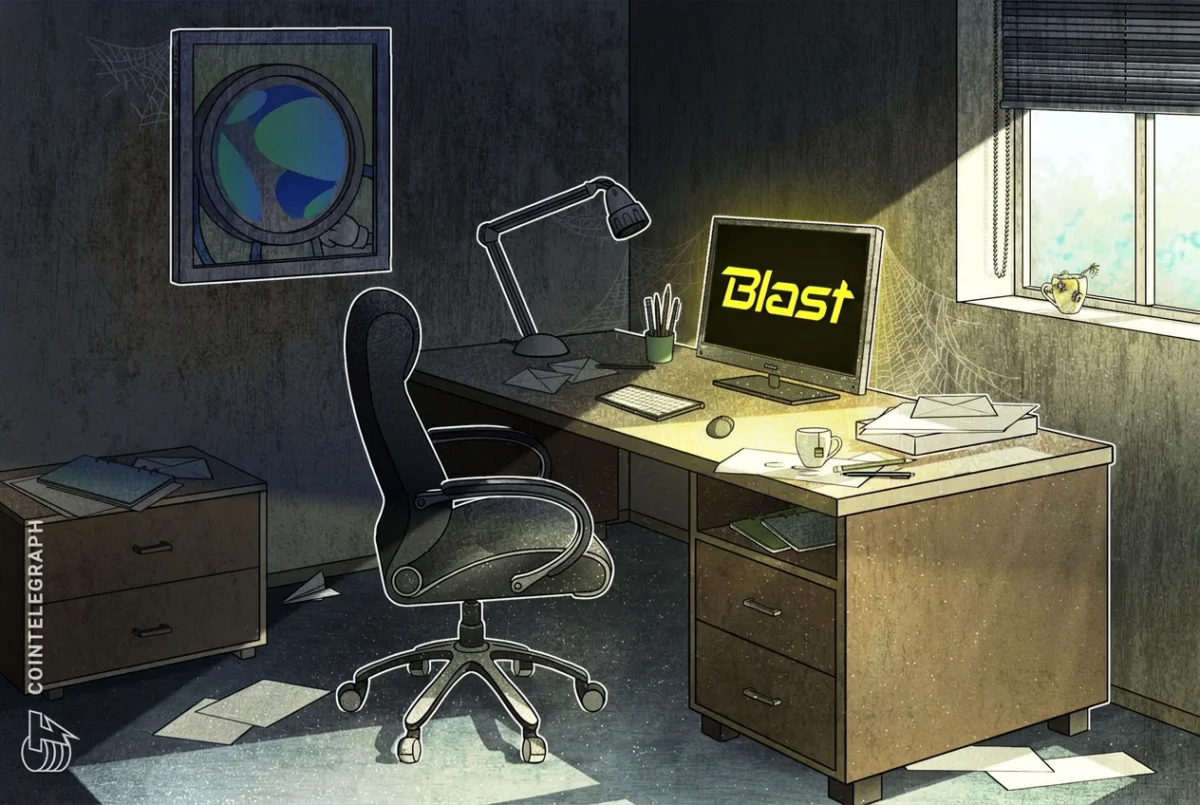
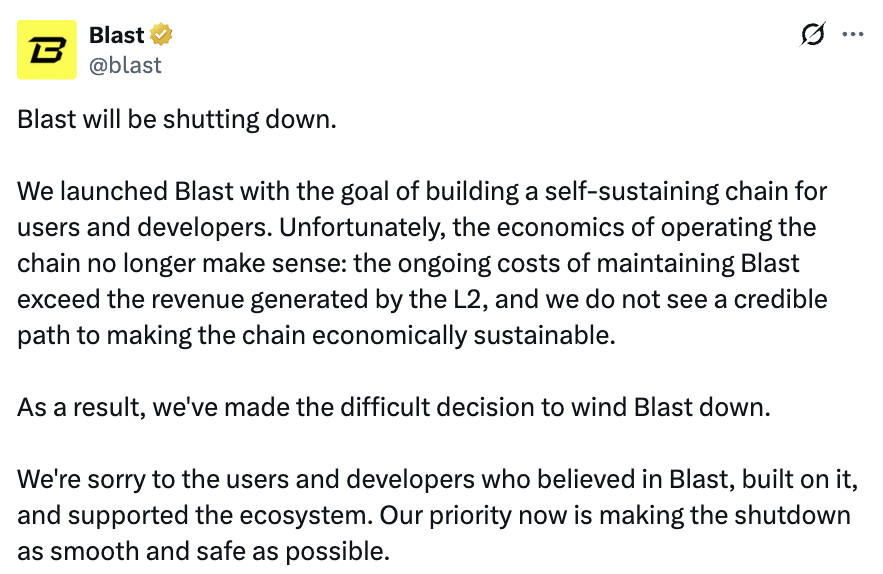
The Ethereum layer-2 network Blast, a venture launched by Blur founder Tieshun “Pacman” Roquerre, has officially announced its imminent shutdown, citing that its operating costs have consistently exceeded the revenue generated by the chain, rendering it economically unsustainable. In a public statement issued on Friday via its official X (formerly Twitter) account, Blast informed its user base and the broader cryptocurrency community that it sees "no credible path" to achieving long-term economic viability. Consequently, the network has initiated a phased process for users to withdraw their digital assets back to the Ethereum mainnet.
"We launched Blast with the goal of building a self-sustaining chain for users and developers," the Blast team communicated in their post. "Unfortunately, the economics of operating the chain no longer make sense." This abrupt closure marks a significant event in the competitive landscape of Ethereum layer-2 solutions, highlighting the inherent challenges in maintaining economic equilibrium amidst fluctuating market conditions and intense competition for user adoption and liquidity. The decision comes after a period of sustained decline in the network’s total value locked (TVL) and transaction activity, signaling a broader struggle to maintain momentum following an initially strong launch.
The Immediate Future: Withdrawal Protocols and Deadlines
For existing users and developers with assets on the Blast network, the immediate priority is the secure and timely withdrawal of funds. Blast has outlined a specific timeline and procedure to facilitate this process, emphasizing the importance of adherence to these instructions to avoid potential complications.
Initially, the network will reduce its standard withdrawal delay to a mere 24 hours, aiming to expedite the movement of assets. However, users should note a temporary suspension of withdrawals, which will be in effect while Blast undertakes the critical task of unwinding its Lido-staked assets. This unwinding process, involving the conversion of staked Ether (stETH) back to native ETH, is anticipated to take approximately one week. During this period, direct withdrawals from the Blast network will be paused, a necessary step to ensure the underlying liquidity for all user withdrawals.
Following the completion of the Lido asset unwinding, withdrawals will resume. Users will then have a critical window, specifically until October 26, to utilize Blast’s dedicated interface for withdrawing their assets. This interface is designed to provide a user-friendly experience for transferring funds back to the Ethereum mainnet. The Blast team has strongly urged all users to complete their withdrawals before this October 26 deadline.
After this date, while assets will technically remain accessible, the process for withdrawal will become significantly more complex. Users will be required to interact directly with the Blast bridge contracts on the Ethereum blockchain, bypassing the more intuitive user interface. This method demands a higher level of technical proficiency and understanding of smart contract interactions, potentially posing a challenge for less experienced users. To assist those who may need to utilize this method, Blast has committed to publishing detailed instructions for direct withdrawals via the bridge contracts well in advance of the October 26 cutoff. The overarching message from the Blast team is clear: act promptly and withdraw assets to the Ethereum mainnet before the designated deadline.
Blast’s Meteoric Rise and Connection to the NFT Boom
The narrative of Blast is intrinsically linked to the volatile yet lucrative world of Non-Fungible Tokens (NFTs) and the entrepreneurial vision of its founder, Tieshun "Pacman" Roquerre. Pacman first rose to prominence as the visionary behind Blur, an NFT marketplace that launched in October 2022. Blur quickly distinguished itself by directly challenging the then-dominant NFT marketplace, OpenSea, through a strategic focus on professional traders and the implementation of aggressive token incentives.
Blur’s innovative approach, which included zero trading fees and a sophisticated tokenomics model centered around airdrops and trader rewards, rapidly resonated with high-volume NFT participants. By the close of 2022, Blur had successfully surpassed OpenSea in trading volume, a remarkable feat that solidified its position as a major player in the NFT ecosystem. This lead was further extended into early 2023, fueled by continuous token airdrops and robust rewards programs that incentivized liquidity and trading activity on the platform. The success of Blur created significant buzz and established Pacman as a notable figure capable of disrupting established markets within the Web3 space.
Building on the momentum and reputation gained from Blur, Roquerre unveiled Blast in November 2023. Blast was positioned as an innovative Ethereum layer-2 network designed with a unique selling proposition: native yield on Ether (ETH) and stablecoins. This "yield-bearing" L2 promised users that their deposited assets would automatically earn interest, a feature not commonly offered by other L2s. In addition to native yield, Blast incorporated a points program, strategically tied to an anticipated token airdrop, designed to further incentivize early adoption and liquidity provision.
The strategy proved highly effective in its initial phase. The promise of native yield combined with the allure of a future token airdrop generated immense excitement and attracted significant capital. Before its mainnet officially launched in February 2024, Blast had successfully accumulated over $2 billion in deposits, a testament to the market’s appetite for innovative yield-generating opportunities and the power of well-executed incentive programs. This initial influx of capital positioned Blast as one of the most anticipated and well-funded new layer-2 networks in the Ethereum ecosystem.
The Unraveling: Economic Realities and Market Shifts
Despite its impressive initial traction and significant capital inflows, Blast’s growth proved difficult to sustain in the long term, particularly amidst a broader downturn in the NFT market and an increasingly competitive layer-2 landscape. The network’s foundational economic model, which relied on transaction fees to cover operational costs while simultaneously offering native yield to users, began to show cracks.
The core issue, as stated by the Blast team, was that operating costs consistently exceeded revenue. The operation of a layer-2 network involves substantial expenses, including maintaining and upgrading sequencer infrastructure, covering Ethereum mainnet transaction fees for batching and finality, funding security audits, supporting developer grants, and ongoing marketing and community management. If the volume of transactions and the associated fees generated are insufficient to cover these overheads, while also fulfilling the promise of native yield to depositors, the economic model becomes unsustainable.
A critical indicator of Blast’s deteriorating health was the precipitous decline in its DeFi Total Value Locked (TVL). According to data from DeFiLlama, Blast’s TVL had peaked at approximately $2.2 billion in June 2024. However, in the months leading up to the shutdown announcement, this figure plummeted dramatically, falling by more than 98%. Such a drastic reduction in TVL signifies a massive outflow of capital from the network, directly impacting its ability to generate revenue from transaction fees and sustain its operations. As of the announcement, the TVL stood at a fraction of its peak, reflecting a significant loss of user confidence and activity.
This decline was not an isolated event for Blast; it mirrored a broader trend within the NFT market and, specifically, affected its progenitor, Blur. The once-booming NFT market experienced a significant cooling period, characterized by reduced trading volumes, lower floor prices for collections, and a general shift in investor sentiment. Blur, which had once challenged OpenSea’s dominance, also experienced a parallel decline in its total value locked. Blur’s TVL, which had risen above $200 million at its early-2024 peak, had similarly fallen to approximately $27 million, according to DeFiLlama data. This interconnected decline suggests that the broader market conditions, particularly in the NFT space, played a substantial role in the economic viability of Pacman’s ventures. The reduced interest and activity in NFTs likely translated into less enthusiasm and liquidity for related or complementary projects like Blast.
Contextualizing Layer-2 Networks and the Challenge of Sustainability
The shutdown of Blast serves as a stark reminder of the complexities and inherent risks within the rapidly evolving Web3 ecosystem, particularly concerning Ethereum layer-2 networks. Layer-2 solutions were conceived to address Ethereum’s scalability limitations, offering faster transactions and significantly lower fees by processing transactions off the mainnet and periodically submitting batches back to Ethereum for finality. This approach has led to a proliferation of L2s, including prominent names like Arbitrum, Optimism, zkSync Era, Polygon PoS, and many others, all vying for market share, developer talent, and user liquidity.
Blast’s unique selling proposition of "native yield" was an attempt to differentiate itself in this crowded field. The mechanism involved staking deposited ETH with liquid staking protocols like Lido and passing a portion of the staking rewards back to users. Similarly, stablecoins deposited on Blast would earn yield through integration with protocols like MakerDAO’s DAI Savings Rate (DSR). While innovative and attractive on paper, this model introduced an additional layer of dependency and operational complexity. The sustainability of such a model hinges not only on robust transaction volume to cover network costs but also on the consistent generation of yield from underlying protocols, which itself can be subject to market fluctuations and protocol risks.
The broader challenge for many L2s is achieving true economic self-sufficiency beyond initial incentive programs and tokenomics. Many L2s bootstrap their ecosystems with significant venture capital funding and allocate large portions of their native tokens for airdrops and liquidity mining programs. These incentives are powerful tools for attracting users and developers initially, but they are not sustainable long-term revenue models. Ultimately, an L2 must generate sufficient revenue from transaction fees (often referred to as sequencer profits) to cover its operational expenses, fund ongoing development, and maintain security. When transaction activity dwindles, as it did for Blast, the entire economic foundation can crumble.
Broader Implications for the Web3 Ecosystem
The closure of Blast carries several significant implications for the Web3 ecosystem, affecting user trust, the future of L2 development, and the ongoing quest for sustainable decentralized finance models.
Impact on User Trust and Confidence: Each time a prominent project or network shuts down, it inevitably erodes a degree of user trust, especially among newer entrants to the crypto space. While Blast has outlined a clear withdrawal process, the necessity of such an operation can instill caution in users contemplating engaging with nascent L2s or experimental DeFi protocols. It underscores the critical importance of due diligence, understanding underlying economic models, and evaluating the long-term viability of projects before committing significant capital.
Re-evaluation of Yield-Bearing L2 Models: Blast’s failure prompts a crucial re-evaluation of the yield-bearing L2 model. While conceptually appealing, the practical implementation demonstrated its susceptibility to market downturns and the challenge of balancing promised yield with operational costs. This event may lead future L2s to prioritize fundamental scalability, security, and developer experience over complex yield generation mechanisms as their primary value proposition, or at least to integrate such yield models with greater caution and transparency regarding risks.
L2 Market Consolidation and Competition: The L2 landscape is incredibly competitive, with dozens of solutions vying for a slice of Ethereum’s ecosystem. Blast’s shutdown could signal an impending period of consolidation, where only the most robust, well-funded, and genuinely sustainable L2s will thrive. Projects with strong technical foundations, diverse ecosystems, and clear paths to profitability beyond initial incentives are more likely to endure. This competition will likely push L2s to innovate further in areas like zero-knowledge technology, interoperability, and enhanced developer tooling.
Lessons Learned for Developers and Investors: For developers, Blast’s journey highlights the necessity of building projects with sound economic fundamentals that can withstand market volatility. Relying heavily on speculative incentives and external market conditions can be a double-edged sword. For investors and users, it reinforces the principle that high yields often come with high risks. Understanding the source of yield, the operational costs, and the overall health of a network’s ecosystem is paramount. The event serves as a reminder that even projects with significant initial funding and high-profile founders are not immune to the harsh realities of economic unsustainability in a rapidly evolving technological and financial landscape.
In conclusion, the shutdown of Blast represents a significant moment of introspection for the Ethereum layer-2 space. While it underscores the inherent risks and challenges of building and sustaining innovative blockchain networks, it also provides valuable lessons that will undoubtedly shape the future development and strategic approaches within the broader Web3 ecosystem. The focus will likely shift even more towards true decentralization, robust economic models, and long-term sustainability as the industry matures.