Lina Wu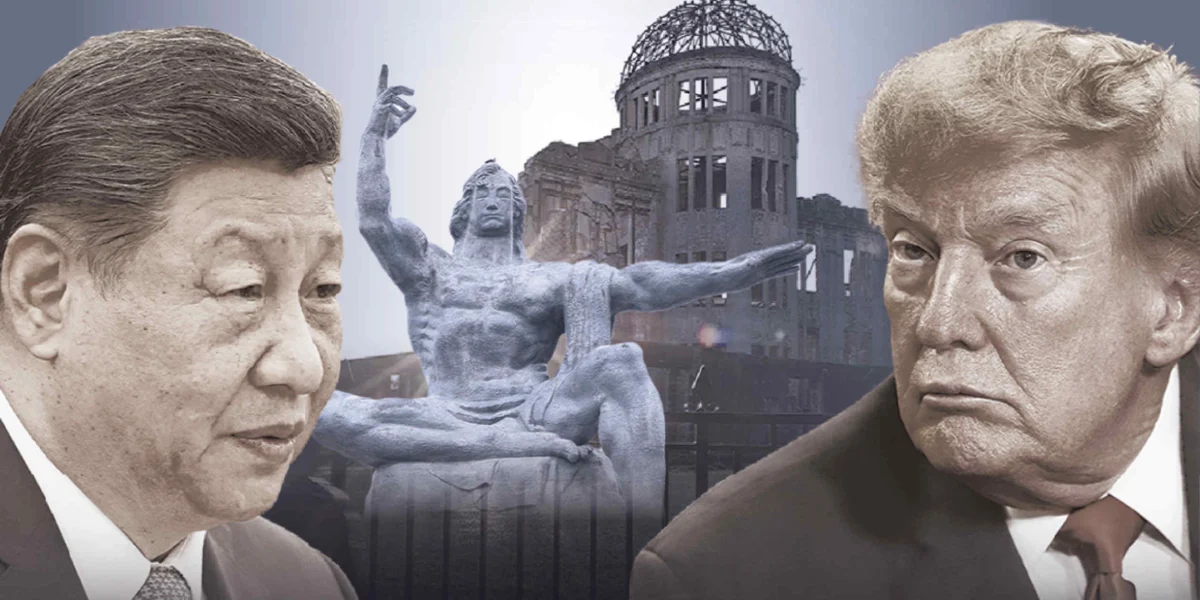
The urgent need for robust international frameworks to govern artificial intelligence, a technology poised to redefine human civilization, has reached a critical juncture, underscored by the recent commitment from United States President Donald Trump and Chinese President Xi Jinping to explore collaborative mechanisms for managing AI’s burgeoning risks. This agreement, reached during their summit on September 24, 2026, signifies a nascent recognition by the world’s two leading AI powers of the profound and potentially destabilizing implications of unchecked artificial intelligence development. The challenge lies not merely in containing AI’s potential downsides, but in simultaneously harnessing its immense capacity for human progress and prosperity – a delicate balancing act that will define much of the 21st century.
The backdrop to this agreement is a rapidly accelerating global AI race, characterized by fierce competition in research, development, and deployment across various sectors, from autonomous systems and advanced analytics to sophisticated weaponry and pervasive surveillance technologies. For years, the United States and China have been at the forefront of this technological arms race, investing billions of dollars and dedicating vast intellectual resources to achieving AI supremacy. While this competition has spurred innovation, it has also amplified concerns about ethical boundaries, national security, economic disruption, and the potential for unintended consequences.
A Summit’s Subtle Shift: From Competition to Cautious Dialogue
The commitment to discuss AI governance was a significant, albeit subtle, development stemming from the high-stakes summit held between President Trump and President Xi. This meeting, the first face-to-face encounter between the two leaders in over eighteen months, was ostensibly convened to address a range of pressing bilateral and global issues, including trade imbalances, geopolitical tensions in the Indo-Pacific, and the escalating climate crisis. However, the inclusion of AI governance on the agenda, and the subsequent joint statement on further discussions, signals a growing awareness within the highest echelons of power that the existential and societal risks posed by AI transcend purely economic or military considerations.
The discussions reportedly focused on identifying shared vulnerabilities and potential areas for cooperation. While specific details remain scarce, sources close to the negotiations suggest that both sides acknowledged the imperative of establishing norms and guardrails to prevent an uncontrolled proliferation of dangerous AI applications, particularly in the realm of autonomous weapons systems and sophisticated cyber warfare capabilities. The concept of "risk containment" emerged as a central theme, indicating a mutual understanding that an unchecked AI arms race could lead to a global security dilemma, where each nation’s pursuit of AI advantage inadvertently increases the risk of catastrophic conflict.
The Escalating AI Landscape: Data and Projections
The urgency of this dialogue is amplified by current trends in AI development and deployment. Global AI market size, which was estimated to be around $150 billion in 2023, is projected to surge to over $1.3 trillion by 2030, according to various industry analyses. This exponential growth underscores the transformative power of AI across all facets of society, from revolutionizing healthcare and scientific discovery to automating vast swathes of the global workforce.
However, this rapid advancement is also accompanied by growing concerns. A recent report by the Global AI Ethics Council, a multi-stakeholder organization, highlighted a significant increase in AI-related incidents, including sophisticated disinformation campaigns amplified by generative AI, autonomous system malfunctions leading to accidents, and the pervasive use of AI in surveillance technologies that raise profound privacy and human rights issues. The report also warned of the potential for "superintelligence" – AI systems far exceeding human cognitive abilities – to pose unforeseen and potentially unmanageable risks if not developed with stringent safety protocols and ethical considerations.
Chronology of AI Governance Discussions:
The path towards this bilateral dialogue has been a gradual one, marked by increasing international attention to AI governance:
- 2023-2024: A surge in public awareness and academic research surrounding AI safety and ethics, fueled by breakthroughs in large language models and generative AI. International organizations and national governments begin to establish advisory bodies and working groups focused on AI policy.
- Early 2025: Several high-profile AI-related incidents, including a major cyberattack attributed to advanced AI capabilities and a widely publicized AI-driven disinformation campaign during a significant election cycle, heighten global concerns. The United Nations convenes a special session on the governance of artificial intelligence.
- Mid-2025: The United States and China engage in preliminary, informal discussions through diplomatic channels regarding AI risks. These initial conversations are characterized by a degree of skepticism and competitive posturing.
- Late 2025: The emergence of advanced autonomous weapons systems capable of independent target selection and engagement prompts urgent calls for international treaties and arms control measures.
- Early 2026: The US and China, alongside other major AI-developing nations, participate in several multilateral forums discussing AI safety and ethical guidelines. However, concrete agreements remain elusive due to differing national interests and strategic priorities.
- September 24, 2026: The summit between President Trump and President Xi results in a joint commitment to explore mechanisms for containing AI risks, marking a significant, albeit early, step towards potential bilateral cooperation.
Reactions from the International Community and Experts
The announcement of the US-China agreement has been met with a mixture of cautious optimism and pragmatic skepticism from the international community. Many welcomed the acknowledgment of shared AI risks by the two leading powers, viewing it as a necessary precursor to any meaningful global governance framework.
"This is a crucial step," stated Dr. Anya Sharma, Director of the International AI Ethics Institute, in a press briefing. "For too long, the AI conversation has been dominated by competition. The fact that both Washington and Beijing are now signaling a willingness to discuss containment measures, particularly concerning security implications, is a cause for measured hope. However, the devil will be in the details of these discussions."
Conversely, some security analysts expressed concern about the potential for such bilateral talks to lead to a bifurcated global AI landscape, where the US and China establish their own distinct governance regimes, potentially excluding other nations and hindering universal adoption of safety standards. "We need a truly multilateral approach to AI governance," argued General (Ret.) Marcus Thorne, a former Pentagon advisor on emerging technologies. "While bilateral dialogue is important, it should not become a substitute for broader international consensus-building. The risks of AI are global, and so must be the solutions."
Technology industry leaders, while generally supportive of efforts to ensure responsible AI development, have also emphasized the need for frameworks that do not stifle innovation. "We are excited about the potential of AI to solve some of the world’s most pressing challenges," commented Sarah Chen, CEO of a leading AI research firm. "Any governance measures must be carefully designed to foster innovation while mitigating risks, ensuring that we can continue to unlock AI’s benefits for humanity."
Broader Implications: A New Era of Tech Diplomacy?
The US-China agreement on AI governance, even in its nascent stage, carries profound implications for the future of international relations and technological development. It suggests a potential shift in the geopolitical landscape, where shared existential risks, such as those posed by advanced AI, could carve out new avenues for cooperation between adversarial powers.
This initiative could pave the way for a new form of "tech diplomacy," where nations engage in dialogue and collaboration on the ethical, security, and societal implications of emerging technologies. The success of these US-China discussions will likely influence the broader international agenda on AI governance, potentially accelerating the development of global norms, standards, and even treaties.
However, significant hurdles remain. Deep-seated mistrust between the two nations, differing political systems, and competing national interests will undoubtedly complicate the path towards concrete agreements. The definition of "risk," the scope of "containment," and the mechanisms for verification and enforcement will be fiercely debated. Furthermore, the rapid pace of AI innovation means that any governance framework must be adaptable and forward-looking, capable of addressing future technological advancements.
The commitment from President Trump and President Xi represents a crucial acknowledgment of the profound challenges and immense opportunities presented by artificial intelligence. Whether this leads to genuine, impactful cooperation or remains a symbolic gesture will depend on the sustained commitment of both nations to navigate the complex terrain of AI governance with foresight, responsibility, and a shared vision for a future where AI serves humanity, rather than imperils it. The world will be watching closely as these critical discussions unfold, for the stakes could not be higher.