Lina Wu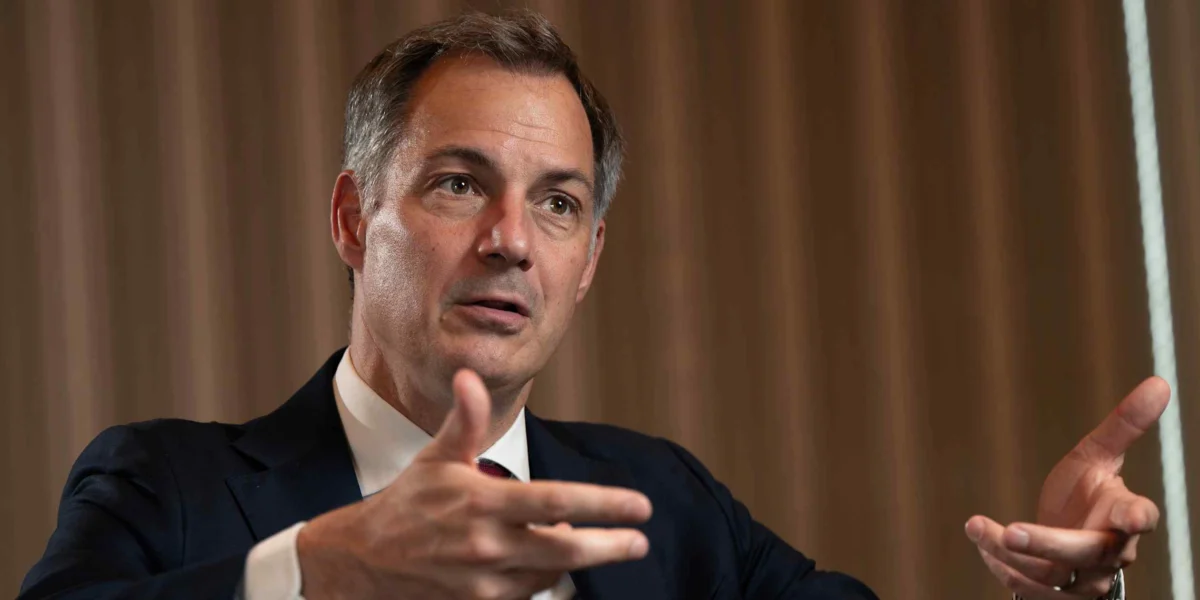
TOKYO – Alexander De Croo, the former prime minister of Belgium and current administrator of the United Nations Development Programme (UNDP), has articulated a compelling vision for international development, asserting that emerging economies require strategic capital injections rather than simple philanthropic handouts. Speaking in Tokyo on July 31, 2026, De Croo emphasized that development aid should be fundamentally re-conceptualized as an investment designed to foster market creation, a perspective that aligns with the national interests of donor countries, even those pursuing ambitious global infrastructure projects like China’s Belt and Road Initiative (BRI).
This shift in perspective, De Croo argued, is crucial for unlocking sustainable growth in developing nations and for recalibrating the often-fraught relationship between aid providers and recipients. The UNDP, as the UN’s leading development agency, plays a pivotal role in facilitating such investments, connecting capital with opportunities in a manner that yields mutual benefits. De Croo’s remarks come at a time of significant global economic flux, with increasing demands on development finance and a growing recognition that traditional aid models may not be sufficient to address the complex challenges of poverty, climate change, and inequality.
The Evolution of Development Finance: From Charity to Capital
For decades, development aid has often been framed through a lens of altruism, with donor nations providing financial assistance to poorer countries with the primary goal of alleviating poverty and improving living standards. While the humanitarian imperative remains, De Croo’s statement signals a maturation of this discourse, moving towards a more pragmatic and economically driven approach.
“We need to move beyond the narrative of charity,” De Croo stated, according to sources familiar with his address. “Emerging economies are not passive recipients of goodwill; they are dynamic markets with immense potential. What they require is strategic capital that can unlock this potential, create jobs, and foster self-sufficiency. For donor countries, this is not merely an act of generosity, but an opportunity to cultivate new markets, secure resources, and promote global stability, all of which align with their own national interests.”
This perspective acknowledges the economic realities faced by both developed and developing nations. Developed countries, often under fiscal pressure, are increasingly scrutinizing the return on investment of their foreign aid budgets. Simultaneously, developing nations are seeking partnerships that offer more than just financial aid, looking for pathways to integration into the global economy and sustainable economic development.
The UNDP, under De Croo’s leadership, is strategically repositioning itself to facilitate this paradigm shift. The agency is working to identify and de-risk investment opportunities in sectors such as renewable energy, sustainable agriculture, digital infrastructure, and education. By leveraging its global network and technical expertise, the UNDP aims to bridge the gap between potential investors and viable projects, ensuring that capital flows into initiatives that have a demonstrable impact on development outcomes and economic growth.
China’s Belt and Road Initiative: A Case Study in Market-Driven Development
De Croo’s acknowledgement of China’s Belt and Road Initiative as a legitimate pursuit of national interest underscores a pragmatic approach to global development. The BRI, launched in 2013, is a massive infrastructure development strategy adopted by the Chinese government to invest in more than 150 countries and international organizations. It aims to foster connectivity and cooperation on a vast scale, encompassing infrastructure development, trade, investment, and people-to-people exchanges.
While the BRI has been met with both praise and criticism, De Croo’s framing suggests a recognition that such large-scale, capital-intensive initiatives, driven by national interests, can indeed contribute to development, provided they are implemented responsibly and sustainably. The UNDP’s role, in this context, is not to oppose such initiatives but to ensure that they are aligned with broader development goals, including environmental sustainability, good governance, and inclusive growth.
“The Belt and Road Initiative, like any other significant capital deployment, presents both opportunities and challenges,” De Croo’s office elaborated in a statement released following his remarks. “Our focus is on ensuring that such investments contribute to sustainable development, create genuine economic opportunities for local populations, and adhere to international standards. We are actively engaging with all stakeholders, including China, to promote responsible investment practices that benefit all parties involved.”
The BRI’s impact on developing economies is multifaceted. Proponents highlight its role in addressing critical infrastructure deficits, boosting trade, and stimulating economic activity. Critics, however, raise concerns about debt sustainability, environmental impact, and transparency. De Croo’s emphasis on capital as an investment that creates markets suggests that the success of initiatives like the BRI hinges on their ability to generate tangible economic returns and foster long-term growth, rather than simply providing financial resources.
Data Supporting the Investment Paradigm
The rationale behind viewing development aid as an investment is supported by a growing body of evidence. For instance, studies by the World Bank and other international financial institutions have consistently shown a strong correlation between infrastructure development and economic growth. Countries with better infrastructure—roads, ports, energy grids, and telecommunications—tend to attract more investment, facilitate trade, and improve productivity.
A 2024 report by the International Monetary Fund (IMF) estimated that a 10 percent increase in infrastructure spending in developing countries could lead to a 1-2 percent increase in GDP growth over the medium term. This indicates that capital invested in tangible assets can yield significant economic dividends, far exceeding the initial outlay.
Furthermore, the concept of market creation is central to sustainable development. When foreign capital is invested in sectors that are nascent or underdeveloped in a recipient country, it can stimulate domestic industries, create employment, and foster innovation. For example, investments in renewable energy projects not only address climate concerns but also create jobs in manufacturing, installation, and maintenance, while also reducing reliance on imported fossil fuels.
The UNDP’s own data from its extensive project portfolio illustrates this point. Projects focused on improving agricultural productivity through access to better technology and markets have shown significant multipliers in rural economies. Similarly, investments in digital literacy and e-commerce infrastructure have empowered small businesses to access global markets, creating new revenue streams and employment opportunities.
Timeline of Shifting Development Discourse
The discourse surrounding development aid has evolved significantly over the past several decades, reflecting changing global economic realities and geopolitical landscapes.
- 1950s-1970s: The Era of State-Led Development and Bilateral Aid: Following World War II, many developed nations initiated large-scale bilateral aid programs, often tied to geopolitical alliances. The focus was on infrastructure projects and institution-building, with an emphasis on state-led economic planning in recipient countries.
- 1980s-1990s: The Rise of Structural Adjustment and Market Liberalization: The debt crisis in developing countries led to the ascendancy of institutions like the IMF and World Bank, which promoted structural adjustment programs. These emphasized market liberalization, privatization, and fiscal austerity, often with significant conditionalities attached to aid.
- 2000s: The Millennium Development Goals (MDGs) and Poverty Reduction Focus: The MDGs, launched in 2000, shifted the focus towards specific poverty reduction targets and social development indicators. Aid was increasingly channeled towards health, education, and water and sanitation.
- 2010s-Present: Sustainable Development Goals (SDGs), Climate Finance, and New Development Finance Models: The adoption of the SDGs in 2015 broadened the agenda to encompass a wider range of interconnected global challenges, including climate change, inequality, and peace. This period has also seen the rise of new development finance mechanisms, including blended finance, impact investing, and the increasing prominence of emerging economies as both aid recipients and providers. China’s BRI, launched in 2013, is a significant development within this latter phase, representing a new model of outward investment driven by national strategic interests.
Alexander De Croo’s current pronouncements represent a continuation of this evolution, seeking to harmonize the imperatives of national interest with the goals of global development, framing capital as a critical driver of market creation.
Potential Reactions and Stakeholder Perspectives
De Croo’s re-framing of development aid is likely to elicit a range of responses from various stakeholders.
Donor Nations: Many developed countries, facing domestic economic pressures and a desire for greater accountability in foreign aid, may welcome this investment-centric approach. It offers a clearer justification for financial flows, emphasizing economic returns and strategic benefits. However, some may remain cautious about large-scale capital deployments that could be perceived as primarily serving the interests of investor nations, particularly if transparency and local benefits are not adequately addressed.
Recipient Nations: Emerging economies are likely to view this shift positively, as it underscores their potential as economic actors rather than solely as beneficiaries of charity. The emphasis on capital for market creation aligns with their aspirations for self-sufficiency and economic integration. However, they will also be keen to ensure that such investments are equitable, sustainable, and do not lead to undue dependency or exploitation. Concerns about debt traps and the environmental impact of large infrastructure projects will remain paramount.
International Financial Institutions (IFIs): Institutions like the World Bank and IMF will likely see this as a complementary approach to their own development finance strategies. The UNDP’s focus on market creation can work in tandem with IFIs’ efforts to provide technical assistance, policy advice, and direct lending. There may be opportunities for increased collaboration in identifying and de-risking investment opportunities.
Private Sector: For the private sector, De Croo’s message signals an increased focus on commercially viable development projects. This could lead to greater private sector involvement in development finance, particularly in areas where returns on investment are demonstrable. However, the role of public entities like the UNDP will remain crucial in de-risking early-stage investments and ensuring that projects align with broader development objectives.
Civil Society Organizations (CSOs): CSOs, often at the forefront of advocating for vulnerable populations and environmental protection, will likely maintain a vigilant watch. While acknowledging the potential benefits of increased capital flows, they will emphasize the need for strong governance, transparency, accountability, and adherence to human rights and environmental standards in all development investments. They may also advocate for the continued importance of grants and concessional financing for essential social services that may not always yield immediate commercial returns.
Broader Implications and Future Outlook
The implications of Alexander De Croo’s vision are far-reaching. By reframing development aid as an investment in market creation, the UNDP is advocating for a more robust and mutually beneficial form of global cooperation.
- Enhanced Economic Growth: This approach has the potential to unlock significant economic growth in developing countries by channeling capital into productive sectors, fostering innovation, and creating sustainable employment.
- Strengthened Global Partnerships: It moves beyond the traditional donor-recipient dynamic towards a more collaborative partnership, where national interests are aligned with global development objectives.
- Increased Private Sector Engagement: By highlighting the potential for returns on investment, this paradigm can attract greater private sector capital into development initiatives, complementing public funding.
- Focus on Sustainability and Inclusivity: The success of such investments will ultimately depend on their ability to be sustainable, environmentally responsible, and inclusive, ensuring that benefits are broadly shared. The UNDP’s role will be critical in ensuring these aspects are prioritized.
- Rethinking Geopolitical Investment: De Croo’s pragmatic approach to initiatives like the BRI suggests a willingness to engage with diverse development finance models, provided they demonstrably contribute to positive outcomes. This could lead to more nuanced and constructive dialogue on global infrastructure development.
In conclusion, Alexander De Croo’s articulation of development aid as an investment that creates markets represents a significant evolution in the thinking of international development. It acknowledges the economic realities of the 21st century, recognizing that strategic capital, when deployed effectively, can be a powerful engine for sustainable growth and mutual prosperity, while also respecting the legitimate national interests of all nations involved. The UNDP’s commitment to facilitating such investments, while ensuring they are responsible and inclusive, positions it as a key player in shaping the future of global development finance.