Gilang Muhammad
The resounding electoral sweep by Democrats in the 2026 midterm elections has profoundly altered the political landscape, injecting a new and inherently unstable dynamic into the single biggest financial risk facing markets in the coming year: the U.S. debt limit. With Democrats poised to assume control of both chambers of Congress in January 2027, the traditional script for debt ceiling negotiations has been dramatically flipped. Unlike past episodes where a Republican-led Congress demanded fiscal concessions from a Democratic president, the incoming Democratic majority now holds significant leverage, setting the stage for a protracted and potentially acrimonious battle with a Republican White House. Unless a fractured and outgoing Republican Party can muster an unlikely show of unity to address the issue in its final weeks, the ensuing showdown is anticipated to be nastier than ever, threatening to introduce severe volatility into an already precarious bond market and casting a long shadow over the global financial system.
The Debt Ceiling: A Primer on America’s Fiscal Brinkmanship Tool
The debt limit, often erroneously conflated with future spending authorizations, is a statutory cap on the total amount of money the U.S. government can borrow to meet its existing legal obligations. These obligations include Social Security and Medicare benefits, military salaries, interest on the national debt, tax refunds, and various other payments for programs and services already approved by Congress. Enacted during World War I to streamline government borrowing, it has evolved into a potent political weapon, transforming what should be a routine administrative act into a recurring flashpoint for partisan gridlock.
Historically, raising or suspending the debt limit has been a bipartisan affair, acknowledging that it merely allows the Treasury to pay for spending already authorized by previous legislative actions. However, since the mid-1990s, and particularly over the last decade, it has been weaponized by the minority party to demand policy concessions from the executive branch. This unique legislative quirk, found in few other developed nations, stops the government from borrowing funds that Congress itself has already ordered federal agencies to spend. Given that Congress has run deficits for decades—this year alone projected at a staggering $1.99 trillion—the nation’s pile of debt periodically bumps into this statutory ceiling. Missing payments on these obligations, even temporarily, would trigger catastrophic economic consequences, making the debt limit a quintessential "must-pass" bill, arguably even more critical than annual government funding or defense appropriations.
A Seismic Shift in Political Dynamics Post-2026 Midterms
The 2026 midterm elections delivered a decisive mandate to the Democratic Party, securing majorities in both the House of Representatives and the Senate. While specific seat counts will continue to be analyzed, the "electoral sweep" signifies a clear rejection of the incumbent Republican agenda and a desire for a change in legislative direction. This outcome fundamentally reconfigures the power dynamics in Washington, D.S. For the first time in recent memory, the incoming Congress will be controlled by the party opposing the President during a debt limit negotiation.
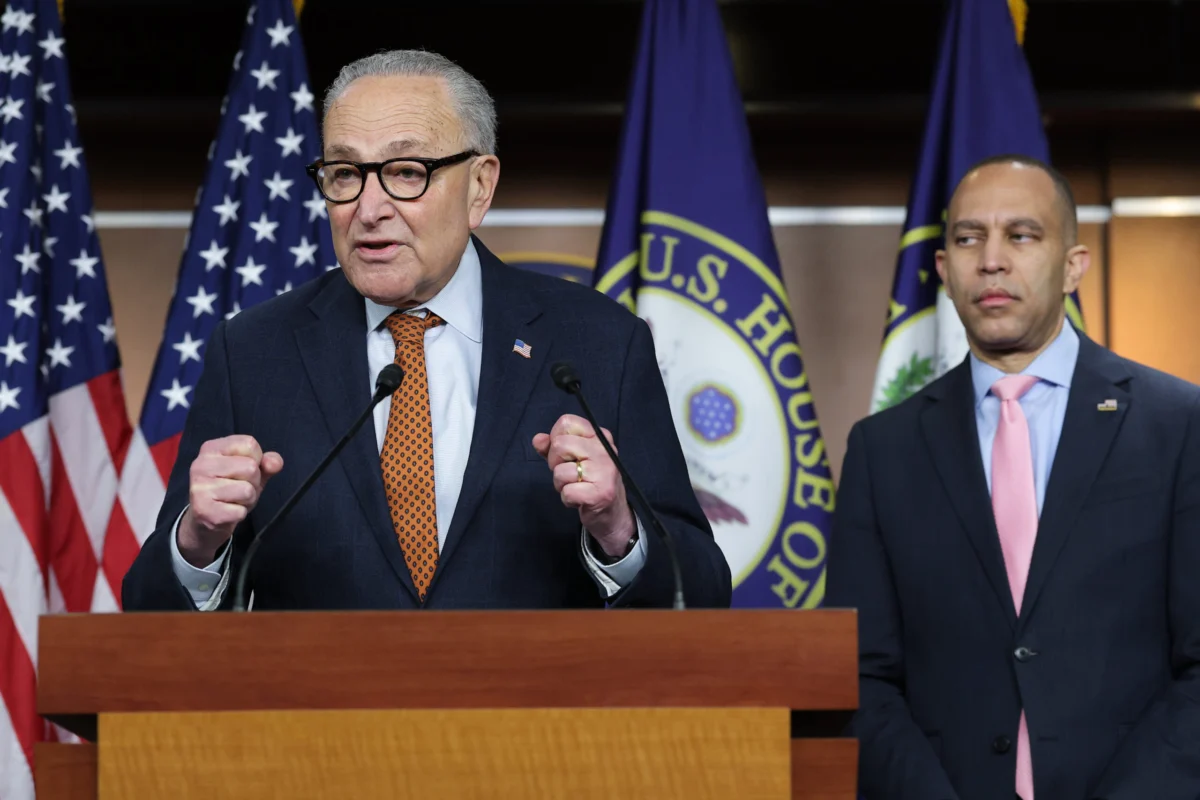
This reversal of leverage is key. In previous debt limit crises, such as those under President Barack Obama in 2011 and President Joe Biden in 2023, it was Republican majorities in Congress that utilized the debt ceiling as a cudgel to extract budget cuts and spending reductions from a Democratic White House. Now, as Senate Minority Leader Chuck Schumer (D-NY) and House Minority Leader Hakeem Jeffries (D-NY) prepare to assume their new leadership roles, it will almost certainly be the Democratic-controlled Congress seeking concessions from a Republican President. This shift presents a unique challenge for the White House, which will find its legislative agenda stymied and its ability to govern effectively severely constrained without congressional cooperation on this critical issue.
President Donald Trump, recognizing the impending challenge, has reportedly called for Republicans to resolve the debt limit issue in the remaining weeks of the lame-duck session, before the new Democratic-majority Congress is seated. However, this scenario is highly improbable. The outgoing Republican majority is facing its own internal divisions and several other pressing legislative priorities, making a unified effort to raise the debt limit — especially one that doesn’t include their desired policy changes — exceedingly difficult. Furthermore, while Republicans could theoretically attempt to raise the limit using budget reconciliation, a procedural tool that bypasses the Senate filibuster, its successful deployment would require an extraordinary level of unity within a fractured, fleeting majority, a unity that has often eluded them even under less stressful circumstances.
The Looming Fiscal Deadline: A Timeline for Crisis
The current statutory debt limit was set in 2025, granting the Treasury Department the authority to borrow up to $41.1 trillion. With the national debt having surpassed the $40 trillion mark for the first time in August 2026 and annual deficits consistently hovering around the $2 trillion mark, the U.S. government is rapidly approaching this ceiling. According to analyses from independent organizations like the Bipartisan Policy Center, a non-profit that meticulously tracks these fiscal deadlines, the Treasury is likely to hit its maximum borrowing capacity by midsummer 2027.
Once the limit is reached, the Treasury Department will be forced to employ "extraordinary measures" – accounting maneuvers such as suspending investments in certain government employee retirement funds – to temporarily extend the government’s ability to pay its bills. These measures typically buy a few months of additional time. Wall Street estimates suggest that these extraordinary measures could push the so-called "X-date," the point at which the U.S. would no longer be able to meet all its obligations, to sometime in the fourth quarter of 2027. This timeline positions the debt limit debate squarely within the first legislative session of the new Democratic Congress, guaranteeing it will be a top priority from day one.
Economic Fallout: The Perilous Path of Default
The potential consequences of the U.S. failing to raise its debt limit are severe and far-reaching. While a few technical hiccups have occurred, the U.S. has never meaningfully breached the debt limit, primarily because the stakes are extraordinarily high. A U.S. default, even a "technical" one where payments are merely delayed, would be catastrophic. It would immediately call into question the sanctity of trillions of dollars in Treasury securities, which are considered the bedrock of the global financial system, serving as the primary safe asset for central banks, financial institutions, and investors worldwide.
Damage to the perceived safety of Treasury bonds could trigger a cascading financial crisis. Interest rates across the board, from mortgages to business loans, would likely spike as lenders demand a higher premium for perceived risk. The value of the U.S. dollar could plummet, fueling inflation and eroding purchasing power. Equity markets would almost certainly experience a sharp downturn, wiping out trillions in wealth. The global economy, deeply intertwined with U.S. financial stability, would face an unprecedented economic tailspin with no obvious means of recovery.
Past episodes of debt ceiling brinkmanship have already resulted in tangible economic damage. In 2011, a protracted fight between the Obama administration and House Republicans led to Standard & Poor’s downgrading the U.S. sovereign credit rating for the first time in history, sparking market turmoil. More recently, in 2023, Fitch Ratings followed suit, citing repeated debt ceiling impasses and a steady deterioration of governance. As Robert Sockin, chief U.S. economist at PGIM, an asset manager, warns, "You’ll get more downgrades to the U.S. sovereign, and those might bite more this time." Such downgrades increase the government’s borrowing costs, adding to the national debt over the long term, and undermine investor confidence. Even if a full, prolonged default is avoided, the heightened uncertainty and volatility alone can stifle investment, impede economic growth, and raise borrowing costs for businesses and consumers alike.
Divergent Agendas: Democratic Demands vs. Presidential Resistance
With Democrats holding the legislative reins, the nature of the debt limit negotiation will fundamentally shift. Unlike past episodes where Republicans sought spending reductions, the incoming Democratic majority is expected to use its newfound leverage to push for increases in government spending and the reversal of policies implemented by the previous Republican Congress. Aniket Shah, head of the Washington policy team at investment bank Jefferies, notes that many in the markets are operating on an "outdated idea that Democrats are less assertive than Republicans." He states, "They have this sort of mental image of Biden-Harris 2024. I don’t think they realize how aggressively Democrats plan to take 2027."
Democrats are likely to target specific areas for expansion. Shah suggests they will push to reverse cuts to Medicaid spending passed in 2025 and actively seek to restore broader healthcare funding. Beyond healthcare, other progressive priorities, potentially including investments in infrastructure, climate initiatives, or social programs, could be brought to the table. Analysts at Goldman Sachs, in a recent research note, suggested that Democrats could also seek to tie the debt limit to restraining signature Trump policies, such as limiting military engagements in the Middle East or rolling back tariffs on imported goods.
Another potential avenue for compromise being discussed in Washington is an increase in the corporate tax rate. George Pollack, senior U.S. analyst with Signum Global Advisers, points out that President Trump has shown surprising flexibility on similar issues in the past, making this a plausible negotiating point. Raising the corporate tax rate could generate additional revenue, appealing to Democratic fiscal priorities, while potentially offering the White House a way to claim a "win" on fiscal responsibility.
However, President Trump and his Republican allies will not easily yield. Ahead of the 2028 presidential election, both sides face strong political incentives to "dig in." While the President has occasionally signaled a willingness to make deals, his base often demands unwavering resistance to Democratic policy advancements. Democrats, conversely, will be eager to demonstrate their capacity to govern and deliver on campaign promises, potentially using the debt limit to "embarrass the White House" and secure legislative victories they couldn’t achieve otherwise. This clash of agendas, driven by electoral calculations, is what will make this debt limit fight particularly volatile and unpredictable. As Robert Sockin of PGIM aptly observes, there’s a "very weird irony here" in that a debt limit negotiation, traditionally a vehicle for austerity, is now far more likely to result in an increase in overall government spending.
Historical Parallels and Uncharted Territory
While the immediate political dynamics are unique, historical precedents offer some cautionary tales. The 2011 debt ceiling crisis under President Obama serves as a stark reminder of the economic damage that can be inflicted by prolonged political brinkmanship. The resulting S&P downgrade triggered significant market sell-offs and eroded confidence. More recently, the 2025 government shutdown, the longest in history, underscored the profound disruption that can occur even without a debt ceiling breach. That shutdown unfolded despite Democrats not controlling either house of Congress; this time, with Democrats wielding even more power, the potential for prolonged legislative gridlock is amplified.
The current situation, however, ventures into uncharted territory due to the complete reversal of traditional negotiating leverage. Unlike the periods where a divided government meant a Republican Congress pushing for cuts against a Democratic President, the upcoming scenario features a Democratic Congress pushing for spending increases against a Republican President. This shift might make compromise even harder to achieve, as both sides are incentivized to frame the other as obstructionist or fiscally irresponsible.
Market Sentiment and Expert Prognoses
The investment community is closely watching the unfolding drama. While many analysts, including Shah, believe that the high stakes will ultimately compel a compromise, they universally anticipate significant market volatility throughout the process. The potential for a "technical default" – where the U.S. misses a payment, even if it’s eventually made up – is a growing concern. "It’s not our base case, but we think the risk is higher than ever that you could get a technical default from the government," Sockin warns. Such an event, even if short-lived, would have immediate repercussions, including further downgrades to U.S. sovereign debt, higher yields on longer-term Treasuries to account for added uncertainty, and a "very negative reaction in equity markets."
The broader implications extend beyond immediate market movements. The recurring weaponization of the debt ceiling erodes confidence in the U.S. government’s ability to manage its finances, potentially jeopardizing the dollar’s status as the world’s primary reserve currency in the long term. It also deters foreign investment and raises fundamental questions about the stability and predictability of U.S. fiscal policy.
The coming months will serve as a critical test of political will and economic resilience. The new Democratic majority will likely push the boundaries of negotiation, seeking to maximize their leverage. The White House, in turn, will be forced to respond, balancing its political objectives with the imperative to avoid an economic calamity. As the X-date approaches in late 2027, the world will be watching to see just how close to the precipice Washington is willing to tread, and at what cost.