Gilang Muhammad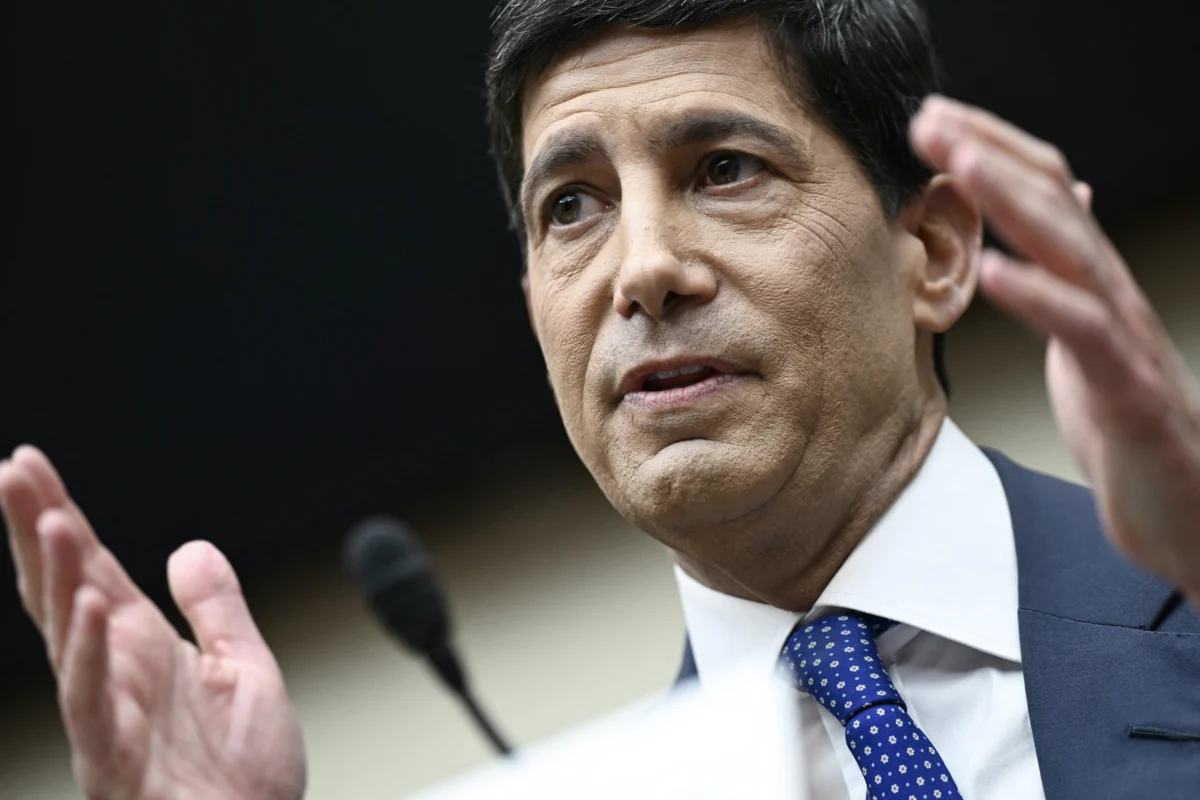
Assuming the influential role of Federal Reserve Chair, Kevin Warsh has quickly distinguished himself not through verbose pronouncements but through a carefully curated and repeatedly deployed lexicon, sparking intense scrutiny among market participants and policy observers alike. Unlike the deliberately opaque "Fedspeak" perfected by former Chairman Alan Greenspan or the more transparent approach favored by Ben Bernanke, Warsh’s communication style is marked by a select few phrases that, while frequent, remain notably ambiguous in their implications for monetary policy. This scarcity of explicit detail places a significant premium on understanding the nuances of his chosen words.
In just five public appearances since his nomination hearing in April – encompassing his inaugural press conference, a high-profile roundtable in Portugal, and two congressional testimonies – Warsh has repeatedly returned to three key expressions. He has used the phrase "family fight" 13 times, invoked "first principles" on 11 occasions, and asserted that "inflation is a choice" for the Fed six times. While the sheer frequency of these phrases is quantifiable, their precise meaning for the trajectory of monetary policy presents a more formidable challenge. Given Warsh’s evident decision to communicate less overtly than his predecessors, deciphering this specialized vocabulary becomes crucial for anyone seeking to anticipate the direction of the world’s most powerful central bank. To shed light on this emerging "Warsh-speak," CNBC convened a panel of five close Fed watchers, inviting them to share their expert interpretations of these pivotal phrases.
A Departure from Predecessors: The Communication Challenge
The Federal Reserve Chair’s communication strategy is a cornerstone of effective monetary policy, influencing market expectations, investor confidence, and public understanding of economic stability. Historically, this strategy has evolved considerably. Alan Greenspan, Fed Chair from 1987 to 2006, was renowned for his deliberate use of convoluted language, often leaving analysts to pore over every syllable for hints of policy direction. His successor, Ben Bernanke (2006-2014), ushered in an era of greater transparency, introducing regular press conferences and clearer forward guidance, particularly in the aftermath of the 2008 global financial crisis. Following Bernanke, Janet Yellen (2014-2018) continued this trend of openness, further refining the Fed’s communication tools. Jerome Powell (2018-present) has largely maintained this approach, striving for clarity while navigating complex economic landscapes.
Kevin Warsh, as the presumed new Fed chief, appears to be charting a different course. His measured and seemingly cryptic communication harks back to an earlier era, albeit with a unique twist. The limited nature of his public pronouncements means that each repeated phrase carries amplified weight, becoming a potential signal for future policy shifts. This approach compels market participants and economists to engage in a deeper, more interpretive analysis, moving beyond explicit statements to infer intent from linguistic patterns. The timeline of his initial public engagements—from his nomination hearing, through a significant international forum like the roundtable in Portugal, to crucial congressional testimonies—highlights that these phrases are not accidental but rather carefully chosen elements of his emerging communication framework. The collective effort by economists and analysts to "crack the Warsh code" underscores the critical need for clarity from the central bank, particularly during periods of economic transition or uncertainty.
Decoding ‘A Good Family Fight’: Fostering Internal Debate or Masking Discord?
Warsh’s repeated invocation of "a good family fight" within the context of Federal Open Market Committee (FOMC) deliberations suggests a desire for a more robust and open internal debate on monetary policy. The FOMC, comprised of 12 voting members (the seven governors of the Federal Reserve System, the president of the Federal Reserve Bank of New York, and presidents of four other Federal Reserve Banks on a rotating basis) and all other Federal Reserve Bank presidents who participate in discussions, typically operates on a consensus-driven model. While dissents are recorded, the public face of the FOMC is often one of unity.
Expert Insights and Analysis:
- Dan Greenhaus, strategist at Solus Alternative Asset Management, views this as a positive development, arguing that "if Chair Warsh encourages more open debate around policy and creates an environment where prevailing assumptions can be challenged rather than simply accepted, that should ultimately lead to better policymaking." He emphasizes that the benefit lies in improving the quality of the decision-making process over time, rather than necessarily altering the outcome of any single meeting.
- Loretta Mester, former Cleveland Fed president, largely agrees with the sentiment of fostering an environment where all views are heard, noting that this was already the atmosphere during her tenure on the FOMC. She states, "I never felt constrained in what I said or the policy case I argued." However, she raises a practical concern, observing that with 19 people around the table, "there has to be some order or else maybe it is only the loudest voice in the room that gets heard and you will actually have fewer views expressed since it will be hard to jump in." This highlights the inherent tension between promoting open discussion and maintaining an orderly, productive meeting.
- Claudia Sahm, chief economist at New Century Advisors, suggests that FOMC meetings traditionally "tend to be highly scripted affairs, with prepared remarks read aloud and limited conversation." She interprets Warsh’s desire for a "livelier back-and-forth" as a reflection of his personal comfort with such a style. However, Sahm remains skeptical about its impact on policy decisions, citing the challenge of facilitating a "free-for-all conversation" within such a large group.
- Mark Spindel, Fed author and chief investment officer at Potomac River Capital, offers a more nuanced, and perhaps critical, perspective. To him, "this is his aphorism for the natural debate going on inside the FOMC and the Board. It implies obvious disagreements, but like all ‘family fights’ is best kept to members of the family and not revealed too much to the public." Spindel argues that the latter part—keeping disagreements internal—is proving problematic for his committee colleagues and market participants. He observes that "members of the committee are clearly willing to disagree in public, or at least state their opinions much more openly (than Chairman Warsh)." Spindel also suggests this phrase could be a tactic for Warsh to deflect responsibility from external pressures originating from the President, Congress, or financial markets.
- Michael Feroli, chief U.S. economist at JPMorgan, views "the family fight" as Warsh’s attempt "to be folksy," but notes that "it doesn’t depart from the tradition under [Ben] Bernanke of (publicly) welcoming dissenting opinions." This suggests that while Warsh’s phrasing might be distinctive, the underlying principle of allowing diverse views is not entirely novel to the Fed.
Broader Implications:
The drive for a "good family fight" could significantly alter the dynamics of FOMC meetings. While it may lead to more thoroughly vetted policy decisions by challenging existing assumptions and fostering intellectual rigor, it also poses challenges for external communication. A central bank thrives on clear and consistent messaging to guide market expectations. If internal disagreements become too pronounced or are perceived as disunity, it could inject uncertainty into financial markets and potentially undermine the Fed’s credibility. The delicate balance for Warsh will be to encourage robust internal debate without inadvertently projecting an image of internal strife that could confuse the public or destabilize markets.
‘First Principles’: Reimagining the Fed’s Foundation
The phrase "first principles" signifies a more fundamental and potentially radical re-evaluation of the Federal Reserve’s operational framework and core philosophy. This concept is particularly resonant in the post-Global Financial Crisis era, where the Fed resorted to unconventional tools like quantitative easing (QE) and forward guidance, expanding its balance sheet dramatically and broadening its perceived mandate. Warsh’s call to return to "first principles" suggests a desire to strip away these layers of complexity and reassess the basic tenets of monetary policy.
Expert Insights and Analysis:
- Mark Spindel characterizes "first principles" as "vague enough to mean whatever Warsh wants it to mean," but contextualizes it as "the basis for the decision making and structural reform he is manifesting." Spindel highlights Warsh’s comments in Sintra, where he questioned the entire process of monetary policy making and encouraged central banking colleagues to "go back to first principles." Spindel also connects this to Warsh’s re-introduction of monetary aggregates and his assertion that "monetary policy should have something to do with money," which contrasts with the Fed’s previous focus on interest rates. Spindel suggests Warsh is critical of the "science of monetary policy," the Phillips Curve, and economic forecasting, viewing them as unhelpful. He implicates predecessors like Jerome Powell for "year-after-year misses in inflation" and considers the low level of interest rates, the expanded balance sheet, and the failure to tighten sooner as departures from these "first principles."
- Claudia Sahm interprets "first principles" as "code for ‘question everything.’" She notes Warsh’s repeated calls for "regime change" at the Fed, aligning with an agenda to question the basic assumptions of how monetary policy is conducted. However, Sahm expresses skepticism about Warsh’s ability to "rewrite first principles," arguing that merely showing an assumption is flawed is insufficient; it requires offering a better replacement. She anticipates that even with task forces, Warsh is "likely to come up short on new first principles," resulting in "some incremental improvements to how it’s done," rather than a complete regime change.
- Loretta Mester defines this concept as a directive to "rethink the way the Fed goes about achieving its dual mandate goals of price stability and maximum employment without preconceived notions or assumptions, or precluding approaches because they may differ from the current approach." She advocates for a fresh look at communications, inflation and labor market assessment, the balance sheet, operating framework, and data sources, followed by a plan to transition to these new approaches. Mester observes that the Committee has often shied away from major changes, making only minor tweaks, and sees Warsh’s approach as an opportunity to consider fundamentally new strategies.
- Michael Feroli links "first principles" to Warsh’s skepticism towards "PhDs from elite institutions not keeping money in monetary policy." Feroli suggests that both remarks imply the institution has allowed "academically driven types" to distract the Fed from focusing on fundamental economic principles. He contrasts Warsh with Jerome Powell, who also lacked a PhD but seemed "less defensive about it." This highlights a potential philosophical tension within the Fed regarding the role of academic theory versus practical, "money-centric" approaches.
- Dan Greenhaus believes that "getting back to first principles could have significant implications for policymaking." He poses critical questions: "What is the Fed’s mandate, and how should it go about fulfilling that mandate?" Greenhaus suggests this "more ‘originalist’ approach" implies a more limited role for the Fed beyond monetary policy, fostering "greater skepticism toward its involvement in areas such as regulatory policy and climate-related issues." More broadly, it signals a willingness to reassess the Fed’s expanded role since the Global Financial Crisis and question whether that expansion has gone too far.
Broader Implications:
A genuine return to "first principles" could usher in a profound shift in the Fed’s mandate interpretation and operational philosophy. It could lead to a significant unwinding of the post-crisis expansion of the Fed’s balance sheet, a re-evaluation of its role in financial regulation, and potentially a retreat from issues deemed tangential to its core monetary policy function, such as climate risk. Such a move would likely be welcomed by more conservative economic thinkers and those critical of the Fed’s recent activism, but it could also face considerable resistance from those who believe the Fed’s expanded toolkit is essential for modern economic management. For markets, a shift away from established frameworks like the Phillips Curve or a renewed focus on monetary aggregates could introduce substantial volatility and necessitate a complete recalibration of expectations regarding the Fed’s reaction function.

‘Inflation is a Choice, and the Fed Must Take Responsibility for It’: A Resolute Stance on Price Stability
Warsh’s assertion that "inflation is a choice, and the Fed must take responsibility for it" is perhaps his most direct and policy-relevant phrase, signaling a potentially more aggressive and uncompromising stance on price stability. This statement immediately echoes the famous dictum of Nobel laureate Milton Friedman: "Inflation is always and everywhere a monetary phenomenon, in the sense that it is and can be produced only by a more rapid increase in the quantity of money than in output."
Expert Insights and Analysis:
- Loretta Mester explicitly links Warsh’s phrase to Friedman’s theory. She explains that "over the longer run, to achieve price stability the Fed has to ensure that aggregate demand is not growing more strongly than aggregate supply. Otherwise, there will be price pressures and sustained inflation." Mester distinguishes between short-run supply disruptions (like energy shocks) that the Fed would typically "look through" due to policy lags, and longer-lasting or multiple disruptions (like those post-pandemic). In the latter scenario, she stresses that "the Fed needs to ensure that monetary policy is restrictive enough to bring demand into alignment with supply or else there will be a sustained rise in inflation."
- Claudia Sahm also identifies the phrase as "a nod to Warsh’s mentor Milton Friedman." She points out that the Fed’s existing framework already contains a version of this idea, stating that "the inflation rate over the longer run is primarily determined by monetary policy." Sahm’s key critique is Warsh’s "omitting the timeframe—and that omission matters." She emphasizes that "in the short run, supply shocks like energy disruptions or tariffs can move inflation regardless of what the Fed does." Sahm concludes that while Warsh’s phrasing is "unlikely to change other Fed officials’ views on monetary policy," it "might confuse the public about what the Fed can do," potentially overstating the Fed’s immediate control over all inflationary pressures.
- Dan Greenhaus interprets the phrase’s "logical conclusion" as suggesting "a Fed that is less willing to attribute prolonged inflation overshoots primarily to exogenous factors such as tariffs, fiscal stimulus, or supply shocks." For Warsh, "the buck stops with us." Greenhaus elaborates that Chair Warsh "will [be] less tolerant of explanations for persistently elevated inflation that do not acknowledge the Federal Reserve’s own role." In his view, the Fed may not initiate every inflationary shock, but "it is ultimately responsible for ensuring that those shocks do not become persistent inflation." This implies a more proactive and interventionist approach to combating inflation, even if it originates from external factors.
- Michael Feroli finds the phrase "Inflation is a choice, and the Fed must take responsibility for it" sitting "oddly aside one of his other catch phrases ‘I don’t believe that we have a cruel choice.’" Feroli explains that "it’s a pillar of modern monetary economics that inflation is a choice that in the long run is under the control of the central bank," so the first phrase is not particularly controversial among economists, though the definition of "long run" is. However, the idea that "there is no short-run tradeoff between growth and inflation then begs for the question: why would the Fed ever choose inflation?" He notes that the argument for central bank independence rests on preventing a politically motivated central bank from exploiting short-run trade-offs to boost the economy at the expense of long-run price stability.
- Mark Spindel echoes the sentiment that this is "another phrase that can mean whatever Warsh wants it to mean," but confirms its consistency with the FOMC’s restatement of its inflation mandate under Warsh: "the committee will deliver price stability." Spindel recalls Warsh’s struggle to explain how he would achieve this when questioned aggressively by Senator John Kennedy, R-Louisiana, ultimately arriving at the conclusion that "higher rates might be in the offing." Spindel adds that Warsh "criticized his predecessors who he implied were comfortable with higher inflation rates." For Spindel, the core message is clear: "At its simplest, the Fed sets the price of money, and if money is too cheap, the Fed has to act."
Broader Implications:
This phrase strongly suggests a more hawkish inclination from the new Fed Chair. It implies a reduced tolerance for inflation exceeding the Fed’s target, even if caused by temporary supply-side disruptions, and a readiness to use monetary tools, primarily higher interest rates, to rein in price pressures. This could lead to a more aggressive tightening cycle than anticipated by markets and a potential reordering of the Fed’s dual mandate, prioritizing price stability more overtly, even if it entails some short-term costs to employment or economic growth. Such a shift would have profound implications for bond markets, potentially leading to higher yields, and could signal a less accommodative stance for an extended period, contrasting sharply with the dovish tendencies of recent years. It also positions Warsh as a guardian of the Fed’s anti-inflationary credibility, potentially willing to make difficult policy choices to safeguard it.
Broader Economic and Political Ramifications
The interpretive challenge posed by Kevin Warsh’s distinct communication style extends far beyond mere linguistic analysis; it has tangible economic and political ramifications. His phrases, when pieced together, hint at a fundamental reorientation of the Federal Reserve’s philosophy and operational strategy, impacting everything from market sentiment to the institution’s relationship with other branches of government.
Market Reactions and Global Standing:
Financial markets crave certainty, and a less transparent, more enigmatic Fed Chair can introduce volatility. If Warsh’s "first principles" lead to a significant unwinding of the Fed’s balance sheet or a more aggressive interest rate path, bond yields could surge, equity markets might face downward pressure, and the dollar could strengthen as investors anticipate higher returns. His skepticism towards established monetary policy models, as suggested by Spindel and Feroli, could also inject uncertainty into long-term investment strategies. On the global stage, Warsh’s comments at the roundtable in Portugal, urging central banking colleagues to return to "first principles," suggest a potential shift in the U.S. Fed’s approach to international monetary cooperation. A more insular or "originalist" Fed might lead to less coordinated global policy responses, especially during periods of synchronized economic challenges.
Relationship with Government and Public Perception:
Warsh’s inferred desire for a more limited role for the Fed, particularly his "greater skepticism toward its involvement in areas such as regulatory policy and climate-related issues," as noted by Greenhaus, could lead to friction with Congress and the Executive Branch. Successive administrations have often looked to the Fed for broader economic stewardship, sometimes beyond strict monetary policy. A Fed that intentionally retreats from these expanded roles might face political pressure or legislative attempts to redefine its powers. Senator Kennedy’s aggressive questioning of Warsh on inflation underscores the political scrutiny the Fed faces, and a communication style perceived as vague or evasive could erode public and political trust. Maintaining public confidence is paramount for a central bank’s independence and effectiveness, and ambiguous messaging, particularly on critical issues like inflation, could foster confusion rather than clarity.
The Future of Fed Independence:
The notion that "inflation is a choice" and the Fed "must take responsibility for it" implicitly reaffirms the central bank’s independence from political interference in its pursuit of price stability. This stance is a bedrock principle, protecting the Fed from short-term political pressures that might favor economic stimulus over inflation control. However, if Warsh’s policies lead to higher interest rates that cool the economy, potentially impacting employment, the "no cruel choice" rhetoric might be tested. The economic argument for central bank independence is strongest when it is perceived as acting in the long-term best interest of the economy, free from partisan influence. Any perception of a trade-off between inflation and employment, particularly one that is explicitly chosen by the Fed, could reignite debates about its accountability and independence.
Conclusion: Navigating the New Era of Fedspeak
Kevin Warsh’s initial tenure as Federal Reserve Chair marks a distinct chapter in the institution’s history of communication. His deliberate reliance on a select few, oft-repeated, yet inherently ambiguous phrases—"a good family fight," "first principles," and "inflation is a choice, and the Fed must take responsibility for it"—has transformed the task of deciphering central bank policy into an intricate exercise in interpretation. This approach stands in stark contrast to the communication norms established by his immediate predecessors, forcing economists, market participants, and policymakers to engage in a deeper, more speculative analysis of his intentions.
The consensus among Fed watchers suggests that Warsh is advocating for a more intellectually rigorous internal debate within the FOMC, a fundamental re-evaluation of the Fed’s core mandate and operational frameworks, and a heightened, uncompromising focus on price stability. While these shifts could lead to more robust policymaking and a reaffirmation of the Fed’s anti-inflationary credibility, they also carry inherent risks. The potential for internal disagreements to spill over and create external confusion, the challenge of replacing established economic frameworks with viable alternatives, and the risk of misinterpreting the Fed’s commitment to its dual mandate all loom large.
Ultimately, the "Warsh code" demands careful and continuous decoding. His words, though few, are freighted with significant implications for the future trajectory of monetary policy, the stability of financial markets, and the very identity of the Federal Reserve. Navigating this new era of Fedspeak will require not just attentive listening, but also a nuanced understanding of economic theory, historical context, and the subtle art of central bank communication. The stakes are high, and the world waits to see how these enigmatic phrases translate into concrete action and shape the global economic landscape.