Clara Shinta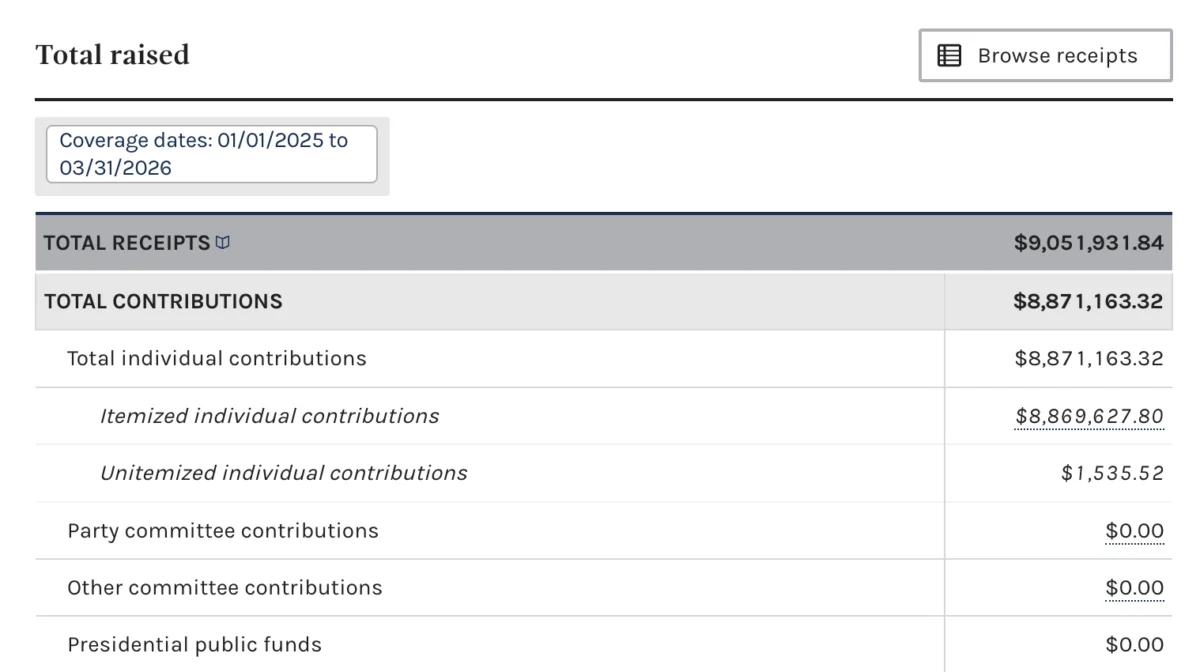
A prominent political action committee (PAC) aligned with the cryptocurrency industry has officially announced its endorsement for a candidate in Ohio’s critical U.S. Senate race, signaling a potentially pivotal shift in campaign finance and influence that could foreshadow trends in the broader 2026 U.S. election cycle. This move underscores the growing financial muscle and strategic focus of the digital asset sector on shaping legislative outcomes through direct electoral intervention, particularly in states seen as crucial battlegrounds.
On Wednesday, the Sentinel Action Fund, a Super PAC that explicitly positions itself as the "only conservative Super PAC advancing pro-crypto candidates and supporting pro-crypto innovation," publicly declared its support for Republican Jon Husted. Husted is currently vying for a U.S. Senate seat representing Ohio. The PAC’s announcement included a significant pledge of financial commitment, with the Sentinel Action Fund and its sister organization, Right Vote, promising to spend more than $8 million in the Buckeye State to bolster Husted’s campaign. This substantial investment highlights the industry’s determination to elect representatives who champion a favorable regulatory environment for digital assets.
The Landscape of the Ohio Senate Race
Jon Husted’s candidacy comes with a unique trajectory. He was appointed by Ohio Governor Mike DeWine in January 2025 to fill the U.S. Senate seat vacated by J.D. Vance. Vance had ascended to the Vice Presidency following his election alongside Donald Trump in the 2024 presidential race. Husted, a seasoned Ohio politician with a background as Secretary of State and Lieutenant Governor, now faces a competitive field of Republican contenders ahead of the May 5 primary election. The outcome of this primary will determine who advances to challenge the Democratic nominee.
On the Democratic side, former Senator Sherrod Brown has announced his intention to reclaim his seat. Brown, a long-serving fixture in Ohio politics, will face off against Ron Kincaid in the Democratic primary. Brown’s history of public statements and legislative actions criticizing cryptocurrencies and advocating for stricter regulations has made him a direct target for crypto-aligned PACs. Jessica Anderson, President of the Sentinel Action Fund, explicitly cited Brown’s perceived obstruction of "pro-innovation policies when it comes to digital assets" as a primary motivation behind the PAC’s endorsement of Husted. This suggests a clear strategic intent to influence the Senate’s composition with candidates who align with the crypto industry’s vision for digital asset regulation.
Financial Clout and Strategic Spending
The Sentinel Action Fund’s financial commitments are not merely symbolic. While Federal Election Commission (FEC) filings as of Tuesday showed no disbursements specifically supporting Husted in the current 2026 cycle, the pledged $8 million signifies a potent force. The Super PAC reported an impressive fundraising haul of approximately $9 million between January 2025 and March 2026. This war chest includes substantial contributions from key players within the digital asset ecosystem. Notably, the Solana Policy Institute, a prominent digital asset advocacy organization, contributed $750,000, while crypto investment firm Multicoin Capital added $250,000 to the fund. These figures underscore the deep pockets and vested interests driving the crypto industry’s political engagement.
The financial graph depicting the total funds raised by the Sentinel Action Fund Super PAC as of March 31 illustrates a rapid accumulation of resources, positioning it as a significant financial player in the upcoming elections. The transparency of these contributions, as recorded by the FEC, offers a window into the industry’s strategic investment in political outcomes.
A Bellwether for Future Elections: Echoes of 2024
The Sentinel Action Fund’s aggressive entry into the Ohio Senate race is not an isolated incident but rather a continuation of a burgeoning trend observed in previous election cycles. The 2024 U.S. elections served as a significant proving ground for the political influence of crypto-backed PACs. During that cycle, these interest groups collectively spent more than $40 million across the U.S. to support Republican Bernie Moreno’s successful bid to unseat then-Senator Sherrod Brown. Brown, who had consistently expressed skepticism and criticism towards the cryptocurrency sector through various public statements, became a focal point of the industry’s opposition. Despite the substantial spending against him, Brown announced in August that he would run again for the Senate, setting the stage for a potential rematch of ideological and financial wills. Moreno’s newly won seat, however, will not be contested again until 2030, meaning Brown is targeting a different Senate term. This historical context illuminates the sustained and escalating nature of the crypto industry’s political strategy.

The strategic deployment of significant capital in Ohio is particularly telling given the state’s status as a perennial swing state. The outcomes in Ohio often serve as indicators for national political sentiment and the effectiveness of various campaign strategies. Therefore, the success or failure of crypto-aligned PACs in this race could well set precedents for how digital asset interest groups approach future state and national elections, potentially influencing races across the country.
Beyond the Senate: Ohio’s Gubernatorial Race and Crypto
The focus on cryptocurrency and its political implications in Ohio extends beyond the Senate race. The state’s gubernatorial election has also drawn a prominent pro-crypto figure: Vivek Ramaswamy. A former Republican candidate for U.S. President and a notable backer of Bitcoin (BTC) treasury company Strive, Ramaswamy has officially thrown his hat into Ohio’s gubernatorial race.
Ramaswamy launched his campaign in February 2025, following his departure from former President Trump’s Department of Government Efficiency (DOGE). Throughout his campaign, Ramaswamy has been a vocal proponent of cryptocurrency integration, notably supporting efforts to establish a strategic Bitcoin reserve within Ohio’s state treasury. His advocacy for such a policy aligns with a broader movement among some politicians to position their states as hubs for digital asset innovation and investment.
However, Ramaswamy’s gubernatorial bid has not been without controversy, particularly regarding potential conflicts of interest. Financial disclosures filed on April 6 revealed that Ramaswamy holds a 10% stake in Strive. This disclosure has prompted critics to highlight a potential conflict: if Ohio’s treasury were to invest in Bitcoin, a policy Ramaswamy would have significant influence over as governor, he could directly benefit from an increase in the cryptocurrency’s value, given Strive’s substantial Bitcoin holdings. As of Wednesday, Strive reportedly held approximately 13,768 Bitcoin, valued at over $1 billion. This situation raises serious ethical questions about the intersection of personal financial interests and public policy decisions, especially in a nascent and volatile asset class like cryptocurrency.
Broader Implications and the Future of Crypto in Politics
The concentrated efforts of crypto-aligned PACs in Ohio reflect a broader trend of the digital asset industry seeking to solidify its influence in Washington and state capitals. The industry, often characterized by its libertarian roots and calls for minimal regulation, has increasingly embraced traditional political lobbying and campaign finance strategies to achieve its objectives. This pivot underscores a realization that the future of cryptocurrency, both in terms of innovation and adoption, is inextricably linked to the regulatory frameworks established by elected officials.
The debates surrounding digital assets encompass a wide array of issues, including consumer protection, financial stability, national security, and technological innovation. Pro-crypto candidates generally advocate for lighter regulatory touches, fostering an environment they believe will allow the technology to flourish. Conversely, critics often express concerns about illicit finance, market manipulation, and the potential risks to retail investors, advocating for more stringent oversight. The significant financial contributions from groups like the Sentinel Action Fund are designed to tip the scales in favor of candidates who share the industry’s perspective, thereby influencing the legislative agenda for years to come.
The Ohio races, both for Senate and Governor, are therefore more than just local contests. They represent a microcosm of the larger national struggle over the future of cryptocurrency regulation. The outcomes in Ohio could provide crucial insights into the effectiveness of crypto-backed political spending, the receptiveness of voters to pro-crypto platforms, and the challenges inherent in balancing innovation with necessary oversight. As the digital asset landscape continues to evolve, so too will the sophistication and scale of its political engagement, making races like those in Ohio critical markers for understanding this dynamic new force in American politics.
Disclosure: A member of the immediate family of Staff Editor Robert Lakin has contributed to the campaigns of Ohio Democratic gubernatorial candidate Amy Acton and Ohio Democratic Senate candidate Sherrod Brown in amounts less than $200.
Cointelegraph is committed to independent, transparent journalism. This news article is produced in accordance with Cointelegraph’s Editorial Policy and aims to provide accurate and timely information. Readers are encouraged to verify information independently. Read our Editorial Policy https://cointelegraph.com/editorial-policy.