Gilang Muhammad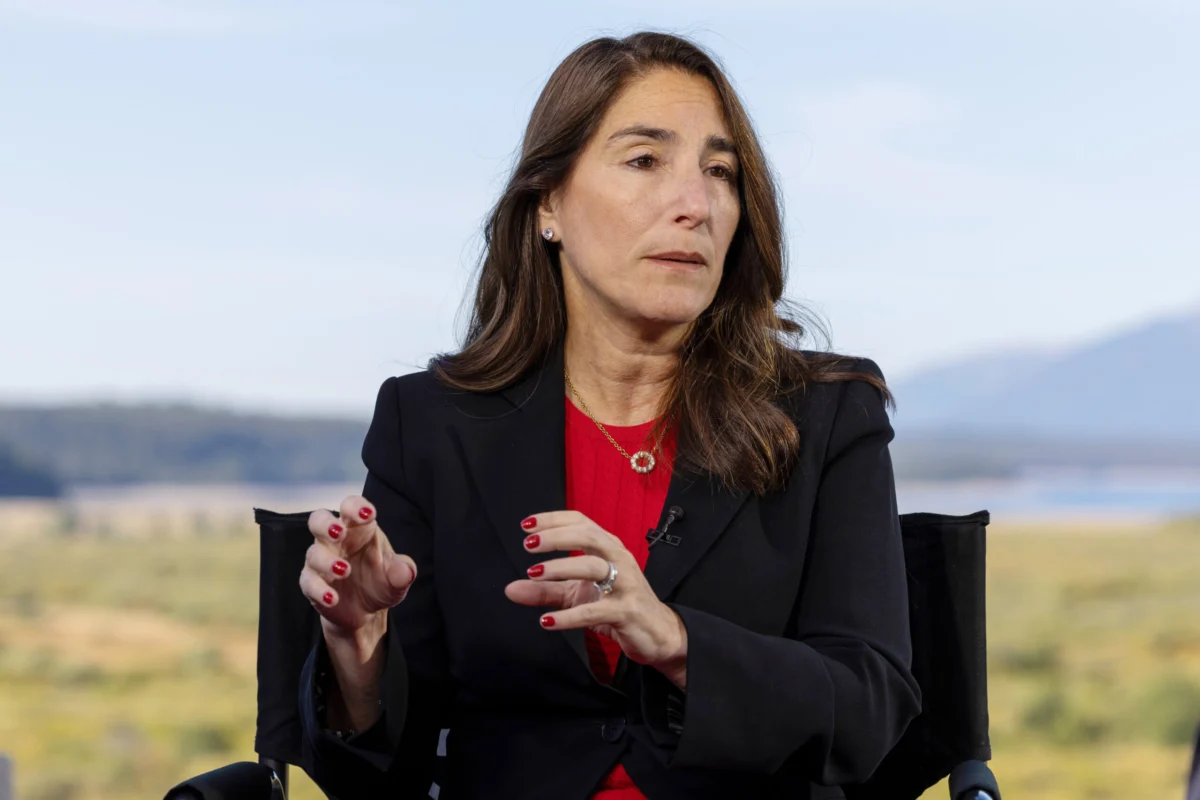
Cleveland Federal Reserve President Beth Hammack delivered a pointed and urgent message from the prestigious annual symposium in Jackson Hole, Wyoming, on Thursday, reiterating her strong conviction that the central bank must raise interest rates immediately. Her call for tighter monetary policy stems from a persistent concern that inflation, despite showing signs of moderating on a monthly basis, remains stubbornly high at an annualized rate of approximately 3%—significantly above the Fed’s 2% target. Hammack’s remarks underscore a growing hawkish sentiment among a segment of policymakers who fear the long-term economic consequences of delayed action against entrenched price pressures.
Speaking in a live CNBC interview, Hammack articulated her firm belief that "now is the time to act." Her position is rooted in the observation that the nation has endured an inflationary environment for over five years, consistently exceeding the Federal Reserve’s mandated objective. Furthermore, she expressed skepticism regarding the current restrictiveness of monetary policy, citing her conversations with market participants and her analysis of prevailing financial conditions. This sentiment reflects a deeper worry that the market may not be sufficiently aligned with the Fed’s inflation-fighting mandate, potentially undermining efforts to restore price stability.
The Jackson Hole Symposium: A Crucible for Policy Debate
The Federal Reserve Bank of Kansas City’s annual Economic Policy Symposium in Jackson Hole, Wyoming, is a pivotal event on the global economic calendar. Bringing together central bankers, finance ministers, academics, and financial market participants from around the world, it serves as a forum for discussing pressing economic issues and often provides crucial signals regarding future monetary policy direction. Hammack’s assertive stance at such a high-profile gathering lends significant weight to her arguments, signaling a robust internal debate within the Federal Open Market Committee (FOMC) regarding the appropriate path forward. Historically, speeches at Jackson Hole have presaged significant shifts in monetary policy, making Hammack’s explicit call for a rate hike particularly noteworthy.
A Persistent Battle Against Inflation: Hammack’s Rationale
Hammack’s argument for immediate action is multifaceted, drawing on both macroeconomic data and anecdotal evidence of economic hardship.
-
Inflationary Data Discrepancy: While acknowledging that monthly rates of price increases have slowed in recent months, Hammack emphasizes that the annualized rate of around 3% is still too high. This distinction is crucial; even if the rate of increase is slowing, the overall price level continues to rise at a pace inconsistent with the Fed’s target. The Personal Consumption Expenditures (PCE) price index, the Fed’s preferred inflation gauge, has shown signs of deceleration, with the latest readings for core PCE (excluding volatile food and energy) hovering around 4.1% year-over-year in July, while the headline PCE stood at 3.3%. The Consumer Price Index (CPI), another widely watched measure, registered 3.2% year-over-year in July. While these figures represent a significant drop from the 9.1% peak of CPI in June 2022, they remain stubbornly above the 2% goal. Hammack’s concern is that this "last mile" of disinflation is proving to be the most challenging.
-
Financial Conditions and Policy Restrictiveness: Hammack’s assertion that she doesn’t "see any restriction in policy when I look at financial conditions" is a critical point. Financial conditions indices, which typically aggregate metrics like equity valuations, bond yields, credit spreads, and the dollar’s exchange rate, provide a holistic view of how monetary policy is being transmitted through the economy. If these indices indicate that borrowing costs remain relatively low or that access to credit is still ample, despite previous rate hikes, it suggests that monetary policy may not be tight enough to sufficiently cool aggregate demand and bring inflation down to target. For Hammack, the perceived ease in financial markets implies that the economy can still absorb higher rates without tipping into a severe downturn, thus justifying further tightening.
-
The Peril of an "Inflationary Mindset": One of Hammack’s most profound concerns is the risk that "an inflationary mindset starts to set in with the public." This refers to the danger of inflation expectations becoming unanchored. If consumers and businesses begin to expect higher inflation to persist, they may adjust their behaviors accordingly—workers demanding higher wages, businesses raising prices to cover anticipated costs, and consumers accelerating purchases to beat future price increases. This self-fulfilling prophecy can create a dangerous wage-price spiral, making it significantly harder and more painful for the central bank to bring inflation back under control. Historical episodes of high inflation, such as the 1970s, serve as a stark reminder of the long-term economic damage caused when inflation expectations become entrenched.
-
Real-World Economic Strain: To underscore the tangible impact of persistent inflation, Hammack recounted a recent meeting with workers in Erie, Pennsylvania. These individuals, despite holding "good jobs" and working diligently, expressed "a sense of despair," feeling unable to "make ends meet" or afford simple pleasures like an "ice cream cone on the weekend with their kids." This poignant anecdote highlights the human cost of inflation, illustrating how rising prices erode purchasing power and diminish living standards for ordinary households. It provides a powerful counterpoint to abstract economic data, grounding the policy debate in the lived experiences of working families.
A Dissenting Voice: The July FOMC Meeting
Hammack’s hawkish stance is not new. At the July meeting of the Federal Open Market Committee (FOMC), where she is a voting member this year, she was one of three dissenters. The majority of the committee voted to hold the central bank’s benchmark policy rate in a range between 3.5%-3.75%. However, Hammack, along with two other members, advocated for a quarter percentage point hike. Dissenting votes within the FOMC are relatively rare and typically signal a strong conviction that the current policy path is suboptimal or outright wrong. Her dissent in July, followed by her explicit call for action at Jackson Hole, solidifies her position as one of the most hawkish voices on the committee.
The FOMC’s decision to pause in July was seen by some as a tactical move to assess the cumulative impact of previous rate hikes and allow recent disinflationary trends to play out. However, for Hammack and her fellow dissenters, the data available at that time, combined with the ongoing risk of sticky inflation, warranted further tightening to ensure the Fed’s credibility and commitment to its price stability mandate.
Background on the Inflation Surge and Fed’s Response

The current inflationary environment traces its roots back to a confluence of factors emerging from the COVID-19 pandemic. Initial drivers included massive fiscal stimulus, unprecedented monetary accommodation (near-zero interest rates and quantitative easing), and severe supply chain disruptions. Demand surged as economies reopened, outpacing the ability of supply to respond, leading to widespread price increases.
Initially, many Fed officials, including Chair Jerome Powell, characterized inflation as "transitory," believing it would dissipate as supply chains healed and demand normalized. However, as inflation proved more persistent and broad-based, the Fed pivoted sharply. In March 2022, the central bank embarked on one of the most aggressive tightening cycles in decades, raising the federal funds rate from near-zero to its current range. This rapid series of hikes aimed to cool demand and bring inflation back down to the 2% target, a goal widely considered optimal for a healthy, growing economy.
Broader Economic Headwinds and Geopolitical Factors
Hammack also alluded to several external factors contributing to the inflationary pressures. The original article mentions the "Iran war," which is likely a broader reference to geopolitical tensions impacting global energy markets and supply chains. Such conflicts, particularly those involving major oil-producing regions or critical shipping lanes, can drive up energy prices, which then feed into the costs of transportation, manufacturing, and ultimately, consumer goods.
Additionally, the imposition of tariffs can directly increase the cost of imported goods, pushing up domestic prices. While tariffs are a trade policy tool rather than a monetary one, their inflationary impact must be considered by central bankers.
A newer and more complex factor is the demand related to artificial intelligence (AI). The burgeoning AI industry requires significant investment in specialized hardware (GPUs), data centers, and highly skilled labor. This surge in demand in specific sectors could create localized inflationary pressures, driving up prices for components, energy, and wages for AI specialists, which could then spill over into the broader economy. While this is a more nascent phenomenon, policymakers are increasingly mindful of its potential implications.
Market Expectations vs. Hammack’s Stance
Despite Hammack’s forceful arguments, market pricing currently indicates a different trajectory for the Fed. Investors largely anticipate that the central bank will maintain its current policy rate at both its September and October meetings. The consensus expectation is that the next rate hike, if any, would not occur until December. This divergence suggests that markets believe the Fed has already done enough, or that incoming data will continue to show sufficient disinflation to warrant a prolonged pause.
This market sentiment is likely influenced by recent cooling in some inflation measures, signs of a moderating (though still strong) labor market, and concerns about the potential for overtightening to trigger a recession. For example, the latest jobless claims figures, while still low, have shown minor upticks, and some forward-looking indicators of economic activity have softened.
However, Hammack’s message challenges this market complacency. Her insistence on immediate action suggests she views the risk of under-tightening as greater than the risk of over-tightening, especially given the potential for inflation expectations to become entrenched. A hike in September or October, contrary to market expectations, would likely send ripples through global financial markets, affecting everything from bond yields and stock prices to currency exchange rates. It would directly impact consumers through higher borrowing costs for mortgages, auto loans, and credit cards, and could put additional pressure on businesses already navigating a complex economic landscape.
Implications for the Fed’s Credibility and Future Policy
The debate within the FOMC, exemplified by Hammack’s hawkish stance, highlights the critical juncture facing the Federal Reserve. The central bank’s credibility hinges on its ability to achieve its dual mandate of maximum employment and price stability. After initially misjudging the persistence of inflation, the Fed has been aggressively trying to regain control. For policymakers like Hammack, allowing inflation to linger above target risks undermining public trust in the Fed’s commitment and capability.
The "higher for longer" narrative—suggesting that interest rates will need to remain elevated for an extended period to fully quell inflation—is gaining traction among some Fed officials, including Hammack. This contrasts with market hopes for a "pivot" to rate cuts in the near future. The decisions made in the coming months will be crucial in determining whether the U.S. economy can achieve a "soft landing," where inflation is brought under control without triggering a severe recession, or if more aggressive measures will be necessary, potentially at a greater economic cost.
In conclusion, Beth Hammack’s unambiguous call for higher interest rates at Jackson Hole serves as a powerful reminder of the persistent inflationary challenges facing the U.S. economy. Her concerns about sticky inflation, insufficiently restrictive financial conditions, and the dangers of an inflationary mindset underscore the ongoing debate within the Federal Reserve. As the FOMC approaches its critical September meeting, Hammack’s arguments will undoubtedly contribute to the intense deliberations over the path forward, balancing the imperative of price stability with the risks of economic slowdown.