Lina Wu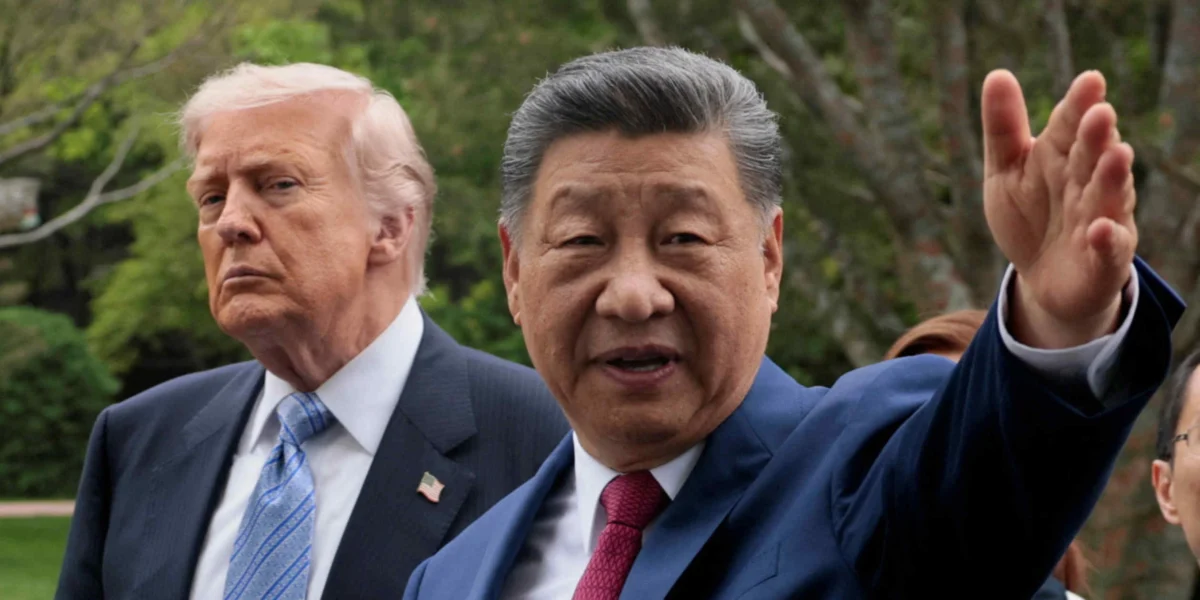
WASHINGTON/NEW YORK — Chinese President Xi Jinping is embarking on a significant state visit to Washington D.C. on September 23, 2026, for a highly anticipated summit with U.S. President Donald Trump. This meeting marks the second high-level engagement between the two leaders this year, occurring at a critical juncture as a fragile trade truce faces an expiration date in November. The agenda is laden with complex issues, including ongoing tariff disputes, the strategic importance of rare earth materials, the rapidly evolving landscape of artificial intelligence, and persistent geopolitical flashpoints.
The choice of Washington as the venue underscores the significance of this diplomatic exchange, following President Trump’s visit to Beijing in May. The White House is expected to host a lavish state dinner, projecting an image of diplomatic engagement. However, a pervasive sense of cautious optimism, bordering on skepticism, surrounds the potential for concrete breakthroughs. Many experts and observers recall the previous summit as prioritizing symbolic gestures over substantive agreements, leaving key challenges largely unaddressed.
A central point of contention likely to dominate discussions is the status of Taiwan. China considers the self-governing island a renegade province, while the United States maintains a policy of strategic ambiguity coupled with significant arms sales. President Trump has previously characterized these arms sales as a "very good negotiating chip," a stance that Beijing views with extreme concern. Any shift or perceived wavering on this sensitive issue could have profound implications for regional stability and the broader U.S.-China relationship.
Deepening Trade Rift and Technological Competition
The economic underpinnings of the bilateral relationship are under severe strain. The trade war, initiated by President Trump’s administration in 2018 with the imposition of tariffs, has significantly altered global supply chains and created uncertainty for businesses worldwide. Despite repeated attempts by the U.S. to curb China’s manufacturing dominance, Beijing has managed to solidify its position, achieving a record trade surplus exceeding $1 trillion. This resilience, however, masks underlying economic vulnerabilities within China, including a protracted property sector slump that has impacted household wealth and dampened consumer spending.
The race for technological supremacy, particularly in the field of artificial intelligence, is another critical area of focus. Both nations are investing heavily in AI research and development, recognizing its transformative potential across economic, military, and societal domains. The summit presents an opportunity to explore the establishment of guardrails for AI development and deployment, aiming to mitigate risks associated with autonomous weapons systems, algorithmic bias, and the potential for misuse. However, the deep-seated mistrust and competition in this sector make finding common ground a formidable challenge.
Shifting Public Perceptions and Generational Divides
Underpinning the diplomatic maneuvering are evolving public sentiments in both nations. Emerging data suggests a generational divergence in American attitudes towards China. Younger Americans, particularly those leaning Democratic, appear more receptive to closer ties with China and less inclined towards a complete decoupling of economies. Surveys conducted by institutions like the Chicago Council on Global Affairs indicate a growing preference for engagement over separation, a notable shift from earlier trends.
Conversely, older Americans, particularly those aged 65 and above, express significantly higher levels of concern regarding Chinese espionage and military ambitions. This generational divide is also reflected in attitudes towards potential conflict over Taiwan and anxieties about China’s growing influence in global supply chains.
In China, while public opinion data is less accessible, trends such as a decline in Chinese students and visitors to the U.S. suggest a growing sense of caution, influenced by rising visa restrictions and tighter immigration policies. The overall perception of the United States in China is also shaped by internal narratives and the evolving geopolitical landscape.
Global Standing and Diplomatic Nuances
Recent global approval ratings paint a complex picture of China’s and the U.S.’s standing on the world stage. Reports from organizations like Gallup suggest that China’s global approval ratings have surpassed those of the United States in certain metrics. This shift is attributed not only to China’s efforts to project itself as a responsible global actor but also to a perceived decline in America’s international image during President Trump’s second term.
However, a more nuanced view emerges from Pew Research Center surveys, which indicate that while China’s favorable ratings have increased in regions like Southeast Asia, Africa, and Latin America, where it has deepened trade ties, the U.S. government still ranks higher in terms of respect for personal freedom. Confidence in both President Trump and President Xi Jinping remains generally low globally, with a notable portion of respondents viewing Xi more favorably than Trump.
A Decade of Transformation: Context for the Summit
This summit is particularly significant as it represents President Xi Jinping’s first official state visit to the U.S. since 2015 and his first visit to American soil since the APEC forum in 2023. The intervening decade has witnessed profound transformations in both nations, shaping their domestic priorities and international outlooks.
In the United States, a robust stock market, buoyed by AI-driven investments, has created substantial wealth among higher-income households. However, middle and lower-income families continue to grapple with rising living costs, exacerbated by elevated energy prices, a consequence of geopolitical conflicts. Economic disparities have reportedly eroded President Trump’s popularity, with recent polls indicating low approval ratings for his job performance and his handling of economic issues.
China, meanwhile, faces its own set of domestic challenges. While it has solidified its position as a global manufacturing powerhouse, the nation is experiencing a two-speed economy. The property market slump has created financial headwinds for many households, and youth unemployment has reached concerning levels, partly attributed to the rapid adoption of AI technologies. Despite official growth figures that continue to trend downward, Beijing is striving to maintain economic stability and manage social contentment.
Expert Assessments and Geopolitical Concerns
Leading experts in Asian affairs and military strategy have offered sober assessments of the current geopolitical climate leading up to the summit. Retired U.S. Indo-Pacific Command Commander John Aquilino has described China’s military buildup as the largest since World War II, with an industrial base operating on a wartime footing. He emphasizes the imperative for the U.S. to collaborate with allies on economic alternatives and robust deterrence strategies. Aquilino specifically voiced deep concerns regarding discussions on Taiwan, noting that China’s military readiness is aimed at fundamentally altering the existing world order.
Kurt Campbell, former U.S. Deputy Secretary of State, echoed these concerns, suggesting that President Xi’s strategy involves undermining confidence in Taiwan’s security and its relationship with the United States by framing the narrative around arms sales. Lai I-Chung, president of the Prospect Foundation think tank, underscored that while Taiwan will be closely observing the summit, its ultimate fate will not be solely determined by the negotiations between these two global powers.
Business Perspectives and Strategic Alliances
The business community is also keenly observing the summit, with figures like Tesla CEO Elon Musk offering notable commentary. Musk, who is reportedly scheduled to attend the state dinner, has publicly praised President Xi as a "great leader" and highlighted China’s significant prosperity during his tenure. Musk’s continued emphasis on China’s importance to Tesla’s operations, while denying rumors of scaling back operations, reflects the complex and intertwined nature of global business interests.
Official Narratives and Diplomatic Boundaries
Official pronouncements from both sides offer insights into their strategic framing of the summit. China’s state-run People’s Daily has characterized the relationship as "the most important and complex bilateral relationship in the world," with head-of-state diplomacy serving as its "guiding star." The commentary emphasizes "constructive strategic stability," a concept that gained prominence following the May summit.
Concurrently, China’s Ambassador to the U.S., Xie Feng, has articulated clear boundaries, asserting that "China’s sovereignty, security, and development interests cannot be violated." He specifically outlined four "red lines": the Taiwan question, democracy and human rights, development paths and systems, and development rights, emphasizing that these cannot be challenged.
The Path Forward: A Balancing Act
As President Xi Jinping lands in Washington, accompanied by his wife Peng Liyuan and key aides including Cai Qi and Foreign Minister Wang Yi, the diplomatic atmosphere is charged with anticipation. The rare courtesy of President Trump greeting Xi personally at Joint Base Andrews signals a deliberate effort to project a stable, albeit complex, bilateral relationship.
Analysts from Oxford Economics suggest that while the trip may indicate a move towards greater predictability in U.S.-China relations, both sides are essentially "buying time." China aims to secure export markets while reducing technological dependence on external sources, while the U.S. seeks to minimize supply chain disruptions and bolster domestic manufacturing. The complex web of economic interdependence is proving difficult to unravel, necessitating a protracted period of adjustment.
The outcomes of the summit are expected to be "narrow" and potentially "reversible." This could include limited tariff relief, potential agreements to increase Chinese purchases of U.S. agricultural products and aircraft, and pledges for cooperation on AI safety and issues related to Iran. However, more contentious issues such as technological rivalry, the practice of transshipments, and the unresolved question of Taiwan are likely to remain on the table, underscoring the persistent challenges that define this crucial global relationship. The summit, therefore, represents not an end to disputes, but a carefully managed continuation of dialogue amidst a rapidly shifting geopolitical and economic landscape.