Gilang Muhammad
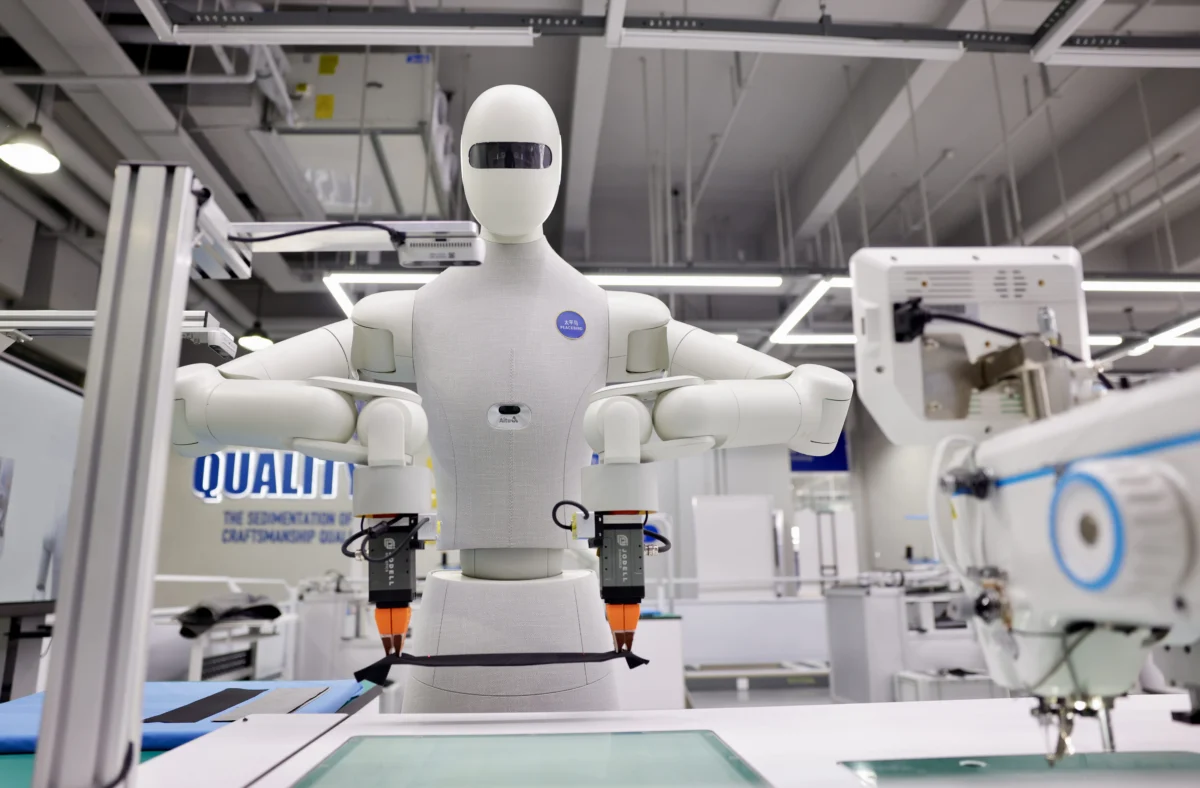
NINGBO, CHINA – China’s industrial sector witnessed its most significant profit growth since May in October 2026, largely propelled by an insatiable global demand for artificial intelligence (AI) technologies and sustained high energy prices. This robust performance, however, casts a stark light on the nation’s increasingly bifurcated economy, where burgeoning high-tech and export-oriented industries thrive while consumer-facing sectors continue to grapple with subdued domestic demand and tight margins.
Data released on Friday by the National Bureau of Statistics (NBS) revealed that profits at sizeable industrial firms – those with annual revenue exceeding 20 million yuan (approximately $2.8 million USD) – surged an impressive 20.1% in October from a year earlier. This marked a notable acceleration from previous months, extending a strong rebound that began earlier in the year. For the first ten months of 2026, cumulative earnings grew 16% year-on-year, an uptick from the 15.5% recorded through September. This trajectory positions China’s industrial profits for their strongest annual expansion since 2021, following three years of declines and a tepid 0.6% growth in the preceding year, signifying a significant turnaround for the nation’s industrial backbone.
The Driving Forces: AI, High-Tech, and Global Demand
The resurgence in industrial profits is overwhelmingly concentrated in specific upstream sectors and high-tech manufacturing, primarily those benefiting from the global AI buildout and elevated commodity prices. Yu Weining, chief statistician of the NBS, highlighted the electronics sector as a prime beneficiary, with earnings doubling in the first ten months compared to the same period last year. This exponential growth underscores the intense global appetite for AI computing power, memory chips, and related hardware components, for which China remains a crucial manufacturing hub. The demand surge has translated directly into higher production volumes and profitability for Chinese electronics manufacturers.
Beyond electronics, the broader high-tech manufacturing sector demonstrated remarkable vitality, with profits jumping an impressive 50.9%, significantly outpacing the overall industrial average. Specific niches within this category showcased even more extraordinary gains; manufacturers of spacecraft and launch vehicles reported a staggering 63.2% rise in profits. This reflects not only China’s strategic investments in its aerospace and advanced manufacturing capabilities but also potentially increasing domestic and international demand for satellite deployment and space exploration technologies.
Commodity producers have also seen substantial profit growth, largely due to demand linked to both renewable energy infrastructure development and the expanding AI industry. Increased global investment in data centers and AI-powered technologies, for instance, drives up the need for materials like copper and aluminum. Concurrently, the global push towards decarbonization fuels demand for these same materials in renewable energy projects, such as solar panels and electric vehicle components. Petroleum processors, a sector often sensitive to global energy price fluctuations, swung to a combined profit in the first ten months, a significant reversal from the losses recorded a year earlier. This shift is indicative of a more favorable global energy market environment and potentially optimized refining margins.
The Persistent Drag: Weak Domestic Consumption and Real Estate Fallout
Despite the gleaming figures from the tech and export-oriented sectors, the broader picture of China’s economy remains uneven, characterized by persistent weakness in domestic demand and traditional industries. Economist Intelligence Unit’s senior economist, Tianchen Xu, cautioned that "the recovery has yet to broaden into a more durable improvement in corporate profitability," pointing out that the rebound is largely skewed towards upstream sectors benefiting from external factors like higher energy prices. This highlights a structural challenge: while export engines are firing, the domestic consumption machine continues to sputter.
The struggles of consumer-facing industries are stark. These manufacturers are finding it exceedingly difficult to pass on higher input costs to consumers, leading to squeezed profit margins. Retail sales, a key indicator of household consumption, grew a smaller-than-expected 0.4% in October, underscoring the cautious spending habits of Chinese consumers. Furthermore, fixed-asset investment, a critical gauge of capital expenditure, steepened its declines to 8.1% in the first ten months of the year, signaling a reluctance by businesses to invest in expansion amidst uncertain demand prospects.
The automotive sector, once a powerhouse of Chinese manufacturing, saw its profits drop by a significant 26% in the first ten months, a wider decline than the previous month. This contraction is attributed to intense competition, ongoing price wars, and a slowing domestic market where consumers are increasingly hesitant to make large purchases. The prolonged slump in the real estate sector continues to cast a long shadow over related industries. Producers of construction materials like cement and glass recorded steep profit declines of 46.7%, while furniture makers saw their earnings plummet by 52.4%. These figures vividly illustrate the cascading impact of the property downturn, which has eroded consumer confidence, dampened investment, and created significant headwinds for entire supply chains.
Further underscoring the strain across various sectors, official data revealed that accounts receivable – money owed to businesses by their customers – and finished-goods inventories grew faster than revenue. This accumulation of unsold goods and unpaid invoices is a classic symptom of weak demand and can severely impact companies’ cash flow and operational efficiency.
Historical Context and Policy Responses
China’s industrial profit trajectory in 2026 represents a critical inflection point after a challenging period. The 2021 peak in industrial profits was followed by three years of decline, primarily due to the stringent "zero-COVID" policies that disrupted supply chains and suppressed domestic activity, coupled with escalating global trade tensions and a cooling property market. The tepid 0.6% growth recorded in 2025 offered little solace, setting the stage for the current rebound, albeit one driven by a narrow set of factors.

In response to these challenges, the Chinese government has intermittently rolled out various stimulus measures, including infrastructure spending, tax cuts, and efforts to boost consumption. However, the effectiveness of these policies, particularly in stimulating broad-based domestic demand and stabilizing the property sector, has been mixed. Capital Economics’ China Activity Proxy, a gauge that relies on less politically sensitive indicators like freight and port traffic, suggested that overall activity in October picked up "substantially" compared to previous months, expanding 2.4% from a year earlier. This growth was primarily attributed to strong external demand and exports, even as manufacturing activity for domestic goods continued to languish.
Leah Fahy, senior China economist at Capital Economics, noted that while local governments did step up fiscal spending for the first time since February in October, this had "little impact" on arresting the property slump or reviving domestic demand. Fahy highlighted the structural challenges faced by local governments, including heavy debt burdens and revenue shortfalls from land sales, which limit their capacity for effective stimulus. "Local governments [are] clearly struggling to make full use of their allocated funds," Fahy stated, suggesting a "limit to how much fiscal policy will be able to support the economy." This underscores a critical dilemma for Beijing: balancing the need for stimulus with concerns over accumulating further debt and ensuring efficient allocation of funds.
Economist Perspectives and Underlying Dynamics
The current economic landscape in China presents a complex picture for analysts. The reliance on AI-driven growth and external demand has, to some extent, reduced the immediate pressure on Chinese policymakers to unleash massive stimulus to support domestic demand and the overall economy. With China’s GDP growth reaching 4.6% in the first three quarters of 2026, Beijing’s annual growth target of 4.5-5% appears well within reach. This allows for a degree of breathing room, but it also highlights the persistent imbalance.
The "two-speed economy" phenomenon is a central theme in current analyses. While the high-tech and export sectors benefit from global trends and strategic government support, traditional industries and consumer confidence remain mired in uncertainty. The property sector, in particular, continues to be a significant drag. The ongoing deleveraging efforts and the crisis among major developers like Evergrande and Country Garden have not only impacted construction and related industries but also significantly eroded household wealth and consumer sentiment. This wealth effect, coupled with concerns about job security and income growth, explains the subdued retail sales figures.
Looking ahead, economists warn about the sustainability of the current growth model. Leah Fahy anticipates that as global AI-related investment begins to moderate, exports will become a "waning prop to growth." She projects China’s overall economic expansion to decline to just 2.8% next year, a significant drop from an estimated 3.9% in 2025. This forecast underscores the urgent need for China to rebalance its economy towards a more robust and self-sustaining domestic demand-led growth model.
Broader Economic Implications and Geopolitical Headwinds
The challenges facing China’s economy are further complicated by a resurfacing of geopolitical and trade tensions. The United States recently proposed new tariffs, which include a 20% headline rate on Chinese goods and punitive rates on several Asian economies. Analysts interpret these latter tariffs as a measure to target transshipments of Chinese goods, effectively closing loopholes. The proposed levies are set to rise to 40% if the existing U.S.-China trade truce is not extended beyond January.
Alicia Garcia Herrero, chief economist for APAC at Natixis, explained the mechanics of these new tariffs: "Chinese firms now export intermediate goods to the rest of Asia and reach the U.S. indirectly." She warned that economies with a higher proportion of Chinese inputs in their manufacturing processes may face elevated tariff risks, potentially disrupting regional supply chains and adding complexity for businesses operating within Asia. This renewed focus on tariffs could create fresh headwinds for China’s export-driven growth, even for its high-tech sectors, by increasing costs and uncertainty for international trade.
The long-term implication for China is the imperative to shift away from its historical reliance on exports and investment towards a more consumption-driven economy. While the AI boom provides a valuable short-term boost and validates China’s strategic push into advanced manufacturing, it does not fundamentally address the underlying structural issues of domestic demand weakness, income inequality, and the overhang of the property crisis. Policymakers in Beijing face the delicate task of fostering innovation and high-tech growth while simultaneously implementing reforms that can genuinely boost household incomes, strengthen social safety nets, and restore consumer confidence, thereby creating a more balanced and resilient economic future.
Conclusion: Navigating the Bifurcated Path
China’s industrial profit surge in October 2026 presents a compelling narrative of innovation and industrial prowess, particularly in the burgeoning AI and high-tech sectors. It underscores the nation’s capacity to capitalize on global technological trends and maintain its position as a critical manufacturing powerhouse. However, this success story is juxtaposed with persistent domestic challenges, including weak consumer spending and a struggling real estate market, creating a distinct "two-speed" economic reality.
While the AI-driven export engine provides valuable momentum, economists warn that its sustainability as the primary growth driver is limited. The confluence of domestic demand constraints, fiscal policy challenges, and escalating trade tensions demands a comprehensive and nuanced policy approach from Beijing. The journey ahead for China’s economy involves not just sustaining its lead in advanced manufacturing but also undertaking profound structural reforms to nurture a robust domestic market, rebalance its growth model, and ultimately ensure a more inclusive and stable prosperity for its citizens amidst a complex global environment.