Gilang Muhammad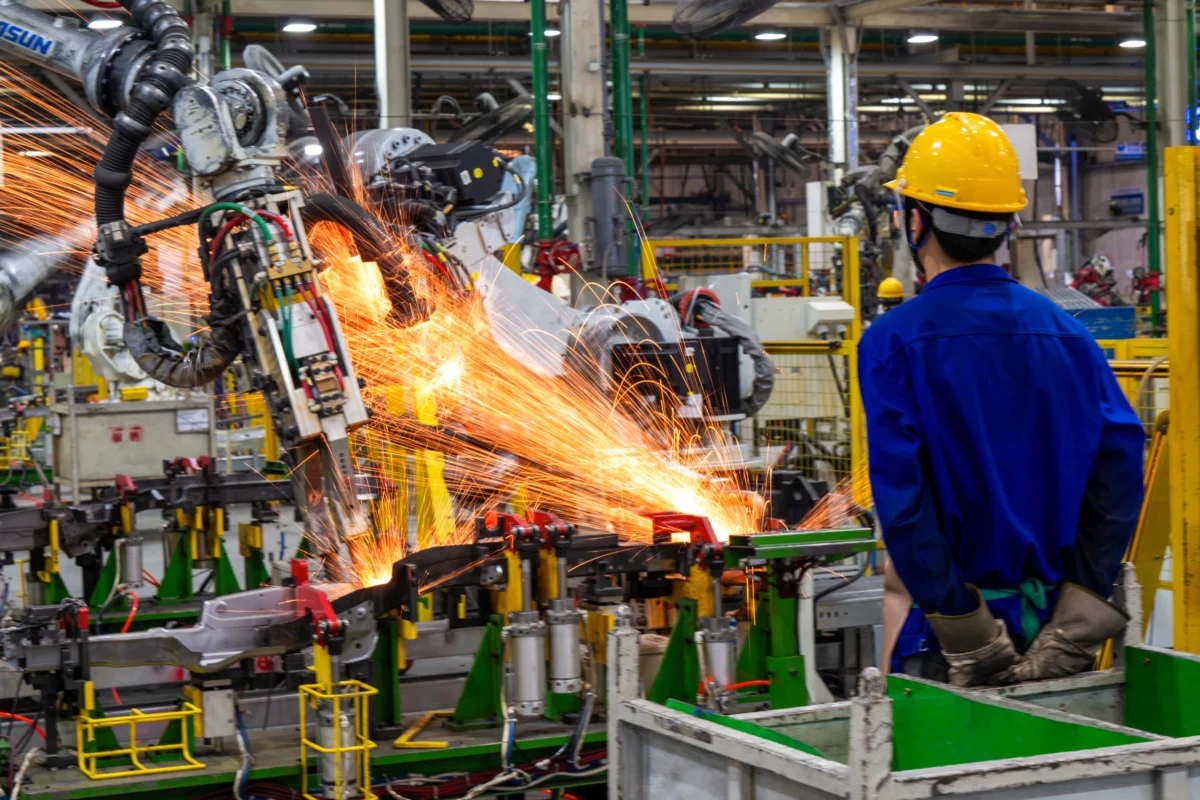
LIUZHOU, CHINA – The engine of China’s vast industrial sector faltered unexpectedly in July, contracting for the first time since February, as a confluence of domestic demand weakness, seasonal disruptions, and the unwinding of pre-emptive export surges dragged down manufacturing output. This downturn has intensified pressure on Beijing to implement more robust policy measures to stabilize the economy and stimulate flagging domestic consumption.
The official manufacturing Purchasing Managers’ Index (PMI) registered 49.2 in July, a notable decline from 50.3 in June, according to data released by the National Bureau of Statistics (NBS) on Friday. This figure fell below the critical 50-point threshold that delineates expansion from contraction, defying economists’ median forecast, which had anticipated a reading of 50.0. The July reading marks the weakest performance for the sector since February and abruptly concludes a four-month period of growth, a stretch largely bolstered by exporters accelerating shipments ahead of anticipated U.S. tariff adjustments. The image captured on July 25, 2026, at Guangxi Liuzhou Zhuotong Auto Parts Co., Ltd., showing robotic arms diligently assembling auto parts, stands in stark contrast to the broader national trend of industrial slowdown reported just days later.
Headline Figures Paint a Grim Picture
The unexpected contraction in manufacturing activity serves as a stark reminder of the underlying vulnerabilities within the world’s second-largest economy. The decline from an expansionary 50.3 in June to a contractionary 49.2 in July reflects a broad-based deceleration across the industrial landscape. This marks a significant shift from the preceding four months, which had seen the manufacturing PMI hover at or above the 50-point mark, largely fueled by a temporary surge in export orders as businesses rushed to beat potential tariff increases.
Economists and market observers had largely anticipated a stabilization, if not a marginal improvement, in July. The actual data, however, presented a more sobering reality, underscoring the persistent challenges confronting China’s economic policymakers. The unexpected nature of the contraction is particularly concerning, as it suggests that the rebound observed in the earlier part of the year, following the initial post-pandemic recovery, was less robust and more transient than initially perceived.
Underlying Weakness: A Deeper Dive into Sub-Indices
A closer examination of the PMI’s sub-indices reveals the specific pain points contributing to the overall decline. The new orders sub-index, a crucial gauge of future demand, plunged to 48.5, reaching its lowest point in 38 months. This sharp drop points squarely to a significant slump in domestic demand, which analysts identify as the primary driver of the manufacturing slowdown. While the export orders index also softened slightly, the pronounced weakness in domestic consumption signals a more profound challenge within the internal market. Julian Evans-Pritchard, head of China economics at Capital Economics, emphasized this point, stating, "Domestic weakness appears largely to blame – while the export orders index softened a bit." He anticipates that local governments will need to align with Beijing’s policy support pledges to effectively buttress domestic demand.
Further exacerbating the situation, the sub-index for factory-gate prices extended its decline. This indicates persistent producer price weakness, a trend that resumed after a brief, war-driven energy spike earlier in the year. Falling factory-gate prices suggest an environment of weak demand and overcapacity, potentially leading to lower corporate profits and an increased risk of deflationary pressures throughout the economy. This trend could further discourage investment and consumer spending, creating a challenging cycle for economic recovery.
Beyond Manufacturing: Broad-Based Economic Slowdown
The economic malaise in July was not confined to the manufacturing sector; it spread broadly across other key pillars of the economy. The construction PMI, a bellwether for investment and infrastructure activity, slumped to a record low of 47.0. This unprecedented decline in construction activity underscores significant headwinds in the property sector and local government financing, which have been sources of concern for several years. The services gauge, reflecting activity in non-manufacturing sectors such as retail, hospitality, and transport, also fell to its weakest level since the initial stringent COVID-19 lockdowns, highlighting a notable erosion of consumer confidence and spending. Consequently, the composite PMI, which offers a comprehensive view of overall economic activity by combining both manufacturing and non-manufacturing indices, dropped to 49.3, its lowest point since the conclusion of the pandemic-induced restrictions in 2022.
The National Bureau of Statistics acknowledged external factors contributing to the weakness, with a spokesperson attributing part of the PMI decline to a recent spate of typhoons. These severe weather events, common during the summer months in China, disrupted production and halted work on numerous construction projects, particularly in coastal and southern regions. While such disruptions are often temporary, their impact in July exacerbated an already fragile economic environment.
Despite these downbeat readings, an interesting divergence emerged in firms’ forward-looking expectations. Indices tracking firms’ expectations for future output held up relatively well across all official PMIs in July, including an improvement in the construction sector. This suggests a degree of optimism among businesses, perhaps rooted in the anticipation of stronger fiscal policy support over the latter half of the year. As Evans-Pritchard noted, "Firms believe the latest deterioration in activity will prove short-lived, perhaps because they anticipate a stronger tailwind from fiscal policy over the rest of the year." This sentiment offers a glimmer of hope that current challenges might be perceived as transient, awaiting imminent policy intervention.
The Shadow of Trade Tensions and Pre-emptive Shipping
The current economic slowdown cannot be fully understood without acknowledging the lingering impact of global trade tensions and the specific dynamics that shaped China’s export performance in previous months. The "front-loading momentum" mentioned in the report refers to a surge in export activity, particularly to the United States, in anticipation of higher American tariffs. For months, Chinese manufacturers had braced for additional levies from President Donald Trump’s Section 301 probes. With the 10% broad-based duty set to expire on July 24, businesses rushed to ship goods ahead of expected increases. This phenomenon temporarily inflated export figures in the preceding months, creating an artificial boost that has now begun to unwind.
Indeed, June saw a significant surge in exports, with overall shipments rising 27% – the fastest pace in nearly five years – and U.S.-bound shipments increasing by 14%. This temporary surge provided a critical, albeit unsustainable, engine for China’s economy. The July data, however, reveals the inevitable correction as this front-loading effect faded. The China Beige Book (CBB), a research firm conducting independent surveys, reported that U.S.-bound shipments fell outright for the first time in several months in July, confirming the reversal of the pre-tariff rush. This decline in a historically reliable growth driver signals a more challenging export environment moving forward, particularly given persistent geopolitical tensions and a slowing global economy.
Beijing’s Policy Conundrum: Balancing Growth and Risk
The disappointing economic data landed just a day after the country’s top policymakers convened for their mid-year meeting, where they explicitly acknowledged "difficulties and challenges facing the economy." In response, the Politburo pledged to accelerate fiscal spending and roll out "incremental policies" to shore up growth in the second half of the year. This official recognition underscores the severity of the situation and the government’s intent to intervene.
However, the Politburo readout, while signaling intent, stopped short of detailing concrete policy steps. This measured approach reflects a complex policy conundrum facing Chinese leaders. While stimulating near-term growth is critical, particularly as the economy expanded by a slower-than-expected 4.3% year-on-year in the second quarter (missing the lower end of the full-year target of 4.5% to 5%), policymakers are also prioritizing "risk containment" over immediate, aggressive stimulus.
Analysts from Eurasia Group, in a note following the Politburo meeting, highlighted that Chinese leaders perceive growth as being at risk of falling below target in the second half, partly because "new-economy" sectors like artificial intelligence are not yet robust enough to offset the slowdown in traditional industries. Moreover, the analysts pointed out that "Officials continue to prioritize risk containment over near-term growth," framing structural issues such as the property sector’s debt crisis, local government debt burdens, and the stability of smaller financial institutions as long-term challenges to be managed carefully rather than problems to be solved with quick, large-scale interventions. This strategic patience, while aimed at ensuring long-term stability, might limit the immediate impact of any stimulus measures.
Analysts Weigh In: Expectations for Stimulus and Outlook
The July data has undoubtedly sharpened expectations for further easing measures from the People’s Bank of China (PBOC) and the Ministry of Finance. While the Politburo refrained from specific announcements, market participants anticipate a range of tools could be deployed. These might include further cuts to interest rates, reductions in the Reserve Requirement Ratio (RRR) for banks to inject liquidity, and targeted fiscal spending on infrastructure projects or subsidies for consumption.
Economists are closely watching for signs of the "incremental policies" promised by Beijing. These could manifest as refined housing policies to stabilize the property market, increased support for small and medium-sized enterprises (SMEs), or measures to boost consumer confidence through direct cash transfers or consumption vouchers. The challenge for policymakers lies in crafting stimulus that is effective without exacerbating existing structural risks or leading to excessive debt accumulation.
Despite the prevailing economic headwinds, the resilience in firms’ future output expectations provides a notable counterpoint. This suggests that while current conditions are challenging, businesses hold a degree of faith in the government’s ability to implement supportive policies that will ultimately turn the tide. However, analysts remain cautious, emphasizing that the effectiveness of future stimulus will depend heavily on its scale, precision, and the government’s willingness to address underlying structural imbalances.
Implications for China and the Global Economy
The unexpected contraction in China’s manufacturing sector carries significant implications, both domestically and internationally. For China, the immediate pressure is on employment. The China Beige Book’s findings that factory activity decelerated in July, with manufacturing posting the worst performance on employment and job growth deteriorating across all sectors surveyed, underscore a critical challenge. Sustained job losses could erode consumer confidence further and exacerbate the domestic demand slump. The decline in retail sales, particularly in travel and restaurants, as noted by the CBB, further illustrates the fragility of consumer spending.
Globally, a weakening Chinese economy could have ripple effects. As a major consumer of raw materials and a crucial link in global supply chains, a slowdown in China’s industrial output could impact commodity prices, reduce demand for goods from other exporting nations, and potentially contribute to a global economic deceleration. Conversely, if producer prices continue to fall due to weak domestic demand and overcapacity, China could begin to export deflationary pressures, affecting global inflation dynamics.
The coming months will be critical for China’s economic trajectory. The government’s response to these challenges, particularly its ability to balance immediate growth concerns with long-term risk management, will determine whether the July contraction is a temporary blip or a harbinger of a more protracted period of economic struggle. The world will be watching closely as Beijing navigates these complex economic waters.